
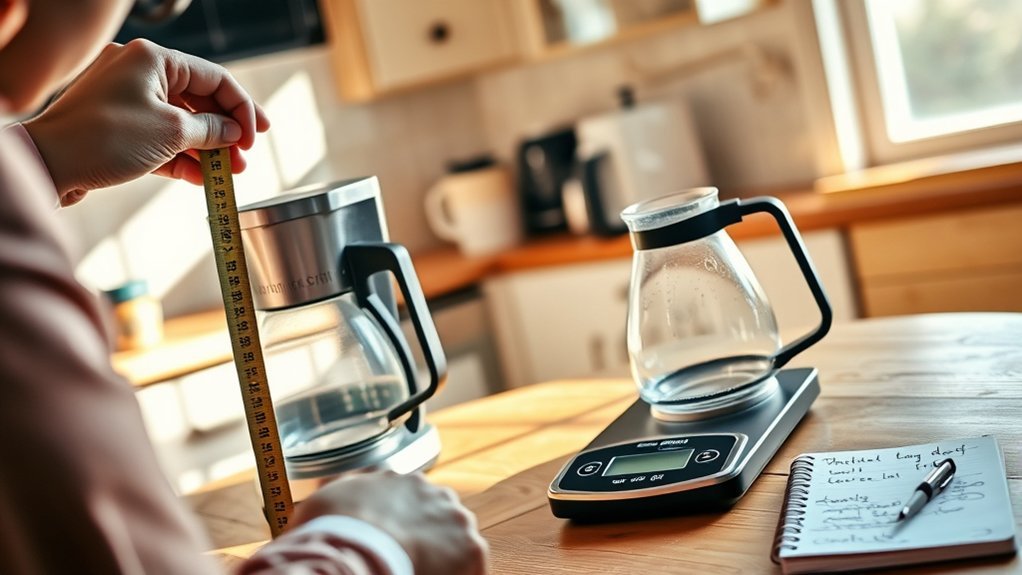
Replacing a broken or worn French press carafe is much easier when you measure more than just the metal frame. The safest approach is to identify your press’s brand, model, and capacity first, then confirm the old beaker’s diameter, height, rim, and spout shape. Those details give you a much better chance of finding a replacement that seats securely and works with the original lid and plunger.
Quick Answer
To measure for a replacement French press carafe, first identify the brand, model, and capacity. Then measure the old beaker’s outside diameter at its widest straight section and its height from base to rim. Also compare the rim, spout, and frame clearance. If the original glass is missing, measure the frame opening instead.
Key Takeaways
- Check the brand, model, and capacity before relying on measurements alone; an exact manufacturer replacement is usually the simplest option.
- Measure the old glass beaker itself when it is intact: outside diameter, base-to-rim height, rim profile, and spout shape all matter.
- Do not assume that all 3-cup, 8-cup, or similarly labeled French presses share the same physical dimensions.
- A third-party or different-brand beaker can fit some presses, but only when its listed dimensions and geometry match your frame and lid.
- Never force replacement glass into a frame or continue using a beaker that is cracked, chipped, or otherwise damaged.
At a Glance
| Time Required | About 5–10 minutes |
| Difficulty | Easy |
| Tools Needed | Ruler or caliper, measuring tape, and your model/capacity information |
| Cost | No cost to measure; replacement-beaker prices vary by brand, size, and model |
Warning: Do not measure, reinstall, or continue using cracked or chipped glass. If the original beaker shattered, remove loose pieces carefully and do not force remaining glass out of the frame. French presses hold very hot water, so a weakened or poorly fitting beaker can create a burn and cut hazard.
Check the Brand, Model, and Capacity First
Before reaching for a ruler, look on the bottom of the frame, handle, packaging, receipt, or manufacturer’s website for a model name or number. An exact replacement part listed for your model is more dependable than choosing a carafe by diameter alone.
For example, BODUM maintains a dedicated replacement-beaker catalog, while GROSCHE sells replacement French press beakers in multiple capacities and advises customers to verify the exact size of their press before ordering.
Record the stated capacity in both milliliters and fluid ounces when possible. Do not assume that a French press labeled “3 cup” or “8 cup” holds three or eight ordinary drinking cups. For example, GROSCHE currently identifies one 3-cup replacement as 350 mL/11.8 fl oz and an 8-cup replacement as 1,000 mL/34 fl oz.
Pro Tip: If an exact manufacturer replacement exists for your model and capacity, use its listed compatibility before trying to match a “universal” beaker by measurements alone.

Power your essentials anywhere with a 999Wh pure sine wave power station delivering up to 1000W continuous with 2000W surge. It supports fast charging via USB-C PD 60W and USB-A QC 18W, plus simultaneous output for multiple devices through AC, USB, wireless, and car/DC ports. Recharge using AC, car, or solar with a built-in MPPT controller and dual cooling fans, while the upgraded battery management system protects against surges, short circuits, and overheating.

Note: 1)Too coarse a grind, too little coffee, or insufficiently tamping the grounds before brewing can all lead to inadequate pressure for a proper brew. 2)It is important to note that the amount of espresso extracted will vary depending on the grind size and amount and reprogramming may be needed when the size and amount are adjusted

Note: 1)Too coarse a grind, too little coffee, or insufficiently tamping the grounds before brewing can all lead to inadequate pressure for a proper brew. 2)It is important to note that the amount of espresso extracted will vary depending on the grind size and amount and reprogramming may be needed when the size and amount are adjusted
How to Measure the Diameter for a Replacement French Press Carafe
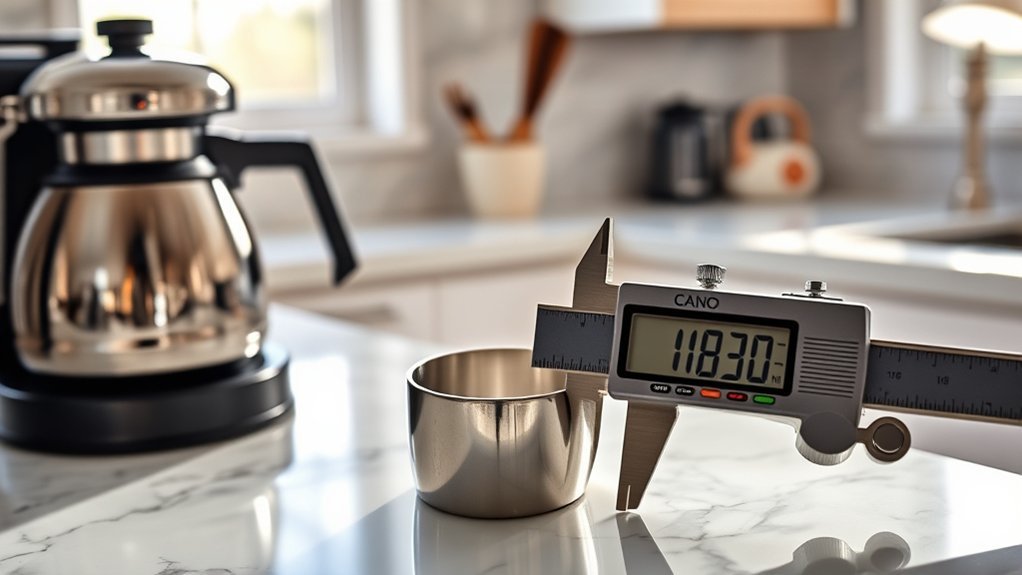
If the old glass beaker is intact, measure the beaker itself first. That gives you a more useful fit measurement than measuring only the outside of the metal cage.
- Remove the plunger and lid. Make sure the press is empty, cool, clean, and dry.
- Measure the outside diameter. Use a caliper for the most precise reading, or place a ruler across the widest straight-sided portion of the beaker.
- Measure the rim separately if needed. A flared or thick rim can affect whether the lid seats correctly even when the body diameter matches.
- Record the measurement. Write it down in both inches and millimeters if the replacement seller provides metric dimensions.
Do not rely on a supposed universal 2.5-inch or 4-inch size. French press dimensions vary among manufacturers and even between products with similar capacities.
What If the Original Glass Is Broken or Missing?
Start with the brand, model, and stated capacity. If you cannot find an exact replacement listing, measure the inside opening of the frame where the beaker sits rather than the frame’s outside diameter. Also measure the base support and any upper retaining ring that could limit the beaker’s width.
These frame measurements are useful for screening replacement options, but they do not automatically equal the correct beaker diameter. The replacement still needs enough clearance to slide into the frame without force while remaining securely supported.
Note: If only fragments of the original carafe remain, do not try to reassemble the glass to estimate its diameter. Use the model information, capacity, and frame measurements instead.
How to Accurately Measure the Height of Your French Press Carafe
Height is just as important as diameter. A beaker that is too tall may prevent the lid from seating, while one that is too short may sit loosely in the frame or leave the plunger in the wrong position.
When the old beaker is intact, stand it upright on a flat surface and measure from the bottom of the glass to the top edge of the rim. Do not include the lid or plunger.
A good replacement must match more than capacity: diameter, height, rim, spout, and frame clearance all affect whether the press works safely.
If the old beaker is unavailable, measure from the supporting base of the cage to the point where the glass rim normally sits. Then compare that measurement with the dimensions supplied by the replacement manufacturer or seller.
Measure the Rim, Spout, and Lid Clearance
Two glass beakers can have similar height and diameter yet still fit differently. Before ordering, compare these details:
- Rim diameter and thickness: The lid needs to sit correctly without rocking or binding.
- Spout shape: The spout must line up with the frame and lid opening.
- Spout height: A taller or wider spout can interfere with some frames or lids.
- Base shape: Confirm that the bottom of the beaker sits fully on the frame’s support.
- Plunger clearance: The filter should travel straight through the beaker without scraping or binding.
Replacement Options for Your Measurements
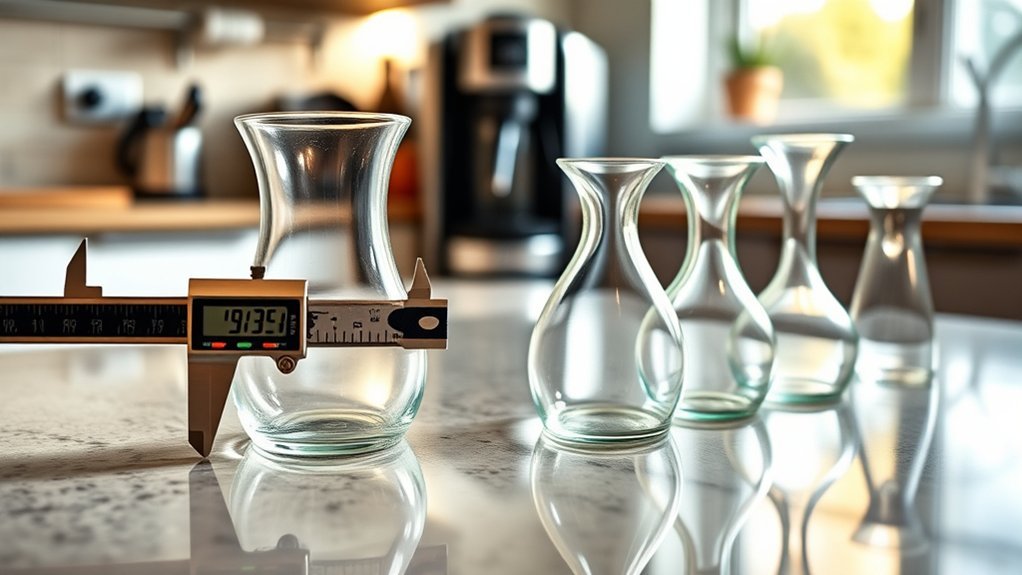
Once you have your measurements, compare replacement options in this order:
- Exact manufacturer replacement: Look for the same model and capacity in the manufacturer’s current spare-parts catalog.
- Model-specific third-party replacement: Choose a beaker that explicitly lists your French press model as compatible.
- Universal or multi-brand replacement: Compare capacity, body diameter, height, rim, and spout before ordering. “Universal” does not mean every beaker fits every press.
Some manufacturers do offer multi-brand beakers. GROSCHE, for example, currently markets its replacement beaker as fitting the majority of major-brand French presses while still telling buyers to verify their particular size before ordering.
Before You Order: Compatibility Checklist
- Brand and model match, when available
- Capacity in milliliters or fluid ounces
- Outside beaker diameter
- Base-to-rim height
- Rim diameter and profile
- Spout shape and orientation
- Frame opening and base clearance
- Lid and plunger clearance
- Seller or manufacturer compatibility statement
How to Safely Disassemble Your French Press
Disassembling a French press should not require force. Start with the press completely cool, empty, and dry.
- Remove the plunger and lid. On a conventional press, lift the plunger assembly straight up. If your model uses a locking lid, unlock it according to its instructions first.
- Inspect the frame. Some glass beakers simply lift or slide out, while other frames use a retaining screw or another model-specific fastening method.
- Release the beaker gently. Support the frame and lift the glass straight out. Do not pry against the rim or squeeze the glass.
- Stop if it is stuck. Check the manufacturer’s instructions instead of twisting or forcing the beaker.
- Clean the empty frame. Remove coffee residue and dry the frame before installing the replacement.
The original instruction to twist the plunger to detach it from the metal ring should not be used as a general disassembly method. The plunger and the frame perform different jobs, and frame construction varies by model.
Manufacturer safety guidance reinforces the need to avoid force. For example, IKEA’s UPPHETTA instructions warn users not to force the plunger downward or sideways because the glass may break.
How to Install and Test a Replacement Carafe
Wash and dry the replacement according to its manufacturer’s care instructions before installation. Then lower it gently into the frame without pushing or squeezing the glass.
If your frame uses a retaining fastener, reassemble it according to the model instructions. The beaker should be supported securely without visible stress on the glass.
Before brewing coffee, perform a dry fit check:
- The beaker sits flat and does not wobble excessively.
- The spout points in the correct direction.
- The lid sits normally on the rim.
- The plunger moves straight through the empty beaker without binding.
- No metal edge presses sharply against the glass.
Warning: A replacement that must be forced into the cage is not a safe fit. Stop and recheck the part number and dimensions rather than trying to bend the frame around the glass.
Troubleshooting a Replacement That Does Not Fit
The Replacement Carafe Is Too Loose
Confirm the body diameter and base shape. A small amount of design-specific clearance may be normal, but the vessel should remain properly supported. If the beaker can shift far enough to strike the frame during normal pouring, verify that it is actually listed for your model.
The Replacement Will Not Slide Into the Frame
Do not force it. Recheck the outside diameter, rim width, and any narrowing in the upper or lower frame. A matching capacity does not guarantee matching physical dimensions.
The Lid Does Not Sit Correctly
Compare the replacement’s height and rim profile with the original. Even a small change in rim shape can affect how a model-specific lid seats.
The Plunger Rubs or Binds
Make sure the beaker is centered in the frame and that the plunger assembly is straight. Do not force the plunger. If it still binds, the replacement’s internal diameter or alignment may be incompatible with the original press.
Looking for a Durable French Press? Here’s What to Consider
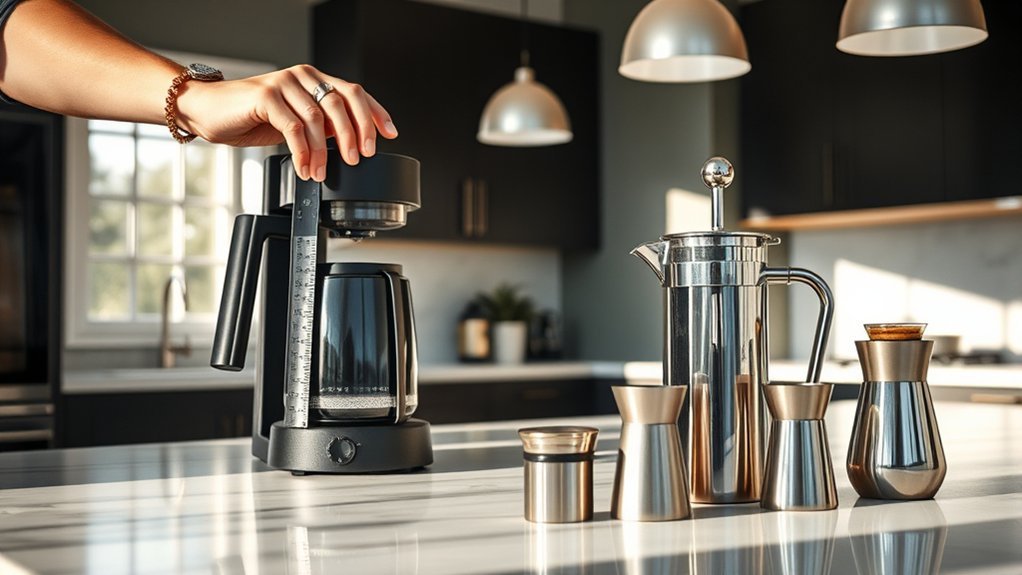
If you repeatedly break glass beakers, an all-stainless French press can be a practical alternative. This is normally a replacement for the entire French press, not a stainless-steel carafe that drops into a frame designed for glass.
When comparing a durable French press, consider:
- Construction: Stainless steel eliminates the exposed glass beaker found in many traditional presses and is more resistant to impact damage.
- Insulation: Double-wall construction can improve heat retention. For example, Frieling’s 2026 commercial literature describes its double-wall stainless presses as keeping coffee hot up to four times longer than glass.
- Capacity: Choose the volume you actually brew rather than relying only on the manufacturer’s “cup” count.
- Cleaning: Check the care instructions for the specific model. Dishwasher compatibility varies among French presses.
- Replacement parts: A model with separately available filters, plungers, lids, or beakers can be easier to maintain over the long term.
How to Clean and Care for the Carafe
After the press cools, remove the grounds and rinse the carafe. Warm water, mild dish soap, and a non-abrasive sponge or soft brush are suitable for routine hand cleaning.
Do not assume every French press is dishwasher-safe. Some manufacturers allow dishwasher cleaning for specific models, while others recommend hand washing. Follow the care instructions supplied with your press and replacement beaker.
Avoid using a beaker with chips, cracks, or other damage. Also avoid forcing a stuck plunger or striking the glass against a hard sink or countertop.
Frequently Asked Questions
Can I Use Any Carafe With My French Press?
No. The replacement needs to match the press closely enough for the frame to support it and for the lid and plunger to work normally. Start with the exact model and capacity, then compare diameter, height, rim, spout, and frame clearance.
What Materials Are Best for a Coffee Carafe?
For a replacement beaker, use the material and design intended for your French press. Heat-resistant borosilicate glass is common in replaceable French press beakers. If break resistance and heat retention are your priorities, a complete double-wall stainless steel French press is another option, but it is usually not a drop-in replacement for a glass beaker.
How Often Should I Replace My French Press Carafe?
There is no standard one- or two-year replacement schedule for an undamaged carafe. Replace the beaker when it is cracked, chipped, badly damaged, or no longer fits safely. Inspect glass regularly, especially after an impact or drop.
Will a Different Brand’s Carafe Fit My French Press?
Sometimes. Multi-brand replacement beakers are available, but a matching cup count alone is not enough. Confirm the seller’s compatibility information and compare the capacity, diameter, height, rim, and spout with your original press before ordering.
How Do I Clean My French Press Carafe Properly?
Let the press cool, remove the grounds, and wash the carafe with warm water, mild dish soap, and a non-abrasive sponge or soft brush. Use a dishwasher only when the manufacturer says the specific model is dishwasher-safe. Rinse well and inspect the glass before reassembly.
How Do I Measure If the Original Carafe Is Completely Broken?
Look for the French press brand, model number, and capacity first. If no exact replacement listing is available, measure the inside frame opening, the supported height from the base to the rim position, and the available space around the lid and spout. Compare those measurements with the replacement manufacturer’s published dimensions.
Does the French Press Cup Count Tell Me Which Carafe to Buy?
Not by itself. French press “cup” labels do not necessarily equal ordinary household cups, and physical dimensions can vary among brands. Use the stated milliliter or fluid-ounce capacity together with the model and actual beaker dimensions.
Conclusion
To measure for a replacement French press carafe, begin with the brand, model, and capacity, then verify the beaker’s outside diameter, height, rim, spout, and frame clearance. Measuring only the metal ring can miss important fit differences. Choose an exact manufacturer replacement when available, verify third-party compatibility carefully, and never force glass that does not seat naturally in the frame.
Sources
- BODUM — Spare Beakers — current manufacturer replacement-beaker catalog.
- GROSCHE — French Press Replacement Beaker — replacement capacities, borosilicate construction, and multi-brand sizing guidance.
- IKEA — UPPHETTA French Press — current dimensions, care information, and warning against forcing the plunger.
- Frieling — 2026 Foodservice Supplement — current double-wall stainless French press construction and heat-retention information.