

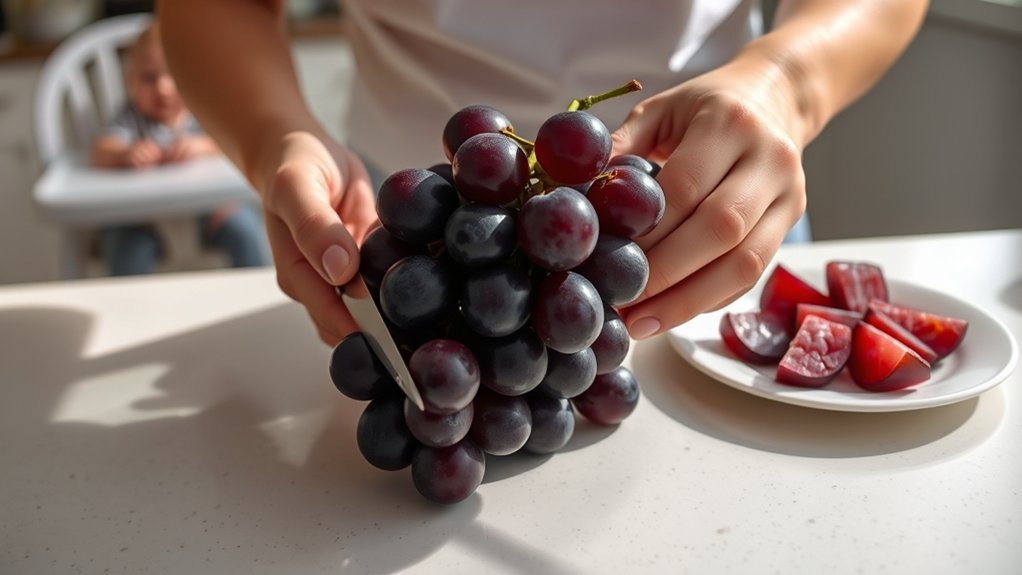
To cut grapes safely for your baby, start by washing them thoroughly. Then, use a sharp knife or kitchen scissors to cut each grape lengthwise, creating flatter pieces. For children under 4, it’s best to quarter the grapes to reduce choking risks. Always supervise your baby while eating and encourage slow, thorough chewing. This simple cutting method can make a big difference in keeping your child safe during snack time. Discover more tips on serving grapes safely!
Key Takeaways
- Always cut grapes lengthwise to create flatter pieces that reduce choking risks for babies and toddlers.
- For children under 4, cut grapes into quarters or smaller to ensure safe chewing.
- Use sharp knives or kitchen scissors to efficiently cut multiple grapes at once for uniformity.
- Introduce modified grapes around 6 months, and by 12 months, serve halved or quartered grapes under supervision.
- Maintain close supervision during meals and watch for signs of discomfort while eating grapes.
What You Need to Know About Choking Hazards With Grapes?
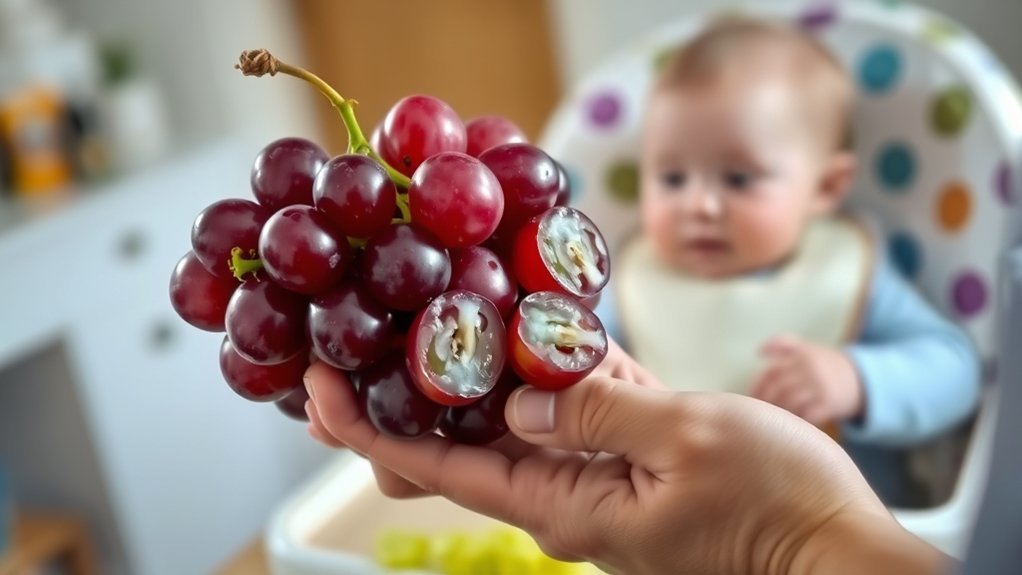
When it comes to feeding your little one grapes, it’s crucial to recognize the choking hazards they pose. Whole grapes are round and slippery, making them tough for babies and toddlers to bite into.
Since young children often have only front teeth, their ability to chew is limited, increasing the risk of choking. Soft foods like grapes can easily block airways, leading to serious incidents.
For effective choking prevention, consider grape alternatives like cut-up apples, bananas, or small pieces of soft cheese. Always be aware of the risks associated with grapes and similar foods, such as cherry tomatoes.
Why Cutting Grapes Is Key to Preventing Choking Hazards
Cutting grapes is vital to keep your little one safe during meals. Whole grapes are slippery and can easily block their airways, especially since babies mightn’t have the teeth to chew them properly.
Choking Risks Explained Clearly
Grapes may seem like a harmless snack, but their round and slippery shape can quickly turn into a choking hazard for babies and young children. Whole grapes can easily block airways, especially since kids often don’t have the molars needed to chew them properly.
That’s why choking prevention is critical during mealtime. Cutting grapes lengthwise creates flatter pieces, making them easier for little ones to chew and swallow. For children under 3 years old, it’s best to cut grapes into quarters or even smaller.
If you’re looking for grape alternatives, consider soft fruits like bananas or cooked apples, which are also safe and nutritious. Always prioritize safety to guarantee your child enjoys snack time without worry.
Safe Cutting Methods
Guaranteeing your child’s safety during snack time involves understanding the importance of cutting grapes properly. Whole grapes pose a choking hazard due to their round, slippery shape, so it’s essential to use effective cutting techniques.
For children under 4, always quarter grapes or cut them into smaller pieces that are easy to chew and swallow. Cutting grapes lengthwise is the safest method, as it prevents large pieces from blocking the throat.
Utilize safe kitchen tools like a long, sharp knife or kitchen scissors to efficiently cut multiple grapes at once. By applying these techniques, you not only reduce choking risks but also promote a safer, more enjoyable mealtime for your little one.
Stay vigilant and informed to guarantee their well-being!
Importance of Supervision
While it’s easy to overlook, careful supervision during mealtime plays an indispensable role in preventing choking hazards, especially with foods like grapes.
Children under 4 years old are particularly vulnerable due to their inability to chew well and the slippery, round shape of whole grapes. By cutting grapes lengthwise, you lessen the risk of them getting lodged in their airways.
Implementing effective supervision strategies guarantees you can respond quickly if a choking incident occurs. Mealtime awareness is vital; keep your eyes on your little one as they eat.
This vigilance not only enhances their safety but also fosters a secure, caring environment during meals. Remember, your attentive presence can make all the difference in preventing choking.
Age-Appropriate Guidelines for Serving Grapes
When introducing grapes to your baby, it’s important to take into account their age and developmental stage to minimize choking risks.
Start with modified grapes around 6 months, either cooked until they burst or blended into a sauce. By 9 months, cut grapes lengthwise into quarters for toddlers who need help with chewing.
Introduce grapes to your baby safely by starting with modified options at 6 months and quartered pieces by 9 months.
At 12 months, you can offer halved or quartered grapes, always under supervision. For children aged 24 months and older, whole grapes can be introduced in a supervised setting, but watch their chewing abilities closely.
Opt for larger, oblong grape varieties to further reduce choking hazards. These age-appropriate serving suggestions guarantee your little one enjoys grapes safely while exploring new flavors and textures.
Step-by-Step: How to Cut Grapes Safely for Your Baby
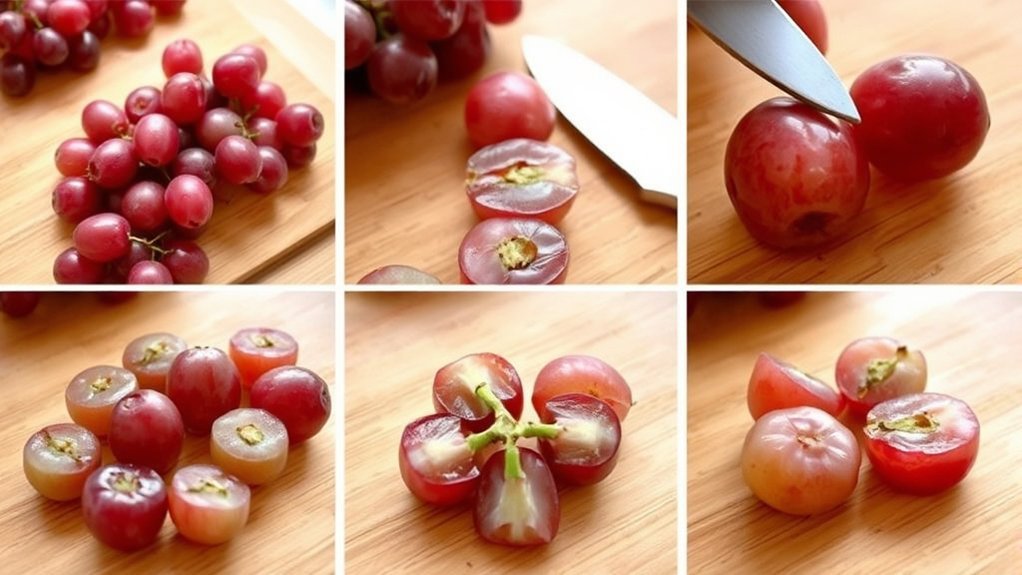
Cutting grapes safely for your baby is essential to prevent choking and encourage healthy eating habits. Start by selecting larger, oblong grape varieties, as they’re easier to manage.
Using a long, sharp knife or kitchen scissors, cut the grapes lengthwise. For children under 2 years old, slice them into quarters or smaller pieces to reduce choking risks.
If you’re cutting multiple grapes, consider using two plates for efficiency. Always check that the grapes are seedless and free from wrinkles.
Finally, supervise your baby while they eat, ensuring they’re seated and aware of their food. This creative cutting method not only enhances safety but also introduces your little one to healthy snacks in a fun way!
Fun Ways to Serve Grapes for Kids
Serving grapes to kids can be a fun and creative experience!
You can mix them into colorful fruit salads, create playful grape skewers, or even freeze them for a cool treat on hot days.
Let’s explore some exciting ways to make grapes a hit at snack time!
Fun Grape Snack Ideas
Grapes can be transformed into exciting snacks that kids will love! They’re not only fun but also packed with grape benefits, making them great healthy snacks.
Here are some fun grape snack ideas to try:
- Mix sliced grapes with bananas and strawberries for a vibrant fruit salad.
- Freeze halved grapes for a cool, chewy treat on hot days.
- Create grape kebabs by threading grapes onto skewers with other fruits for a playful snack.
- Serve grapes with yogurt or cottage cheese for a creamy dip that adds protein.
- Use grapes as a topping on pancakes or waffles to bring a fruity twist to breakfast.
These ideas make snack time enjoyable while ensuring your kids reap the benefits of delicious, nutritious grapes!
Creative Grape Presentation Tips
Making food visually appealing can transform mealtime into an exciting experience for kids. Serve grapes on a colorful plate or in fun-shaped containers to grab their attention!
Create grape skewers with small, child-safe sticks, turning snack time into a playful activity that boosts fine motor skills. You can also freeze grapes for a revitalizing treat that doubles as a natural teething aid for younger children.
Combine grapes with other colorful fruits to whip up a vibrant fruit salad, encouraging kids to explore different flavors and textures.
For an extra touch, use cookie cutters to slice grapes into fun shapes, making grape art that kids love. These creative ideas make snack games more enjoyable and engaging for everyone!
Engaging Grape-Themed Activities
When you’re looking for fun ways to introduce grapes to kids, engaging activities can turn snack time into an adventure. Here are some grape-themed activities to spark grape exploration and sensory play:
- Create a sensory bin: Fill a container with washed grapes for kids to explore textures and improve fine motor skills.
- Art with grapes: Stamp halved grapes dipped in non-toxic paint to make unique prints.
- Grape-tasting party: Let children sample various grape types, discussing their colors, shapes, and flavors.
- Counting game: Group or stack grapes to reinforce basic math skills while enjoying a healthy snack.
- Grape-themed cooking: Involve kids in washing, cutting (under supervision), and preparing grape-based recipes to promote healthy eating habits.
These activities will make grapes exciting for kids!
Signs to Watch for When Feeding Grapes to Babies
How can you guarantee your baby enjoys grapes safely? Always supervise your little one during snack time to watch for choking signs.
Pay attention to any signs of discomfort like coughing, gagging, or struggling to breathe. If your baby seems to have difficulty chewing larger pieces, it’s time to revert to smaller, quartered grapes.
Monitor for signs of discomfort, like coughing or struggling to chew, and switch to smaller, quartered grapes if needed.
Keep an eye on their facial expressions; wide eyes or a panicked look can indicate distress or potential choking issues. After serving grapes, remain vigilant for any unusual behavior, as this could signal trouble with the food.
Prioritizing baby safety means being attentive and proactive, ensuring that your baby’s experience with grapes is enjoyable and safe.
Tips for Supervision and Safe Eating Practices

To secure your baby enjoys grapes safely, it’s vital to supervise them closely during snack time. Mealtime supervision is significant to guarantee safe eating and quickly address any potential choking hazards.
Here are some tips to help you create a safe eating environment:
- Always have your child seated at a table or in a high chair.
- Encourage your baby to eat slowly and chew food thoroughly.
- Eliminate distractions like screens to keep their focus on eating.
- Regularly practice choking response techniques so you’re prepared in an emergency.
- Stay attentive and engaged during mealtime to monitor their eating habits.
Following these practices will help guarantee your baby can enjoy their grapes safely and with confidence!
What to Do If Your Baby Chokes on Grapes?
Choking can be a frightening experience, but knowing what to do can make all the difference.
If your baby chokes on grapes, first assess their ability to breathe and make sounds. If they can cough, encourage them to do so.
If not, perform back blows: firmly strike their back between the shoulder blades with the heel of your hand.
If that doesn’t work, use abdominal thrusts by placing your baby face down on your forearm and delivering thrusts.
Always call emergency services if choking persists, as timely intervention is vital.
Familiarize yourself with the latest choking prevention techniques from trusted sources like the NHS to be prepared for any emergency response.
Your readiness can save your baby’s life.
Frequently Asked Questions
Can I Serve Frozen Grapes to My Baby?
You shouldn’t serve frozen grapes to your baby. They can be a choking hazard and may cause discomfort. Instead, offer fresh grapes, sliced appropriately, to guarantee your baby’s safety while enjoying a nutritious snack.
How Do I Store Cut Grapes for Freshness?
Store cut grapes in an airtight container in the fridge to maintain freshness. For ideal grape storage, consume them within three days, and consider adding a damp paper towel to keep them crisp and delicious for your little one.
What Other Fruits Are Similar Choking Hazards?
Like tiny grenades, some fruits pose choking risks, including cherries, berries, and apples. Consider fruit alternatives like bananas, peaches, or soft melons, which are easier for your little one to enjoy safely and happily.
Are Organic Grapes Safer for My Baby?
Organic grapes can offer benefits, like fewer pesticides, but they’re not inherently safer from choking. Different grape varieties might vary in size; always cut them properly to guarantee your baby enjoys them safely and healthily.
How Can I Encourage My Baby to Eat Grapes?
To encourage your baby to eat grapes, offer them as a fun snack, highlighting their health benefits. Engage your baby’s preferences by experimenting with textures and flavors, turning mealtime into an enjoyable exploration of nutritious options.
Conclusion
Now that you know how to cut grapes safely, imagine your little one enjoying their snack without a worry. Picture those perfectly sliced pieces, ready for tiny hands to grab, while you watch closely, ensuring every bite is safe. With your newfound knowledge, you can prevent choking hazards and create a fun, healthy experience for your baby. Just remember, keeping a watchful eye is key—because those sweet, juicy grapes can turn into a delightful moment, rather than a distressing one.


