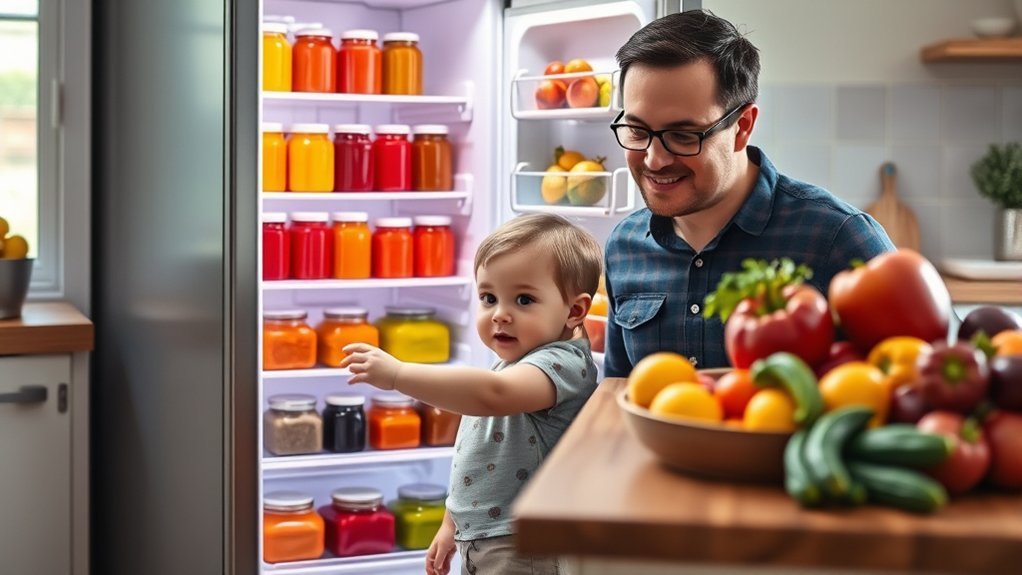
Most babies are ready to begin solid foods at about 6 months, but age alone is not enough. Your baby also needs the head control, sitting stability, swallowing skills, and hand coordination required to eat safely. Watching these developmental signs helps you choose the right time without rushing or delaying an important stage of nutrition.
Quick Answer
Your baby may be ready for solid foods at about 6 months when they can sit upright with support, control their head and neck, open their mouth for food, move food back and swallow it, and bring objects to their mouth. Do not start before 4 months, and ask your pediatric clinician if readiness signs are delayed.
Key Takeaways
- Most babies begin complementary foods at about 6 months, when both age and developmental readiness signs are present.
- Good head control, supported sitting, swallowing food instead of pushing it out, and bringing objects to the mouth are important readiness signs.
- Breast milk or infant formula remains the main source of nutrition from 6 through 12 months while solid-food intake gradually increases.
- Offer iron- and zinc-rich foods early and introduce a range of tastes and textures instead of relying only on fruit and vegetable purees.
- Introduce common allergens in developmentally appropriate forms; babies with severe eczema or egg allergy may need medical guidance before peanut introduction.
- Always seat your baby upright, supervise every bite, and prepare food according to its shape, firmness, stickiness, and your baby’s eating skills.
At a Glance
| Time Required | About 10–20 minutes for an early practice meal |
| Difficulty | Easy, with continuous adult supervision |
| Tools Needed | Supportive highchair, clean bowl, soft-tipped spoon or safe finger food, bib, and open or training cup |
| Cost | Usually low when using safe, unsalted versions of family foods |
Medical note: This guide provides general education and does not replace care from your child’s pediatric clinician. Ask for individualized guidance if your baby was born prematurely or has swallowing problems, poor growth, severe eczema, known food allergies, developmental differences, or other medical needs.
Signs Your Baby Is Ready for Solid Foods

The Centers for Disease Control and Prevention recommends beginning foods other than breast milk or infant formula at about 6 months. Introducing solids before 4 months is not recommended.
Look for several readiness signs working together rather than relying on your baby’s age or weight alone.
| Readiness Sign | What It Looks Like |
|---|---|
| Head and neck control | Your baby can hold their head steady and upright throughout a feeding. |
| Supported sitting | Your baby can sit alone or with support without slumping far forward or sideways. |
| Swallowing ability | Food is moved toward the back of the mouth and swallowed instead of being pushed onto the chin. |
| Mouth response | Your baby opens their mouth when food is offered and closes their lips around a spoon or food. |
| Hand-to-mouth coordination | Your baby grasps objects or food and brings them accurately toward their mouth. |
| Interest in eating | Your baby leans toward food, reaches for it, or watches food being offered while remaining calm and alert. |

Power your essentials anywhere with a 999Wh pure sine wave power station delivering up to 1000W continuous with 2000W surge. It supports fast charging via USB-C PD 60W and USB-A QC 18W, plus simultaneous output for multiple devices through AC, USB, wireless, and car/DC ports. Recharge using AC, car, or solar with a built-in MPPT controller and dual cooling fans, while the upgraded battery management system protects against surges, short circuits, and overheating.

ON THE GO BABY FOOD: Gerber Stage 1 Baby Food Puree Tubs are designed for ease and convenience. These tubs are the perfect on the go baby food, made in a portable and easy-to-store format for busy parents

ON THE GO BABY FOOD: Gerber Stage 1 Baby Food Puree Tubs are designed for ease and convenience. These tubs are the perfect on the go baby food, made in a portable and easy-to-store format for busy parents
Signs That Do Not Prove Readiness
Some normal behaviors are often mistaken for readiness. They should not replace the developmental checklist above. A baby is not necessarily ready just because they:
- Wake more often at night.
- Chew their hands or toys.
- Have doubled their birth weight.
- Seem hungrier during a growth spurt.
- Watch other people eat.
- Reach a certain clothing size or weight.
If your baby is about 6 months old but cannot sit with support, hold their head steady, or move food back to swallow, pause and speak with their pediatric clinician. Premature babies may be assessed using corrected age and their individual development.
What to Expect When Introducing Solid Foods
Early meals are practice sessions. Your baby is learning how food feels, how to move it around the mouth, and how to swallow from a spoon or feed themselves safely.
Choose a time when your baby is awake, calm, and not extremely hungry. Seat them upright in a supportive highchair. Offer a small amount of soft food, allow time to explore, and stop when your baby shows that they are finished.
The goal of the first meals is not to finish a bowl. It is to practice eating safely while discovering new tastes and textures.
How Much and How Often
Begin with a small taste once a day and increase the amount and frequency gradually. Your baby may eat only a spoonful or two at first. That is normal.
According to the CDC’s feeding guidance, breast milk or infant formula remains the main source of nutrition from 6 through 12 months. Solid foods gradually become a larger part of the diet as feeding skills improve.
Follow Hunger and Fullness Cues
Responsive feeding means you decide which safe foods to offer and your baby decides whether and how much to eat.
Possible hunger cues include leaning toward food, opening the mouth, reaching for food, or becoming excited when food appears. Fullness cues may include turning the head away, closing the mouth, pushing food away, slowing down, or becoming distracted.
Pro Tip: Stop when your baby consistently turns away or closes their mouth. Pressuring a baby to take “one more bite” can make meals stressful and teaches them to ignore fullness cues.
First Solid Foods to Offer Your Baby

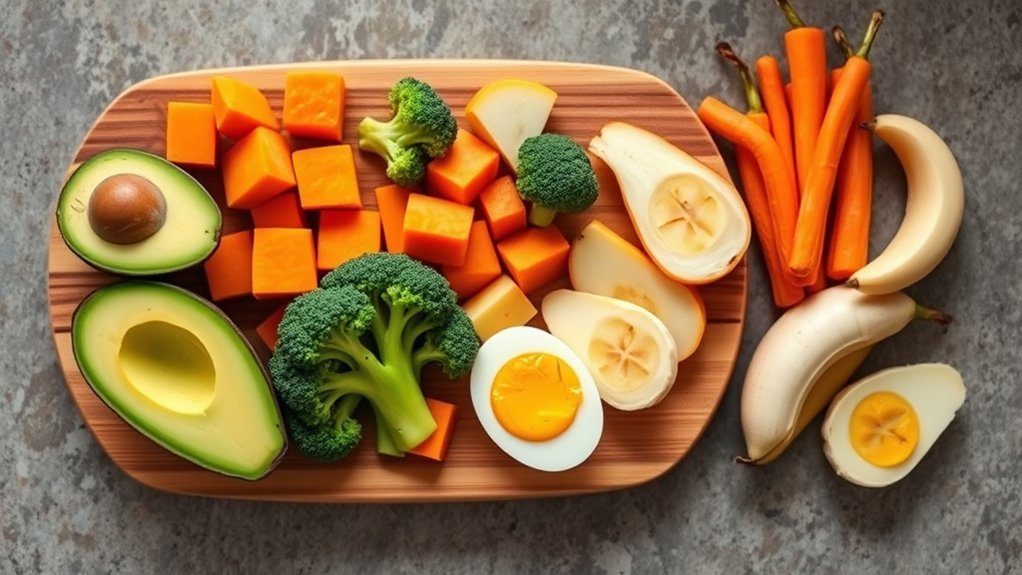
There is no required order for introducing food groups. Purees are one option, but babies may also begin with smooth mashed foods or appropriately prepared finger foods when they have the motor skills to manage them.
Include foods rich in iron and zinc, particularly for babies receiving human milk. These nutrients become increasingly important at about 6 months.
| Food Group | Baby-Friendly Examples |
|---|---|
| Iron- and zinc-rich foods | Finely pureed or shredded meat, mashed beans or lentils, cooked egg, tofu, and iron-fortified infant cereal |
| Vegetables | Soft-cooked sweet potato, peas, broccoli, squash, carrots, or green beans |
| Fruits | Mashed banana, avocado, pear, peach, mango, or unsweetened applesauce |
| Grains | Fortified oat, barley, or multigrain infant cereal; soft oatmeal; or well-cooked grains mashed to a safe texture |
| Dairy foods | Plain pasteurized full-fat yogurt or soft pasteurized cheese prepared without choking-size chunks |
Note: If you use infant cereal, rotate fortified oat, barley, and multigrain cereals rather than serving only rice cereal. The CDC advises variety because relying only on rice cereal can increase arsenic exposure.
How to Introduce Common Allergens
Once your baby is developmentally ready, common allergens do not generally need to be delayed. Examples include cooked egg, peanut, dairy, wheat, soy, sesame, tree nuts, fish, and shellfish.
Introduce one allergen at a time in a safe texture when your baby is healthy and you can watch them afterward. Begin with a small amount. If it is tolerated, keep the food in your baby’s regular diet in age-appropriate forms instead of offering it only once.
Safe examples include:
- Well-cooked, mashed egg.
- Smooth peanut butter thinned with warm water, breast milk, formula, or puree.
- Peanut powder mixed completely into a familiar puree.
- Plain pasteurized yogurt.
- Soft wheat cereal or well-cooked pasta mashed to a safe texture.
- Finely flaked, fully cooked fish with every bone removed.
- Finely ground tree nuts mixed into a moist food.
Never give whole nuts, nut pieces, or a thick spoonful of nut butter to a baby. These are choking hazards.
Warning: A baby with severe eczema, an existing egg allergy, or a previous food reaction may need testing or supervised peanut introduction. Ask the baby’s pediatric clinician or allergist before offering peanut. Do not give antihistamines before a new food unless a clinician has specifically directed you to do so.
Stop feeding the food and seek medical advice if your baby develops mild symptoms such as a few hives, facial redness, vomiting, or diarrhea. Call 911 for trouble breathing, wheezing, swelling of the tongue or throat, widespread hives with other symptoms, repeated vomiting with weakness, sudden limpness, blue coloring, collapse, or another sign of a severe reaction. Epinephrine is the first-line emergency treatment for a diagnosed anaphylactic reaction.
Essential Safety Tips for Preparing Baby Food
Food safety is especially important for infants because their immune systems are still developing. Clean preparation, proper cooking, safe storage, and constant supervision all reduce risk.
Food Preparation Safety
- Wash your hands with soap and water before preparing or serving food.
- Clean utensils, cutting boards, counters, bowls, and highchair surfaces.
- Rinse produce under running water before peeling or cutting it.
- Cook meat, poultry, fish, and eggs thoroughly.
- Use pasteurized milk products and juices in recipes.
- Remove bones, pits, tough skins, seeds, and other hard pieces.
- Do not add salt, sugar, honey, or syrup to baby food.
- Test heated food carefully and stir it well to eliminate hot spots.
When storing homemade baby food, place it promptly in clean, covered containers. Label it with the preparation date. According to the U.S. Food and Drug Administration, homemade baby food may be frozen in covered portions for up to three months.
Place only the amount your baby is likely to eat into a separate bowl. Do not return food from the baby’s bowl to the storage container, and do not save food that has contacted the baby’s spoon or saliva.
Choking Hazard Prevention
Always seat your baby upright and supervise every meal. Do not feed a baby who is lying down, crawling, riding in a moving vehicle, or distracted by toys or screens.
Food must be prepared according to its shape, firmness, stickiness, and your baby’s current feeding skills. The following table gives general examples.
| Food Type | Safer Preparation | Avoid as Served |
|---|---|---|
| Fruits | Mash, puree, grate, or cook until soft; quarter grapes lengthwise | Whole grapes, hard apple chunks, fruit with pits, or firm round pieces |
| Vegetables | Steam or roast until easily mashed between two fingers | Raw carrots, firm celery, or other hard raw pieces |
| Grains | Cook until soft and moisten dry foods | Popcorn, hard crackers, chips, dry cereal clusters, or large sticky bread pieces |
| Meat and protein | Puree, mince, shred finely, or mash with moisture; remove every bone | Large meat chunks, sausage rounds, fish bones, whole nuts, or spoonfuls of nut butter |
| Snacks and sweets | Choose soft, nutrient-dense food instead | Hard candy, gummies, marshmallows, gum, chewy fruit snacks, or popcorn |
Gagging Versus Choking
Gagging can be noisy. A gagging baby may cough, make sounds, push the tongue forward, or become red in the face while learning to manage food. Stay calm and watch closely.
Choking may be quiet. A choking baby may be unable to cry, cough forcefully, or breathe. The baby may become blue or unresponsive.
Warning: If a baby cannot breathe, cry, or cough effectively, call 911 and begin age-appropriate choking first aid. For a conscious infant younger than 1 year, this involves back blows and chest thrusts—not abdominal thrusts. Do not perform a blind finger sweep. Take a certified infant CPR and choking course before solids begin.
Foods and Drinks to Avoid or Limit
The following foods and drinks are unsafe or unnecessary during a baby’s first year:
- Honey before 12 months: This includes raw, cooked, and baked honey because of infant botulism risk.
- Whole cow’s milk as a drink before 12 months: Pasteurized yogurt and cheese may be offered earlier, but cow’s milk should not replace breast milk or infant formula as the main drink.
- Fruit or vegetable juice before 12 months: Whole fruit is more nutritious and provides fiber.
- Unpasteurized milk, cheese, or juice: These products can contain harmful germs.
- Added sugar and sweetened drinks: Babies do not need soda, sweet tea, flavored drinks, sports drinks, or desserts with added sugar.
- Excess salt and highly processed foods: Serve unsalted or lightly seasoned versions of family foods.
- Caffeinated drinks: Coffee, tea, energy drinks, and caffeinated soda are not appropriate for babies.
- High-risk choking foods: Whole nuts, popcorn, hard candy, raw hard vegetables, whole grapes, sausage rounds, meat chunks, and thick spoonfuls of nut butter must be avoided or modified.
See the CDC’s complete list of foods and drinks to avoid or limit for infants and young children.
Create a Positive Mealtime Experience

A calm, responsive approach helps your baby learn to eat without pressure. Keep early meals short and accept that touching, smearing, dropping, and refusing food are normal parts of learning.
- Use a highchair that keeps your baby upright and well supported.
- Turn off televisions and put phones away during meals.
- Eat together when possible so your baby can watch others model eating.
- Offer food without forcing, distracting, bribing, or rushing.
- Let your baby touch safe foods and attempt self-feeding.
- Expect mess and place a washable mat under the chair if needed.
- Offer a rejected food again on another day without pressure.
- End the meal when your baby shows clear fullness cues.
Common Concerns When Starting Solids
Food Allergies to Watch For
Common allergens include milk, egg, peanut, tree nuts, wheat, soy, sesame, fish, and shellfish. Introduce them in safe forms and one at a time so a reaction is easier to identify.
Possible symptoms include hives, swelling, coughing, wheezing, vomiting, diarrhea, unusual sleepiness, sudden limpness, or trouble breathing. Contact your pediatric clinician for any suspected reaction. Use epinephrine and call 911 for anaphylaxis when your child has a prescribed emergency plan.
Hydration Needs for Your Baby
Breast milk or infant formula supplies most fluid during the first year. At about 6 months, you can begin offering small amounts of plain water in an open, straw, or training cup with meals.
The CDC lists approximately 4–8 ounces of water per day as an appropriate range for many babies ages 6–12 months. Needs vary, and water must not displace breast milk or formula.
Contact a clinician if your baby has noticeably fewer wet diapers than usual, a dry mouth, no tears when crying, unusual sleepiness, a sunken soft spot, repeated vomiting or diarrhea, or difficulty taking fluids.
Constipation and Stool Changes
Stools often change in color, smell, and firmness after solids begin. Mild temporary changes are common. Offer a variety of fruits, vegetables, whole grains, breast milk or formula, and age-appropriate water.
Call your baby’s clinician for blood in the stool, persistent vomiting, a swollen abdomen, severe pain, poor feeding, hard pellet-like stools that continue, or concern that your baby is dehydrated.
When to Seek Feeding Help
Ask your pediatric clinician for an assessment if your baby:
- Frequently coughs, chokes, or turns blue during feeding.
- Has a wet or gurgly voice or breathing sound after swallowing.
- Cannot hold their head steady or sit with support near the expected time.
- Regularly arches, cries, or appears to be in pain during meals.
- Refuses nearly all solids for an extended period.
- Is not gaining weight as expected.
- Has known medical, developmental, or oral-motor concerns.
Tips for Encouraging Healthy Eating Habits
Offer foods from different groups and allow your baby to experience natural flavors without added sugar or excess salt. A baby may need repeated, pressure-free exposure before accepting a new taste.
Progress textures as feeding skills improve. Many babies begin with smooth mashed or pureed food, then move toward thicker mashed food, soft lumps, finely chopped food, and safe finger foods. Avoid keeping every food completely smooth for longer than necessary unless a clinician or feeding specialist recommends it.
By about 8–10 months, many babies can practice picking up soft pieces of food and bringing them to the mouth. Examples may include very soft vegetables, ripe fruit, shredded meat, soft beans, or strips of cooked egg, provided each item is prepared for the baby’s developmental skills.
Continue offering breast milk or infant formula, share family meals, follow hunger and fullness cues, and let eating skills develop at your baby’s pace.
Frequently Asked Questions
Can I start solids before 4 months old?
No. Introducing solid foods before 4 months is not recommended. Most babies begin at about 6 months when they can control their head and neck, sit upright with support, and swallow food safely. A clinician may provide different guidance for a specific medical reason.
What if my baby refuses to eat solids?
Stop without pressure and offer the food again on another day. Try different safe textures and let your baby touch or smell the food. Contact your pediatric clinician if refusal continues, meals are painful, your baby coughs or chokes, or growth is affected.
How do I know if my baby is allergic to a food?
Possible symptoms include hives, swelling, vomiting, diarrhea, coughing, wheezing, unusual sleepiness, or trouble breathing. Stop the food and contact your clinician about any suspected reaction. Call 911 for breathing difficulty, tongue or throat swelling, collapse, sudden limpness, or another sign of anaphylaxis.
Should I blend food or offer small pieces?
Either approach can work when the texture matches your baby’s skills. Smooth mashed or pureed food may be easiest at first. Safe finger foods should be soft enough to mash easily and shaped so the baby can manage them without a hard, round, sticky, or rubbery choking risk.
How often should I offer solids to my baby?
Begin with a small practice meal once a day. Gradually offer solids more often as your baby becomes comfortable and interested. Breast milk or infant formula should remain the main source of nutrition from 6 through 12 months.
Does my baby need teeth before starting solid foods?
No. Babies can manage soft mashed foods and many properly prepared finger foods with their gums. Readiness depends more on posture, head control, swallowing ability, and coordination than on the number of teeth.
Should I delay peanut, egg, or other allergens?
Common allergens generally do not need to be delayed once a baby is developmentally ready. Introduce them one at a time in safe forms. Ask a clinician before peanut introduction if your baby has severe eczema, an egg allergy, or a previous food reaction.
Conclusion
Your baby may be ready for solid foods at about 6 months when they can sit upright with support, hold their head steady, bring objects to their mouth, and swallow food instead of pushing it out. Begin slowly, prioritize iron- and zinc-rich choices, progress textures as skills develop, and follow hunger and fullness cues.
Safe food preparation and close supervision matter at every meal. Ask your pediatric clinician for guidance when readiness signs are unclear or your baby has eczema, allergies, feeding difficulty, premature birth, poor growth, or another medical concern.
Sources
- CDC: When, What, and How to Introduce Solid Foods — starting age, readiness signs, first foods, and infant cereal guidance
- CDC: Choking Hazards — safe food textures, preparation, seating, and supervision
- CDC: Foods and Drinks to Avoid or Limit — honey, juice, unpasteurized products, sugar, sodium, and caffeine
- National Institute of Allergy and Infectious Diseases: Peanut Allergy Prevention Guidelines — risk-based peanut introduction
- MedlinePlus: Choking First Aid for Infants — back blows, chest thrusts, CPR, and emergency response
- FDA: Food Safety Once Baby Arrives — homemade baby-food preparation, storage, freezing, and saliva-contamination precautions