
To make baby food applesauce, start by washing, peeling, and coring fresh apples. Cut them into small pieces and place them in a pot with enough water to cover. Bring the water to a boil and then simmer until the apples are soft, about 10-15 minutes. Allow cooling slightly and blend until smooth. Store in airtight containers or freeze for later use. For tips on flavor combinations and serving suggestions, keep exploring the topic further.
Key Takeaways
- Select sweet apple varieties like Fuji or Honeycrisp, and avoid tart options for a palatable taste.
- Wash, peel, core, and cut apples into small pieces before cooking.
- Simmer apple pieces in water until soft, about 10-15 minutes, stirring occasionally.
- Puree the cooked apples in a blender, adjusting consistency with reserved cooking liquid if necessary.
- Store applesauce in airtight containers, refrigerating for up to 4 days or freezing for up to 4 months.
Why Make Your Own Baby Food Applesauce?
When you make your own baby food applesauce, you guarantee your child enjoys fresh, wholesome ingredients without the added sugars and preservatives often found in store-bought options.
The nutritional benefits of homemade applesauce are significant; you control the quality of your ingredients and can customize flavors to suit your baby’s palate and developmental needs. This flexibility is one of the homemade advantages, allowing you to introduce various spices and textures, enriching your child’s taste experience.
Additionally, preparing applesauce is cost-effective, as bulk apples lead to multiple batches. You can conveniently store homemade applesauce in the freezer for up to four months, ensuring you always have a healthy option ready for your little one, even on your busiest days.
Select the Best Apples for Puree
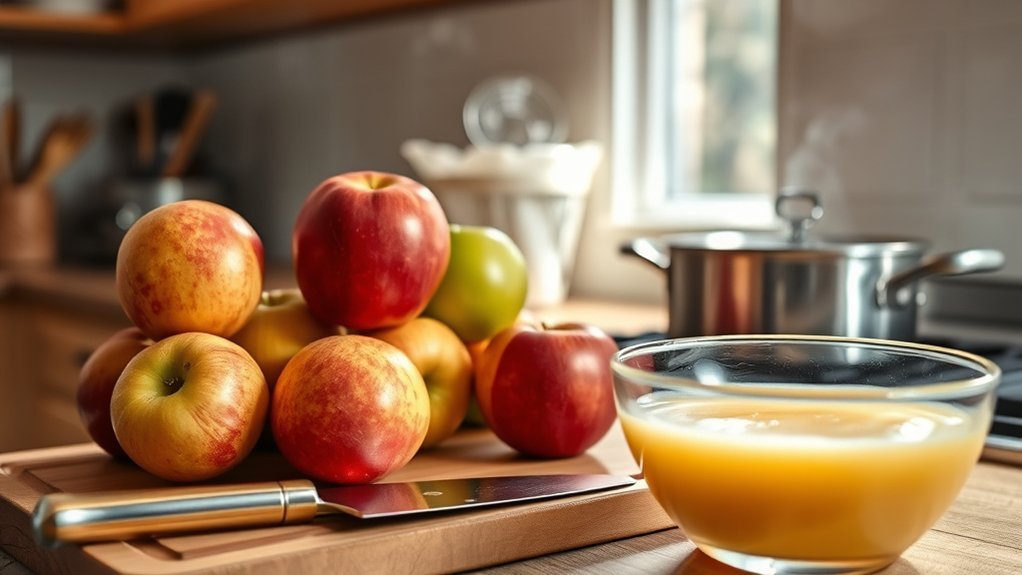
When you select apples for puree, focus on sweeter varieties like Fuji, Honeycrisp, and Pink Lady to guarantee a naturally flavorful result.
Consider the texture and sweetness level, as softer apples like McIntosh break down easily for a smooth consistency.
Avoid tart apples like Granny Smith, which can produce a puree that’s too sharp for your baby’s taste.
Top Apple Varieties
Selecting the right apple variety is essential for creating the perfect puree, as each type offers distinct flavors and textures that can enhance the overall quality of your applesauce.
For instance, Fuji and Honeycrisp are sweet apple varieties that yield a naturally sweeter puree, minimizing the need for added sugars. McIntosh apples provide a soft texture and tart flavor, producing a smooth, tangy applesauce.
Cortland apples resist browning and maintain their color during cooking, making them an excellent choice for purees. Other notable varieties include Kanzi, Pink Lady, Jazz, Royal Gala, and Jonathan, each contributing unique flavor profiles.
Your personal preference plays a significant role in selecting the best apples for your desired taste and texture.
Sweetness Level Considerations
Choosing apples with the right sweetness level is essential for creating a delicious and nutritious baby food puree. Opt for naturally sweet varieties like Fuji, Pink Lady, or McIntosh, as they help achieve a better sweetness balance without needing added sugars.
The ripeness importance can’t be overstated; select apples that are firm and fragrant to guarantee ideal sweetness. Avoid tart varieties such as Granny Smith, as their sour flavor mightn’t be well-received by your little one.
Texture and Flavor Impact
The texture and flavor of your baby food applesauce depend heavily on the apple varieties you pick. Choosing the right apples creates texture variations and enhances flavor profiles, leading to a more enjoyable experience for your baby.
Here are three excellent apple varieties for pureeing:
- Fuji: Offers a firm texture and sweet flavor, requiring longer cooking times for a smoother consistency.
- McIntosh: Breaks down easily for a silky puree, providing a naturally sweet flavor without added sugars.
- Pink Lady: Combines sweetness with a hint of tartness, enriching the overall taste of the applesauce.
Consider mixing varieties to create a complex flavor profile. For added nutrients, cook apples with the skin on, but peeling them guarantees a smoother texture.
How to Cook Apples for Applesauce: Step-by-Step
To make delicious applesauce, first, wash the apples thoroughly, ensuring that any dirt or residue is removed.
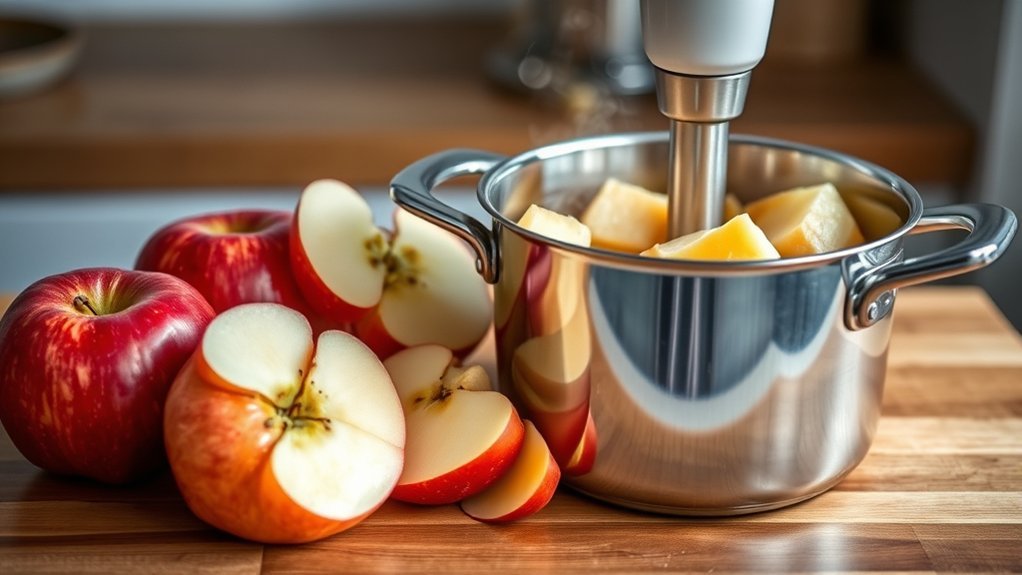
Next, peel, core, and chop the apples into even chunks for uniform cooking. Choose apple varieties like Fuji or Gala for natural sweetness.
Place the chopped apples in a saucepan, adding 1/2 cup of water and optional spices like cinnamon for flavor enhancement.
Cover the saucepan, bring the mixture to a boil, then reduce the heat to a simmer, cooking for about 10-15 minutes until the apples are fork-tender.
Drain the apples, reserving some cooking liquid if you prefer a smoother consistency.
Finally, puree the apples using your preferred cooking methods, and you’ll have a delightful batch of applesauce ready for storage.
Blending Techniques for Smooth Baby Food Applesauce
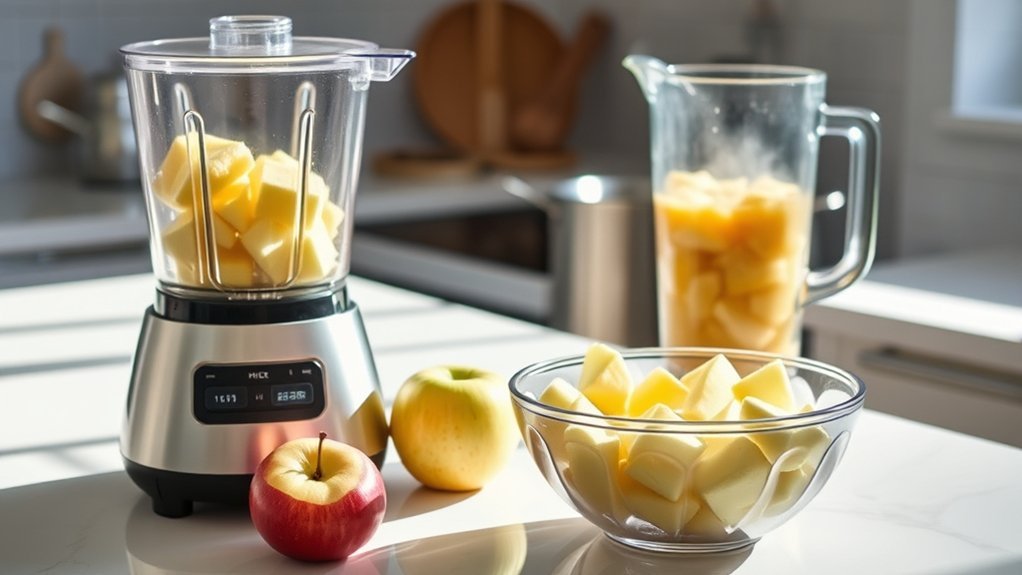
While blending apples for baby food applesauce, using a high-powered blender or food processor is essential for achieving a smooth consistency. These appliances effectively break down apple fibers, ensuring a creamy texture.
Using a high-powered blender or food processor is key to creating smooth and creamy applesauce for baby food.
Here are some blending techniques to take into account:
- Blend Duration: Blend the cooked apples for 30 seconds to 1 minute, stopping to scrape down the sides for even mixing.
- Adjusting Texture: For chunkier texture variations preferred by older babies, pulse the mixture instead of continuous blending.
- Consistency Control: If the applesauce is too thick, add reserved cooking liquid or breast milk gradually to reach the desired consistency.
Avoid over-pureeing, as it can introduce air, negatively affecting the texture.
Enjoy your liberating journey into homemade baby food!
How to Store and Freeze Baby Food Applesauce
Storing and freezing homemade baby food applesauce properly helps maintain its freshness and nutritional value. To guarantee quality, use airtight containers and store your applesauce in the refrigerator for up to 4 days.
For longer storage, employ effective freezing methods by pouring the applesauce into ice cube trays. This allows for easy portion control and defrosting. Frozen applesauce can last up to 4 months; however, for ideal taste and nutrition, aim to consume it within 1-3 months.
When you’re ready to use it, defrost the desired amount by placing it in a small bowl in the refrigerator overnight or using a microwave for quick thawing. Always check the temperature before serving to keep your baby safe.
Flavor Combinations to Enhance Applesauce for Babies
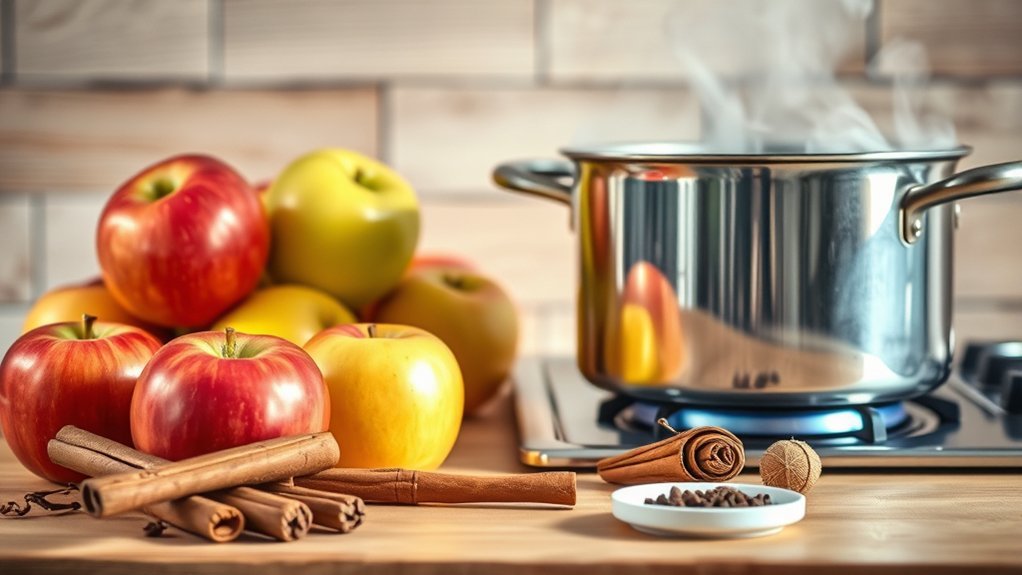
Enhancing the flavor of applesauce for babies not only makes it more appealing but also boosts its nutritional profile. Here are some delicious flavor pairings that provide added benefits:
- Sweet Potatoes: Mixing applesauce with pureed sweet potatoes adds creaminess and enhances fiber and vitamin content.
- Blueberries: Incorporating blueberries into applesauce enhances flavor while providing antioxidants that support a baby’s immune system.
- Bananas: Combining applesauce with mashed bananas creates a naturally sweet treat rich in potassium and healthy carbohydrates.
For an extra twist, consider adding a pinch of cinnamon or nutmeg for warmth and potential digestive benefits.
Each of these combinations not only tantalizes taste buds but also enriches your baby’s diet with essential nutrients.
Best Ways to Serve Applesauce to Your Baby?
How can you best serve applesauce to your baby? For infants under 6 months, offer applesauce as a smooth puree.
For infants under 6 months, serve applesauce as a smooth puree for optimal enjoyment and nutrition.
As your baby grows, gradually introduce chunkier textures to promote self-feeding. You can enhance flavor and nutrition by mixing applesauce with oatmeal or yogurt, creating versatile meals.
For a creative apple recipe, combine it with other purees like sweet potatoes or carrots to expand your baby’s palate.
If you’re exploring baby-led weaning, serve a thick, chunky applesauce that’s easy to grasp as a finger food.
Consider offering it cold after defrosting for a revitalizing treat or gently heating it to a safe temperature, ensuring it’s always enjoyable and nutritious for your little one.
Frequently Asked Questions
Can I Use Different Types of Apples for Applesauce?
Yes, you can use different apple varieties for applesauce. Each type brings unique flavor profiles, influencing sweetness and tartness. Experimenting with combinations can enhance the taste, creating a more enjoyable and nutritious experience for your baby.
Is Homemade Applesauce Safe for Babies Under Six Months?
Homemade applesauce can be safe for babies under six months, but make certain you follow baby food safety guidelines. Always consult your pediatrician, and use simple homemade recipes to avoid added sugars or harmful ingredients.
How Can I Tell if Apples Are Ripe for Cooking?
To determine ripeness, check apple varieties for color and firmness. Ripe apples yield slightly to pressure, have a sweet aroma, and exhibit vibrant skin. Avoid overly soft or bruised apples for the best cooking results.
Can I Add Sugar or Sweeteners to the Applesauce?
You can certainly add sugar or sweeteners to your applesauce, but why not embrace the natural sweetness of ripe apples? Sweetener alternatives like honey or maple syrup can enhance flavor without overpowering the fruit’s essence.
What Kitchen Tools Do I Need for Making Applesauce?
You’ll need a sturdy cooking pot to simmer the apples and a blender for smoothness. Consider options like immersion or countertop blenders, as they effectively puree the cooked apples into a delicious, consistent applesauce.
Conclusion
Making your own baby food applesauce is like cultivating a garden of flavors and nutrients for your little one. Just as a well-tended garden yields vibrant fruits, your homemade applesauce can provide essential vitamins and a taste of nature’s sweetness. By selecting the best apples, mastering the cooking and blending techniques, and exploring flavor combinations, you’re not just feeding your baby; you’re nurturing their growth. With proper storage, your homemade applesauce can bloom into a nutritious staple ready for your baby’s meals.