

Making baby food at home is simple and rewarding. Start by gathering fresh, organic fruits and veggies, wash them thoroughly, and cook until tender. Blend the cooked ingredients to a smooth consistency, ensuring there are no choking hazards. Store your purees in airtight containers and refrigerate or freeze for later use. Introduce new foods gradually to monitor for any allergic reactions. For more tips on flavors and storage, you can find additional helpful insights.
Key Takeaways
- Gather fresh, organic fruits and vegetables, wash, and peel them to remove contaminants before cooking.
- Cook ingredients by steaming or boiling until they are tender to retain nutrients.
- Puree cooked fruits and vegetables in a blender or food processor until smooth for a safe texture.
- Store baby food in airtight containers, labeling them with the food name and preparation date for freshness.
- Introduce new single-ingredient foods one at a time, waiting three to five days before trying another to monitor for allergies.
The Benefits of Making Homemade Baby Food
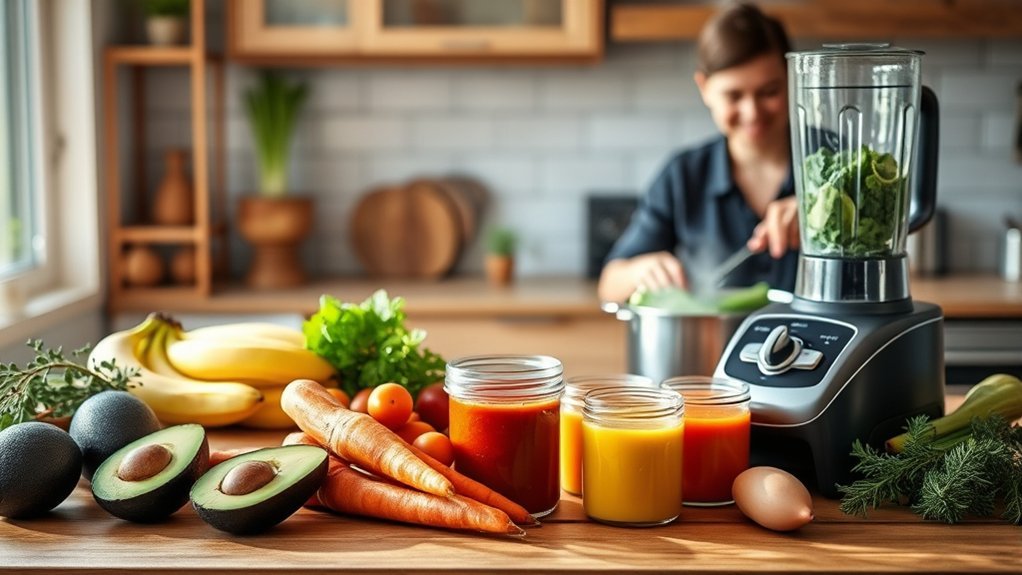
When you make baby food at home, you gain full control over what goes into your child’s meals, which can greatly enhance their health.
By preparing meals yourself, you guarantee there are no preservatives or artificial additives, providing pure, nutritious options. This approach not only offers significant nutritional benefits but also saves money compared to store-bought alternatives.
Preparing homemade baby food ensures pure nutrition without preservatives, offering significant health benefits and cost savings over store-bought options.
You can introduce a diverse range of fruits and vegetables, promoting healthy taste preferences early on and reducing the likelihood of picky eating later. Plus, you can easily tailor recipes to meet your baby’s specific dietary needs, accommodating any allergies.
Ultimately, homemade baby food fosters healthier eating habits from the start, as your little one enjoys fresh, whole foods without added sugars or salt.
Choosing Ingredients for Homemade Baby Food
When you choose ingredients for homemade baby food, focus on seasonal produce to enhance flavor and guarantee freshness.
Select nutrient-rich options like sweet potatoes and apples, while also being mindful of potential allergens.
Seasonal Produce Selection
Choosing seasonal produce for homemade baby food not only enhances flavor but also boosts nutritional value. By opting for seasonal nutrition, you’ll provide your baby with the freshest ingredients.
Here are some tips for selecting the best produce:
- Fruits and Vegetables: Choose sweet potatoes in the fall, peas in the spring, and berries in the summer for peak freshness.
- Local Sourcing: Visit farmers’ markets to find ripe, blemish-free options while supporting local agriculture.
- Flavor Variety: Incorporate a variety of seasonal ingredients to expose your baby to new tastes and textures.
- Quality Check: Always verify that selected produce is fresh to enhance the overall quality of your homemade baby food.
These practices will enrich your baby’s diet and palate development.
Nutrient-Rich Options
Selecting nutrient-rich ingredients for homemade baby food is crucial for supporting your baby’s growth and development.
Choose nutrient sources like sweet potatoes and carrots, which are high in vitamins A and C, and beta-carotene, respectively. Incorporate mild fruits such as apples and pears for their smooth texture and natural sweetness, making them perfect first foods.
Green options like peas provide essential vitamins and minerals, easily pureed for your little one. Don’t forget healthy fats from avocados, a low-allergenic food that introduces important nutrients without overwhelming their digestive system.
Always opt for fresh, organic produce to avoid pesticides and additives, fostering healthier eating habits from the start. These choices guarantee your baby receives the nutrient benefits they need for ideal growth.
Allergen Awareness
As you prepare homemade baby food, it’s essential to be aware of potential allergens that could affect your little one’s health.
Introducing new foods can be exciting, but it’s important to monitor for food reactions. Here are some tips to guarantee safety:
- Introduce one single-ingredient food at a time.
- Wait three to five days before adding another new food to identify any adverse reactions clearly.
- Start with low-allergenic foods like sweet potatoes, bananas, and avocados.
- Consult with a healthcare provider before introducing high-risk allergen types, such as peanuts, dairy, and shellfish, especially if there’s a family history of allergies.
Step-by-Step Guide to Preparing Baby Food
When you’re ready to make homemade baby food, begin by gathering fresh, organic fruits and vegetables. Wash and peel them to remove any contaminants.
Next, cook the ingredients by steaming or boiling until they’re very tender; this helps retain nutrients and makes them easier to puree. Use a blender or food processor to achieve a smooth consistency, adding water, formula, or breast milk as needed for texture.
When you’re ready to store your creations, label airtight containers and refrigerate for up to two days or freeze in ice cube trays for up to three months.
Remember to introduce one new single-ingredient food at a time, starting with low-allergenic options like avocado or banana. You can even experiment with baby food recipes and ingredient substitutions!
Essential Tools for Preparing Baby Food

To make nutritious baby food at home, you’ll need some essential kitchen tools.
A blender or food processor is vital for achieving that smooth texture, while a steamer basket helps preserve nutrients during cooking.
Don’t forget storage solutions like airtight containers and ice cube trays to keep your baby food fresh and conveniently portioned.
Essential Kitchen Equipment
Having the right kitchen equipment makes preparing homemade baby food not only easier but also more efficient. Here are some essential tools you’ll need:
- Blender Types: A strong blender or immersion blender is vital for pureeing fruits and vegetables to a smooth texture suitable for infants.
- Steamer Basket: Use this for food steaming; it helps retain nutrients better than boiling.
- Ice Cube Trays: Perfect for freezing homemade baby food in small portions, allowing for easy thawing and serving.
- Basic Kitchen Tools: Keep a knife for chopping, bowls for mixing, and spoons for serving handy to streamline your preparation process.
With these essentials, you’ll be set to create nourishing meals for your little one!
Food Storage Solutions
Effective food storage solutions are essential for keeping your homemade baby food fresh and safe for your little one. Start by choosing the right food container types, like airtight containers for refrigerator storage, which keep purees fresh for up to two days.
For longer storage, opt for freezer-safe containers or ice cube trays, allowing you to freeze small portions easily. Remember to implement freezer organization tips, such as labeling storage bags with the preparation date to track freshness and guarantee proper consumption.
A steamer basket is also handy for cooking fruits and vegetables while preserving their nutrients. With these tools and strategies, you’ll simplify meal prep and provide nutritious meals for your baby with confidence.
Best Practices for Storing and Freezing Homemade Baby Food
Storing and freezing homemade baby food properly can greatly extend its freshness and safety. Here are some best practices to follow:
Properly storing and freezing homemade baby food enhances its freshness and ensures safety for your little one.
- Use airtight containers: This keeps food fresh in the fridge for up to two days and in the freezer for up to three months.
- Label your containers: Write the food name and preparation date to easily track freshness.
- Utilize freezing methods: Freeze baby food in ice cube trays for easy portioning, then transfer cubes to freezer bags.
- Thaw safely: Always thaw in the refrigerator overnight or under cold running water, and never refreeze thawed food to guarantee safety.
Ensuring Baby Food Safety and Nutrition

To guarantee your homemade baby food is both safe and nutritious, start by practicing good hygiene in the kitchen. Always wash your hands, utensils, and produce thoroughly to prevent contamination.
Adhere to nutritional guidelines by avoiding honey, salt, or sugar in baby food for infants under 12 months. These ingredients pose health risks and aren’t necessary.
Cook fruits and vegetables until they’re very tender, then puree them to a smooth consistency to eliminate choking hazards.
Store your creations in clean, airtight containers in the refrigerator for 1-2 days or freeze them in ice cube trays for up to 3 months.
Introducing New Foods: Allergy Considerations
As you begin introducing new foods to your baby’s diet, it’s crucial to do so thoughtfully to minimize the risk of allergic reactions.
Here are some practical steps to follow:
Here are essential steps to safely introduce new foods into your baby’s diet.
- Introduce one new single-ingredient food at a time, waiting three to five days before the next.
- Be cautious with common allergenic foods like peanuts, eggs, and fish, ideally after six months and consult your healthcare provider.
- Keep an eye out for allergy signs such as hives, vomiting, or difficulty breathing; seek medical help for severe reactions.
- Maintain a food diary to track new foods and any reactions, considering your baby’s family history of allergies to assess risk.
Flavor Variations for Homemade Baby Food
Once you’ve established a routine of introducing new foods and monitoring for allergies, you can begin to enhance your baby’s meals with flavor variations. Flavor balancing is key; mixing tart purees like kiwi or berries with sweeter options such as banana or sweet potato can create a delightful taste. You can also experiment with fruit pairings by combining peach and mango, keeping mealtime exciting.
Here’s a quick reference table to inspire you:
| Ingredient | Flavor Variation |
|---|---|
| Kiwi | Mix with banana for sweetness |
| Sweet Potato | Add a bit of breast milk for creaminess |
| Avocado | Blend with yogurt for healthy fats |
| Basil | Incorporate in savory purees |
| Mint | Use in fruit purees for freshness |
These variations can help broaden your baby’s palate!
Troubleshooting Common Baby Food Preparation Issues
When preparing homemade baby food, you might encounter some common issues that can affect the final product.
Here are some quick solutions to help you make texture adjustments and flavor enhancements:
Here are some easy fixes for adjusting texture and enhancing flavors in homemade baby food.
- Too Thick: Gradually add breast milk, formula, or water until you reach the desired consistency.
- Grainy Purees: Blend ingredients thoroughly and strain if necessary for a smoother texture.
- Off-Putting Taste: Mix in naturally sweet fruits like bananas or applesauce to balance flavors.
- Discoloration: Add a few drops of lemon juice to purees like avocado or apple to maintain freshness.
If your baby shows discomfort after trying new foods, wait several days before introducing another ingredient to monitor for allergies.
Frequently Asked Questions
Can I Use Frozen Fruits and Vegetables for Baby Food?
Yes, you can use frozen fruits and vegetables for baby food. They retain nutrients and save time. Just thaw and blend using fruit preparation techniques to create smooth, nutritious meals for your little one.
How Long Can Homemade Baby Food Be Stored in the Freezer?
You can store homemade baby food in the freezer for up to three months. For ideal food safety, label containers with dates and make certain they’re airtight to prevent freezer burn and maintain quality.
What Are the Best First Foods for Babies?
When introducing solids, start with single-grain cereals, pureed fruits like bananas, and vegetables like sweet potatoes. Baby food combinations can enhance flavors and nutrients, helping your little one explore diverse tastes and textures. Enjoy the journey!
Can I Add Spices or Herbs to Baby Food?
Yes, you can add spices and herbs to baby food! Just guarantee spice safety by introducing them gradually. Herbs can offer numerous benefits, enhancing flavor and nutrition, making mealtime more enjoyable for your little one.
How Do I Know if My Baby Is Allergic to a Food?
You’ll notice signs like hives, swelling, or gastrointestinal issues after introducing new foods. If symptoms arise, consult your pediatrician about allergy testing to confirm any potential food allergies and guarantee your baby’s safety.
Conclusion
By making your own baby food at home, you’re not just feeding your little one; you’re crafting a culinary adventure reminiscent of a gourmet chef in a cozy kitchen. This journey empowers you to choose the freshest ingredients, ensuring ideal nutrition and taste. Embracing this process can strengthen the bond between you and your child, as you introduce them to the world of flavors. So roll up your sleeves, and enjoy the rewarding experience of nourishing your baby with love and care.