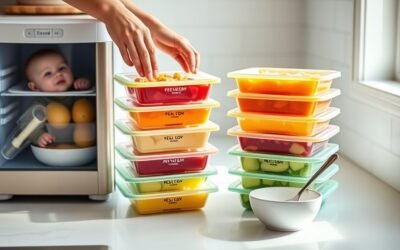

To make Stage 1 baby food, start with fresh, high-quality ingredients like sweet potatoes or carrots. Wash, peel, and steam them until soft. Blend the cooked veggies with some breast milk or water for a smooth consistency. Taste and adjust as needed. Freeze portions in ice cube trays for easy serving later. Store in airtight containers in the fridge for three days or freeze for up to three months. Discover more about flavor combinations and storage tricks next!
Key Takeaways
- Start with fresh, high-quality ingredients like sweet potatoes, apples, and carrots, preferably organic to reduce pesticide exposure.
- Wash and peel the produce thoroughly, then steam harder vegetables until soft for easy pureeing.
- Blend the cooked ingredients until smooth, adjusting the consistency with breast milk or water as needed.
- Portion the purees into ice cube trays for freezing, allowing for convenient single servings that can be used within three months.
- Store purees in airtight containers in the refrigerator for up to three days, and always check temperature before serving to ensure safety.
Essential Ingredients for Making Baby Food
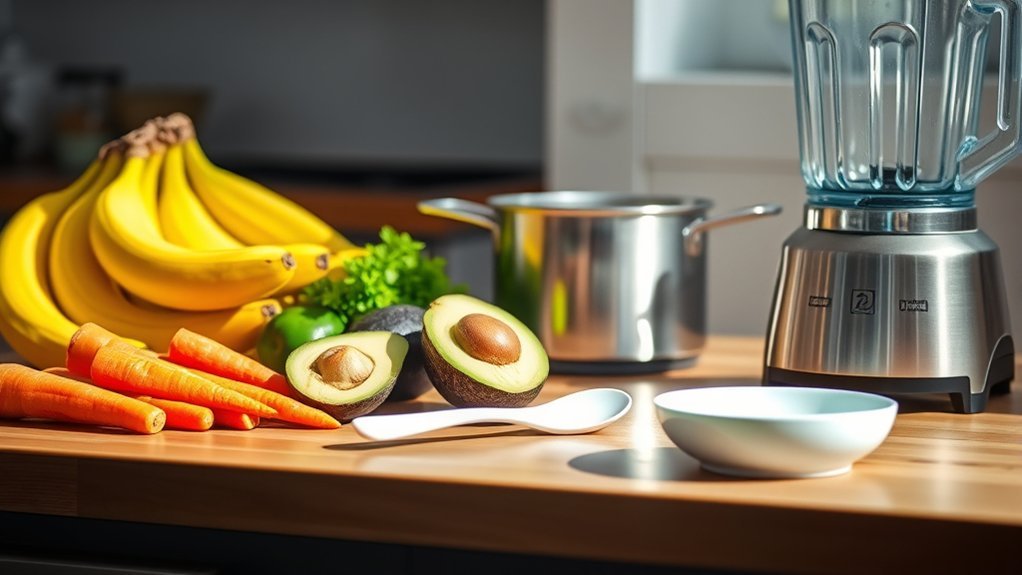
When it comes to making Stage 1 baby food, you’ll want to focus on using fresh, high-quality ingredients.
Sweet potatoes, apples, carrots, bananas, and avocados are essential for providing the nutrient benefits your baby needs. Sweet potatoes are an excellent choice, rich in vitamin A and easily pureed. Apples offer high fiber and vitamin C, promoting healthy digestion.
Carrots are packed with antioxidants and can be steamed and pureed for a nutritious start. Opting for organic choices minimizes pesticide exposure and guarantees the best quality for your baby’s first foods.
Step-by-Step Baby Food Puree Preparation
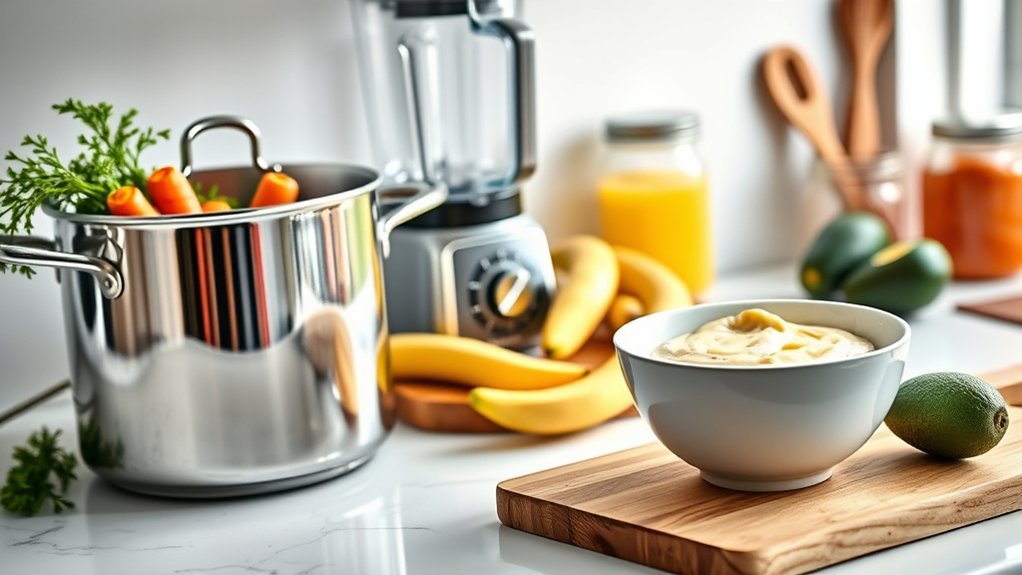
To guarantee your baby food puree is nutritious and delicious, start by selecting fresh, seasonal organic fruits or vegetables. Here’s a simple step-by-step guide to help you:
- Thoroughly wash and peel the produce to remove pesticides.
- Steam harder veggies like sweet potatoes or carrots until soft for maximum baby food benefits.
- Blend the cooked ingredients until smooth, adding breast milk or water for desired consistency using effective puree techniques.
- Taste the puree to verify it’s pleasing and adjust as necessary.
- Portion into ice cube trays for easy freezing; this allows you to store purees for up to three months and thaw single servings as needed.
With these steps, you can create wholesome meals for your baby with ease!
Tips for Steaming and Cooking Fruits and Vegetables
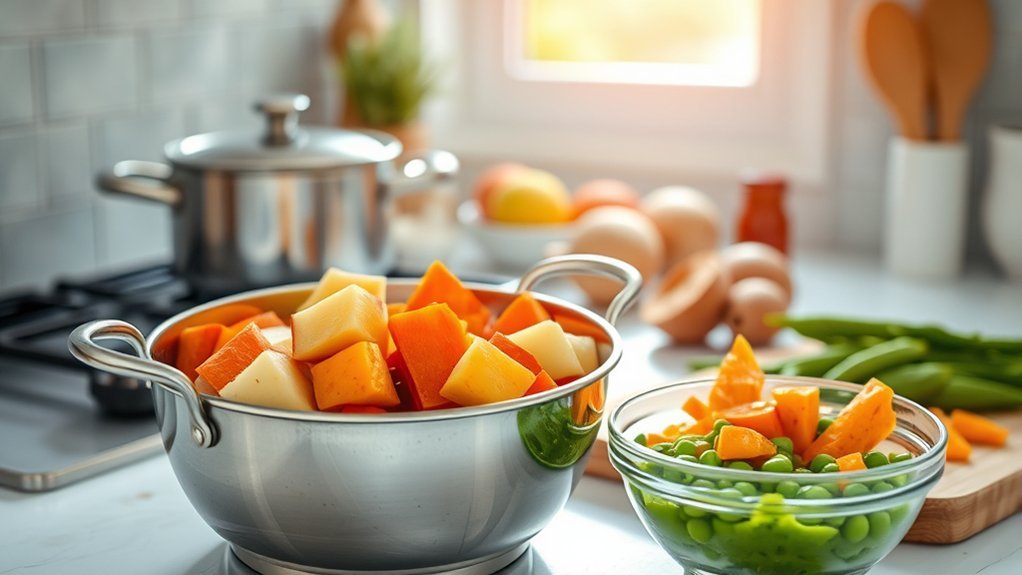
Steaming fruits and vegetables is an excellent method for preserving their nutrients and flavors, making it a preferred choice for preparing baby food.
Use effective steaming techniques by placing washed hard fruits and vegetables, like carrots and green beans, in a steamer basket. This allows steam to circulate evenly, enhancing nutrient retention.
For tougher veggies, steam for 3-11 minutes, while fruits like apples and pears should be steamed for 7-12 minutes until tender. Always watch the cooking time to avoid overcooking; you want them soft but not mushy.
This approach not only keeps their vibrant colors but also guarantees your baby’s food is packed with essential vitamins and minerals, creating a wholesome start to their diet.
Best Ways to Store and Serve Your Baby’s Food
After preparing nutritious purees through steaming, storing and serving them properly guarantees your baby gets the best quality food.
Here are some effective ways to do this:
- Use airtight storage containers in the refrigerator for up to 3 days.
- Freeze purees in ice cube trays for convenient single-serving portions.
- Transfer frozen cubes to freezer-safe bags and label them with preparation dates.
- Thaw frozen portions in the refrigerator overnight or use a bowl of warm water for quick warming.
- Always check the temperature before serving to verify it’s safe and comfortable for your baby.
Implementing these storage methods and serving tips will help maintain freshness and provide peace of mind while feeding your little one.
Flavor Combinations for Baby Food: What to Introduce Next?
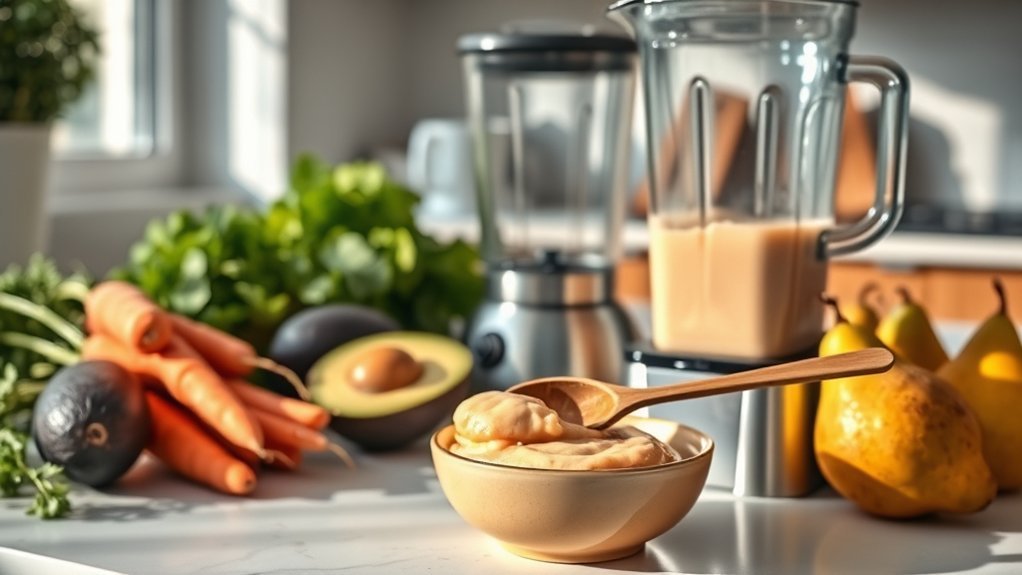
What delicious flavor combinations can you introduce to your baby’s diet next? Start with mild baby food flavors like sweet potato and apple or carrot and pear. These combinations are easy to digest and expose your baby to new tastes.
Gradually incorporate richer mixes, such as avocado and banana or peach and mango, which are packed with healthy fats and essential vitamins. For a nutritious boost, blend spinach with pear or apple; the vitamin C in fruit enhances iron absorption from leafy greens.
As your baby gets used to solids, mix in protein sources like plain chicken puree with sweet potato or pumpkin. Always introduce new combinations one at a time every 3-5 days to guarantee safety and monitor for any reactions.
Common Baby Food Preparation Problems and Solutions
When making baby food, you might encounter some common issues like consistency and spoilage.
If your puree is too thick or grainy, adjusting the texture can make feeding easier for your little one.
Additionally, knowing how to store purees properly will help maintain their freshness and prevent spoilage.
Consistency Issues During Pureeing
Achieving the right consistency during pureeing is essential for your baby’s feeding experience, as it affects both safety and enjoyment.
To tackle common consistency issues, consider these tips:
- If your puree’s too thick, add breast milk, formula, or water gradually.
- To eliminate a grainy texture, make certain all ingredients are cooked through and blended smoothly.
- If separation occurs post-storage, stir or shake well before serving.
- For watery puree, cook it down on the stove to thicken it up.
- Always check the puree’s temperature on your wrist to prevent burns.
Spoilage and Storage Challenges
After guaranteeing the right consistency in your baby’s purees, it’s important to address spoilage and storage challenges to keep your homemade baby food safe and fresh.
For spoilage prevention, store purees in airtight containers; they’ll last 3-4 days in the refrigerator and up to 3-4 months in the freezer. Always check for signs of spoilage like off smells, discoloration, or texture changes before serving.
To make portioning easier, freeze baby food in ice cube trays, allowing you to thaw only what you need. Thaw frozen food overnight in the refrigerator or warm it gently in a bowl of warm water.
Don’t forget to label your containers with dates to guarantee freshness and maintain quality!
Why Homemade Stage 1 Baby Food Is the Best Choice
While many parents may opt for store-bought baby food for convenience, homemade Stage 1 baby food stands out as the superior choice for ensuring your infant’s safety and health.
By preparing food at home, you can address critical safety concerns and maximize nutritional benefits.
- Avoid exposure to heavy metals like lead found in some commercial options.
- Retain maximum nutrients through minimal processing.
- Eliminate hidden additives, sugars, and preservatives.
- Save money compared to purchasing pre-packaged foods.
- Customize flavors and ingredients for diverse taste experiences.
Homemade baby food empowers you to take control of what your baby eats, ensuring a cleaner, healthier, and safer start to their culinary journey.
Your baby’s health deserves the best, and homemade food provides just that.
Frequently Asked Questions
Can I Use Frozen Fruits and Vegetables for Baby Food?
Yes, you can use frozen fruits and vegetables for baby food. They often retain nutrients well, making them convenient frozen options. Just make certain you thaw and prepare them properly for your little one’s meals.
When Can I Introduce Mixed Flavors to My Baby’s Diet?
You can introduce mixed flavors to your baby’s diet around 6-8 months. Start with simple flavor combinations, gradually progressing as your baby adapts. This helps develop their palate and encourages a love for diverse foods.
How Do I Know if My Baby Is Ready for Solids?
You’ll know your baby’s ready for solids when you see key signs: they can sit up, show interest in food, and have good head control. Trust these feeding readiness indicators to guide your journey.
Are There Any Allergens I Should Avoid in Stage 1 Baby Food?
You should avoid common allergens like dairy, eggs, peanuts, and shellfish during stage 1. Instead, choose safe alternatives like pureed fruits and vegetables, introducing new foods one at a time to monitor for reactions.
What Equipment Do I Need for Making Baby Food at Home?
You’ll need a reliable blender for smooth purees and various food storage containers to keep the baby food fresh. Consider options like glass jars or BPA-free plastic containers for safe, efficient storage.
Conclusion
In summary, crafting homemade Stage 1 baby food is a delightful endeavor that not only guarantees your little one receives the best nutrition but also fosters a bond during mealtime. By using fresh ingredients and following simple preparation techniques, you can create wholesome purees that cater to your baby’s developing palate. Remember, this isn’t just a culinary task; it’s akin to an art form, nurturing your child’s growth while inviting creativity into your kitchen.