A well-organized baby food freezer stash can save time and reduce waste, but safe rotation requires more than placing the oldest containers at the front. You also need clear labels, correct freezer temperatures, safe thawing methods, and firm rules for leftovers. The steps below give you a simple system for preparing one portion at a time while protecting your baby from avoidable food-safety risks.
Quick Answer
Label every portion with the food name, freezing date, and use-by date. Keep your freezer at 0°F (-18°C) or below, place older portions at the front, and use homemade baby food within one to two months. Thaw it in the refrigerator, reheat it safely, and discard anything contaminated by a used spoon.
Key Takeaways
- Follow a first-in, first-out system by placing newly frozen food behind older portions.
- For a simple, conservative rule, use homemade baby food within one month for best quality and no later than the current one-to-two-month federal storage window.
- Thaw food in the refrigerator whenever possible; never leave it on the counter to thaw.
- Transfer one serving to a clean dish and discard anything that has touched the baby’s mouth or used spoon.
- Freezer burn affects quality, but smell and appearance alone cannot prove that food is safe.
At a Glance
| Time Required | About 5 minutes to organize, plus a weekly 5-minute inventory check |
| Difficulty | Easy |
| Tools Needed | Freezer-safe containers or bags, waterproof labels, marker, storage bin, and freezer thermometer |
| Cost | Minimal if you already own freezer-safe containers |
Understanding the Importance of a Freezer Stash
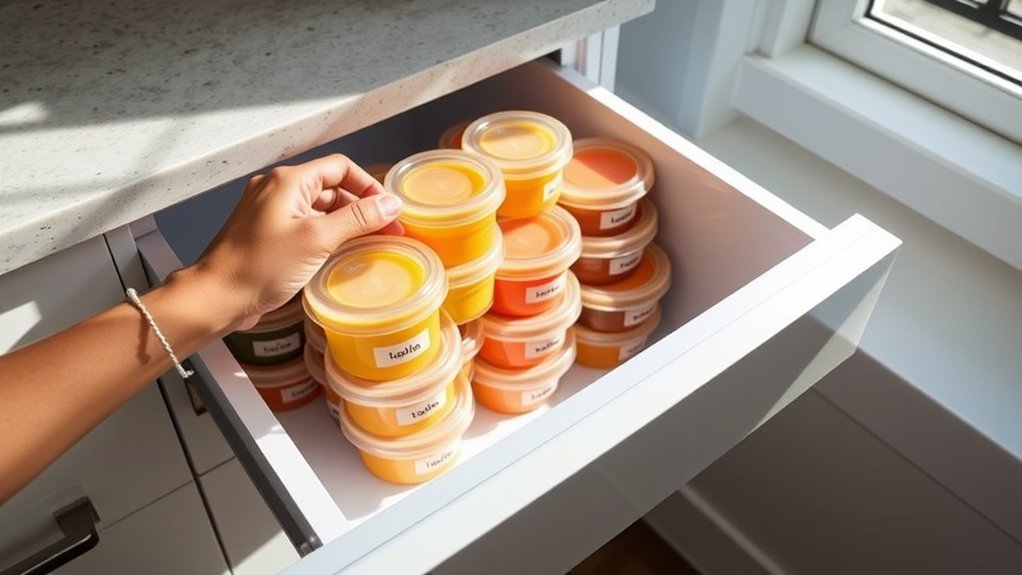
A freezer stash gives you ready-to-use portions on busy days and helps prevent freshly prepared food from going to waste. Freezing food soon after preparation also lets you make small batches without serving the same food several days in a row.
The benefits depend on safe handling. Keep your freezer at 0°F (-18°C) or below, package food in clean freezer-safe containers, and label every portion before it goes into the freezer.
A freezer stash is convenient only when every portion has a known identity, freezing date, and safe storage history.
Rotation also makes meal planning easier. When older portions are always visible at the front, you are less likely to discover forgotten food after its recommended storage period has passed.
Power your essentials anywhere with a 999Wh pure sine wave power station delivering up to 1000W continuous with 2000W surge. It supports fast charging via USB-C PD 60W and USB-A QC 18W, plus simultaneous output for multiple devices through AC, USB, wireless, and car/DC ports. Recharge using AC, car, or solar with a built-in MPPT controller and dual cooling fans, while the upgraded battery management system protects against surges, short circuits, and overheating.

Food-Grade Silicone Ice Cube Trays: Made from BPA-free, food-grade silicone, these ice cube trays are safe, durable, and flexible. Perfect for direct contact with food and drinks, they’re compatible with the dishwasher, refrigerator, freezer, and even the microwave.

Effortless Meal Preparation: Streamline your baby's nutrition with our 3 Pack Silicone Freezer Tray. Batch prepare baby food, purees, breastmilk, and more for efficient and convenient meal planning.
When Should You Start Using Frozen Baby Food?
Freezing does not determine when a baby is ready for food. According to the Centers for Disease Control and Prevention, most children can begin solid foods at about six months when they show developmental signs of readiness. Introducing solid foods before four months is not recommended.
Signs of readiness include being able to control the head and neck, sitting alone or with support, opening the mouth when food is offered, and swallowing food instead of pushing it back out.
Once your baby is ready, you may serve freshly prepared or safely frozen food. Match the texture to your baby’s current eating skills. Early foods may need to be smooth, mashed, or strained, while thicker and lumpier textures can be introduced as those skills develop.
Note: Ask your pediatrician for individual guidance if your baby was born prematurely, has swallowing difficulties, has severe eczema, or has a known food allergy.
Duration of Safe Freezer Storage for Baby Food
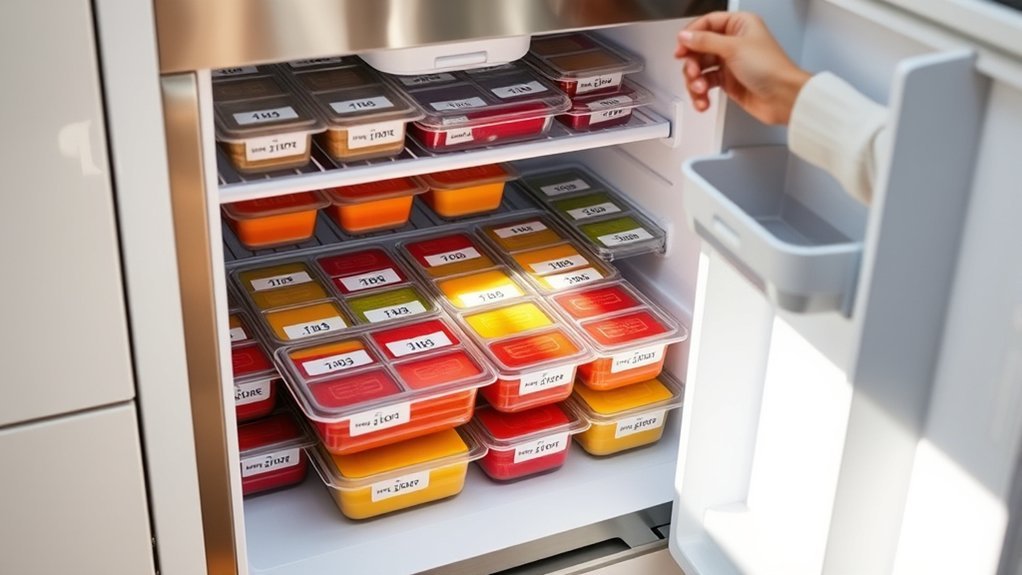
The most recent FoodSafety.gov storage table for children under five lists homemade baby food at one to two days in the refrigerator and one to two months in the freezer.
For an easy household rule, aim to use frozen homemade baby food within one month for the best texture and flavor. Discard any portion that reaches two months, has an unknown freezing date, or has an uncertain temperature history.
Note: You may see an older FDA page that says homemade baby food can be stored for up to three months. This guide follows the newer, more conservative FoodSafety.gov table reviewed in 2025.
Safe Storage Guidelines
- Keep the freezer at 0°F (-18°C) or below and the refrigerator at 40°F (4°C) or below.
- Freeze food promptly after cooking and cooling it safely.
- Use clean, airtight, freezer-safe bags or containers.
- Leave expansion space when freezing food in an approved glass container.
- Store portions toward the back of the freezer instead of in the door, where temperatures change more often.
- Do not pack the freezer so tightly that cold air cannot circulate.
- Write the food name, ingredients, freezing date, and use-by date on every portion.
Signs of Spoilage and Quality Loss
Discard baby food if you see mold, notice a leaking or damaged container, detect an unusual odor after thawing, or cannot confirm how long the food was stored. Also discard it when you do not know whether it stayed properly frozen.
However, appearance and smell cannot prove that food is safe. Harmful germs may be present without an obvious change in color, odor, or taste. Storage time, temperature, and contamination history are more reliable safety checks.
Freezer burn may create dry, pale, or leathery areas. The FDA identifies freezer burn as a quality issue, not automatic proof of unsafe food. Because texture matters when feeding a baby, it is still reasonable to discard a badly freezer-burned portion.
Practical Methods for Efficiently Rotating Your Freezer Stash
Use the same first-in, first-out process every time you freeze or remove a portion:
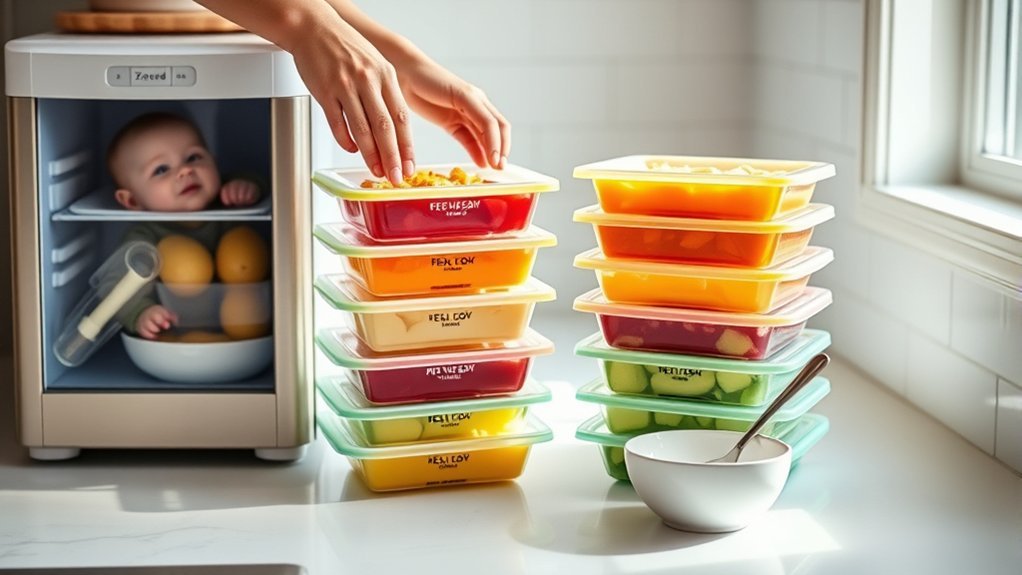
- Label the portion before freezing. Include the food, ingredients, date frozen, and use-by date.
- Freeze portions flat or in small containers. Smaller portions freeze and thaw more evenly.
- Move older food forward. Place every new batch behind the food already in the freezer.
- Choose the oldest suitable portion first. Check that its seal and storage history are intact.
- Review the stash weekly. Remove expired portions and note which foods need to be replaced.
Pro Tip: Use two small freezer bins. Label the front bin “Use First” and the rear bin “New.” Move portions from the rear bin to the front during your weekly check.
Adjust the number and size of portions as your baby’s appetite changes. Start with a small serving and offer more from the uncontaminated container with a clean spoon when needed.
Tips for Efficiently Storing Frozen Baby Food
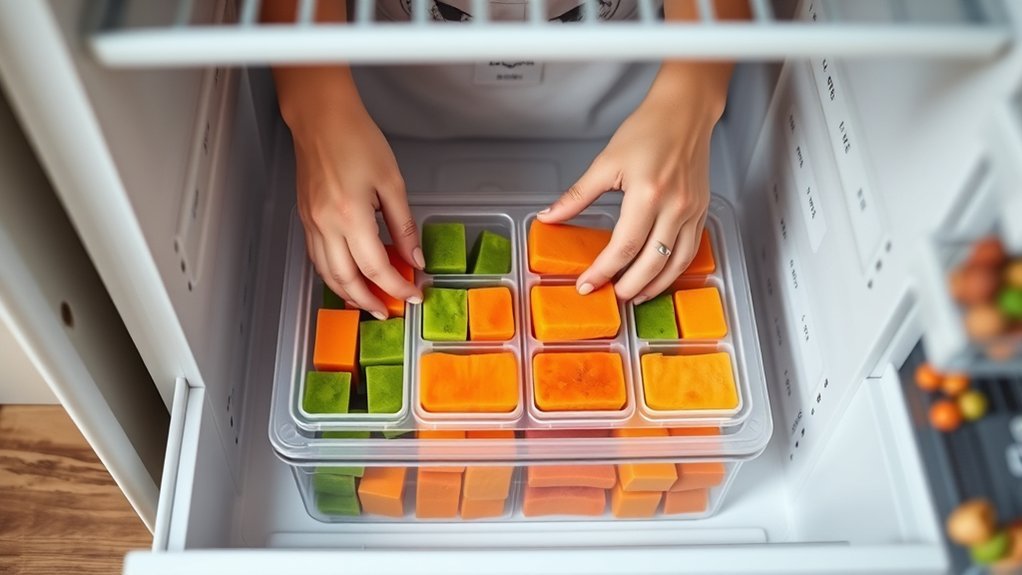
Use Airtight Containers
Choose containers or bags specifically marked as freezer-safe. BPA-free plastic, freezer-safe glass, and food-grade silicone can all work when used according to the manufacturer’s directions.
An airtight seal limits moisture loss and helps prevent freezer burn. It also protects the food from odors and contact with other items in the freezer.
Check containers before each use. Discard cracked containers, torn bags, loose lids, and any package that has leaked.
Label With Dates
Use a waterproof marker or freezer label. Do not rely on memory, container color, or food color because different purees can look alike after freezing.
A useful label includes the following information:
| Label Field | What to Write | Why It Matters |
|---|---|---|
| Food name | Carrot puree, chicken and peas, or oatmeal | Prevents mix-ups after freezing |
| Date frozen | Month, day, and year | Establishes the start of the storage period |
| Use-by date | No later than two months after freezing | Makes rotation fast and consistent |
| Ingredients | Every ingredient in a mixed food | Helps track allergens and reactions |
| Texture or portion | Smooth, mashed, chopped, 1 tablespoon, or 2 tablespoons | Helps select food suited to current eating skills |
Freeze in Portions
Freeze food in small portions so you can thaw only what you expect to serve. Ice cube trays or silicone molds can be useful for initial freezing when they are clean, food-grade, and covered.
Once the food is frozen solid, transfer the portions to an airtight freezer-safe bag or container. Label the final package rather than relying on a label attached to a temporary tray.
Portion size should follow your baby’s appetite rather than a rigid “one cube equals one meal” rule. The CDC recommends starting with small amounts, such as one or two tablespoons, and watching the child’s hunger and fullness cues.
How to Thaw and Reheat Frozen Baby Food Safely
The refrigerator is the easiest and safest place to thaw a planned portion. Put the sealed container in the refrigerator the night before you expect to use it and keep it separate from raw meat, poultry, seafood, and eggs.
When you need a portion sooner, use one of these methods:
- Cold-water method: Keep the food in a sealed, leakproof container and place it under cold running water. Prepare and serve it promptly.
- Microwave method: Transfer the food to a microwave-safe dish, thaw or heat it, stir thoroughly, let it stand, and check the temperature before feeding.
- Direct reheating: Warm a small frozen portion in a saucepan over low heat while stirring frequently.
Warning: Never thaw baby food on the counter or in standing warm or hot water. Do not refreeze baby food after it has thawed.
The University of Illinois Extension recommends reheating refrigerated or frozen homemade baby food to 165°F (74°C), then allowing it to cool before serving. Stir the food thoroughly and test it with a clean spoon so there are no hidden hot spots.
Solid baby food can be heated in a microwave when handled correctly. Do not microwave it in a glass baby-food jar. The FDA also advises heating baby-food meats, meat sticks, and eggs on the stovetop rather than in a microwave because their higher fat content can cause splattering and overheating.
Making the Most of Your Weekly Frozen Food Day
Choose one day each week for a short freezer check. This does not need to be a major meal-preparation session. Five minutes is usually enough.
- Read the use-by date on every front-row portion.
- Plan the oldest suitable portions for the coming week.
- Move newer food behind the older food.
- Discard anything with an expired or unreadable label.
- Write down which foods or textures need to be replenished.
- Check the freezer thermometer and confirm that it reads 0°F (-18°C) or below.
Thaw only the portions you expect to use. Preparing too many portions at once creates pressure to save leftovers that should be discarded.
Daily Usage Strategies for Baby Food Rotation
Each day, select the oldest portion that is still within its use-by date and suitable for your baby’s current texture needs.
Transfer a small serving to a clean dish. Keep the remaining uncontaminated food covered and refrigerated within its safe storage period. Use a new clean spoon if you need to add more food to the serving dish.
Warning: Discard any food left in the serving dish after feeding. A spoon that has touched the baby’s mouth can transfer saliva and bacteria back into the food. Do not refrigerate, freeze, or serve that contaminated portion again.
Continue to review your baby’s preferences, but do not remove a food permanently after one facial expression or refusal. Babies often need repeated, pressure-free exposure to become familiar with a flavor or texture.
Identifying When Your Frozen Baby Food Is No Longer Safe
Discard a portion when any of the following applies:
- The use-by date has passed.
- The date or ingredients cannot be read.
- The container is cracked, leaking, swollen, or no longer sealed.
- The food was left at room temperature for more than two hours, or more than one hour in temperatures above 90°F (32°C).
- The food has touched the baby’s mouth, serving spoon, or used dish.
- The food thawed and you cannot confirm how long it remained above 40°F (4°C).
- Mold, an unusual odor, or an unexpected texture appears after thawing.
- You are unsure whether the food was handled safely.
Do not taste questionable baby food to test it. When the storage history is uncertain, throwing away one portion is safer than taking a chance.
What to Do After a Power Outage or Accidental Thaw
Keep the freezer door closed during an outage. According to the FDA, a full unopened freezer generally holds a safe temperature for about 48 hours, while a half-full freezer generally holds it for about 24 hours.
When power returns, check an appliance thermometer. General FDA guidance says food that still contains ice crystals or is at 40°F (4°C) or below may be refrozen, although its quality may decline.
For homemade baby food, use a cautious approach. Discard it when you cannot confirm its temperature, when it has completely thawed and warmed above 40°F, or when the outage lasted longer than the freezer could safely hold its temperature.
Additional Resources for Exclusive Pumping Support
If your freezer also contains expressed breast milk, keep the milk and baby food in separate labeled bins. The storage timelines are not interchangeable.
Label breast milk according to the CDC’s breast-milk storage guidance. Use a different label color or container type so a caregiver does not confuse milk dates with baby-food use-by dates.
Separate bins and label colors make it easier for every caregiver to follow the correct storage rules for baby food and breast milk.
A pediatrician, registered dietitian, or lactation consultant can help when feeding plans involve prematurity, poor weight gain, swallowing concerns, food allergies, or a medically restricted diet.
Frequently Asked Questions
Can I refreeze baby food after it has thawed?
No. Do not refreeze thawed homemade baby food. Thaw only the amount you expect to use and discard food that has been served or left at an unsafe temperature.
How should I label freezer containers?
Write the food name, all ingredients, date frozen, use-by date, portion size, and texture. Clearly mark any common allergen, such as egg, dairy, wheat, peanut, fish, or sesame.
What containers are best for freezing baby food?
Use clean, airtight containers or bags specifically marked as freezer-safe. BPA-free plastic, food-grade silicone, and freezer-safe glass are reasonable options when used according to their manufacturer’s instructions.
Can I mix different flavors in one container?
Yes, after your baby has already tolerated the individual ingredients. List every ingredient on the label so you can track allergens and identify the food accurately.
How can I tell if my baby dislikes a flavor?
Turning away, closing the mouth, or repeatedly refusing a food may show that your baby is finished or does not want it at that moment. One facial expression does not always mean permanent dislike. Offer the food again later without pressure.
How long can thawed homemade baby food stay refrigerated?
Use it promptly and stay within the one-to-two-day refrigerated limit for homemade baby food. Foods containing meat, poultry, fish, or egg should generally be used within one day. Discard anything that has touched a used spoon.
Can I heat solid baby food in a microwave?
Yes, with care. Transfer it to a microwave-safe dish, heat a small amount, stir thoroughly, let it stand, and test the temperature with a clean spoon. Do not microwave it in a baby-food jar, and heat baby-food meats and eggs on the stovetop instead.
Does freezer burn mean baby food is unsafe?
Not by itself. Freezer burn mainly affects moisture, texture, and flavor. However, discard badly freezer-burned baby food when its texture is no longer suitable or when its storage history is uncertain.
Conclusion
A safe baby food freezer stash depends on consistent habits: label every portion, keep the freezer at 0°F or below, use older food first, and follow the current one-to-two-month storage window for homemade baby food. Thaw food in the refrigerator, reheat it carefully, and discard anything contaminated by saliva or kept at an unsafe temperature. A five-minute weekly check can keep the system simple, useful, and safe.
Sources
- FoodSafety.gov: Children Under Five — baby-food refrigerator and freezer storage periods and microwave precautions
- U.S. Food and Drug Administration: Once Baby Arrives — safe preparation, serving, saliva-contamination, and heating guidance
- Centers for Disease Control and Prevention: Introducing Solid Foods — age and developmental readiness for complementary foods
- University of Illinois Extension: Practicing Food Safety — thawing, reheating, refreezing, and serving homemade baby food
- University of Illinois Extension: Storing and Reheating — portioning, storage quality, and reheating methods
- U.S. Food and Drug Administration: Are You Storing Food Safely? — appliance temperatures, freezer burn, power outages, and temperature checks