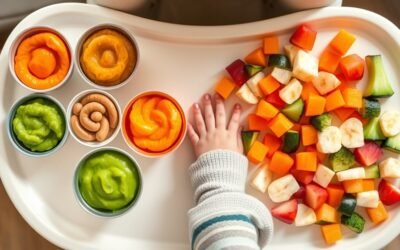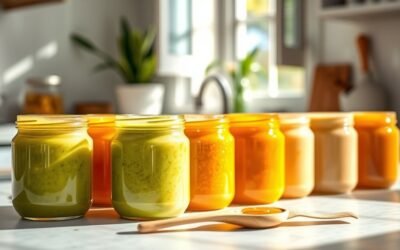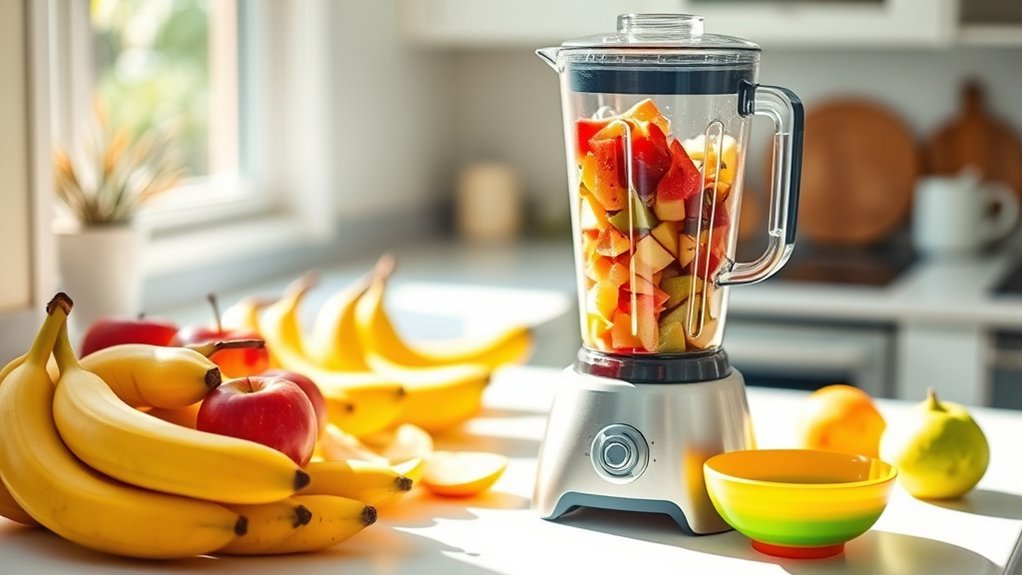
To make fruit puree for your baby, start by selecting ripe, organic fruits. Wash and peel them, then chop into small pieces. Steam or boil the fruit until tender, allowing for easier blending. Use a blender or food processor to achieve a smooth consistency, adding water if needed. Store the puree in airtight containers, refrigerating for up to three days or freezing for longer storage. There’s more to explore about serving and safely introducing new flavors!
Key Takeaways
- Select ripe, organic fruits, ensuring they are free from bruises and imperfections for the best flavor and nutrition.
- Wash fruits thoroughly under running water, peel if necessary, and cut them into small pieces for easy cooking.
- Steam or boil the fruit pieces until tender, which will make them easier to puree.
- Use a blender or food processor to blend the cooked fruit until a smooth consistency is achieved.
- Store the puree in airtight containers in the refrigerator for up to 3 days or freeze in ice cube trays for longer storage.
Benefits of Homemade Fruit Puree for Babies
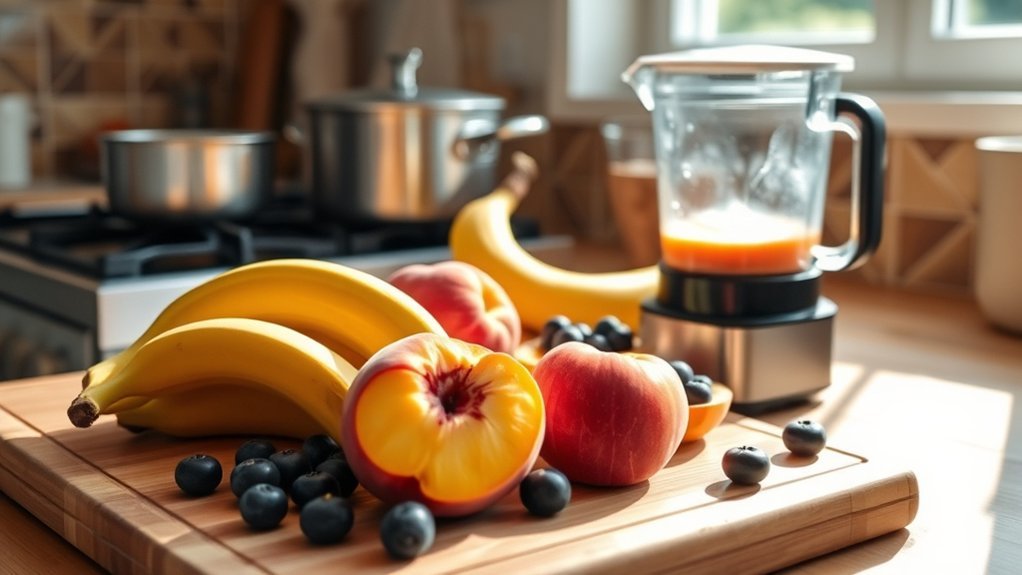
Homemade fruit puree offers numerous advantages for your baby’s nutrition and development. By making purees at home, you control the ingredients, ensuring freshness and avoiding harmful additives often found in store-bought options.
This approach is also cost-effective, saving you considerably—about $10 for 64 ounces compared to $72 for commercial baby food. With homemade purees, you can introduce your baby to a variety of flavors and textures, encouraging taste preferences that promote a diverse palate from an early age.
Additionally, customizing the sweetness and combining different fruits allows for exciting texture exploration. The process also fosters bonding during feeding times, creating a positive experience that enriches both your and your baby’s journey into solid foods.
How to Make Fruit Puree for Your Baby
To make delicious fruit puree for your baby, start by selecting ripe, fresh fruits like apples, pears, or bananas for maximum flavor and nutrition.
Once you prepare the fruit by washing and cutting it, you can steam or boil it until tender before blending it into a smooth consistency.
Finally, follow proper storage guidelines to keep the puree fresh and safe for your little one.
Selecting Fresh Fruits
Selecting fresh fruits is essential for making nutritious and delicious purees for your baby. Focus on proper fruit selection by choosing ripe, organic options when possible, which offer better flavor and nutrition while reducing pesticide exposure.
Check for ripeness indicators, such as firmness and vibrant color, while avoiding any fruits with bruises, discoloration, or soft spots. Always wash your fruits thoroughly under running water to eliminate dirt and contaminants.
For fruits with skins, like apples and pears, peeling them helps achieve a smoother texture ideal for pureeing. Opt for naturally sweet fruits, such as bananas, pears, and apples, to introduce delightful flavors to your baby’s diet and guarantee a positive eating experience.
Blending Techniques
When you’re ready to make fruit puree for your baby, start by washing and patting dry the chosen fruit to eliminate any dirt or contaminants.
For fruits like apples and pears, peel and core them before steaming or boiling to guarantee they blend smoothly.
Use a blender or food processor, adding a small amount of water, breast milk, or formula to reach the desired consistency.
Adjust blending speeds for different texture variations; blend longer for a smooth puree or pulse for a chunkier texture.
Always taste the puree to check sweetness and flavor, and feel free to adjust the consistency by adding more liquid if necessary.
Your baby will appreciate the effort you put into their meals!
Storage Guidelines
After blending your fruit into a delicious puree, proper storage becomes important to keep it fresh and safe for your baby.
Use airtight storage containers to maintain quality, storing in the refrigerator for up to 3 days. For longer storage, freeze your purees in ice cube trays for up to 3 months. This way, you’ll have easy-to-thaw portions ready when needed.
- Label each container with the date of preparation
- Thaw frozen purees overnight in the refrigerator
- Always check the consistency and taste before serving
Choosing the Best Fruits for Puree
When choosing fruits for puree, opt for seasonal selections to guarantee freshness and flavor.
Nutrient-rich options like bananas and avocados provide essential vitamins and minerals that support your baby’s growth.
Always aim for ripe fruits, as they offer the best taste and texture for your little one.
Seasonal Fruit Selection
Choosing seasonal fruits for your baby’s puree can greatly enhance the flavor and nutritional value of their meals. When you opt for fruits that are in season, you’re not just getting better taste but also taking advantage of their seasonal advantages.
Fresh, ripe fruits are often more nutrient-dense and budget-friendly, thanks to their abundance and availability.
Consider these ideal options for your purees:
- Ripe bananas that blend smoothly and are naturally sweet
- Creamy avocados packed with healthy fats
- Juicy, ripe peaches bursting with flavor
Nutrient-Rich Options
Selecting the best fruits for your baby’s puree is essential, as it directly impacts their nutritional intake and taste experience. Choose naturally sweet, nutrient-dense options like ripe apples, pears, and bananas, which are gentle on the palate and easy to digest.
Consider fruit combinations, such as mixing avocado and mango; these not only provide healthy fats but also essential vitamins that support brain development. Always opt for organic fruits to minimize pesticide exposure.
Remember to wash the fruits thoroughly and remove any peels or seeds before blending to guarantee a smooth and safe puree. Avoid adding sweeteners or acidic ingredients, as they can upset your baby’s developing digestive system.
Prioritize fresh, wholesome ingredients for the best results.
Storing and Freezing Fruit Puree
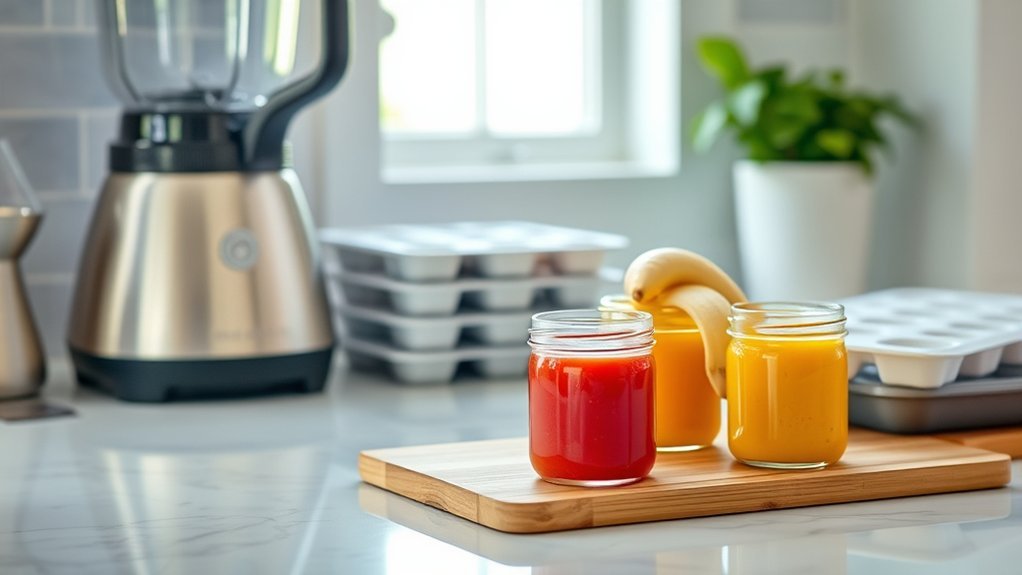
To keep your freshly made fruit puree tasting great, it’s essential to store it properly. Use airtight containers to maintain the puree’s freshness in the refrigerator for up to three days. For longer storage, freeze the puree in ice cube trays or freezer-safe containers for up to three months.
To preserve the flavor of your fruit puree, store it in airtight containers for up to three days in the fridge or freeze for three months.
- Choose sturdy glass or BPA-free plastic containers.
- Label containers with the date of preparation.
- Monitor for off smells or discoloration.
When you’re ready to use the frozen puree, remember to thaw it overnight in the refrigerator, ensuring safe consumption.
Following these freeze precautions and selecting the right container types will help you provide the best for your baby while keeping your fruit puree delicious and nutritious.
Creative Ways to Serve Fruit Puree
While serving fruit puree to your baby can be a delightful experience, finding creative ways to incorporate it into meals enhances both flavor and nutrition.
Combine fruit puree with yogurt for a creamy snack that adds protein, appealing to both babies and toddlers. Use it as a natural sweetener in oatmeal or pancakes, offering a healthy alternative to sugar.
Freeze fruit purees in ice cube trays for easy portions, perfect for smoothies or a revitalizing treat for teething babies. You can also mix puree into muffins or baked goods, boosting their nutritional value and introducing different textures.
Finally, serve fruit puree as a dipping sauce for finger foods, encouraging self-feeding and making mealtime fun with exciting flavor combinations.
Common Problems When Making Fruit Puree and How to Fix Them
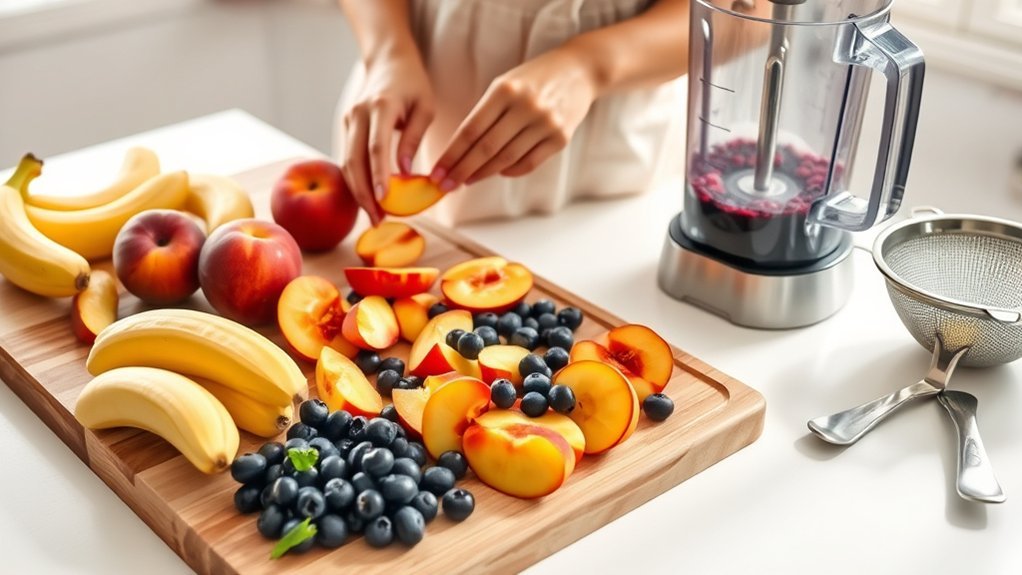
Even with all the creative ways to serve fruit puree, you might encounter some common problems during the preparation process.
Here are a few issues and how to fix them:
- If your puree is too thick, gradually add small amounts of water, breast milk, or formula.
- For grainy texture issues, blend longer or strain through a fine mesh sieve.
- If you notice any color changes or an off smell, discard the puree immediately, as these indicate spoilage.
Additionally, make sure your fruit is ripe to avoid tartness, and if using frozen fruit, fully thaw and drain it before blending.
Safety Tips for Making Fruit Puree
When preparing fruit puree for your baby, safety should always be a top priority. Start by washing fruits thoroughly under running water to eliminate any pesticide residues or contaminants.
Whenever possible, opt for organic fruits to reduce your baby’s exposure to harmful chemicals.
Don’t overlook equipment sanitization; guarantee that all tools, including blenders and storage containers, are cleaned and sanitized to prevent bacterial contamination.
When introducing new fruits, do so one at a time and wait 3-5 days before adding another to monitor for any allergic reactions.
Finally, store your homemade fruit purees in airtight containers and label them with the preparation date to maintain freshness and safety.
Your baby’s health is paramount, so follow these safety precautions diligently.
Nutritional Benefits of Homemade Fruit Puree for Babies
Homemade fruit purees offer a wealth of nutritional benefits for your baby, making them an excellent choice for introducing solid foods. By preparing these purees at home, you guarantee they’re packed with essential vitamins and minerals while avoiding added sugars and preservatives.
Homemade fruit purees are nutritious and free from additives, making them perfect for your baby’s first solid foods.
- Rich in vitamin C from apples and pears, providing immune support.
- High in fiber, aiding digestion and preventing constipation.
- Customizable to suit your baby’s tastes, encouraging an adventurous palate.
These purees not only deliver high nutritional value but also help cultivate healthy eating habits from the start.
Frequently Asked Questions
Can I Mix Different Fruits in One Puree?
Yes, you can mix different fruits in one puree! Combining flavors creates delicious flavor combinations and enhances nutritional benefits, providing your baby with a diverse range of vitamins and minerals essential for their growth and development.
How Can I Tell if Fruit Is Ripe Enough?
To tell if fruit’s ripe, check for color, firmness, and aroma. Ripe indicators like slight softness or a sweet scent mean it’s ready for selection. Trust your senses to choose the best fruit for your needs.
Is It Safe to Use Frozen Fruits for Puree?
Yes, using frozen fruits for puree is safe and convenient. Studies show frozen fruits retain 90% of their nutrients. Just thaw them properly using microwave or cold water techniques for the best results in your puree.
What Kitchen Equipment Do I Need to Make Puree?
You’ll need a blender, food processor, or immersion blender for smooth purees. Cooking methods like steaming or boiling help soften fruits, making it easier to blend. Choose the equipment that suits your preferences and needs best.
How Long Can I Store Homemade Puree in the Fridge?
You can store homemade puree in the fridge for up to three days. For longer puree storage, consider freezing it. Always check for freshness before serving, ensuring your little one enjoys safe, delicious food!
Conclusion
In the garden of your baby’s diet, homemade fruit puree is the sweetest fruit to nurture. By crafting these purees yourself, you’re not just feeding them; you’re sowing seeds of flavor and nutrition that will bloom into healthy eating habits. With a little effort, you’re creating a treasure trove of vibrant tastes and essential nutrients. So, roll up your sleeves, embrace the adventure, and let your little one savor the fruits of your labor—one delightful spoonful at a time.