

Nuts and nut butters can be nutritious early foods, but the timing and texture matter. Once your baby is developmentally ready for solids—usually around 6 months and never before 4 months—you can offer peanut and individual tree nuts in smooth, thinned, or finely ground forms. Babies with severe eczema, egg allergy, or a previous food reaction need medical guidance first.
Quick Answer
Serve nuts to a baby only in an age-appropriate texture: smooth nut butter thinned with water, breast milk, or formula; nut powder stirred into a moist food; or finely ground nuts mixed into puree. Never offer whole nuts, chopped nuts, or thick spoonfuls of nut butter. Introduce one nut at a time and watch for reactions.
Key Takeaways
- Start when your baby shows signs of readiness for solid food, usually around 6 months; do not start before 4 months.
- Use smooth, thinned nut butter or finely ground nut powder mixed into a soft food. Whole nuts, chopped nuts, and thick globs of nut butter are choking hazards.
- Introduce peanut and each tree nut separately so you can identify the food if a reaction occurs.
- For severe eczema, egg allergy, or a previous immediate food reaction, ask your pediatrician or allergist how and where to introduce peanut.
- After a nut is tolerated, keep serving it routinely in a safe texture rather than treating the first taste as a one-time test.
At a Glance
| Time Required | About 10 minutes to prepare, plus time to watch your baby closely after the first serving |
| Difficulty | Easy, with careful texture preparation and supervision |
| Tools Needed | Small bowl, measuring spoon, baby spoon, and a safe thinning liquid or familiar puree |
| Cost | Low; only a small amount of nut butter or nut powder is needed |
Why Early Introduction of Nuts Matters for Your Baby

Current guidance no longer recommends delaying common food allergens once a baby is ready for solids. The strongest evidence is for peanut, not every type of tree nut. The American Academy of Pediatrics advises introducing allergenic foods in infant-safe forms during the complementary-feeding period and keeping tolerated foods in the diet routinely.
The landmark LEAP trial found an 81% relative reduction in peanut allergy at age 5 among high-risk children assigned to eat peanut regularly from infancy compared with those assigned to avoid it. A later NIH-funded follow-up reported that the protective effect remained into adolescence, with a 71% lower rate of peanut allergy in the early-consumption group.
Early peanut introduction has strong prevention evidence, but the 81% figure comes from a controlled study of high-risk infants and should not be presented as a guarantee for every baby or every nut.
Peanuts are legumes, while almonds, cashews, walnuts, pecans, pistachios, and similar foods are tree nuts. A baby can tolerate one and still react to another, so introduce each one separately in a safe texture.
For babies with severe eczema, egg allergy, or a previous immediate reaction to food, talk with a pediatrician or allergist before introducing peanut. The clinician may recommend testing, an observed feeding, or a specific introduction plan.

Power your essentials anywhere with a 999Wh pure sine wave power station delivering up to 1000W continuous with 2000W surge. It supports fast charging via USB-C PD 60W and USB-A QC 18W, plus simultaneous output for multiple devices through AC, USB, wireless, and car/DC ports. Recharge using AC, car, or solar with a built-in MPPT controller and dual cooling fans, while the upgraded battery management system protects against surges, short circuits, and overheating.
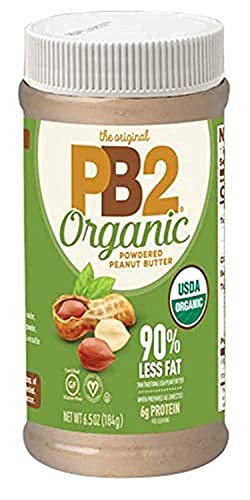
USDA Certified Organic: Premium quality, meets organic standards. 2. Non-GMO Verified: Guaranteed free of genetically modified organisms. 3. Gluten-Free: Ideal for those with gluten sensitivities. 4. 6g Protein: Packed with protein per serving for energy. 5. Pure Ingredients: Just organic peanuts, salt, and sugar. 6. 90% Less Fat: Enjoy the flavor with less fat. 7. 70% Fewer Calories: A healthier peanut butter choice. 8. USA Grown & Made: Support local, from farm to jar.

EARLY INTRODUCTION: Pure protein supplements that make it easy to add peanuts into your a diet.
When Can Babies Safely Start Eating Nuts?
Most babies are ready to begin solid foods at about 6 months. The CDC says solid foods should not be introduced before 4 months. Age alone is not enough; look for developmental readiness.
Signs Your Baby Is Ready for Solid Foods
- Your baby can sit upright with support and control their head and neck.
- Your baby opens their mouth for food and can move food to the back of the mouth to swallow.
- Your baby no longer pushes most food straight back out with the tongue.
- Your baby shows interest in food and can stay upright in a safe high chair.
Note: Guidance for early peanut introduction does not mean feeding solids before your baby is developmentally ready. High-risk babies may need a clinician-guided plan between 4 and 6 months.
Introduce one nut at a time, using a single-ingredient product when possible. The CDC suggests waiting 3 to 5 days between new single-ingredient foods to make reactions easier to trace. This waiting period is a tracking method, not an allergy test, and it should not lead to delaying all common allergens for months.
Choose a Good Time for the First Serving
Offer the first taste at home when your baby is healthy, awake, and not about to nap. Choose a time when a responsible adult can watch closely for at least 2 hours. Do not introduce a new nut during travel, at day care, or when your baby is already sick, vomiting, wheezing, or having a major eczema flare.
How to Safely Prepare Nuts and Nut Butters for Babies
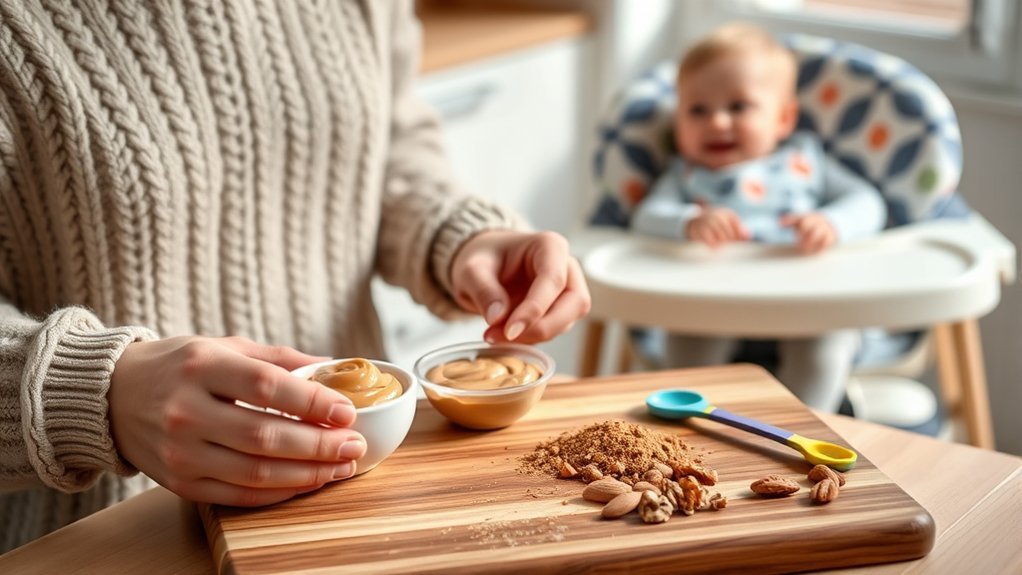
The main danger is texture. The CDC lists whole or chopped nuts and thick chunks or spoonfuls of nut butter as choking hazards. Nut butter should be thinned or fully blended into a moist food so it does not form a sticky glob.
Warning: Never give a baby whole nuts, chopped nuts, crunchy nut butter, or a thick spoonful of smooth nut butter. Keep your baby seated upright and supervise every bite. Do not feed while your baby is lying down, crawling, walking, riding in a stroller, or sitting in a moving car.
Safe Preparation Methods
Choose smooth nut butter or a finely milled nut powder. For the first serving, use a product with a short ingredient list and avoid versions containing chunks. For babies younger than 12 months, do not use nut products made with honey. Products without added sugar or excess sodium are the simplest choice.
- Thinned nut butter: Stir about 2 teaspoons of smooth nut butter with 2 to 3 teaspoons of warm water, breast milk, or prepared infant formula. Add more liquid until it drips easily from a spoon.
- Mixed into puree: Blend a small amount of smooth nut butter into a familiar fruit, vegetable, or meat puree until no sticky pockets remain.
- Mixed into yogurt or oatmeal: Use plain, unsweetened yogurt or smooth infant oatmeal that your baby has already tolerated. Stir thoroughly.
- Finely ground nuts: Use a commercial nut powder or grind nuts into a flour-like texture, then mix the powder into a moist food. Do not serve loose powder or coarse pieces.
Homemade nut butter can be used if it is completely smooth and thin enough for your baby’s feeding skills. Store-bought products are also suitable. “Natural” does not automatically mean safer; the texture, ingredient label, and absence of hard pieces matter most.
Proper Serving Techniques
Start with a small taste from a baby spoon. If no symptoms appear, continue slowly with the prepared serving. Do not force your baby to finish. Keep the nut mixed into a texture your baby already handles well, and record the nut, amount, date, and any symptoms.
| Nut or Nut Butter | Baby-Safe Serving Method |
|---|---|
| Peanut butter | Thin with warm water, breast milk, or prepared formula; or stir fully into puree |
| Almond or cashew butter | Use a smooth product and thin it until it is easy to swallow |
| Walnut or pecan | Use finely milled powder mixed completely into moist oatmeal, yogurt, or puree |
| Mixed-nut butter | Use only after each listed nut has been introduced separately and tolerated |
Pro Tip: Introduce the single-nut version first. Once your baby tolerates peanut, almond, cashew, and other nuts separately, a mixed-nut butter can make routine exposure easier.
How to Serve Nuts to Babies: Step-by-Step Guide
- Confirm readiness and risk level. Make sure your baby is ready for solids. Ask a clinician first if your baby has severe eczema, egg allergy, or a prior immediate food reaction.
- Choose one nut. Select smooth peanut butter, smooth single-tree-nut butter, or a finely milled single-nut powder. Check the label for other allergens and cross-contact warnings.
- Prepare a thin texture. Mix the nut butter with water, breast milk, or prepared formula until runny, or stir it completely into a familiar puree, plain yogurt, or smooth oatmeal.
- Offer a small first taste. Give a small amount from a spoon while your baby is seated upright. Pause and watch for symptoms before offering more.
- Continue slowly if there is no reaction. Offer the rest of the prepared serving at your baby’s pace. Never place a thick dollop directly in the mouth.
- Observe and record. Stay nearby and watch closely for at least 2 hours after the first exposure. Write down what was served and how your baby responded.
- Keep tolerated nuts in the diet. Once a nut is tolerated, offer it routinely in developmentally safe portions. A one-time taste does not provide the same evidence-based pattern as regular inclusion.
- Repeat with another nut on a different day. Peanut, almond, cashew, walnut, pecan, pistachio, and other tree nuts should be treated as separate foods.
Gagging, Choking, and Allergy Are Different
Gagging can be noisy and may include coughing or pushing food forward. Choking may be silent and can prevent breathing or crying. An allergic reaction may cause hives, swelling, vomiting, coughing, wheezing, or sudden behavior changes. Learn infant choking first aid and CPR from a qualified course before starting solids.
What to Do if Your Baby Has an Allergic Reaction?
Food-allergy symptoms usually begin within minutes to a few hours. Possible signs include hives, redness, swelling of the lips or face, vomiting, diarrhea, coughing, wheezing, a hoarse cry, trouble swallowing, sudden drooling, unusual sleepiness, or becoming pale or floppy.
Warning: Call 911 for trouble breathing, swelling of the tongue or throat, repeated vomiting with other symptoms, sudden limpness, faintness, or symptoms affecting more than one body system. If your child has prescribed epinephrine, use it immediately according to the emergency plan. Antihistamines do not replace epinephrine for anaphylaxis.
For a mild or uncertain symptom, stop feeding the suspected food and contact your pediatrician promptly for advice. Do not give an over-the-counter antihistamine to a baby unless a clinician has told you which product and dose to use.
Keep the package or ingredient label, and record what your baby ate, how much, when symptoms began, and what symptoms occurred. This information can help the pediatrician or allergist decide whether testing or a supervised oral food challenge is appropriate.
If epinephrine is given, call 911 and go to the emergency department, even if your baby appears to improve. Symptoms can return, and medical observation is needed.
Nut-Free Alternatives for Babies
Sunflower seed butter and soy nut butter can provide a similar creamy texture, but they are not “allergy-free.” Soy is one of the nine major food allergens recognized in the United States, and seeds such as sunflower can also cause allergic reactions. Introduce each alternative as a new food and use the same choking precautions.
For babies who must avoid peanuts or tree nuts, suitable options may include thinned sunflower seed butter, thinned soy nut butter, mashed avocado, plain full-fat yogurt, hummus made without sesame when sesame is also avoided, or smooth bean puree. Choose the option that fits your baby’s diagnosed allergies and feeding plan.
Read labels every time because formulas and manufacturing warnings can change. A product labeled “peanut-free” may still contain another allergen, such as soy, milk, sesame, or a tree nut.
Tasty Nut and Nut Butter Recipes
These recipes keep the original flavors while using spoonable, baby-safe textures. Introduce each ingredient separately before combining several foods in one recipe. Use plain, unsweetened ingredients and avoid honey before 12 months.
Nut Butter Smoothie Ideas
For babies, serve these as thick spoon-fed purees rather than drinks. Breast milk or prepared infant formula remains the main milk drink before 12 months; cow’s milk or plant beverages should not replace it.
- Banana-peanut puree: Mash 1/4 ripe banana with 2 teaspoons of thinned smooth peanut butter. Add water, breast milk, or prepared formula until the texture slides easily from a spoon.
- Green almond puree: Blend a small spoonful of cooked, cooled spinach with banana, plain unsweetened yogurt, and thinned almond butter. Serve by spoon.
- Pear-cashew puree: Mix smooth pear puree with thinned cashew butter. Add more puree or water if the mixture is sticky.
For children older than 12 months who can safely drink from a cup, these mixtures can be thinned further. Continue to avoid large amounts of milk or plant beverages that crowd out meals.
Flavorful Nut Dips
Baby “dips” should be soft enough to spoon or spread in a very thin layer on a developmentally appropriate food. Do not pair them with raw apple slices, hard vegetable sticks, dry rice cakes, or other firm foods that may be choking hazards.
| Nut Dip | Main Ingredients | Baby-Safe Serving Idea |
|---|---|---|
| Pumpkin peanut dip | Plain yogurt, pumpkin puree, thinned peanut butter | Offer by spoon or mix into smooth oatmeal |
| Almond banana dip | Plain yogurt, mashed banana, thinned almond butter | Serve by spoon or spread very thinly on a soft strip for an older, skilled eater |
| Cashew pear dip | Plain yogurt, pear puree, thinned cashew butter | Stir into puree or serve by spoon |
Nut-Infused Oatmeal Options
Prepare smooth infant oatmeal with water, breast milk, or prepared formula. Stir in thinned peanut, almond, cashew, walnut, or pecan butter only after that nut has been introduced on its own. Mashed banana, pear puree, pumpkin puree, or plain yogurt can soften the texture and add flavor.
If using ground nuts, grind them to a flour-like powder and mix them fully into moist oatmeal. Do not leave coarse pieces on top. A thick “dollop” of nut butter should also be stirred in completely before serving.
Tips for Encouraging Your Baby to Enjoy Nuts
Create a calm eating environment and let your baby explore new flavors without pressure. A baby may need repeated exposures before accepting a food, so a refusal on the first day does not mean the food is disliked.
Keep the texture safe, the serving small, and the mood relaxed. Familiar foods can make a new nut flavor easier to accept.
- Mix thinned nut butter into a familiar puree, yogurt, or oatmeal.
- Start with a small taste and gradually increase to a normal infant portion as tolerated.
- Rotate tolerated nuts through breakfasts and snacks so they stay in the diet.
- Do not hide a new allergen in a large mixed meal; introduce it clearly and separately first.
- Model calm eating and stop when your baby turns away, closes their mouth, or shows signs of being full.
How to Store Opened Nut Butters Safely
Follow the storage directions on the jar. Many conventional nut butters can be stored in a cool pantry after opening, while some natural products require refrigeration. Keep the lid tightly closed, use a clean utensil, and discard any portion that has been mixed with saliva or served from your baby’s bowl.
Check the product for an off smell, mold, damaged packaging, or a recall notice before serving. Oil separation in natural nut butter is common; stir it thoroughly, then thin the portion for your baby.
Frequently Asked Questions
Can I give my baby whole nuts?
No. Whole and chopped nuts are choking hazards for babies and young children. The American Academy of Pediatrics advises avoiding whole peanuts and tree nuts until a child can reliably chew them well, usually at least age 4. Continue to judge the individual child’s chewing skills and supervise closely.
What are signs of a nut allergy in a baby?
Possible signs include hives, redness, swelling, vomiting, diarrhea, coughing, wheezing, a hoarse cry, sudden drooling, unusual sleepiness, or becoming pale or floppy. Call 911 for breathing trouble, throat or tongue swelling, collapse, or symptoms affecting more than one body system.
How should I store opened nut butter?
Follow the label. Many shelf-stable products can stay in a cool pantry, while some natural nut butters should be refrigerated. Close the lid tightly, use a clean utensil, and never return a saliva-contaminated serving to the jar.
Can I mix nuts with other allergens?
After your baby has tolerated each ingredient separately, you can combine them in an age-appropriate food. For a first exposure, serve one new allergen at a time so a reaction is easier to trace. Babies with diagnosed allergies or severe eczema may need a clinician-directed plan.
Are there different age rules for specific nuts?
The main rule is texture, not a separate age for each nut. Peanut and tree nuts can be introduced once a baby is ready for solids, but only as smooth, thinned butter or finely ground powder mixed into moist food. Whole nuts remain unsafe for young children.
How much nut butter should I offer the first time?
Begin with a small taste of a properly thinned mixture. If there are no symptoms, continue slowly toward an infant-sized serving; the AAP gives about 2 teaspoons of nut butter as an example portion. Follow a clinician’s plan for high-risk babies.
Do I need allergy testing before introducing peanut?
Most babies do not need routine testing before trying peanut. Testing or supervised feeding may be considered for babies with severe eczema, egg allergy, or a previous immediate food reaction. Ask your pediatrician or allergist rather than arranging broad food panels on your own.
What if my baby refuses the nut mixture?
Do not force it. Try again on another day in a thinner texture or mix it into a familiar puree. Keep portions small and the feeding relaxed. Repeated, pressure-free exposure often helps babies accept a new flavor.
Conclusion
You can serve nuts and nut butters safely by matching the food to your baby’s readiness and feeding skills. Use smooth, thinned nut butter or finely ground nut powder in moist food, introduce each nut separately, and keep tolerated nuts in the diet. Whole nuts and thick spoonfuls remain choking hazards, and babies at high risk for peanut allergy need a clinician-guided plan. Most importantly, know the signs of an allergic reaction and be ready to call 911 for severe symptoms.
Sources
- CDC: When, What, and How to Introduce Solid Foods — readiness signs, timing, new-food tracking, and infant feeding guidance.
- American Academy of Pediatrics: Introducing Common Food Allergens — early allergen introduction, high-risk infants, portions, and safe peanut textures.
- National Institutes of Health: Early Peanut Introduction and Lasting Protection — LEAP and LEAP-Trio findings.
- CDC: Choking Hazards — whole nuts, chopped nuts, and thick nut butter as choking risks.
- American Academy of Pediatrics: Anaphylaxis in Infants and Children — symptoms, epinephrine, and emergency response.
- U.S. Food and Drug Administration: Food Allergies — major allergens and packaged-food labeling.