
To make high-calorie baby food for weight gain, start with nutrient-rich ingredients like avocados, full-fat yogurt, and nut butters. Cook and blend carbohydrate-rich veggies like sweet potatoes until smooth. Enhance the mix with healthy fats like olive oil or melted butter to boost calories. For grain options, combine infant oats with breast milk or formula and add nut butters. Introduce new foods slowly to monitor for allergies. There’s much more to explore about creating nutritious meals for your baby.
Key Takeaways
- Start with high-calorie ingredients like avocados, full-fat Greek yogurt, and nut butters for nutrient density.
- Cook and blend carbohydrate-dense vegetables, such as sweet potatoes, until smooth for easy digestion.
- Incorporate healthy fats like olive oil or melted butter to enhance calorie content in purees.
- Mix infant oats with breast milk or formula, adding nut butters or heavy cream for added calories.
- Introduce high-calorie foods gradually to monitor for allergies, starting with small amounts in purees.
Essential Ingredients for High-Calorie Baby Food Recipes
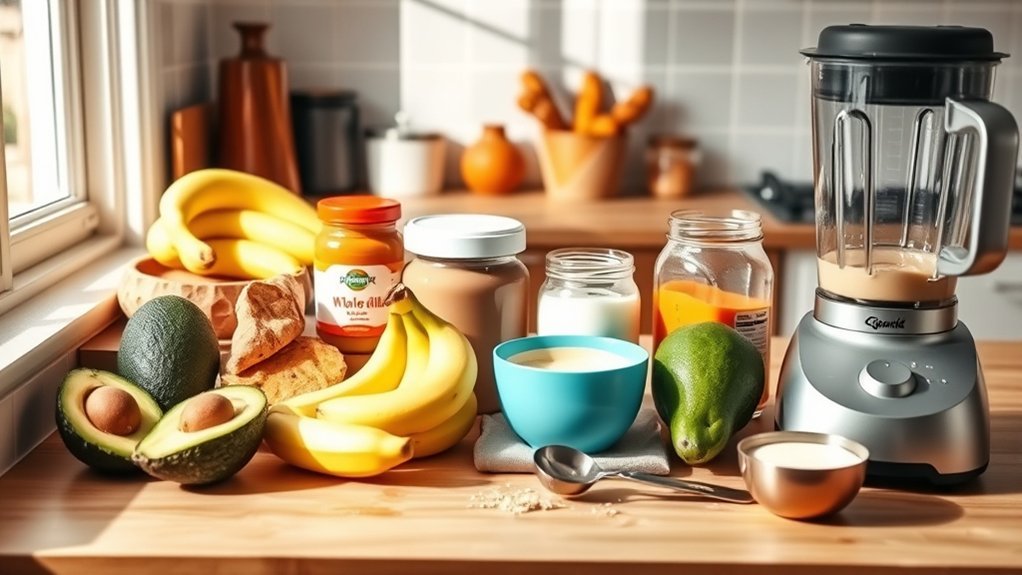
When you’re looking to create high-calorie baby food, it’s crucial to incorporate ingredients that are both nutritious and energy-dense.
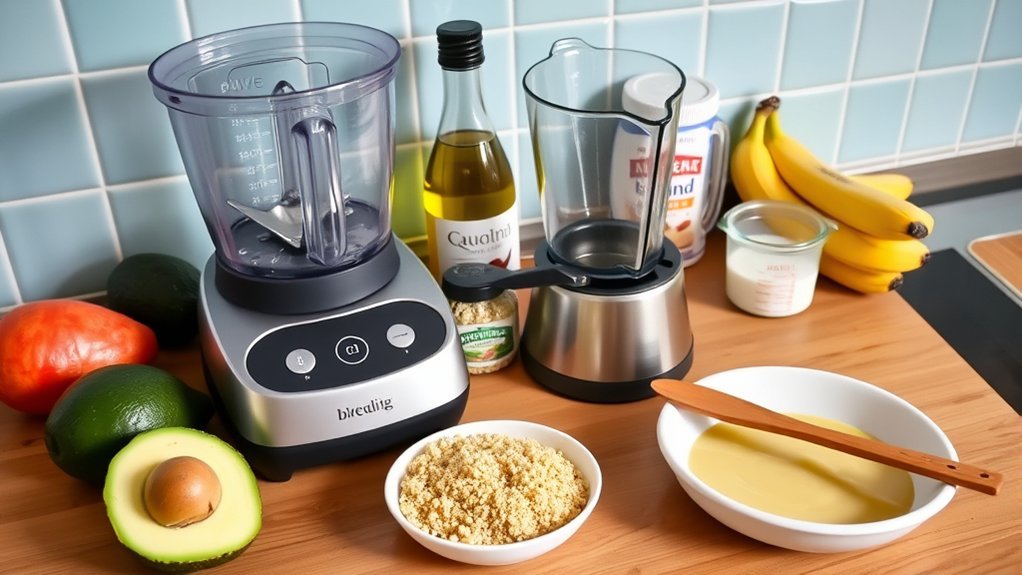
Focus on healthy fats like avocados, nut butters, and oils such as canola or olive oil to support weight gain. Full-fat dairy products, including Greek yogurt and cottage cheese, enhance nutrient density while providing essential calories.
Incorporate healthy fats and full-fat dairy to boost calorie intake and support your baby’s growth.
Carbohydrate-dense foods like sweet potatoes, oats, and bananas guarantee your baby has ample energy sources. Don’t forget protein-rich options like pureed meats, eggs, and legumes to foster muscle development.
Finally, consider calorie-dense toppings like cheese and butter to boost flavor balance without compromising nutrition.
Step-by-Step: Preparing High-Calorie Baby Food
Creating high-calorie baby food involves a straightforward process that guarantees your little one receives the necessary nutrients for healthy growth.
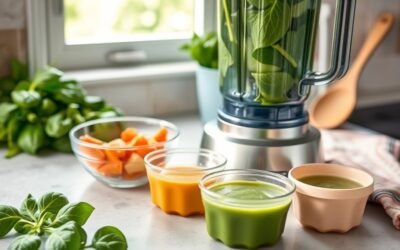
Start by selecting high-calorie ingredients like avocados, full-fat Greek yogurt, and nut butters. Cook and blend vegetables such as sweet potatoes and carrots until smooth, adding healthy fats like olive oil or melted butter to enhance calorie content.
For cereals, mix infant oats with breast milk or formula, incorporating nut butters or heavy cream for added richness and texture variations.
You can also prepare high-calorie snacks, like mashed bananas combined with yogurt or energy balls made from oats, nut butter, and dried fruits.
Store the baby food in airtight containers, refrigerating for up to 24 hours or freezing in ice cube trays for easy serving.
High-Calorie Ingredients to Enhance Baby Food
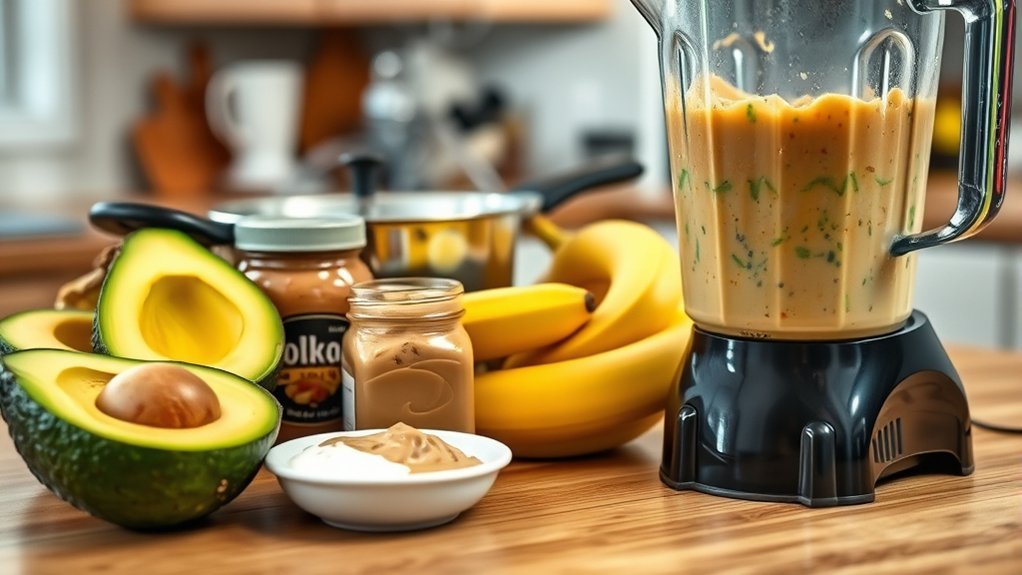
To enhance your baby’s diet with high-calorie options, it’s essential to select nutrient-dense ingredients that support healthy growth and development.
Start with full-fat yogurt for its protein and healthy fats, ideal for weight gain.
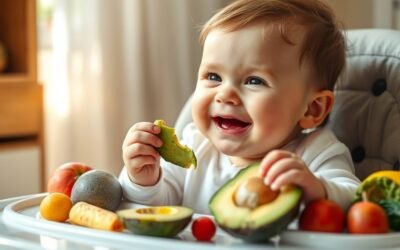
Avocado benefits your little one with its rich monounsaturated fats, which are easy to mash and incorporate into meals.
Nut butters like peanut or almond butter add healthy fats and protein but consult your pediatrician regarding nut butter safety to avoid allergy risks.
You can also mix in oils such as canola or olive oil—just one teaspoon per serving can boost calorie density without changing the taste.
Finally, heavy cream enhances dishes like oatmeal, adding extra calories and richness.
Tips for Safely Introducing High-Calorie Foods
Introducing high-calorie foods into your baby’s diet can be a rewarding experience, but it’s important to do so safely. Start by introducing one high-calorie food at a time, allowing three days for allergy monitoring. This helps you identify any adverse reactions.
Begin with small amounts, like 1/2 teaspoon of nut butters or oils mixed into purees, to ease your baby into new flavors and textures. Choose creamy forms of allergens, such as creamy peanut butter or scrambled eggs, ensuring they’re age-appropriate.
Consult your pediatrician before introducing known allergens. For chunkier foods, use mesh bags to minimize choking hazards while promoting texture exploration. This way, your baby can safely enjoy new tastes and gain weight effectively.
Why High-Calorie Baby Food Matters for Weight Gain
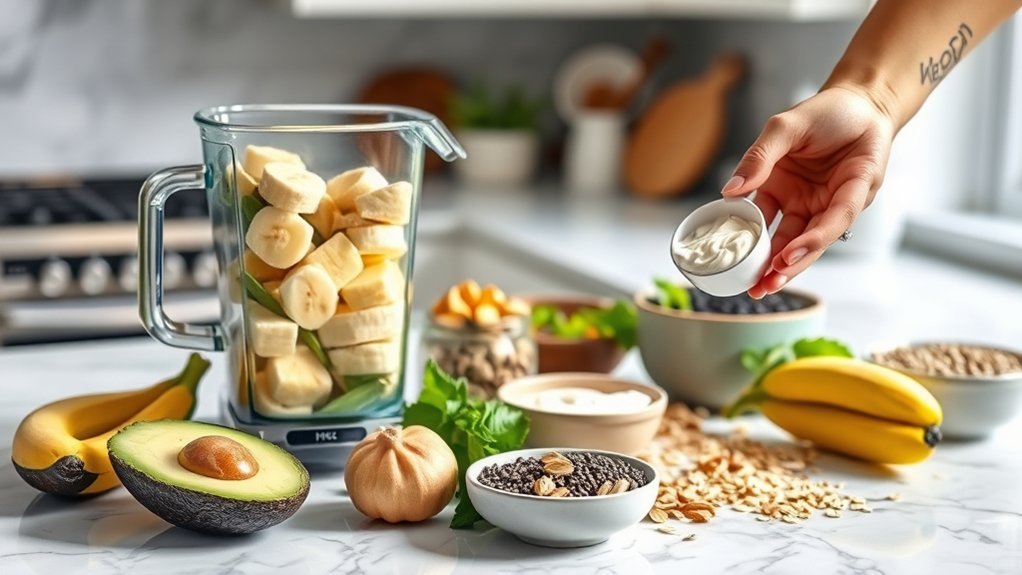
When it comes to your baby’s growth, high-calorie baby food plays an essential role in providing the energy and nutrients necessary for healthy development. Meeting your baby’s caloric requirements is vital, especially for those who need to gain weight.
Nutrient-dense foods like avocados, full-fat dairy, and nut butters help fulfill these increased needs. By incorporating high-calorie ingredients such as oils and cream, you can appreciably boost calorie content without larger portion sizes.
Healthy fats from sources like full-fat yogurt support brain development and overall health while promoting weight gain. Regularly monitoring your baby’s growth allows you to adjust their diet, ensuring they receive adequate nutrition to foster ideal infant growth and well-being.
Frequently Asked Questions
Can I Use Frozen Vegetables Instead of Fresh Ones?
Yes, you can use frozen vegetables instead of fresh ones. Frozen vegetable benefits include convenience and nutrient retention, making them excellent fresh vegetable alternatives for preparing baby food. Just make certain they’re properly cooked for your baby’s safety.
How Long Can I Store Homemade Baby Food?
You can store homemade baby food in airtight storage containers for up to three days in the refrigerator. Follow refrigeration guidelines carefully to guarantee freshness, and avoid letting it sit too long before serving.
Are There Any Allergens to Watch for in Ingredients?
Yes, there are common allergens like dairy, eggs, nuts, and gluten. When preparing baby food, consider ingredient substitutions to avoid these allergens and guarantee your baby’s safety while meeting their nutritional needs. Always consult a pediatrician.
Can I Add Spices to Baby Food for Flavor?
Absolutely, you can add spices to baby food for flavor! Just start with mild options like cinnamon or nutmeg. Explore gentle flavor combinations, but always check for allergies to keep your little one safe while enjoying variety.
What Are Signs My Baby Is Ready for High-Calorie Foods?
Your baby’s ready for high-calorie foods if you notice increased appetite and they’re hitting growth milestones. Look for signs of hunger between meals and interest in solid foods, indicating they’re ready to explore new flavors.
Conclusion
Incorporating high-calorie baby food can greatly support your little one’s weight gain journey, especially if they’re struggling to meet their nutritional needs. Research shows that babies with higher caloric intake often have improved growth patterns. However, always consult your pediatrician before introducing new foods to verify they’re suitable for your baby’s age and health status. By carefully selecting and preparing these nutrient-dense options, you’re not just feeding your baby; you’re nurturing their growth and development with intention.