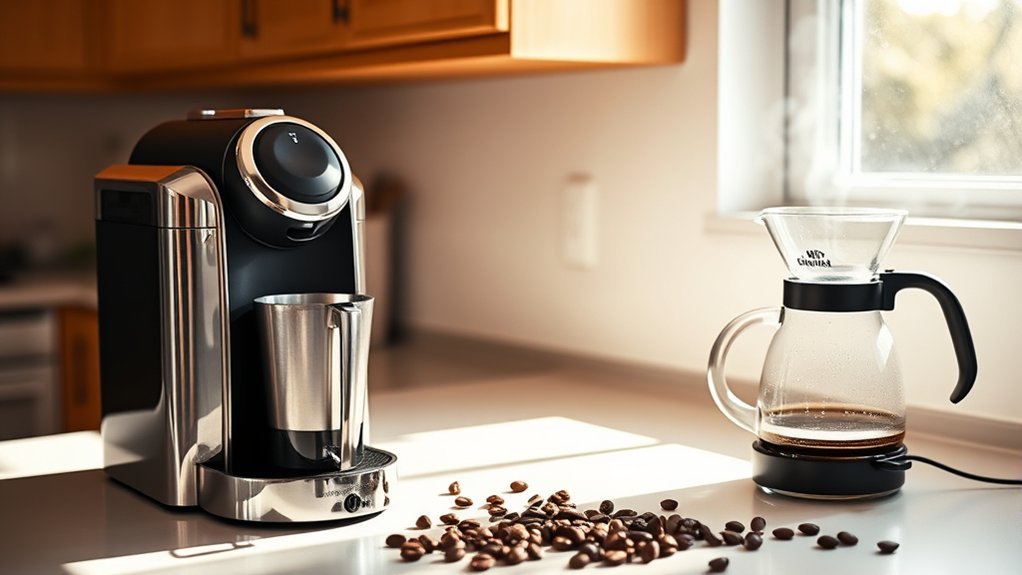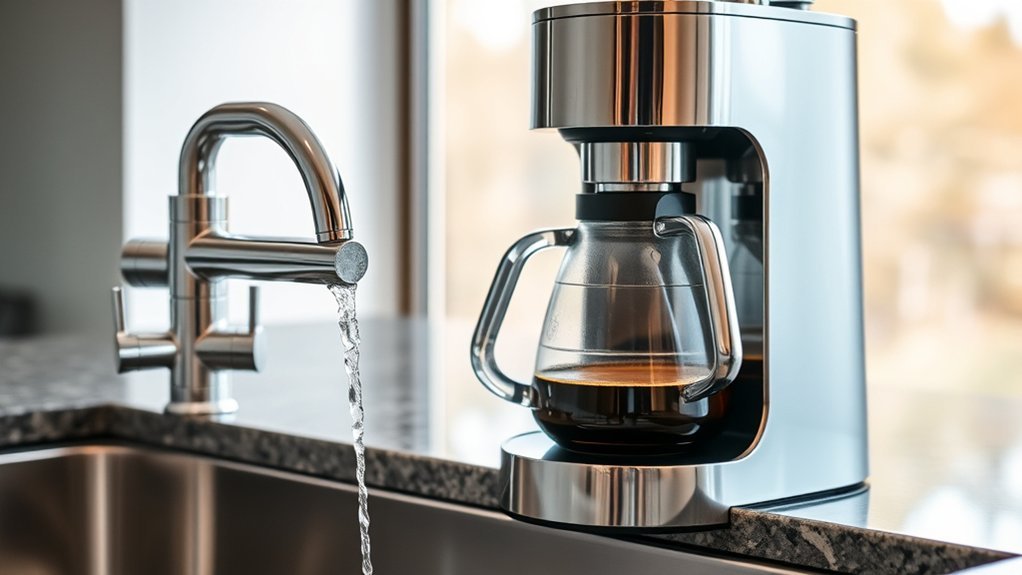
Yes, you can usually use tap water in a coffee maker when the water is safe to drink, tastes clean, and is suitable for your machine. After safety, the main concerns are water chemistry and flavor. Chlorine or chloramine can affect taste, while hardness and alkalinity can influence both coffee flavor and mineral-scale buildup inside the brewer.
Quick Answer
Yes. If your tap water is safe to drink, tastes clean, and your coffee maker’s manual does not restrict it, you can usually brew with it. Filter it when chlorine or chloramine affects flavor, manage hard water to limit scale, and do not assume distilled or very low-mineral RO water suits every machine.
Key Takeaways
- Potable, good-tasting tap water can normally be used in a coffee maker, but mineral content and disinfectants can change the finished coffee.
- Do not judge brewing water by TDS alone. Hardness, alkalinity, chlorine or chloramine, and the individual minerals present also matter.
- Water-filter certifications are claim-specific. Choose a filter certified for the actual problem you want to reduce, such as chlorine, chloramine, taste and odor, or a specific health-related contaminant.
- Hard water can contribute to scale inside a coffee maker, so check your water hardness and follow the manufacturer’s descaling instructions.
- Distilled, demineralized, and very low-mineral reverse-osmosis water are not recommended for every coffee maker. Follow the manual for your exact model.
- Private-well users should test their water regularly rather than assuming clear, good-tasting water is automatically safe.
- Never assume a coffee maker makes unsafe tap water safe. Follow the exact instructions in any local drinking-water advisory.
At a Glance
| Time Required | About 5–15 minutes for basic taste, odor, report, and hardness checks; laboratory testing takes longer |
| Difficulty | Easy |
| Tools Needed | Clean drinking glass, your water-quality report, and optionally a hardness test strip or TDS meter |
| Cost | Usually $0 for basic checks; additional cost if you buy test strips, a filter, or laboratory testing |
Is Tap Water Good Enough for a Coffee Maker?
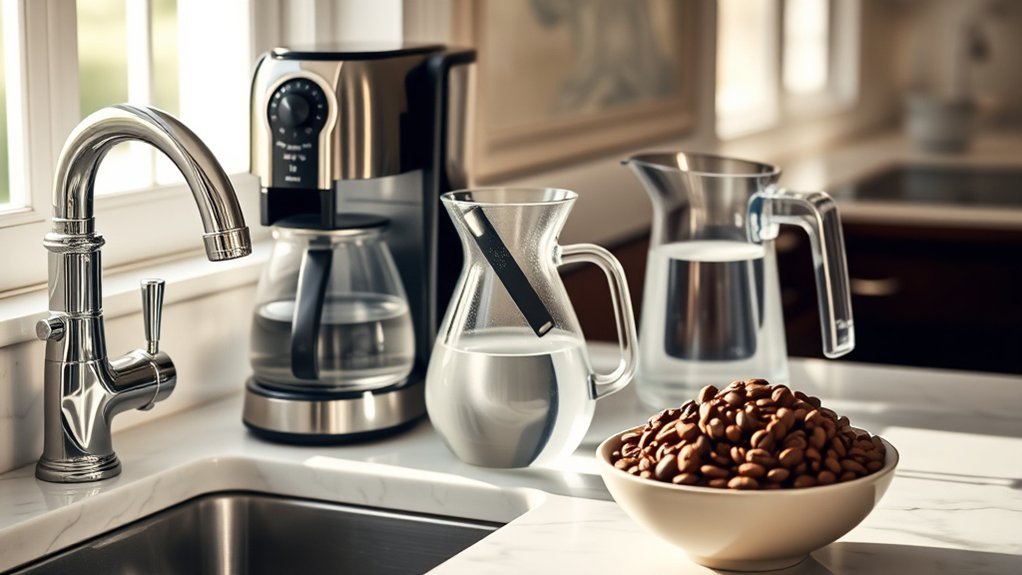
Start with the most important question: Is the water safe to drink, and does it taste good by itself? Public water systems in the United States are regulated under federal drinking-water rules, but local conditions can change. If your community has issued a drinking-water advisory, follow local instructions rather than assuming your coffee maker will make untreated water safe.
Community-water customers can check their latest Consumer Confidence Report through the U.S. Environmental Protection Agency. These reports provide information about the local water source, regulated contaminants, detected violations, and other water-quality details.
Once safety is confirmed, look at the characteristics that matter for brewing. Coffee water contains dissolved minerals and other substances that can influence extraction, acidity, aroma, and mouthfeel. The Specialty Coffee Association’s discussion of water and coffee explains how mineralization and alkalinity can change the way coffee tastes.
Note: There is no single TDS number that guarantees good coffee. Two waters can show similar TDS readings while containing very different combinations of calcium, magnesium, sodium, bicarbonate, chloride, and other dissolved material.
Power your essentials anywhere with a 999Wh pure sine wave power station delivering up to 1000W continuous with 2000W surge. It supports fast charging via USB-C PD 60W and USB-A QC 18W, plus simultaneous output for multiple devices through AC, USB, wireless, and car/DC ports. Recharge using AC, car, or solar with a built-in MPPT controller and dual cooling fans, while the upgraded battery management system protects against surges, short circuits, and overheating.

PATENTED DESIGN – The top-mounted fastener allows for easy countertop installation entirely from above, eliminating the hassle of tightening the nut from underneath the sink.

Provides consistent high quality water
Main Drawbacks of Using Tap Water for Coffee
Tap water is convenient and often works very well, but three common issues can reduce coffee quality or increase maintenance.
- Disinfectant taste or odor: Municipal systems may use chlorine or chloramine to disinfect drinking water. The water can meet safety requirements while still having a noticeable taste or smell. If that character carries into your coffee, an appropriate filter may help.
- Excessive hardness: Hard water contains more dissolved calcium and magnesium. The U.S. Geological Survey explains that hardness can produce mineral deposits in heated equipment and plumbing. Inside a coffee maker, that can mean more scale and more frequent descaling.
- Unbalanced water chemistry: Water that is extremely low in minerals or unusually high in alkalinity can also affect flavor. The goal is not to remove every mineral. It is to use water that tastes clean and is compatible with both the coffee and the machine.
How to Assess Your Tap Water for Brewing Coffee
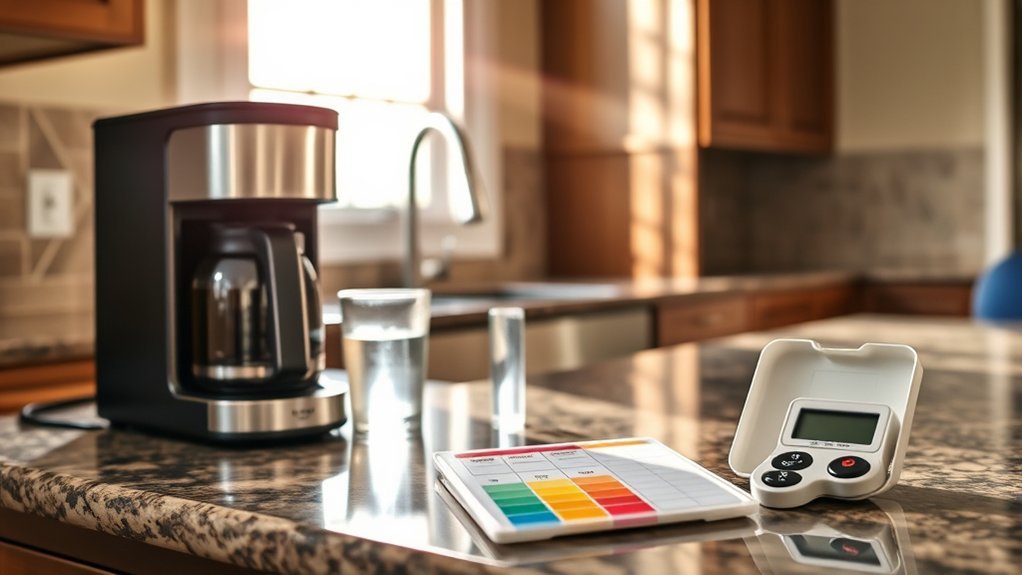
You do not need laboratory equipment for a useful first check. Start with taste and odor, review information about your water supply, and measure hardness if scale is a recurring concern.
Assess Odor and Taste
Pour a glass of cold tap water and smell it before tasting it. Water that tastes clean and pleasant by itself is a better starting point for coffee than water with a strong chlorine, sulfur-like, metallic, earthy, or otherwise unusual character.
If the water develops a sudden or persistent change in taste, odor, or appearance, do not assume it is merely a coffee problem. Check local notices or contact your water utility when appropriate.
Check Your Water Quality Report
If you use a community water system in the United States, look up your Consumer Confidence Report. It provides more useful information than guessing from taste alone and may identify the water source, disinfectant, regulated contaminants, and any reported violations.
Remember that a utility report describes the public water system. Conditions inside a building’s plumbing can also influence what comes from an individual faucet.
Private Well Water Needs a Different Safety Check
Private-well users do not receive municipal Consumer Confidence Reports, and privately owned household wells are not regulated in the same way as public water systems. As a practical baseline, private-well water should be tested at least once a year for total coliform bacteria, nitrates, total dissolved solids, and pH, with additional testing based on local risks and health-department guidance.
Use a state-certified laboratory when laboratory testing is needed. Test again if flooding, repairs, nearby contamination, or a sudden change in the water’s color, taste, or smell gives you reason to suspect a problem.
Test Hardness, Then Use TDS as a Secondary Check
Hardness and TDS describe different properties. Hardness mainly reflects dissolved calcium and magnesium. Total dissolved solids is a broader estimate of dissolved material in the water.
A hardness test strip, utility report, or properly performed water test is more useful for judging scale risk than a dish-soap foam test. A TDS meter can help you compare one water source with another, but it cannot identify which minerals or salts are producing the reading.
The Specialty Coffee Association has specifically cautioned that a TDS meter does not tell you what is actually dissolved in the water. For that reason, do not treat a particular TDS reading as proof that coffee will be under-extracted or over-extracted.
Understand Alkalinity
Alkalinity describes the water’s ability to buffer acids. This matters because coffee contains acids that contribute to its flavor. Greater alkalinity can soften perceived acidity, while very low alkalinity can allow acidity to stand out more strongly.
For practical home brewing, you usually do not need to engineer alkalinity precisely. It is enough to recognize that TDS alone cannot describe how the water will behave in your cup.
Good coffee water is not simply “low TDS” or “high TDS.” Mineral composition, hardness, alkalinity, taste, and machine compatibility all matter.
Best Practices for Brewing Coffee With Tap Water
Start With Safe, Good-Tasting Cold Water
Use fresh, cold, potable water from the cold-water tap and let the coffee maker heat it to brewing temperature. If the water has a strong off-taste or odor, investigate the cause before assuming that more coffee, a different grind, or a hotter brew will fix the cup.
Warning: A coffee maker is not a substitute for drinking-water treatment. During a boil-water, do-not-drink, or do-not-use advisory, follow the instructions issued by local public-health officials. The required action depends on the type of advisory, and boiling does not make water contaminated with harmful chemicals or toxins safe to drink.
Filter for Better Taste When Needed
If chlorine taste or odor is the main problem, filtration can be a practical solution. Look for a filter certified for the reduction claim you actually need rather than assuming every drinking-water filter removes the same substances.
NSF explains drinking-water treatment standards, including NSF/ANSI 42 for aesthetic effects such as certain chlorine, chloramine, taste, and odor claims and NSF/ANSI 53 for specified health-effect contaminant claims. Certification is product- and claim-specific.
Check Whether Your Utility Uses Chlorine or Chloramine
If your utility uses chloramine, look for a filter specifically certified for chloramine reduction. A product that carries only a chlorine-reduction claim should not automatically be treated as certified for chloramine. Likewise, an aesthetic taste-and-odor certification is not the same as certification for reducing a health-related contaminant such as lead.
A basic carbon filter may improve flavor without substantially reducing hardness. If scale is your main concern, test the hardness and choose a treatment approach intended for that problem.
Pro Tip: Brew the same coffee once with your normal tap water and once with a suitable filtered water. Keep the coffee dose, grind, water amount, temperature, and brew method the same. A side-by-side taste test is often more useful than chasing one meter reading.
Match Maintenance to Your Water and Machine
Harder water generally creates scale faster, so a coffee maker supplied with hard water may need more frequent descaling. However, there is no universal vinegar ratio or maintenance interval that applies to every machine.
Follow the instructions for your exact model. For example, Cuisinart publishes cleaning and descaling procedures for its brewers, including vinegar guidance, while other manufacturers may specify a proprietary descaling solution, different concentration, or dedicated cleaning cycle.
Possible signs that maintenance is due include slower brewing, reduced water flow, unusual operating noises, repeated descale alerts, or visible mineral deposits. These symptoms can also have other causes, so use the troubleshooting instructions for your machine before taking it apart.
TDS vs. Hardness vs. Alkalinity: What Actually Matters?
| Measurement | What It Tells You | Why Coffee Drinkers Care |
|---|---|---|
| TDS | An estimate of the total amount of dissolved material | Useful for comparison, but it does not identify the minerals present or predict extraction by itself |
| Hardness | Primarily dissolved calcium and magnesium | Influences scale formation and can affect brewing chemistry |
| Alkalinity | The water’s acid-buffering capacity | Can change how strongly the coffee’s acidity is perceived |
How Hard Is Your Water?
The U.S. Geological Survey uses the following general hardness categories. These are useful for understanding a water report, but they are not universal coffee-maker descaling thresholds. Scale behavior also depends on factors such as alkalinity, temperature, and the machine’s design.
| Hardness Classification | Hardness as CaCO3 | Practical Meaning |
|---|---|---|
| Soft | 0–60 mg/L | Lower hardness; still consider flavor, alkalinity, and machine guidance |
| Moderately hard | 61–120 mg/L | Commonly usable, with maintenance needs depending on the machine and water chemistry |
| Hard | 121–180 mg/L | Greater potential for mineral buildup in heated equipment |
| Very hard | More than 180 mg/L | Scale management and manufacturer-recommended treatment become especially important |
Why Do Baristas Often Prefer Filtered Water?
Professional coffee shops care about consistency. If water chemistry changes significantly from one location or season to another, the same coffee recipe may not taste exactly the same.
Filtration and water treatment give cafés more control over disinfectant taste, hardness, alkalinity, and other variables. They can also help protect expensive brewing equipment from excessive scale or unsuitable water chemistry.
This does not mean every home brewer needs a commercial filtration system. If your tap water is safe, tastes good, produces coffee you enjoy, and does not create excessive scale, there may be little reason to change it.
How to Improve Tap Water for Better Coffee
Choose the fix that matches the actual problem rather than treating every tap-water issue the same way.
| What You Notice | Likely Issue | What to Try |
|---|---|---|
| Strong chlorine-like taste or odor | Disinfectant affecting flavor | Use a drinking-water filter certified for the exact reduction claim you need |
| Utility uses chloramine and the taste remains after ordinary filtration | Filter may not carry a chloramine-reduction claim | Choose a product specifically certified for chloramine reduction |
| Frequent white scale or mineral deposits | Hard water | Test hardness, descale as directed, and consider suitable hardness treatment |
| Coffee tastes flat despite fresh coffee and a sound recipe | Water chemistry may be contributing | Compare your tap water with a suitable filtered or bottled water using the same recipe |
| Using distilled or nearly mineral-free RO water | Mineral content may be unsuitable for flavor or for the specific machine | Check the appliance manual and consider an approved water source or appropriately remineralized RO water |
| Tap water suddenly smells, tastes, or looks unusual | Possible water-supply or plumbing change | Check local notices or contact the water utility before using it for brewing |
Do not add lemon juice, citric acid, or other acids directly to everyday brewing water as a general fix for hardness. Doing so changes water chemistry and flavor without reliably correcting the underlying water problem.
Alternatives to Tap Water for a Coffee Maker
If your tap water does not produce the flavor or machine performance you want, several alternatives are available.
Filtered Tap Water
For many households, filtered tap water is the simplest option. A filter chosen for the actual issue can improve flavor while avoiding the cost and waste of using bottled water for every brew.
Check the exact certification claim. A filter intended mainly for chlorine taste and odor does not necessarily reduce hardness or a health-related contaminant.
Bottled Water
Bottled drinking or spring water can work well, but mineral content varies widely between products. Rather than choosing a bottle solely because it has a particular TDS number, use water that tastes clean, produces coffee you enjoy, and meets your coffee maker’s requirements.
Reverse-Osmosis Water
Reverse-osmosis systems remove a large portion of dissolved material. That can be useful when the source water is difficult to manage, but very low-mineral RO water is not automatically ideal for every coffee maker or coffee recipe. Some coffee-focused systems blend or remineralize RO water after treatment.
Manufacturer guidance varies. Some machines can be used with appropriately treated RO water, while others recommend avoiding extremely low-mineral water unless mineral content has been added back.
Distilled and Demineralized Water
Check your coffee maker’s manual before using distilled or demineralized water. Some manufacturers explicitly advise against it. For example, certain Keurig and Breville instructions tell users not to use distilled or very low-mineral water. The exact reason and restriction depend on the machine, so do not assume one rule applies to every brewer.
Softened Water
Water from a household ion-exchange softener can reduce scale-forming hardness, but it is not automatically the best water for coffee. Softening changes the water’s mineral balance, which can affect taste. Follow the coffee maker manufacturer’s guidance and compare the flavor with untreated or suitably filtered water before making softened water your default.
A Simple Way to Choose the Best Water for Your Coffee Maker
- Confirm the water is safe to drink. Check local advisories if there is any question about the supply. Private-well users should keep up with appropriate testing.
- Use cold water. Fill the brewer from the cold-water tap and let the machine heat the water.
- Taste and smell the water. Strong chlorine, sulfur, metallic, earthy, or other unpleasant characteristics can carry into coffee.
- Check the water report. Use a Consumer Confidence Report for a community water system or appropriate testing information for a private well.
- Check hardness. Use your water report or a proper hardness test if scale is a recurring problem.
- Use TDS only as supporting information. It cannot tell you which dissolved substances are present.
- Match filtration to the problem. Verify the exact certified reduction claim, especially for chlorine, chloramine, or a health-related contaminant.
- Check your machine’s instructions. Confirm whether distilled, demineralized, softened, filtered, or reverse-osmosis water is recommended or restricted.
- Compare brews side by side. Keep the coffee recipe identical and let taste plus machine performance guide the final choice.
Frequently Asked Questions
Can I Use Softened Water in My Coffee Maker?
Sometimes. Household softened water can reduce hardness and scale, but it also changes the water’s mineral balance. Check your coffee maker’s instructions and compare the taste with normal or suitably filtered water before deciding whether softened water is the best everyday choice.
How Does Chlorine in Tap Water Affect Coffee Taste?
A noticeable chlorine taste or odor can carry into brewed coffee and mask more delicate flavors. If chlorine is affecting taste, a drinking-water filter certified for chlorine reduction is often a practical solution.
What if My Tap Water Uses Chloramine Instead of Chlorine?
Check the filter’s actual certification claims. If chloramine is the problem, choose a product specifically certified for chloramine reduction. Do not assume a filter certified only for chlorine reduction has also been certified for chloramine.
Is Boiling Tap Water Before Brewing Beneficial?
Not for normal everyday brewing with safe drinking water. During a boil-water advisory, follow local public-health instructions. Boiling can kill many disease-causing germs, but it does not make water contaminated with harmful chemicals or toxins safe to drink.
Does a Coffee Maker Make Questionable Tap Water Safe?
No. Do not treat a normal coffee maker as a drinking-water purification system. If officials issue a boil-water, do-not-drink, or do-not-use advisory, follow the instructions for that specific advisory before making coffee.
Should I Put Hot Tap Water in a Coffee Maker?
Use fresh cold water unless your machine’s instructions explicitly say otherwise. Automatic coffee makers are designed to heat their brewing water, so starting with hot tap water is normally unnecessary.
Can I Mix Tap Water With Bottled Water for Brewing?
Yes, provided both water sources are safe and suitable for your coffee maker. Blending can reduce an unwanted taste or lower the concentration of hardness minerals in very hard tap water. Keep the ratio consistent once you find a blend that produces good flavor and manageable scale buildup.
Does Water Temperature Impact Coffee Extraction From Tap Water?
Yes. Brewing temperature affects extraction regardless of whether the water came from a tap, filter, or bottle. Water chemistry and temperature are separate variables, so changing the water source does not replace proper temperature control.
Can I Use Distilled Water in a Coffee Maker?
Do not assume distilled water is suitable for every machine. Some manufacturers specifically advise against distilled or very low-mineral water, while requirements vary by model. Check the instructions for your exact coffee maker before making distilled water your regular brewing water.
How Often Should I Descale When Using Tap Water?
Follow the schedule or descale indicator specified for your coffee maker. Harder water generally contributes to scale more quickly, so a machine supplied with hard water may require more frequent descaling than one using softer or appropriately treated water.
Conclusion
You can use tap water in your coffee maker when the water is safe, tastes clean, and is compatible with the machine. Instead of chasing one “perfect” TDS number, pay attention to hardness, alkalinity, disinfectant taste, scale buildup, filter claims, and manufacturer guidance. If your coffee tastes better with filtered water or your tap water creates heavy scale, match the treatment to the actual problem. A controlled side-by-side brew test can often tell you more than a single meter reading.
Sources
- Specialty Coffee Association — Water and the Taste of Coffee — mineralization, alkalinity, and the influence of water chemistry on coffee flavor; this SCA page identifies the article as sponsored content provided by BRITA.
- Specialty Coffee Association — Addressing Water Quality Issues: The TDS Meter — limitations of relying on a TDS meter alone.
- U.S. Environmental Protection Agency — Consumer Confidence Reports — finding and understanding local community drinking-water information.
- NSF — Standards for Water Treatment Systems — filtration standards and claim-specific certification for aesthetic and health-related reductions.
- U.S. Geological Survey — Hardness of Water — water-hardness definitions, calcium and magnesium, hardness classifications, and mineral-scale concerns.
- Centers for Disease Control and Prevention — Drinking Water Advisories — safe-water use during boil-water, do-not-drink, and do-not-use advisories.