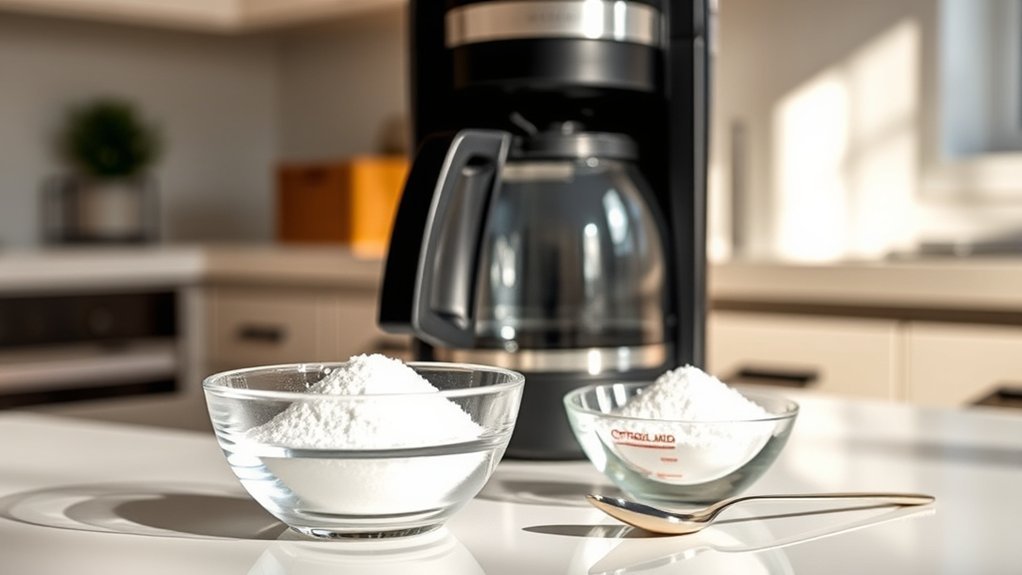
Smooth iced coffee is easy to make with an automatic drip coffee maker once you account for the ice in your recipe. The keys are a consistent coffee-to-water ratio, a medium grind, fresh coffee, clean equipment, and fast cooling. Bitterness usually comes from the beans or brewing process—not from the ice itself.
Quick Answer
For two servings, use 30 grams of medium-ground coffee, 300 grams of filtered brew water, and 150 grams of ice. Brew normally, then immediately pour the hot coffee into a heat-safe pitcher containing the measured ice. Stir until mostly chilled and serve over fresh ice. The total ratio is 1:15.
Key Takeaways
- Count both the brew water and melting ice when calculating your coffee-to-water ratio.
- Start with a 1:15 ratio: 30 grams of coffee to 450 grams of total water and ice combined.
- Use a medium grind for an automatic drip machine; move slightly coarser if the coffee tastes bitter or drains slowly.
- Use paper filters rather than metal mesh to trap bitter micro-fines that increase astringency over ice.
- Flash chilling does not cause over-extraction because coffee solids stop dissolving once liquid leaves the brew basket.
- Do not put ice in a standard glass carafe or leave it on an active warming plate to prevent thermal shock and cooked flavors.
At a Glance
| Time Required | About 8–12 minutes |
| Difficulty | Easy |
| Tools Needed | Automatic drip coffee maker, paper filter, scale or measuring spoon, heat-safe pitcher or glass |
| Cost | About $1–$3 per batch, depending on beans and add-ins |
Understanding Iced Coffee: Why Brewing Matters

Iced coffee is coffee brewed with hot water and then cooled rapidly. It is distinctly different from cold brew, which steeps coarse grounds in cold or ambient water over 12 to 24 hours. While cold brew mutes acidity and bright top notes, hot-brewed flash-chilled coffee locks in delicate aromatic oils and crisp fruit or floral notes without developing harsh bitterness when brewed correctly.
When an automatic drip machine runs, hot water passes through the grounds and extracts soluble organic acids, sweetness, aromatic compounds, oils, and bitter tannins in sequence. Grind size, coffee dose, water volume, flow rate, roast level, and machine cleanliness all determine the balance of this extraction.
Once the brewed coffee leaves the grounds and drips into the carafe, pouring it over ice causes zero additional extraction. Dedicated Japanese-style iced-coffee makers use this flash-chilling method to cool hot coffee instantly. To prevent a thin or watery cup, the ice must be factored into the overall brewing recipe as a portion of the total liquid volume.
Bitterness is controlled before the coffee hits the ice: dial in the roast, dose, grind size, filter type, and machine cleanliness first.
Water quality plays a significant role in final extraction. The National Coffee Association’s drip-coffee guidance recommends cold, filtered water to remove chlorine and harsh minerals while advising against distilled or softened water, which can lead to flat, hollow extraction.
How to Brew Iced Coffee With a Coffee Maker: Step by Step
This standard recipe yields two 8-ounce servings. Using a digital kitchen scale measuring in grams ensures repeatable extraction, as drip-machine carafe lines and kitchen measuring spoons vary considerably.
Ingredients and Equipment
- 30 grams fresh coffee beans (medium grind)
- 300 grams (or mL) cold, filtered water for the reservoir
- 150 grams clean ice for chilling
- Additional fresh ice for serving glasses
- Automatic drip coffee maker
- Paper filter matching your machine basket (cone or flat-bottom)
- Heat-safe glass pitcher or stainless steel carafe
- Digital kitchen scale
- Milk, cream, simple syrup, or spices (optional)
Warning: Never put ice directly into a standard glass brew carafe while it sits on an active warming plate. The rapid temperature swing can cause thermal shock, cracking the glass and creating a severe burn hazard. Always brew into an empty carafe and transfer immediately to a separate heat-safe container containing your chilling ice.
- Confirm the machine’s minimum batch volume. Many drip coffee makers require at least 250–300 mL of water in the reservoir to generate sufficient steam pressure and proper showerhead dispersion.
- Rinse and clean the brew basket. Old coffee oils clinging to the basket or carafe turn rancid and add harsh, astringent bitterness to fresh brews.
- Pre-weigh the chilling ice. Place 150 grams of ice into a separate heat-safe glass pitcher or stainless steel serving container. Set aside away from the brewer’s warming plate.
- Weigh and grind the coffee. Grind 30 grams of coffee to a medium consistency, resembling coarse sand or kosher salt.
- Insert and rinse the paper filter. Place a paper filter into the brew basket. Run a splash of clean water through it to eliminate dry paper fibers, then discard the rinse water.
- Fill the water reservoir. Pour exactly 300 grams (or mL) of cold filtered water into the machine’s reservoir. Never add flavorings, syrups, or milk to the reservoir.
- Brew on the standard cycle. Start the brew cycle on the regular setting. Avoid using “Bold” or “1-4 Cup” modes on your first attempt, as these settings slow water contact time and can over-extract dark, bitter compounds.
- Flash-chill the hot coffee. As soon as the cycle finishes dripping, pour the hot concentrated coffee directly over the 150 grams of measured ice in your heat-safe pitcher. Stir briskly for 20–30 seconds until the ice melts completely and the liquid is thoroughly chilled.
- Taste and serve over fresh ice. Taste a small sip of the black coffee. If balanced, pour into glasses filled with fresh ice cubes and stir in milk or sweetener as desired.
Pro Tip: To scale your recipe to any size, maintain a 1:15 coffee-to-total-water ratio. Split the total water volume into roughly 67% hot reservoir water and 33% chilling ice.
Batch Scaling Reference Table
| Servings (8 oz) | Coffee Dose (Medium Grind) | Brew Water (Reservoir) | Chilling Ice (Pitcher) | Total Liquid Base |
| 2 Servings | 30 grams | 300 grams (mL) | 150 grams | 450 grams |
| 4 Servings | 60 grams | 600 grams (mL) | 300 grams | 900 grams |
| 6 Servings | 90 grams | 900 grams (mL) | 450 grams | 1,350 grams |
| 8 Servings | 120 grams | 1,200 grams (mL) | 600 grams | 1,800 grams |
Selecting the Right Coffee Beans for Iced Coffee

Coffee served over ice requires beans with sufficient sweetness and structural body to remain expressive when chilled. Chilling dulls taste-bud sensitivity to sweetness while accentuating perceived bitterness and sourness, making bean selection vital.
Bean Roast Level Matters
A medium roast is the most forgiving foundation for drip iced coffee. It retains sufficient body and caramelized sugars without the heavy carbon and pyrolytic bitterness of darker roasts.
- Light roast: Delivers vibrant floral and fruit notes with bright malic or citric acidity. When under-extracted in a basic drip maker, it can taste unpleasantly sour or sharp over ice.
- Medium roast: Provides a balanced cup with milk chocolate, stone fruit, and brown sugar notes that hold up cleanly under dilution.
- Dark roast: Contains smoky, baker’s chocolate, and roasty notes. Darker beans dissolve soluble compounds faster; if over-extracted, they release heavy astringency and bitter phenols.
The National Coffee Association’s roast guide notes that darker roasting increases roasty, bitter profiles while obscuring origin-specific sweetness.
Flavor Profile Considerations
Washed coffees from Central and South America (featuring milk chocolate, toasted hazelnut, and caramel profiles) blend seamlessly with milk and ice. Natural-processed coffees from Ethiopia or Costa Rica add refreshing berry notes that shine when served black.
Always prioritize roast date freshness over packaging buzzwords. Whole-bean Arabica consumed within 2 to 6 weeks of its roast date provides superior sweetness compared to stale supermarket blends.
Why Grind Size Matters for Your Iced Coffee
Grind size directly dictates water flow velocity (contact time) and the rate at which soluble compounds dissolve from the coffee bed.
Impact on Flavor Profile
- Too fine: Restricts water drainage through the basket. Extended contact time dissolves bitter plant tannins and polyphenols, yielding an astringent, dry cup.
- Too coarse: Water passes through too rapidly. The brew finishes before sugars and balance compounds dissolve, resulting in a weak, sour, or grassy cup.
- Medium target: Water drains steadily over 4 to 6 minutes, yielding a clean, sweet, and crisp brew.
Filter Type: Paper vs. Metal Mesh
The type of filter in your drip basket directly affects cup clarity. High-density paper filters trap micro-fines and diterpenes (coffee oils). Permanent gold-tone or stainless steel mesh filters allow micro-grounds to wash into the carafe. Over ice, suspended fines settle at the bottom and continue releasing bitter compounds into the chilled drink. Use quality paper filters for the cleanest, smoothest iced profile.
Importance of Grind Consistency
A conical or flat burr grinder produces uniform particle distribution. Blade grinders chop beans unevenly, generating both boulders (which cause sour under-extraction) and dust-like fines (which cause harsh over-extracted bitterness in the same cup). If using a blade grinder, pulse in short bursts while shaking the unit gently to achieve an even medium grind.
Brewing Techniques for Avoiding Bitterness
Brewing iced coffee using a hot drip brewer requires managing extraction variables carefully.
Use a Consistent Ratio
The Specialty Coffee Association defines standard hot drip coffee at roughly 60 grams per liter (a 1:16.7 ratio) as outlined in their water and extraction guidelines. For iced coffee, brewing at a concentrated 1:15 ratio accounts for initial ice melt during flash chilling without diluting beverage body.
Do Not Improvise With Brew Temperature
Automatic drip machines are calibrated to heat water internally between 195°F and 205°F. Never pour pre-boiled hot water directly into a drip maker’s reservoir. Research published by the Specialty Coffee Association demonstrates that brew temperature has minimal independent impact on sensory quality when extraction yield and beverage concentration are controlled. Adjust grind size and coffee dose first.
Remove Coffee From the Warming Plate Immediately
Leaving the brewed carafe sitting on an electric hot plate burns delicate volatile aromatics and oxidizes chlorogenic acids into bitter quinic acid within minutes. Turn off the machine or pull the carafe the moment dripping finishes.
Keep the Coffee Maker Clean
Residual coffee oils polymerize on filter baskets, showerheads, and glass carafes. Clean removable parts with warm, soapy water after every use. Descale every 1–3 months to remove mineral scale that slows water delivery and overheats grounds in the basket.
Cool Your Brew: Top Tips for Flavor
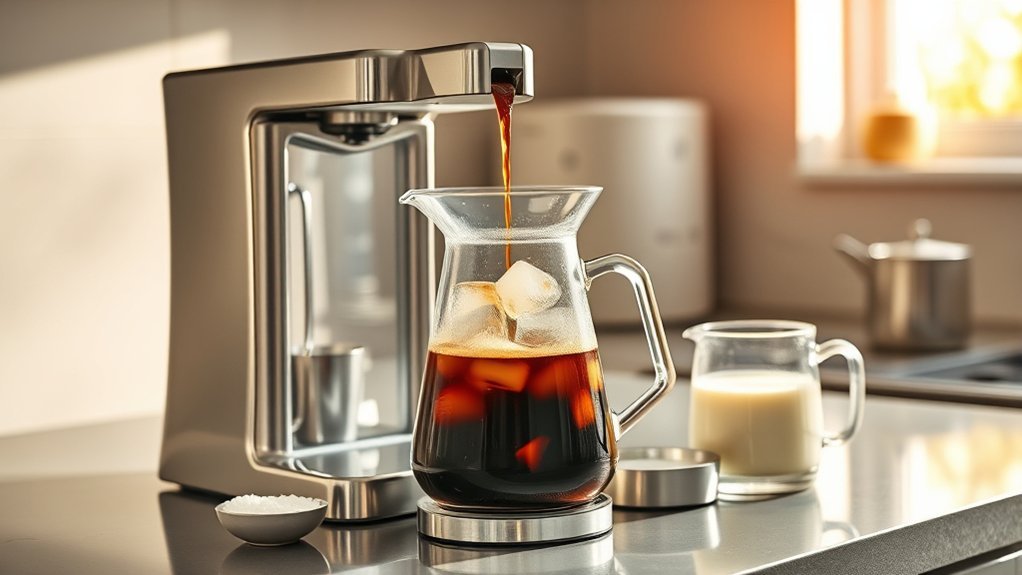
Flash cooling hot coffee preserves volatile floral and fruity aromas that evaporate when hot coffee cools slowly on a counter or in a refrigerator.
Brew Over Ice Safely
Dedicated pour-over systems like the Hario V60 Fretta Glass Iced Coffee Maker incorporate a specialized central ice tube designed to withstand sudden thermal changes. For automatic drip machines, the safest universal method is transferring hot brewed coffee immediately into a separate thermal carafe or heavy heat-resistant pitcher holding your chilling ice.
Adjust Coffee Concentration
Taste the flash-chilled coffee before pouring it over fresh serving ice:
- If slightly too strong: Add cold filtered water or milk 15 mL at a time.
- If weak or watery: Increase the dry coffee dose by 2–3 grams on the next brew rather than reducing reservoir water below your brewer’s minimum threshold.
- If sharp and sour: Grind slightly finer to increase extraction.
- If bitter and astringent: Grind one step coarser or switch to a lighter roast.
Note: Coffee maker carafe tick marks measure 4- to 5-ounce manufacturer cups rather than 8-ounce measuring cups. Always measure water and ice using weight (grams) on a digital scale for consistency.
Flavor Boosters: Milk, Syrups, and Spices
Always add mix-ins directly to your serving glass. Never add milk, sugar, syrups, or spices into the brewer’s water reservoir or brew basket, where residues cause mold and pump failure.
- Milk and Cream: Whole dairy milk, oat milk, or half-and-half provide fats and proteins that bind to bitter polyphenols, smoothing the drink’s mouthfeel. Start with 1–2 tablespoons.
- Simple Syrup: Granulated sugar struggles to dissolve in cold liquids. Prepare a 1:1 simple syrup (equal parts sugar and hot water dissolved together) for seamless cold blending.
- Vanilla or Caramel Extracts: A single drop of pure vanilla extract or flavored syrup adds sweet aromas that counteract perceived bitterness without requiring excess sugar.
- Ground Spices: Dust ground cinnamon or nutmeg across the finished drink. Avoid brewing ground spices in the drip basket, as fine spice powders clog paper filter pores and cause basket overflows.
- Pinch of Saline or Salt: A microscopic pinch of salt suppresses bitter taste receptors on the tongue, accentuating natural coffee sweetness.
Common Mistakes to Avoid When Brewing Iced Coffee
- Omitting ice from the water calculation: Pouring regular hot coffee over unmeasured ice causes excessive dilution and weak flavor.
- Using espresso-fine grind settings: Fine powders choke the brew basket, extending contact time and resulting in over-extracted bitterness.
- Letting coffee sit on the warming plate: Electric heating elements cook brewed coffee, turning clean organic acids into harsh quinic acid.
- Using a gold-tone mesh filter for iced batches: Metal mesh allows insoluble micro-fines through, which continue extracting tannins in the chilled cup.
- Brewing below the machine’s minimum volume: Running tiny water volumes through a large drip basket creates uneven channeling and sour extraction.
- Using pre-ground stale coffee: Pre-ground beans oxidize rapidly, leaving stale, woody flavors that stand out sharply when chilled.
- Subjecting standard glass carafes to thermal shock: Adding ice directly to standard hot glass carafes risks sudden structural failure.
Serving and Storing Iced Coffee
Iced coffee delivers its brightest aroma and crispest flavor immediately after flash chilling. For serving, fill a tall glass with large, solid ice cubes to minimize rapid secondary melting.
Coffee ice cubes are an effective way to maintain full beverage strength over extended sipping. Freeze leftover black coffee in a silicone ice cube tray and use these frozen coffee cubes in place of standard ice.
How Long Iced Coffee Lasts
Black flash-chilled coffee remains fresh for 24 to 48 hours when sealed in an airtight glass container in the refrigerator. Over time, exposure to oxygen flattens volatile aromatics and increases stale flavors.
Any iced coffee blended with milk, plant creamers, or dairy must be refrigerated within two hours (or within one hour if ambient room temperature exceeds 90°F). Follow the standard FoodSafety.gov storage guidelines, which recommend consuming refrigerated perishable beverages within three to four days. Discard any stored coffee exhibiting off-odors, curdling, or sediment film.
How to Fix Bitter Iced Coffee: Solutions and Tips
Diagnose off-flavors accurately before adjusting your next brew. Bitter coffee feels dry, chalky, and harsh in the back of the throat, whereas sour coffee feels sharp, puckering, and acidic on the sides of the tongue. Adjust only one parameter at a time.
| Problem | Likely Cause | Best First Fix |
| Bitter, dry, or astringent | Grind too fine, dark roast, prolonged hot plate warming, or metal filter fines | Grind coarser, switch to a paper filter, and pull immediately from heat |
| Sour or sharply tart | Grind too coarse, under-extraction, or water drained too quickly | Grind slightly finer to increase contact time |
| Watery or hollow body | Unmeasured ice or coffee dose too low | Follow the 1:15 total ratio with pre-measured chilling ice |
| Too intense or heavy | Beverage concentration is higher than desired | Stir in 15–30 mL of cold filtered water or milk |
| Stale, woody, or rancid | Old beans, oxidized grounds, or dirty brew basket/carafe | Use fresh whole beans and deep clean equipment with soap and water |
| Papery or cardboard aftertaste | Dry paper filter fiber residue | Rinse paper filter with clean water prior to adding grounds |
To rescue a cup that has already been brewed bitter, stir in 1–2 ounces of cold whole milk or oat milk to bind to harsh tannins, or add a tiny drop of simple syrup and a grain of salt to suppress bitter taste perception.
Frequently Asked Questions
Can I use flavored coffee beans for iced coffee?
Yes. Vanilla, hazelnut, caramel, and mocha flavored beans brew well over ice. Flavored beans leave synthetic aromatic oils inside grinders, brew baskets, and carafes, so wash all contact surfaces thoroughly before brewing unflavored specialty beans.
How long can I store brewed iced coffee?
Plain black flash-chilled coffee keeps well for 24 to 48 hours in a sealed, airtight glass jar in the refrigerator. Coffee containing dairy, plant milk, or cream should be refrigerated within two hours and consumed within three to four days.
What type of coffee maker is best for iced coffee?
Any standard automatic drip coffee maker works well as long as it maintains stable brew temperatures and allows you to remove the carafe immediately from the warming plate. Machines with removable showerheads and paper filter baskets produce the cleanest results.
Can I sweeten iced coffee before brewing?
Never place sugar, syrups, milk, or flavor extracts in your coffee maker’s water reservoir. Dissolve granulated sugar into the hot coffee immediately after it brews, or stir liquid simple syrup into the drink after it has been chilled over ice.
Is it okay to reuse coffee grounds for iced coffee?
No. The initial brew cycle extracts roughly 18% to 22% of soluble sugars and desirable aromatic compounds. Reusing spent grounds yields a flat, woody, and intensely bitter beverage loaded with over-extracted tannins.
Why does my iced coffee taste watery?
Watery iced coffee happens when hot coffee is poured over unmeasured ice without adjusting the brewing recipe. To keep the beverage rich, use the 1:15 ratio by placing one-third of your total recipe water into the chilling pitcher as ice and two-thirds into the reservoir.
Can I use pre-ground coffee?
Yes, provided it is fresh and ground to a standard medium drip consistency. Store the opened bag in an airtight container away from light and moisture, and consume within one to two weeks of opening to prevent stale, oxidized bitterness.
What is the difference between iced coffee and cold brew?
Iced coffee is brewed hot in minutes and flash-chilled over ice, retaining bright fruit notes, crisp acidity, and aromatic complexity. Cold brew steeps grounds in cold water for 12–24 hours, creating a low-acid, heavy-bodied concentrate with muted aroma.
Conclusion
Making smooth, full-flavored iced coffee in a standard drip coffee maker comes down to managing dilution and extraction. By brewing a concentrated base using 30 grams of medium-ground coffee and 300 grams of water, then flash-chilling it directly over 150 grams of measured ice, you achieve a balanced 1:15 ratio with vibrant sweetness and no bitter astringency.
Keep your machine clean, use paper filters to trap bitter fines, pull the carafe off the hot plate immediately, and adjust your grind slightly coarser if dark roast notes become harsh. Once your base brew is dialled in, customize with fresh ice, milk, or simple syrups for an optimal cold cup.
Sources
- National Coffee Association: Drip Coffee — drip grind sizing, brewing ratios, filtration standards, and machine maintenance
- Specialty Coffee Association: Water, Acidity, and Brewing Ratios — golden cup brewing ratios and water mineral chemistry
- Hario USA: V60 Hot and Iced Glass Coffee Maker — Japanese-style flash-chilling extraction mechanics
- Specialty Coffee Association: Brewing Temperature and Sensory Profile — thermodynamic extraction analysis and sensory profiles
- National Coffee Association: Coffee Roasts — roasting levels, solubility rates, and flavor degradation
- FoodSafety.gov: Refrigerating Leftovers — cold beverage storage timelines and two-hour perishable refrigeration guidelines