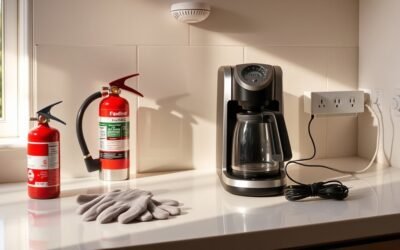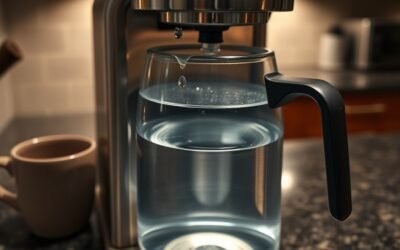

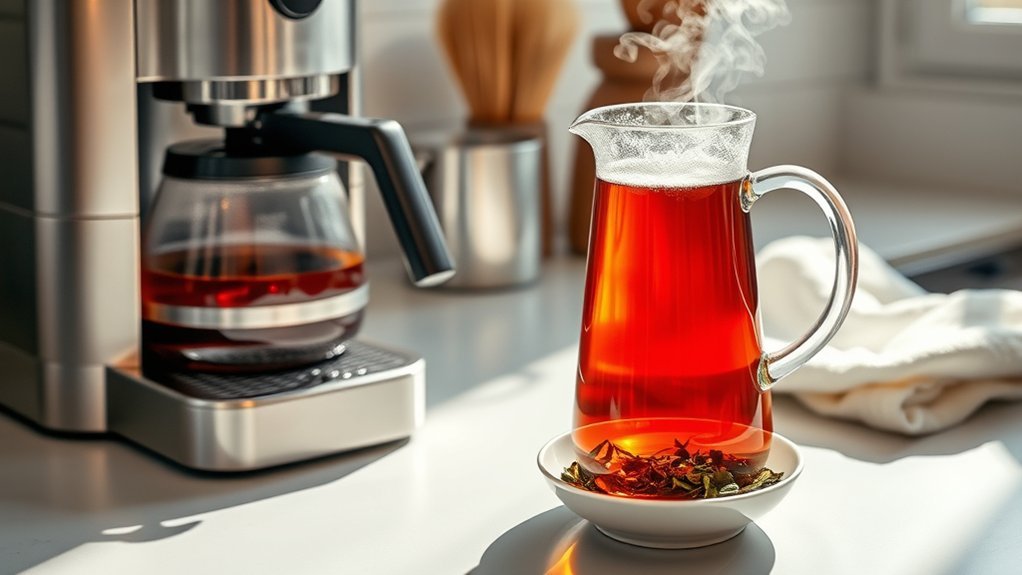
Yes, you can make tea in an automatic drip coffee maker, but the best results come from using the machine to heat clean water and then steeping the tea in the carafe. This gives you more control over the brewing time than placing tea directly in the filter basket. Start with the tea package’s ratio, temperature, and steeping instructions whenever they are available.
Quick Answer
Run clean water through an automatic drip coffee maker, add one tea bag per 8 ounces of water—or measured loose tea in an infuser—to the carafe, and steep for the time listed on the package. Remove the tea when finished. Wash the carafe and basket afterward; do not run vinegar after every batch.
Key Takeaways
- These instructions are designed mainly for an automatic drip coffee maker with a carafe.
- For better control, brew plain water into the carafe and steep the tea there instead of relying on the filter basket.
- Start with one tea bag or about 2 grams of loose tea per 8 fluid ounces of water, then adjust to taste.
- Green and white teas usually need cooler water than black and herbal teas, but package instructions should take priority.
- Wash removable parts after use. Use vinegar or descaler only as directed by the coffee maker’s manufacturer.
At a Glance
| Time Required | About 10–15 minutes, depending on the machine and tea |
| Difficulty | Easy |
| Tools Needed | Automatic drip coffee maker, carafe, tea bags or loose tea, and an optional paper filter or infuser |
| Cost | No added equipment cost beyond tea, water, and an optional filter or infuser |
Can You Make Tea in a Drip Coffee Maker?
An automatic drip coffee maker can heat and dispense water for tea, making it useful when a kettle is unavailable. However, it does not give you the same temperature control as a variable-temperature kettle. It also moves water through the brew basket quickly, which can make tea placed in the basket weaker or less predictable.
The instructions below are intended for a standard drip machine with a separate filter basket and carafe. Check the owner’s manual before using a pod brewer, single-serve machine, espresso machine, or coffee maker with a built-in grinder. Some models have special hot-water settings, while others are designed only for coffee or approved pods.
Note: Never put tea leaves, tea bags, milk, sugar, honey, lemon, or brewed tea in the water reservoir. The reservoir should contain only the water or manufacturer-approved cleaning solution specified in the manual.
Power your essentials anywhere with a 999Wh pure sine wave power station delivering up to 1000W continuous with 2000W surge. It supports fast charging via USB-C PD 60W and USB-A QC 18W, plus simultaneous output for multiple devices through AC, USB, wireless, and car/DC ports. Recharge using AC, car, or solar with a built-in MPPT controller and dual cooling fans, while the upgraded battery management system protects against surges, short circuits, and overheating.

STRONG BREW: Increases the strength and bold taste of your coffee’s flavor.

QUICK INSTANT BREW TIME: With the personal single-serve coffee maker, you can brew fresh coffee at home in under 60 seconds. And immediately take it on the go to reduce precious time in the early mornings.
Why Clean Your Coffee Maker Before Brewing Tea
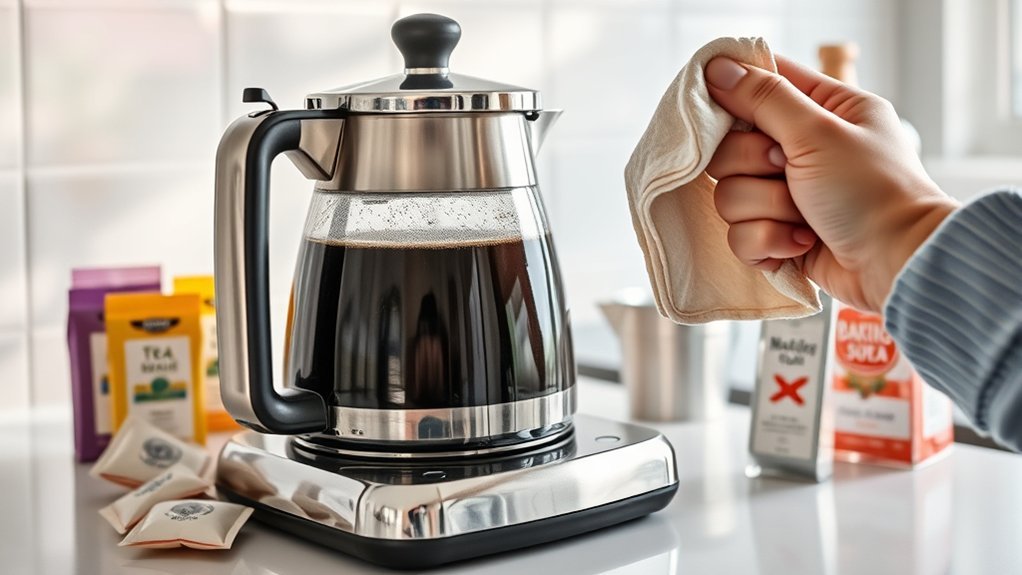
Coffee oils and old grounds can leave roasted or bitter flavors in delicate tea. Mineral deposits can also affect water flow and machine performance. Both Cuisinart’s coffee-maker cleaning guidance and Hamilton Beach’s cleaning instructions explain that residue and mineral buildup can affect flavor and operation.
You do not need to descale the machine with vinegar before every pot of tea. If the coffee maker is already clean, wash the carafe and filter basket with warm, soapy water, rinse them well, and run one full cycle with plain water. Smell the water in the carafe. If it still carries a strong coffee odor, repeat the water-only cycle.
Use vinegar, citric-acid descaler, or another cleaning product only at the concentration and interval approved for your model. Manufacturer procedures differ. Some use diluted vinegar, while others specify a measured amount of undiluted vinegar followed by two or more clean-water cycles.
Warning: Unplug the coffee maker and let it cool before wiping or hand-washing non-removable areas. Never immerse the electrical base, cord, or plug in water. Do not pour dish soap into the reservoir or run soapy water through the internal tubing.
For the cleanest tea flavor, use the coffee maker as a hot-water dispenser and control the actual steeping in the carafe.
How to Measure Tea and Water for Optimal Flavor
Start with the instructions printed on the tea box or pouch. Tea blends differ in leaf size, strength, and recommended brewing time, so the package is more specific than a universal chart.
- Tea bags: Use one standard tea bag per 8 fluid ounces of water unless the package gives a different ratio. Lipton, for example, directs users to steep one bag in 8 fluid ounces for its standard hot black tea.
- Loose tea: Start with about 2 grams, or roughly 1 level teaspoon, per 8 fluid ounces. Very bulky herbal blends may require closer to 1 tablespoon per cup.
- Strong tea: Add more tea instead of extending the steep far beyond the recommended time. Excessive steeping can make black, green, white, and oolong tea harsh or bitter.
- Large batches: Multiply the amount of tea by the actual number of 8-ounce servings, not only by the numbered marks on the carafe.
Coffee-maker “cup” markings can vary by model and may represent less than an 8-fluid-ounce measuring cup. For consistent results, measure the water with a liquid measuring cup or check the capacity chart in the owner’s manual.
Twinings recommends one tea bag per person or about 2 grams of loose tea as a basic starting point. Adjust the amount slightly after tasting your first batch.
How to Get Your Coffee Maker Ready for Tea

- Remove all used coffee grounds and discard the old coffee filter.
- Wash the carafe, lid, reusable filter, and removable basket with warm, soapy water.
- Rinse every removable part thoroughly so no soap remains.
- Reassemble the coffee maker.
- Fill the reservoir with the amount of fresh water you need.
- Place the empty carafe on the warming plate.
- If the machine still smells like coffee, run one water-only cycle before making tea.
Fresh, good-tasting water gives tea a cleaner flavor. Filtered water can help when tap water has a noticeable chlorine, sulfur, or mineral taste. Avoid repeatedly reheating old water that has been sitting in the reservoir.
Steeping Time and Temperature for Different Teas
Tea temperature and steeping time are starting points rather than absolute rules. Follow the package whenever its instructions differ from the table below. Leaf size, processing style, and the specific blend can all change the best brewing conditions.
| Tea Type | Starting Water Temperature | Starting Steep Time |
|---|---|---|
| Green tea | 170–180°F | 1–3 minutes |
| White tea | 175–185°F | 3–5 minutes |
| Oolong tea | 185–200°F | 3–5 minutes |
| Black tea | 200–212°F | 3–5 minutes |
| Herbal or fruit infusion | About 212°F | 5–7 minutes or package directions |
Lipton’s brewing guidance similarly recommends cooler water for green tea, boiling water for black tea, and shorter steeping for lighter teas.
Coffee makers do not all deliver water at the same temperature. Some lower-powered machines may produce water that is suitable for green tea but not hot enough to extract a full-flavored black or herbal tea. By contrast, the Specialty Coffee Association’s certified-equipment listings include drip machines designed to heat water to approximately 197–205°F.
When your tea is consistently weak, place a food-safe instant-read thermometer in the empty carafe and run a small water-only cycle. Measure the water immediately after it enters the carafe without touching the hot plate or internal machine parts. If the temperature is much lower than the tea package recommends, use a kettle for that variety or choose a tea that brews well at the machine’s delivered temperature.
Brewing Tea in a Coffee Maker: Step-by-Step
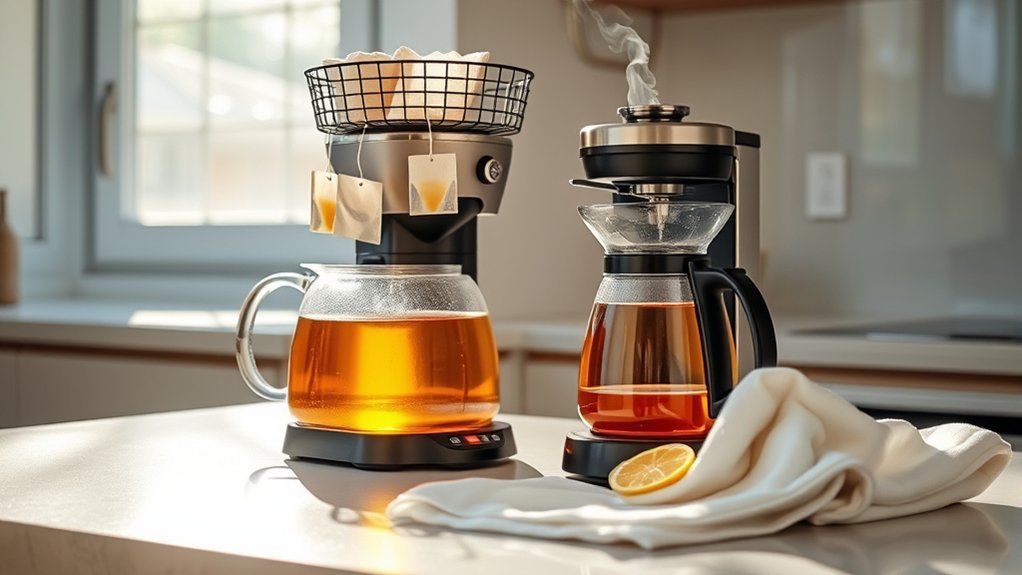
Preferred Method: Steep the Tea in the Carafe
- Clean the removable parts. Wash and rinse the carafe and filter basket. Run a plain-water rinse cycle first if coffee aroma remains.
- Measure the water. Add the amount of fresh water needed for the number of 8-ounce servings you plan to make.
- Run a water-only brew cycle. Do not place coffee, tea, milk, sweetener, or flavoring in the reservoir.
- Add the tea to the carafe. When the water cycle finishes, add one tea bag per 8 ounces. For loose tea, use a roomy infuser or reusable tea filter so the leaves can expand.
- Cover the carafe. Keep the lid in place to reduce heat loss, but do not place the carafe on an active hot plate unless your model allows it and you are monitoring the tea.
- Set a timer. Steep according to the tea package or the starting ranges above.
- Remove the tea. Take out every bag or the loose-leaf infuser as soon as the steeping time ends.
- Serve carefully. Stir the pot gently for even strength and allow the tea to cool to a comfortable drinking temperature.
Pro Tip: If the first pot tastes weak, increase the amount of tea on the next batch before increasing the steeping time. More tea usually adds body without creating as much bitterness as a very long steep.
Alternative Method: Brew Through the Filter Basket
You can place loose leaves in a paper coffee filter and run water through the basket, but this method gives you less control. The water contacts the leaves only while it passes through, and the exact contact time depends on the machine.
- Place the correct paper filter in the clean basket.
- Add measured loose tea and spread it evenly.
- Fill the reservoir with fresh water.
- Run the normal brew cycle.
- Taste the tea after the cycle finishes.
- If it is weak, use more tea during the next cycle rather than packing the basket too tightly.
Tea bags usually work better in the carafe than in the brew basket. A bag can fold, block the basket outlet, interfere with an anti-drip valve, or receive uneven water flow. Never overfill the filter basket with expanding loose leaves.
Brewing Methods Compared
| Method | Advantages | Limitations |
|---|---|---|
| Water-only cycle, then steep in carafe | Controlled steeping time; works with bags or loose tea; easy to adjust | Requires adding and removing the tea after the water cycle |
| Loose tea in the filter basket | Simple one-cycle process; paper filter catches small particles | Less control over contact time; can produce weak or uneven tea |
| Tea bag in the filter basket | Minimal preparation | Bag may fold or block flow; carafe steeping is usually more reliable |
How to Improve the Flavor of Tea Brewed in a Coffee Maker
- Use fresh water. Water that tastes or smells unpleasant on its own will affect the finished tea.
- Preheat the carafe. Swirl a small amount of hot water in the carafe, discard it, and then brew the full batch. This reduces heat loss during steeping.
- Use the right temperature. Let overly hot water cool briefly for delicate green or white tea.
- Control strength with tea quantity. Add another bag or a little more loose tea instead of steeping far beyond the recommended time.
- Give loose leaves room. A large infuser lets leaves open and circulate more freely than a tightly packed filter.
- Remove coffee odor first. Wash the carafe and basket and run plain water until the brewed water smells neutral.
- Add milk, sugar, honey, or lemon after brewing. Never place these ingredients in the reservoir or internal water path.
Loose tea can provide more room to adjust quantity and leaf style, while tea bags are faster and easier to remove. Neither format is automatically healthier; the finished drink depends on the tea itself, the amount used, and the brewing method.
Common Problems and Solutions
| Problem | Likely Cause | Solution |
|---|---|---|
| Tea tastes weak | Too little tea, low water temperature, or short basket contact time | Steep in the carafe, add more tea, and check the delivered water temperature |
| Tea tastes bitter or dry | Water is too hot or the tea steeped too long | Use cooler water for delicate tea and remove the leaves sooner |
| Tea tastes like coffee | Coffee oils remain in the basket, lid, or carafe | Wash removable parts and run one or more plain-water cycles |
| Leaves or sediment enter the carafe | The filter is the wrong size or the infuser mesh is too coarse | Use the correct paper filter or a finer tea infuser |
| Basket overflows | Too many expanding leaves, a blocked outlet, or a misplaced filter | Turn off and unplug the machine, let it cool, clear the basket, and use less tea |
| Tea cools before steeping finishes | Cold carafe or low delivered water temperature | Preheat the carafe and keep its lid closed while the tea steeps |
How to Properly Clean Your Coffee Maker After Brewing Tea
Routine cleanup after tea is simpler than descaling:
- Discard the tea bags or loose leaves.
- Let the carafe and basket cool.
- Wash removable parts with warm, soapy water.
- Rinse thoroughly and let the parts dry.
- Wipe splashes from the warming plate only after the machine is unplugged and cool.
- If tea aroma remains in the internal water path, run one plain-water cycle.
Do not automatically run vinegar after each pot. Periodic descaling is meant to remove mineral deposits and should follow the model’s manual. Cuisinart notes that cleaning frequency can depend on water hardness, while Hamilton Beach procedures may require two or three clean-water cycles after vinegar.
Best Practices for Brewing Tea in a Coffee Maker
- Use a clean automatic drip machine with a carafe.
- Measure water in fluid ounces instead of assuming every carafe mark equals an 8-ounce cup.
- Use the coffee maker to heat water, then steep in the carafe for better control.
- Start with one bag or about 2 grams of loose tea per 8 ounces.
- Follow the tea package’s temperature and time before relying on a general chart.
- Remove the tea promptly when the steeping time ends.
- Keep flavorings and sweeteners out of the reservoir.
- Wash removable parts after use and descale only as the manufacturer directs.
- Allow very hot tea to cool before drinking. The Harvard T.H. Chan School of Public Health advises avoiding frequent consumption of extremely hot beverages.
Frequently Asked Questions
Can I use loose leaf tea instead of tea bags?
Yes. Start with about 2 grams, or roughly 1 level teaspoon, per 8 fluid ounces of water. Steep the leaves in a roomy infuser placed in the carafe, or place them in a correctly sized paper filter if you prefer the basket method. An infuser usually gives you better control and less risk of overflow.
What type of tea works best in a coffee maker?
Black tea and many oolong teas often work well because drip coffee makers can produce fairly hot water. Green and white teas also work when the delivered water is within the package’s recommended range or is allowed to cool briefly before steeping. Herbal tea may taste weak if the machine does not produce near-boiling water.
Is it safe to brew herbal tea in a coffee maker?
It is generally safe to use a clean drip coffee maker to heat the water, provided the machine is operated according to its manual. Herbal infusions often need boiling or near-boiling water and a longer steep, so check the delivered temperature and follow the package instructions.
How often should I clean my coffee maker when brewing tea?
Wash the carafe, lid, basket, and reusable filter after each use. Run a plain-water rinse when an odor remains. Descale at the interval specified in the owner’s manual, which may depend on the machine and local water hardness. Vinegar is not required after every pot of tea.
Can I brew multiple types of tea in one session?
Yes. Empty and rinse the carafe and infuser between varieties. Brew delicate or lightly flavored tea before strong black, smoky, mint, spice, or herbal blends. Run a plain-water cycle if a strong aroma remains before starting the next tea.
Should tea bags go in the filter basket or the carafe?
Place tea bags in the carafe after the water cycle for the most controlled result. A bag in the basket may fold, receive uneven water flow, or interfere with the basket outlet. Carafe steeping also makes it easier to remove every bag at the correct time.
Can I make iced tea with a coffee maker?
Yes. Brew a stronger hot concentrate using about twice the normal amount of tea, steep it for the package’s recommended time, and remove the tea. Pour the concentrate over a heat-safe pitcher filled with the appropriate amount of ice or cold water. Do not fill a hot glass carafe with ice unless the manufacturer says it is safe, because sudden temperature changes can crack glass.
Can I use a pod or single-serve coffee maker for tea?
Use the machine’s hot-water function or an approved tea pod if the manual allows it. Run a water-only rinse first to reduce coffee flavor. Do not place loose leaves or an ordinary tea bag inside a pod chamber unless the manufacturer specifically approves that method.
Conclusion
Making tea in a coffee maker is practical when you do not have a kettle, but the machine works best as a source of hot water rather than as the steeping vessel. Brew plain water into a clean carafe, add the correct amount of tea, time the steep, and remove the leaves or bags promptly. With the right temperature, ratio, and cleanup routine, you can prepare black, green, white, oolong, or herbal tea without leaving unwanted coffee flavors behind.
Sources
- Cuisinart — How to Clean a Coffee Maker — supports manufacturer-specific cleaning, vinegar ratios, rinsing, and descaling guidance.
- Hamilton Beach — How to Clean Your Coffee Maker — supports automatic-drip cleaning procedures and clean-water rinse cycles.
- Twinings — How to Make the Perfect Cup of Tea — supports basic tea quantities, fresh-water use, and package-specific brewing instructions.
- Lipton Teas and Infusions — Tips for Brewing — supports cooler green-tea water, hotter black-tea water, and general steeping ranges.
- Specialty Coffee Association — Certified Home Brewers — supports modern drip-brewer performance and high-temperature brewing capability.
- Harvard T.H. Chan School of Public Health — Tea — supports cautious wording about tea health claims and avoiding extremely hot beverages.