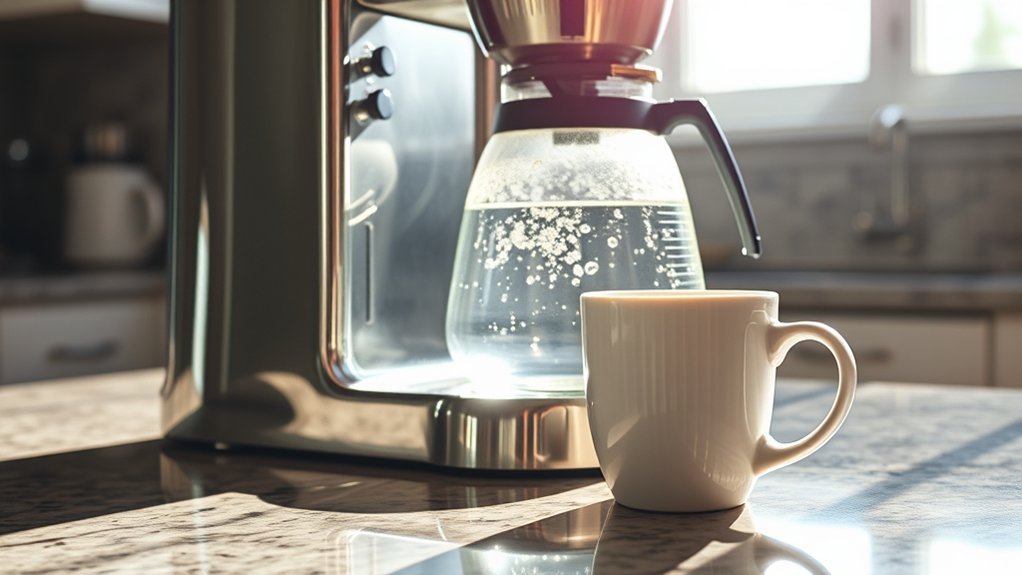
Yes, you can run plain water through many coffee makers without adding coffee. A water-only brew, rinse, or cleaning cycle can flush loose grounds, reduce mild flavor carryover, prepare some machines for use, and rinse away an approved cleaner. The exact procedure depends on the brewer, so use the rinse, cleaning, hot-water, or empty-brew method listed in your model’s manual.
Quick Answer
Yes. Many drip, single-serve, pod, and espresso machines can run water without coffee. Remove the grounds or pod, add fresh water, place a suitable container under the outlet, and use the brew, rinse, flush, hot-water, or cleaning function specified for your model. Discard the rinse water afterward.
Key Takeaways
- A water-only cycle can flush loose coffee particles, mild flavor carryover, and traces of a manufacturer-approved cleaning solution.
- Remove the beverage pod, used grounds, paper filter, or cleaning tablet before the final fresh-water rinse unless the manual specifically says otherwise.
- Use fresh potable water at the temperature recommended for your brewer; many manuals specify cold or fresh drinking water.
- There is no universal rinse count. Manufacturer examples include two full-water cycles, three or more cycles, at least five cycles, and at least 12 individual rinsing brews depending on the machine and procedure.
- Plain water does not replace washing oily removable parts or completing the model’s approved descaling procedure for mineral buildup.
At a Glance
| Time Required | About 5–30 minutes for a routine rinse; longer when it is part of a full cleaning or descaling procedure |
| Difficulty | Easy |
| Tools Needed | Fresh potable water, an empty carafe or heat-safe mug, and your model’s manual |
| Cost | Minimal—the amount of fresh water used |
What a Water-Only Coffee Maker Rinse Does
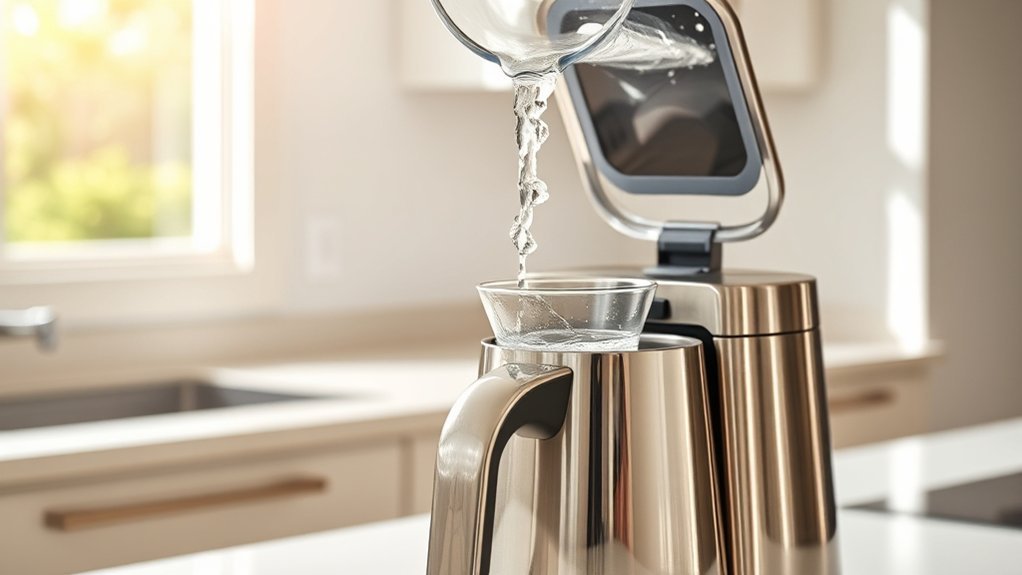
A water-only cycle sends fresh water through part or all of the machine’s normal water and brew path. Depending on the design, it can help flush away loose coffee particles, small amounts of surface residue, mild odors, and traces of a manufacturer-approved cleaner.
This can be helpful after brewing strongly flavored coffee, before using certain machines after storage, during first-use setup when the manufacturer requires it, or after completing a cleaning or descaling procedure. Some machines also use a water-only rinse to clear particles from a valve, brew chamber, needle, or coffee outlet.
However, plain water has limits. Coffee oils can cling to a brew basket, carafe, portafilter, pod holder, reusable filter, or brew chamber. Those removable parts often need separate washing with warm water and mild dish soap when the manufacturer permits it. Plain water also does not remove established calcium deposits as effectively as the machine’s approved descaling process.
Note: A rinse, a wash, and a descale are three different maintenance tasks. A rinse flushes the water or brew path, washing removes residue from washable parts, and descaling treats mineral deposits inside the machine.
When Should You Run Plain Water Through a Coffee Maker?
A water-only cycle is useful in several common situations, but the exact procedure should still come from the model’s use-and-care instructions.
- Before first use: Some coffee makers require one or more water-only cycles before you brew coffee for the first time. For example, certain Hamilton Beach models instruct users to wash removable parts and run two tap-water cycles before first use.
- After strongly flavored drinks: A plain-water rinse can reduce mild flavor carryover before the next beverage.
- After cleaning or descaling: Fresh-water cycles remove the approved cleaning or descaling solution before you make another drink.
- After storage or a long period of non-use: Some manufacturers specify a rinse, cleaning program, or priming procedure before the machine returns to normal service.
- For routine flushing: Some machines specifically recommend water-only cycles to clear residual coffee particles or oils from the brew path.
Do not assume that an ordinary empty brew is the correct procedure for every machine. Some pod and automatic espresso systems have a dedicated rinse or cleaning program with a specific button sequence.
Before You Run Water Through the Coffee Maker
Take a minute to prepare the machine before starting:
- Read the cleaning, rinsing, first-use, or maintenance section of the model’s use-and-care manual.
- Remove used grounds, a beverage pod, a paper filter, or any cleaning tablet that should not remain during the final rinse.
- Empty and rinse the carafe, drip tray, pod holder, brew basket, or capsule container as appropriate.
- Check that the reservoir contains only the fresh potable water specified for the rinse.
- Place an empty carafe or heat-safe mug beneath the outlet.
- Make sure the receiving container can hold the full amount of water the selected cycle may dispense.
Warning: Rinse water may be very hot. Keep your hands away from the outlet, sprayhead, steam wand, and warming plate. Never immerse the machine base, cord, or plug in water. Unplug the brewer and let it cool before removing internal parts or cleaning a sprayhead unless the manual gives a different procedure.
How to Run a Water-Only Cycle Through a Coffee Maker
- Empty the machine. Remove used coffee, a beverage pod, paper filter, or cleaning product as required. Do not leave a cleaning tablet in place during the final fresh-water rinse unless the manufacturer specifically tells you to.
- Clean visible residue. Wipe loose grounds from the basket, pod area, or brew chamber. Wash removable parts separately if they have an oily coating and the manual allows soap.
- Add fresh water. Fill the reservoir with the amount required for the selected cycle without exceeding the maximum line.
- Position the container. Put the empty carafe or a sufficiently large heat-safe mug beneath the coffee outlet.
- Select the correct function. Use the normal brew, hot-water, rinse, flush, or dedicated cleaning function specified for your model. Do not add coffee.
- Discard the rinse water. Treat the output as maintenance water rather than a beverage, and carefully pour it away after the cycle ends.
- Repeat when required. After an approved cleaner or descaler, complete every fresh-water rinse required by the manufacturer. If the procedure allows additional rinses and a cleaner odor remains, run another fresh-water cycle.
- Finish the job. Rinse the receiving container, reinstall clean removable parts, and allow wet components to air-dry when appropriate.
Pro Tip: After the discarded rinse water has cooled, smell it rather than tasting it. If you can still detect vinegar or cleaner and the manufacturer allows additional rinses, run another fresh-water cycle before brewing coffee.
Standard Drip Coffee Makers
Remove the grounds and paper filter, install the empty brew basket if the model requires it, fill the reservoir with fresh water, and run the rinse or normal brew cycle specified in the manual. After a vinegar cleaning procedure, some Hamilton Beach instructions call for two additional cold-water cycles, while the BUNN Speed Brew manual calls for three or more fresh-water cycles or until the vinegar smell is gone.
Single-Serve and Pod Brewers
Remove the pod and check that the holder, capsule area, or outlet is clear. Place a sufficiently large mug or container underneath, then use the model’s rinse, cleaning, hot-water, or empty-brew procedure. Do not assume every pod brewer uses the same controls. Some Nespresso models, for example, have a dedicated water-only rinsing function, while other machines use an ordinary brew without a pod.
Discard the water from a maintenance rinse. A rinse cycle is intended to flush or clean the machine and should not automatically be treated as drinking water.
Espresso Machines
Espresso machines may use a short group-head flush, automatic rinse, or dedicated cleaning program rather than a full-reservoir brew. Run water without coffee in the filter basket only when the manual permits it. Milk systems, steam wands, portafilters, brew groups, and group heads have separate cleaning needs, so a water-only flush does not clean the entire machine.
How Many Water-Only Cycles Should You Run?
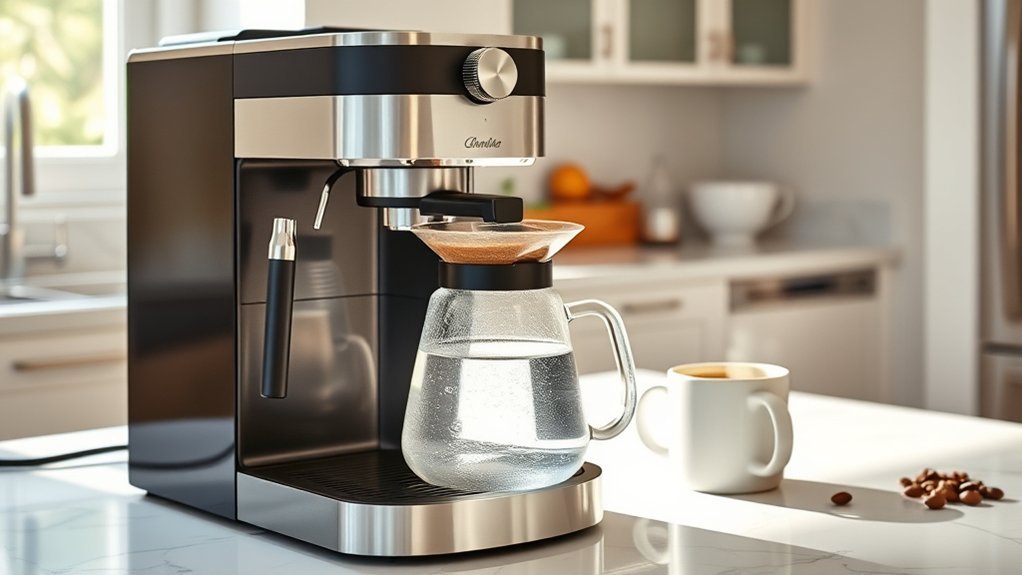
There is no universal rinse count. The correct number depends on the brewer, the size of each rinse, and what you are trying to remove. A “cycle” on a full-size drip machine is also not equivalent to a single mug-size rinsing brew on a pod machine.
- After an ordinary brew: One optional water-only cycle may be enough when your goal is simply to reduce mild flavor carryover and the manual permits an empty brew.
- After an approved cleaning solution: Follow the model’s minimum rinse procedure and discard every rinse. Continue with additional fresh-water rinses when the instructions permit it and cleaner odor remains.
- After vinegar: Manufacturer procedures differ. Hamilton Beach examples include two additional full-water cycles, while BUNN Speed Brew specifies three or more.
- After a model-specific deep-cleaning cycle: Some machines require more. The BUNN Trifecta manual, for example, specifies at least five water-only brew cycles after its vinegar procedure.
- On some Keurig brewers: Certain use-and-care guides specify at least 12 individual rinsing brews after descaling, showing why a universal cycle count is misleading.
- After storage: Use the model’s restart, priming, or cleaning procedure rather than assuming one or two cycles are enough. Some machines specify several rinse brews or a dedicated automated cleaning program.
A water-only cycle is a rinse—not a substitute for washing oily parts or descaling mineral buildup.
Rinsing, Washing, and Descaling: What Is the Difference?
Water-Only Rinsing
Use a water-only cycle to flush loose particles, refresh the brew path, or remove traces of an approved cleaner. You may also run one after strongly flavored coffee when you want to reduce flavor transfer to the next batch and the manufacturer permits an empty brew or rinse.
Washing Removable Parts
Wash the carafe, brew basket, reusable filter, pod holder, drip tray, capsule container, and other washable parts as directed by the manufacturer. Warm water and mild, nonabrasive dish soap usually remove oily residue more effectively than a brew cycle alone. Check the manual before using soap on a specific part or putting anything in a dishwasher.
Descaling the Internal Water Path
Descaling targets calcium and other mineral deposits that can restrict water flow or affect brewing performance. Use only the descaling product, vinegar mixture, quantity, and procedure approved for your model. Keurig schedules vary by machine: some guides recommend descaling every three to six months, while newer model-specific support may specify every three months or when a descale indicator activates. Use the schedule listed for your brewer in Keurig’s current support guidance or your model manual.
A Practical Maintenance Schedule
- After each use: Discard grounds or pods and rinse or wash the removable coffee-contact parts specified in the manual.
- As needed: Run a water-only cycle after flavored coffee, during model-approved first-use or return-from-storage procedures, or when you have a minor taste-transfer problem.
- After cleaning or descaling: Complete every required fresh-water rinse before brewing another drink.
- Periodically: Descale when the indicator appears or at the interval listed in the model manual.
Water quality also matters, but “filtered” does not automatically mean scale-free. Some filters mainly reduce taste and odor while hardness minerals remain. Water recommendations can also be model-specific. For example, the BUNN Trifecta manual discourages distilled, reverse-osmosis, and highly purified water for brewing. Use the water type recommended for your brewer and continue descaling when required.
Avoid These Coffee Maker Rinsing Mistakes
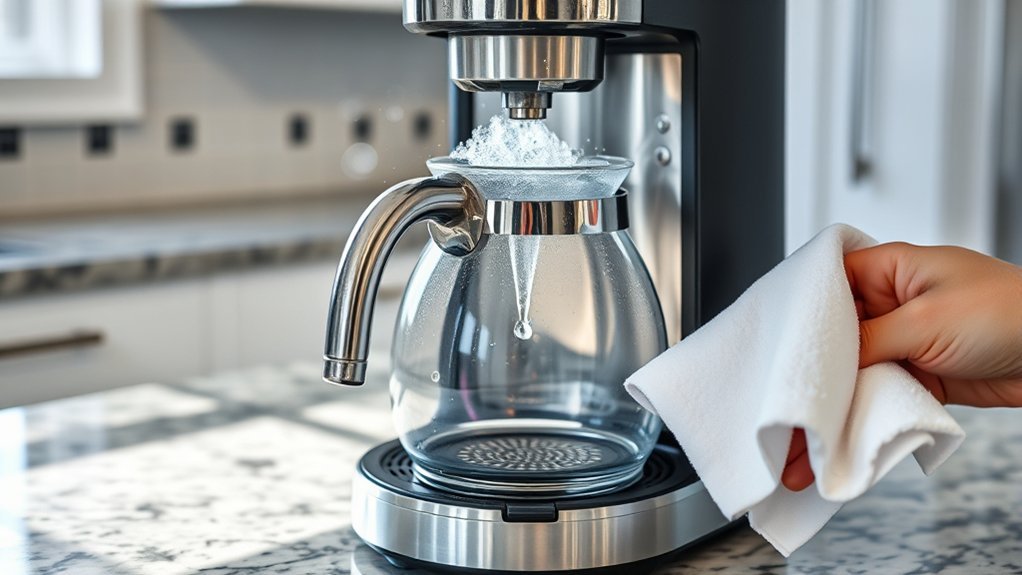
- Leaving coffee in place: Remove grounds, beverage pods, and used filters before a water-only cycle unless the instructions say otherwise.
- Assuming one cycle count fits every machine: Follow the model’s cleaning, descaling, or rinsing procedure.
- Using the wrong program: Some machines require a dedicated rinse or cleaning mode rather than an ordinary empty brew.
- Drinking the rinse output: Discard maintenance rinse water, especially after cleaning or descaling.
- Pouring very hot tap water into the reservoir: Use fresh cold or room-temperature potable water when that is what the manual specifies. The machine heats the water itself.
- Treating a rinse as a deep cleaning: Wash oily removable parts and descale mineral buildup separately.
- Using an unapproved cleaner: Do not put baking soda, bleach, dish soap, or another household product into the reservoir unless the manufacturer expressly directs you to do so for that model.
- Overfilling the reservoir or receiving container: Stay below the maximum fill line and use a carafe or mug large enough for the selected cycle.
- Handling internal parts while hot: Turn off, unplug, and cool the machine before disassembly when the manual requires it.
- Ignoring persistent problems: Slow flow, leaking, electrical smells, or unusual noises need more than repeated plain-water cycles.
Troubleshooting After Rinsing With Water
The Water Still Smells Like Vinegar or Cleaner
Run another full fresh-water cycle if the manufacturer permits it and discard the output. Complete at least the minimum number of rinses listed for the model. Do not taste rinse water to check for cleaner residue. Also rinse the carafe, brew basket, pod holder, or other removable parts separately because cleaner may remain on those surfaces.
The Next Coffee Still Tastes Oily or Stale
A water-only cycle may not remove an oily film. Wash the carafe, basket, reusable filter, pod holder, brew chamber, or portafilter with mild dish soap if the manual permits it. Rinse each part thoroughly before reinstalling it.
The Water Flow Is Slow or Uneven
Mineral scale or a blocked sprayhead, needle, screen, or water path may be restricting flow. Complete the model’s approved descaling or cleaning procedure rather than repeatedly running plain water.
Grounds or Particles Appear in the Rinse Water
Stop and clean the brew basket, reusable filter, pod holder, shower screen, brew chamber, needle, or valve area described in the manual. Run another water-only cycle after the parts are correctly reinstalled if the manufacturer calls for it.
The Machine Leaks or Makes an Unusual Noise
Stop the cycle, turn off the machine, and unplug it when safe to do so. Check that the reservoir, carafe, brew basket, drip tray, capsule container, and removable seals are seated correctly. Contact the manufacturer if the leak or unusual noise continues.
Frequently Asked Questions
How often should I rinse my coffee maker?
Run a water-only cycle when you need to reduce flavor carryover, when the model requires one before first use or after storage, or when the manual calls for fresh-water rinses after cleaning. Wash removable coffee-contact parts as directed and descale on the manufacturer’s schedule.
Can I use flavored water to rinse the machine?
No. Flavored, sweetened, or carbonated water can leave residue or create new odors. Use fresh potable water that meets the recommendations in your coffee maker’s manual.
Should I pour hot water into the coffee maker reservoir?
Usually not when the manual specifies fresh cold or room-temperature water. The brewer heats the water during operation, and the discharged rinse water may be hot enough to burn.
Will a water-only cycle remove coffee stains?
It may loosen fresh residue, but it usually will not remove established stains or an oily coating. Wash the stained removable part using the method approved in the manual. Avoid abrasive pads that could scratch glass, plastic, or stainless steel.
Can I run a cleaning solution instead of water?
Only during the manufacturer’s approved cleaning or descaling procedure. Use the specified product, amount, and cycle. Afterward, complete every required fresh-water rinse and discard the rinse output before making coffee.
Does running plain water descale a coffee maker?
No. Plain water can flush loose material, but it does not reliably dissolve established calcium deposits. Use the model’s approved descaling process when its service interval or descale indicator calls for it.
Do I leave a filter or coffee pod in during the rinse?
Do not leave coffee grounds or a beverage pod in place. An empty reusable or permanent filter should remain installed only when the model’s rinse procedure calls for it. Remove a used paper filter or cleaning tablet before the final fresh-water cycles unless the instructions specifically say otherwise.
Can I use distilled water for the rinse?
That depends on the machine. Some manufacturers or specific models discourage distilled, reverse-osmosis, or highly purified water. Follow the water guidance in your model’s manual rather than assuming one water type is suitable for every brewer.
Conclusion
Running plain water through a coffee maker is a simple way to flush the brew path, reduce mild flavor carryover, prepare some machines for use, and rinse after an approved cleaning procedure. Start with an empty machine, use fresh water, discard every maintenance rinse, protect yourself from hot discharge, and follow the model-specific function and rinse count. Remember that rinsing supports regular maintenance but does not replace washing oily parts or descaling mineral buildup.
Sources
- Hamilton Beach Coffee Maker FAQs — automatic-drip cleaning, cold-water rinse cycles, removable-part cleaning, and model-specific maintenance guidance
- BUNN Speed Brew Owner’s Manual — safety, deep cleaning, sprayhead care, and three-or-more post-vinegar rinse cycles
- BUNN Trifecta MB Use & Care Manual — regular water-only brew cycles, coffee-oil cleaning, water recommendations, and at least five post-vinegar cycles
- Keurig Support — Descaling Instructions — current model-specific descaling schedules, fresh-water rinsing, and maintenance guidance
- Mr. Coffee Cleaning Guide — water-only cycles after a manufacturer-described vinegar cleaning procedure
- Nespresso Vertuo Up Machine Assistance — model-specific water-only rinsing and cleaning behavior without a capsule