

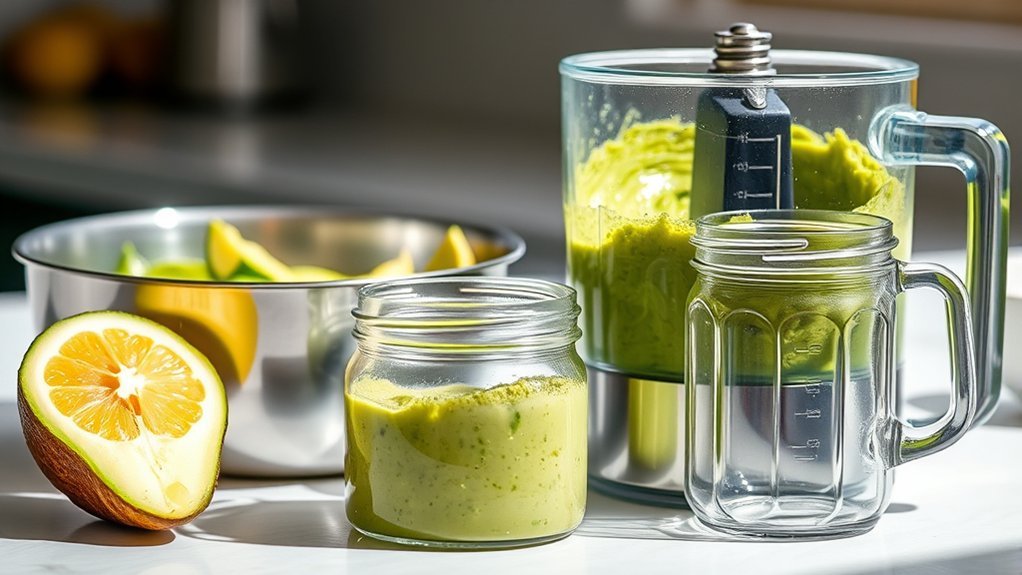
To prevent avocado baby food from turning brown, start by choosing ripe avocados that feel slightly soft. After blending the flesh into a smooth puree, add a teaspoon of lemon juice for every 3-4 avocados to inhibit oxidation. Store the puree in an airtight container, pressing plastic wrap against its surface to reduce air exposure. Refrigerate it and consume within a few days. You’ll find additional tips and creative uses for leftover puree as you explore further.
Key Takeaways
- Add a teaspoon of lemon juice to the avocado puree to lower pH and reduce oxidation.
- Store the puree in an airtight container to minimize air exposure.
- Press plastic wrap directly onto the surface of the puree before sealing the container.
- Refrigerate the puree to slow down the browning process and keep it fresh.
- Use the puree within a few days for the best taste and appearance.
Why Avocado Puree Turns Brown and How to Prevent It
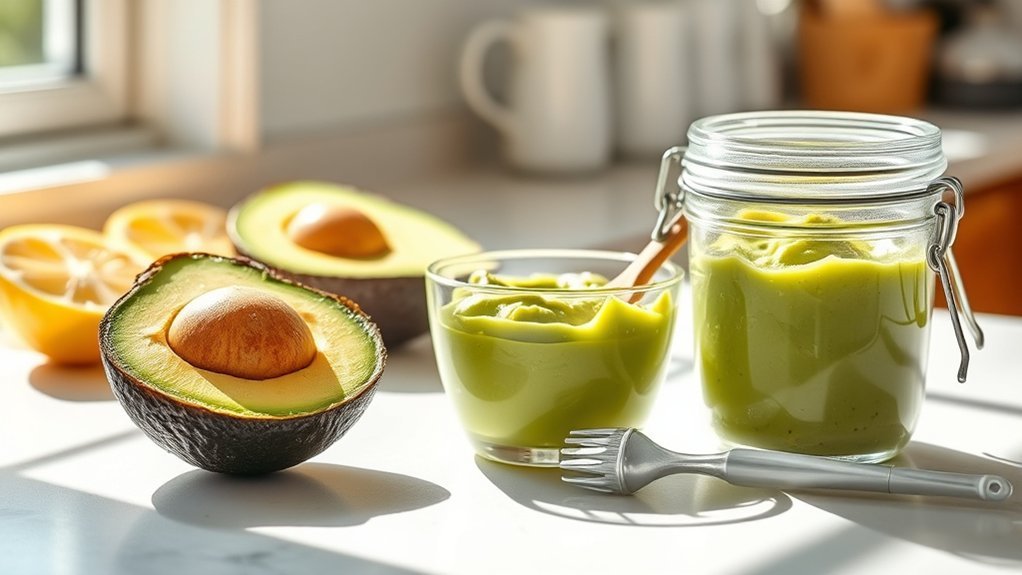
When you prepare avocado puree, you might notice it turning brown shortly after exposure to air, and that’s due to oxidation. This chemical reaction occurs when the flesh of the avocado meets oxygen, leading to that unappetizing hue.
To combat this, you can employ several browning prevention methods. For instance, adding a teaspoon of lemon juice for every 3-4 avocados lowers the pH, effectively inhibiting the oxidation process. Keeping the pit in unused avocado halves also helps, as it minimizes surface area exposure.
Storing the puree in an airtight container and pressing plastic wrap against the surface further reduces air contact. Finally, refrigerate your puree to slow oxidation, but remember to consume it within a few days for the best taste and freshness.
How to Choose the Perfect Ripe Avocado for Puree
When choosing the perfect ripe avocado for puree, start by feeling for firmness with just a slight give, which indicates it’s ripe but not overripe.
While the skin color can vary, look for dark green to almost black shades, but remember it’s not the only sign of ripeness.
You want an avocado with smooth, creamy flesh that’s vibrant green and free from dark or brown spots to guarantee a delicious puree.
Look For Firmness
Selecting the right avocado for baby food puree is crucial for achieving a smooth and creamy texture. When you’re choosing, look for firmness indicators that suggest ripeness. A ripe avocado should feel firm but yield slightly to gentle pressure. This balance guarantees the avocado texture is creamy without being overly soft.
Avoid avocados with brown spots or indentations, as these indicate overripeness or spoilage. Ideally, you want one with a uniform dark green to black skin, free of large blemishes. If you can easily twist off the stem, that’s a good sign it’s ripe.
For the best results, aim for avocados that are 2-3 days ripe to achieve that perfect consistency for your puree.
Check For Color علامات
The color of an avocado plays a significant role in determining its ripeness and suitability for baby food puree.
Look for dark green to black skin color, which typically indicates avocado ripeness. Gently press the fruit; it should yield slightly but not feel overly mushy or have brown spots. Avoid unripe avocados, as they can lead to a gritty texture in your puree.
Check for an intact stem; if it comes off easily and reveals green underneath, it’s likely ripe. While you can use frozen ripe avocados as an alternative, be aware that the texture may change slightly after thawing.
Step-by-Step Process to Make Fresh Avocado Puree

To make fresh avocado puree, start by selecting a ripe avocado that feels slightly soft when you press it.
Once you’ve cut it open and removed the pit, scoop the flesh into a blender and blend until smooth.
Adding a splash of lemon juice right after blending will help keep your puree from turning brown.
Selecting Ripe Avocados
When you’re on the hunt for ripe avocados, gently squeezing the fruit can reveal its readiness for pureeing. Look for a slight softness without any brown spots, indicating peak ripeness.
While there are various avocado varieties, the ideal firmness should yield slightly to pressure but not feel mushy. Avoid avocados that are overly soft or have dark blemishes, as these signs often indicate overripeness or spoilage.
If fresh avocados aren’t available, consider using thawed frozen options, though the texture may differ slightly post-thawing. Always check for vibrant green flesh, which suggests freshness; brown spots can mean the fruit isn’t suitable for your baby food.
Choosing the right avocados is key to a successful ripening process.
Blending Techniques Explained
Creating fresh avocado puree involves a straightforward process that guarantees your baby gets the best nutrition.
Start by selecting a ripe avocado, cut it in half, and remove the pit. Scoop out the flesh into a bowl.
For chunky texture variations, use a fork to mash the avocado. If you prefer a smoother puree, utilize blending techniques with a high-speed blender or food processor.
To achieve a creamier consistency, gradually add small amounts of breast milk, formula, or water while blending until the desired texture is reached.
Remember to mix in a teaspoon of fresh lemon or lime juice to prevent browning.
Serve immediately for ideal flavor, or store in an airtight container with plastic wrap pressed on the surface.
Storage Tips for Avocado Puree
While avocado puree is a nutritious option for baby food, proper storage is essential to prevent it from turning brown.
To minimize air exposure, store your puree in airtight storage containers in the refrigerator for up to 2–3 days. For added protection, press plastic wrap directly onto the surface of the puree before sealing the container.
If you want to store it longer, freeze the puree in ice cube trays and transfer the solid cubes into freezer-safe bags or containers, where they can last up to 3 months. Adding a teaspoon of lemon or lime juice can further inhibit browning.
When thawing, do so in the refrigerator overnight or under cold running water to maintain its texture and color.
Use Leftover Avocado Puree Creatively
Using leftover avocado puree creatively can elevate your meals while minimizing waste.
Transform your meals and reduce waste by creatively using leftover avocado puree in various delicious ways.
You can blend thawed avocado puree into smoothies for an extra creamy texture and boost nutrition. It also makes a fantastic base for homemade salad dressings—simply mix it with olive oil, vinegar, and your favorite seasonings.
If you’re baking, incorporate the puree into muffins or pancakes for added moisture and health benefits. Spread it on toast or sandwiches as a healthy alternative to butter or mayonnaise, enhancing both flavor and creaminess.
Additionally, mixing avocado puree into soups or sauces enriches their texture and introduces healthy fats.
These creative uses guarantee you enjoy every bit of your avocado while crafting delicious avocado dips along the way.
Nutritional Benefits of Avocado Puree
Avocado puree offers a wealth of nutritional benefits that can markedly support your baby’s development. Packed with beneficial fats, it promotes brain growth while providing essential nutrients for overall health.
| Nutrient | Benefit |
|---|---|
| Monounsaturated Fats | Essential for brain development |
| Vitamin E | Supports immune function |
| Folate | Aids in cell growth |
| Magnesium | Contributes to bone health |
Additionally, its high fiber content aids digestion and helps babies feel full, while low carbohydrates minimize allergy risks. With potassium supporting healthy muscle and nerve function, avocado puree stands out as a wholesome choice for introducing solids. Embrace this nutritious option to nourish your little one!
Frequently Asked Questions
Can I Freeze Avocado Baby Food to Prevent Browning?
Yes, you can freeze avocado baby food using various freezing methods, but be aware that texture changes might occur. To maintain quality, consider using ice cube trays and transferring them to airtight containers after freezing.
How Long Does Avocado Baby Food Last in the Fridge?
Avocado baby food lasts about 1 to 3 days in the fridge. Proper avocado storage is essential; the fresher it is, the better your little one’s nutrition. Always check for changes in color or smell.
Is It Safe to Eat Brown Avocado Puree?
Brown avocado puree isn’t harmful, but it loses some nutrients and flavor. If you’re concerned about brown avocado safety, consider fresh options for your baby. Avocado still offers great nutrition benefits, even if discolored.
What Other Fruits Can Brown Like Avocado?
Just like autumn leaves turning brown, bananas and apples also undergo oxidation. When exposed to air, bananas darken quickly, while apples take a bit longer but still brown. Keep them sealed for freshness.
Can Adding Lemon Juice Help Prevent Browning?
Yes, adding lemon juice can help prevent browning. Its acidity levels slow down oxidation, keeping your baby food fresh. Just a little juice goes a long way in maintaining vibrant color and nutritional quality.
Conclusion
Ultimately, preventing your avocado baby food from turning brown is essential for both aesthetics and nutrition. By choosing the right ripe avocado and following our step-by-step process, you can create fresh puree that lasts longer. Remember to store it properly and get creative with leftovers, just like a master chef in a Michelin-starred kitchen! With these tips, you’ll guarantee your little one enjoys the delicious benefits of avocado without the unsightly browning.