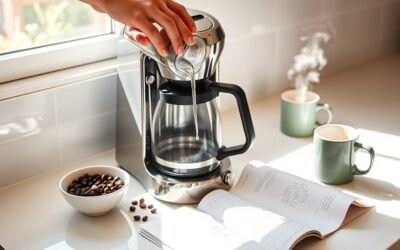

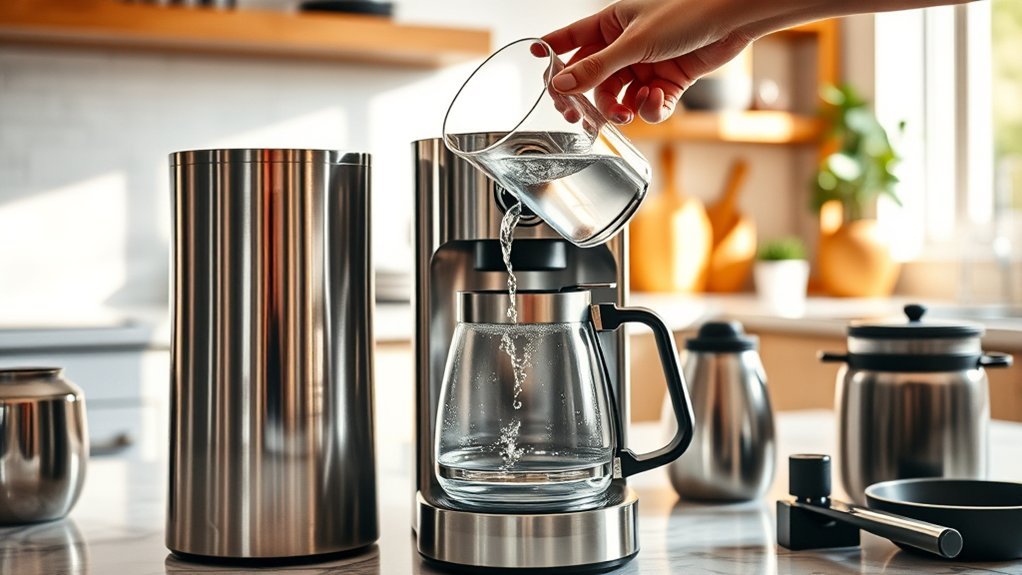
To prime your coffee maker before first use, plug it in and verify there’s no K-Cup inside. Select the 8-ounce button and press the K button to start. Expect minimal water flow at first, as the pump heats the water. Run a couple more 8-ounce cycles to thoroughly rinse the system. This guarantees your coffee maker is clean and ready for peak brewing. Stick around, and you’ll discover more tips for maintaining your coffee maker’s performance.
Key Takeaways
- Plug in the coffee maker, turn it on, and ensure no K-Cup is inserted before starting the priming process.
- Select the 8-ounce button and press the K button to initiate the priming cycle.
- Expect minimal water flow initially as the pump heats water; this is normal during priming.
- Conduct additional 8-ounce cycles to rinse the system thoroughly and flush out any manufacturing particles.
- Check the water reservoir and needle basket for clogs or obstructions to ensure proper water flow during brewing.
Step-by-Step Guide to Priming Your Coffee Maker
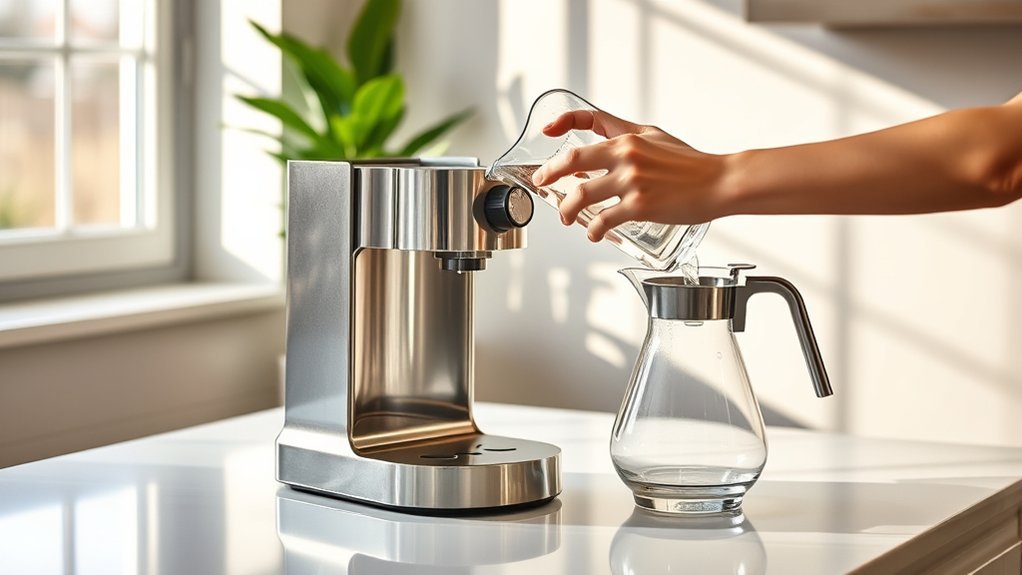
Priming your coffee maker is a straightforward process that guarantees peak performance and flavor.
Start by plugging in your coffee maker and turning it on. Lift the handle and make certain there’s no K-Cup inserted; this prevents obstructions during priming.
Begin by powering on your coffee maker and ensuring no K-Cup is present to avoid any blockages during the priming process.
Next, select the 8-ounce button and press the K button to initiate the priming cycle, which activates the water pump. Initially, expect minimal water flow, as the machine needs to prime the pump and heat the water.
Once the first cycle completes, conduct additional 8-ounce water cycles to thoroughly rinse the system. This step is essential for proper coffee maker maintenance and assures you’re ready to implement your favorite brewing techniques with maximum efficiency.
Why Priming Your Coffee Maker Is Essential
Priming your coffee maker is essential for achieving ideal flavor extraction, as it guarantees the machine heats up effectively and brews coffee at the right temperature.
Regularly priming also extends your equipment’s longevity by preventing residue buildup that can lead to malfunctions.
Optimal Flavor Extraction
When you take the time to properly prime your coffee maker, you set the stage for excellent flavor extraction in your brew.
Priming guarantees the internal components, like the water pump and heating element, are filled with water, promoting ideal brewing temperatures. This process also flushes out any residual manufacturing particles, enhancing the cleanliness of your coffee.
By reducing the risk of air bubbles, you promote even water flow, preventing inconsistent brewing that can compromise flavor. For the best results, perform multiple fresh water rinses post-priming to eliminate lingering tastes or odors.
A well-primed coffee maker improves the extraction of coffee solubles, resulting in a richer aroma and a fuller-bodied flavor in your final cup.
Equipment Longevity Benefits
Making sure your coffee maker is properly primed not only enhances the taste of your brew but also plays an essential role in prolonging the life of the machine.
By removing manufacturing residues and contaminants, priming helps maintain cleanliness, leading to better flavor extraction. Regularly priming your coffee maker prevents mineral buildup within its internal components, promoting durability enhancement.
This proactive approach also guarantees that the pump operates effectively, reducing the risk of malfunctions over time. Establishing a maintenance schedule that includes regular priming keeps your coffee maker functioning at its best, allowing for consistent brewing quality.
Preventing Residue Buildup
To enjoy a consistently great cup of coffee, you need to keep your coffee maker free of residue buildup, and that starts with the priming process.
Priming removes residue sources, such as manufacturing dust or oils, ensuring a clean brewing environment. By flushing the system with clean water, you allow the internal components to function efficiently, which is vital for ideal flavor extraction.
Regularly priming your coffee maker also aids in buildup prevention, stopping coffee oils and residue from affecting the taste of future brews. Neglecting this essential step can lead to unwanted flavors in your coffee, ruining your experience and discouraging you from using the machine.
Avoid These Common Priming Mistakes
When priming your coffee maker, don’t skip the essential initial water rinses; they’re vital for clearing any leftover residue.
Also, make sure you follow the filter installation steps closely, as an improperly placed filter can lead to brewing issues.
These common mistakes can hinder your machine’s performance, so it’s important to get them right from the start.
Skipping Initial Water Rinses
Skipping the initial water rinses can seriously compromise your coffee maker’s performance and the flavor of your brew. By neglecting this step, you risk leaving behind manufacturing oils and residual flavors that can taint your coffee. Additionally, air pockets may form in the water lines, leading to inconsistent brewing and potential pump damage. Not rinsing can also result in leftover coffee grounds or tea residues, which can negatively impact taste and cleanliness. Checking for proper water flow during priming is crucial to avoid under-extraction and a weak cup. Remember, regular fresh water rinses are key to maintaining peak performance.
| Issue | Impact | Solution |
|---|---|---|
| Manufacturing oils | Poor flavor | Rinse before use |
| Air pockets | Inconsistent brewing | Check water flow |
| Leftover residues | Off-tasting coffee | Rinse after use |
| Under-extraction | Weak coffee | verify proper priming |
Ignoring Filter Installation Steps
Properly priming your coffee maker involves more than just rinsing it out; it also requires careful attention to filter installation steps.
First, check your installation checklist to verify the needle basket is correctly positioned. If it’s not flush with the machine, you may face leaks or poor brewing.
Next, make certain the handle operates smoothly after reinstalling the filter; any misalignment can disrupt the priming process.
Don’t forget to lift the handle and remove any K-Cup before starting—your machine needs to be empty to prime correctly.
Finally, clean the water reservoir and needle basket to avoid any unwanted residues that could affect your coffee’s flavor.
Pay attention to these details; they’re essential for a successful brewing experience.
Is Your Coffee Maker Primed?

To determine if your coffee maker is primed, first confirm it’s plugged in and turned on, with no K-Cup inserted.
Priming techniques vary slightly among coffee maker types but generally follow these steps:
- Select the 8-ounce button and press the K button to start the water pump.
- Expect minimal water output initially as the system fills with water.
- After the first cycle, run additional 8-ounce cycles to thoroughly rinse the system.
- Regularly check for any residual coffee grounds or steam during rinses.
Following these steps guarantees your coffee maker is clean and ready for use.
Troubleshooting Priming Issues
Troubleshooting priming issues with your coffee maker can feel frustrating, but addressing the problem systematically can save you time and guarantee your machine runs smoothly.
First, if you notice minimal water output, check that the water reservoir is filled to the max fill line and properly seated.
Next, inspect the needle basket for clogs or obstructions; disassemble and clean it if necessary.
If the machine isn’t heating water or completing the first cycle, verify it’s plugged in and that the power connection is secure, along with the handle being closed tightly.
If the K button won’t initiate the priming cycle, lift the handle again and confirm no K-Cup is inserted.
For persistent issues, consult the manufacturer’s troubleshooting guide.
How to Keep Your Coffee Maker Clean After Priming
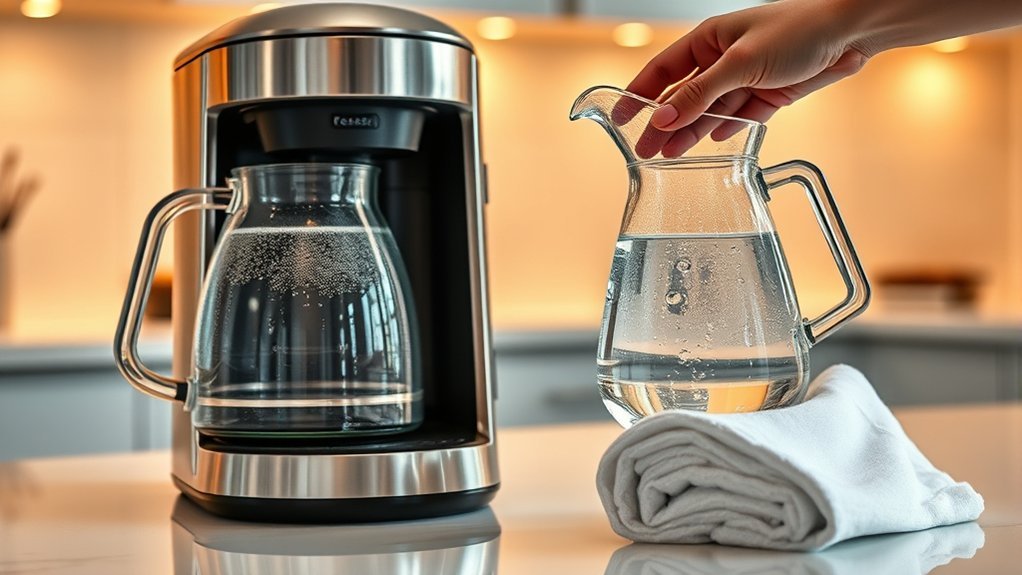
Keeping your coffee maker clean after priming is essential for ensuring great-tasting brews and extending the life of your machine.
Maintaining a clean coffee maker is vital for delicious brews and longevity of your machine.
Establish a cleaning schedule and follow these maintenance tips:
- Regularly clean the water reservoir with soap and water using a brush to prevent buildup.
- After each use, run fresh water rinses through the machine by selecting the 8-ounce button to eliminate any coffee grounds or residues.
- Disassemble and wash the needle basket thoroughly, as it can accumulate coffee oils and particles over time.
- Always use filtered water instead of distilled water to reduce mineral buildup.
Fresh Water Rinses: Why They Matter
While it might seem like a minor step, performing fresh water rinses is essential for maintaining your coffee maker’s performance and ensuring the best flavor in your brews.
These rinses help remove any residual manufacturing debris or contaminants, creating a cleaner brewing environment. By conducting multiple 8-ounce fresh water cycles, you eliminate potential tastes or odors that could negatively impact your first cup of coffee.
Rinsing also primes the pump, ensuring it functions effectively and delivers the right amount of water. Regular fresh water rinses after brewing tea or coffee are vital for preventing the buildup of coffee grounds.
In the long run, this practice enhances your coffee maker’s longevity and guarantees better-tasting coffee by avoiding stale flavors.
Frequently Asked Questions
Can I Use Vinegar to Prime My Coffee Maker?
Yes, you can use vinegar to prime your coffee maker. Its cleaning solutions effectively remove mineral buildup, ensuring peak performance. Just mix equal parts water and vinegar, run it through, and rinse thoroughly for best results.
How Often Should I Prime My Coffee Maker?
You should prime your coffee maker every few months for ideal coffee maker maintenance. This practice enhances brewing efficiency, ensuring your coffee tastes fresh and flavorful. Regular priming prevents buildup and maintains your machine’s performance.
Is It Safe to Run a Dry Cycle?
Running a dry cycle isn’t safe; it can damage your coffee maker. For proper coffee maker maintenance, always guarantee water’s in the reservoir. This protects the heating element and prolongs your machine’s lifespan.
What if My Coffee Maker Doesn’t Heat Water?
If your coffee maker doesn’t heat water, check for power issues, verify the water reservoir’s filled, and inspect for any blockages. These coffee maker troubleshooting steps can help resolve common water temperature issues effectively.
Can I Prime With Flavored Coffee Pods?
You can definitely prime with flavored coffee pods, but check for pod compatibility first. Curiously, over 60% of coffee drinkers prefer flavored varieties. So, enjoy customizing your brew while ensuring your machine’s settings accommodate those pods!
Conclusion
Now that you know how to prime your coffee maker, you’re ready to brew that perfect cup. Remember, “a stitch in time saves nine,” so taking these steps guarantees your machine runs smoothly and lasts longer. Regular maintenance and cleanings will keep your coffee tasting fresh and delicious. So, don’t skip the priming process, and enjoy the rich aroma and flavor of your coffee every morning. Happy brewing!