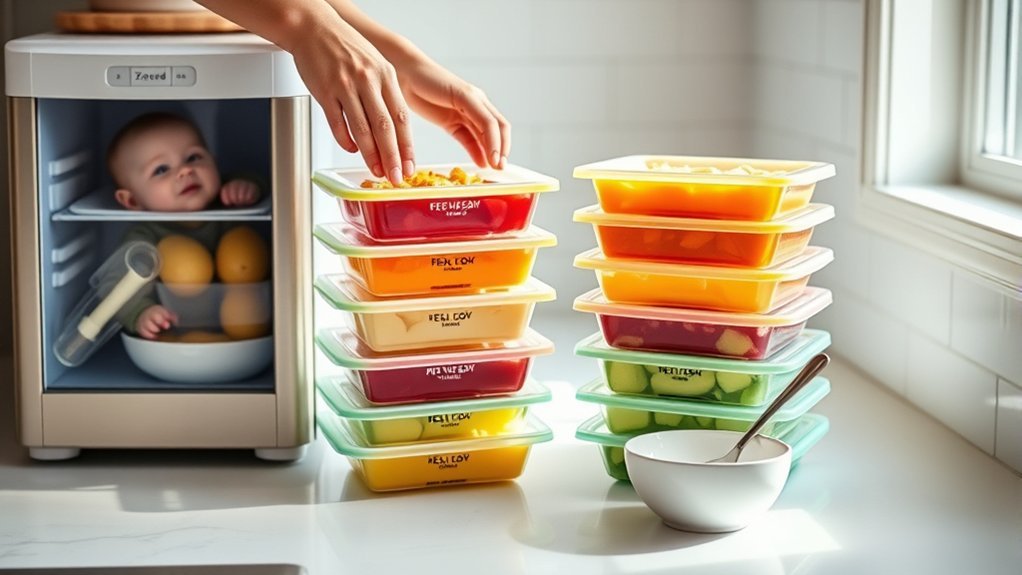
To effectively rotate and use your baby food freezer stash, label each container with dates and store older items at the front. Implement a “first in, first out” approach, using the oldest foods first. Thaw overnight in the fridge or warm gently before serving. Regularly inspect your stash for spoilage indicators, like off smells or discoloration. By following these steps, you’ll guarantee freshness and safety for your child’s meals. Stay tuned for more tips on maximizing your freezer stash!
Key Takeaways
- Label all containers with the freezing date and type of food to track freshness and organization.
- Implement a “first in, first out” method by placing older jars at the front for easy access.
- Designate a specific day each week to use the oldest baby food, ensuring regular rotation.
- Freeze baby food in small, flat portions for efficient thawing and serving when needed.
- Regularly inspect your stash for spoilage indicators like discoloration, off smells, or unusual textures, and discard any compromised food.
Understanding the Importance of a Freezer Stash
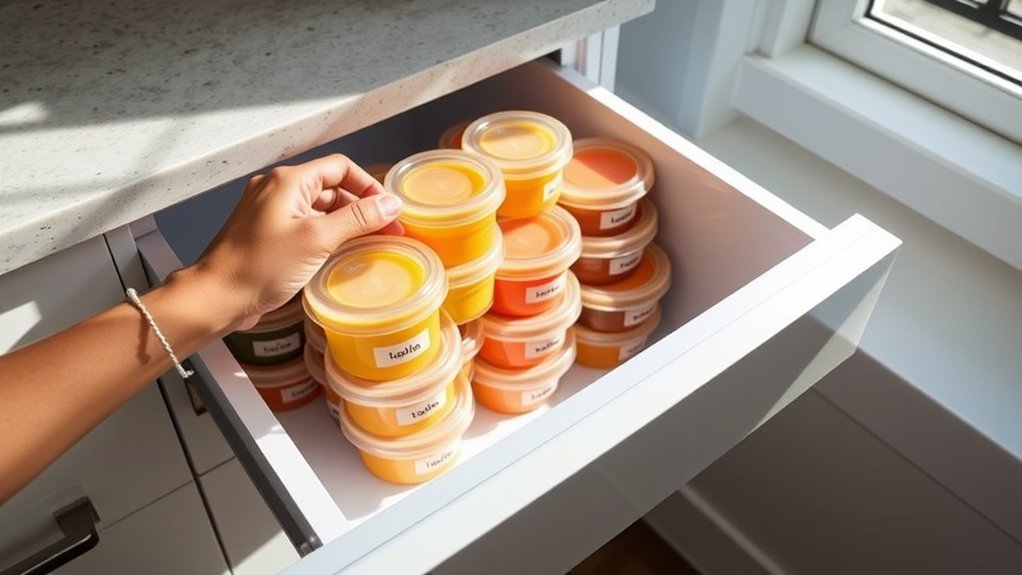
When you have a baby, the convenience of a freezer stash can be a lifesaver, especially during those hectic days. A well-stocked freezer provides essential freezer benefits, ensuring your little one has nutritious meals readily available.
The ease of a freezer stash can transform your busy days, providing nutritious meals for your little one at a moment’s notice.
This stash alleviates stress from unexpected events like spills or your baby rejecting freshly prepared food. Storing homemade baby food extends its shelf life, lasting up to three months when properly sealed.
Regularly rotating your stash not only maintains freshness but also preserves nutritional quality. Don’t forget to label containers with dates; this simple step helps you use the oldest food first, reducing waste and maximizing the benefits of your stash.
Embracing a freezer stash truly enhances meal convenience for you and your baby.
When Should You Start Using Frozen Baby Food?
How soon can you start using frozen baby food after preparing it? You should begin using your frozen baby food within 3 to 6 months to guarantee it retains ideal freshness and nutritional value.
Proper baby food preparation includes labeling your containers with dates, so you can easily track when each batch was made. To prevent waste, adopt a “first in, first out” rotation method, guaranteeing you use the oldest food first.
Keep an eye on the texture and color, as extended freezer storage may alter quality. Regularly check for freezer burn or signs of spoilage, discarding anything that looks compromised.
Your baby’s safety and health depend on the quality of the food you serve!
Duration of Safe Freezer Storage for Baby Food
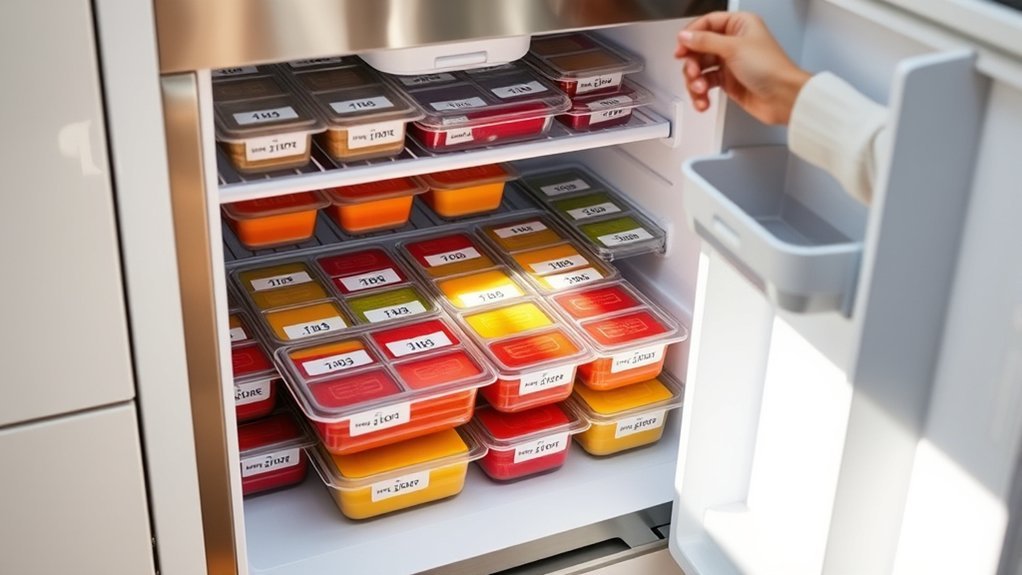
When storing baby food in your freezer, keep in mind that standard freezers can maintain quality for up to 3 months, while deep freezers extend that to 6 months.
It’s essential to label your containers with the freezing date to track how long they’ve been stored.
Always inspect for any signs of spoilage, such as changes in color or smell, before serving.
Safe Storage Guidelines
To guarantee your baby food remains safe and nutritious, it’s crucial to follow proper storage guidelines.
You can store frozen baby food in a standard freezer for up to 3 months, ensuring it retains its quality and nutritional value. If you’re using a mini-fridge freezer, consume the baby food within 1 month to prevent spoilage.
Always label your containers or bags with the preparation date, so you can easily track how long it’s been stored. To maximize storage space, freeze baby food in flat containers or bags for easier stacking.
Regularly check your freezer for any signs of freezer burn or spoilage, and discard any food that appears discolored or has an off odor to maintain safe storage.
Signs of Spoilage
Keeping an eye on your baby food stash is important, especially as time goes by.
Baby food can be safely stored in the freezer for up to three months to maintain its quality and nutrients. After six months, although it may still be safe to eat, you might notice changes in texture and taste.
Look out for spoilage indicators like off odors, discoloration, or ice crystals, as these can signal freezer burn or degradation. Always label your containers with the freezing date to help track freshness.
While it’s possible to keep baby food longer, using it within three months guarantees the best flavor and nutrient retention for your little one.
Stay vigilant to make the most of your stash!
Practical Methods for Efficiently Rotating Your Freezer Stash
Efficiently rotating your baby food freezer stash is essential for ensuring freshness and minimizing waste. Start by designating a specific day each week to use the oldest baby food, ensuring consistent rotation.
Label all containers with dates for easy identification, which enhances freezer organization and prevents waste. Consider freezing baby food in flat, portion-sized containers; this saves space and allows for easy stacking.
Implement a “one container a day” strategy to maintain a steady supply—use one meal daily and replace it with a fresh batch. Regularly review your stash, adjusting your rotation methods based on your baby’s evolving dietary needs and preferences.
This approach not only streamlines meal planning but also supports your desire for a sustainable, efficient feeding process.
Tips for Efficiently Storing Frozen Baby Food
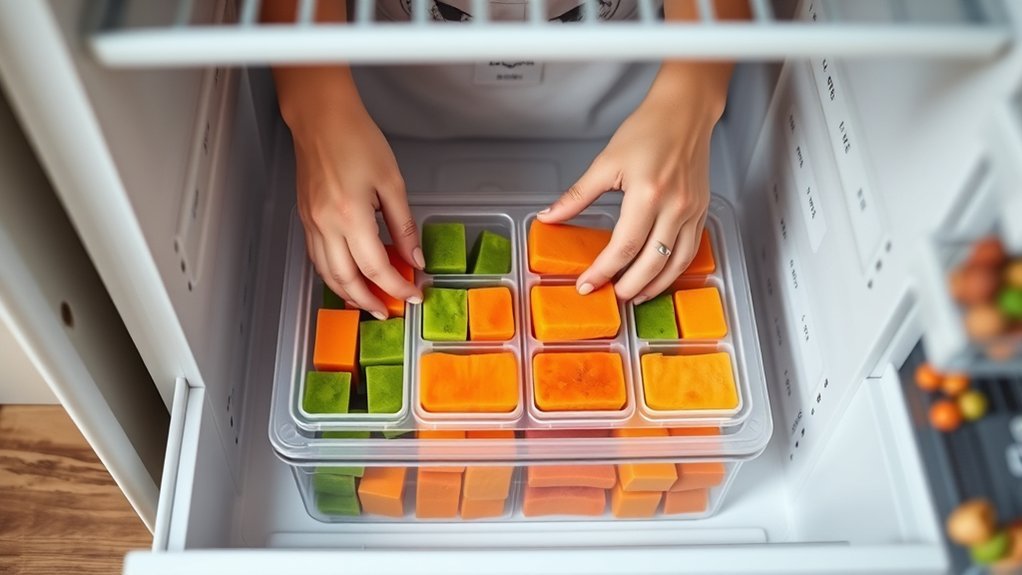
To make the most of your frozen baby food stash, use airtight containers to prevent freezer burn and preserve flavor.
Label each container with the date and type of food so you can easily track freshness.
Freezing in portion-sized amounts also helps you thaw only what you need, making mealtime more efficient.
Use Airtight Containers
Airtight containers are essential for preserving the quality of your frozen baby food. They prevent freezer burn, ensuring your meals maintain their flavor and nutrients for longer.
Opt for container materials like BPA-free plastic, glass, or silicone, which are safe and durable in freezing conditions. Choose portion-sized containers to simplify thawing and serving, minimizing waste while providing the right meal sizes for your baby. This approach not only makes feeding easier but also helps you manage portion control effectively.
Regularly check your stash and rotate the containers, ensuring that older items are used first. By using airtight containers wisely, you’ll keep your baby’s food fresh and nutritious, allowing you to focus on what truly matters—nurturing your little one.
Label With Dates
Labeling each container of frozen baby food with the preparation date is essential for maintaining a well-organized stash. This simple labeling technique helps you track the age of the food, ensuring you use the oldest items first. Use waterproof markers or labels to prevent smudging, and include the type of food for easy identification. Organize your freezer so the oldest items are at the front, facilitating quick access.
Here’s a quick reference table to evaluate:
| Date Prepared | Food Type |
|---|---|
| 01/01/2023 | Carrot Puree |
| 01/10/2023 | Pea Puree |
| 01/15/2023 | Apple Sauce |
| 01/20/2023 | Sweet Potato Mash |
| 01/25/2023 | Banana Puree |
Regularly check your stash to remove any containers older than 3-6 months.
Freeze in Portions
Freezing baby food in small portions is a practical way to streamline your meal prep and minimize waste.
Use ice cube trays or silicone molds to create ideal portion sizes for each meal, making it easy to thaw only what you need.
Store your prepared food in airtight containers or freezer bags to prevent freezer burn and maintain quality.
Label each container with the date and type of food to track freshness and variety effectively.
If you’ve made larger batches of pureed foods, divide them into single servings to simplify meal preparation.
Finally, organize your freezer by placing older baby food at the front, ensuring you use it before newer batches for maximum freshness.
Making the Most of Your Weekly Frozen Food Day
To make the most of your weekly Frozen Food Day, start by organizing a system that prioritizes using the oldest baby food first.
Designate this day to thaw your oldest frozen baby food in the refrigerator overnight or in warm water, making it ready for your baby’s meal. After serving a portion, replenish your stash by preparing fresh baby food and freezing it immediately.
Keep a specific container or section in your freezer for easy access to the oldest items, allowing for efficient rotation. Label each container with the preparation date to track freshness.
Incorporating simple frozen food recipes into your meal prep can help streamline your process, ensuring your baby enjoys nutritious meals without waste.
Daily Usage Strategies for Baby Food Rotation
While managing a steady rotation of your baby food stash might seem challenging, implementing daily usage strategies can simplify the process.
Start by adopting a “one jar a day” approach, designating a single jar for daily feeding to guarantee your freezer management is effective. Label all jars with their preparation dates to track the oldest ones, promoting efficient use.
When you prepare new jars, place them at the back of the freezer and move older jars to the front for easy access. Thaw frozen baby food overnight in the refrigerator or warm it gently to preserve nutrients—avoid the microwave.
Regularly evaluate your baby’s preferences, adjusting your cooking and freezing schedule to provide variety while minimizing waste.
Identifying When Your Frozen Baby Food Is No Longer Safe
Knowing when your frozen baby food is no longer safe to eat is essential for your child’s health.
Ideally, you should use frozen baby food within 3 to 6 months to maintain its flavor and nutritional quality. After 6 months, while it might still be safe, spoilage indicators like discoloration or ice crystals can emerge, signaling a decline in quality.
Always label your containers with the freezing date to stay organized. If you notice an off smell or unusual texture after thawing, it’s best to discard the food.
Prioritizing frozen food safety guarantees your baby enjoys meals that are both delicious and nutritious, helping you raise a happy, healthy eater.
Additional Resources for Exclusive Pumping Support
Finding the right support can make a significant difference in your exclusive pumping journey.
Consider joining online forums or support networks dedicated to exclusive pumping. These platforms allow you to share experiences and gain valuable advice from other parents.
Joining online forums for exclusive pumping can provide invaluable support and shared experiences from fellow parents.
Explore websites and blogs that offer exclusive pumping tips, including storage techniques and troubleshooting common issues. Social media can also be a powerful tool for connecting with exclusive pumping communities, enabling real-time discussions.
Don’t overlook local resources; seek out lactation consultants or breastfeeding support groups that focus on exclusive pumpers.
Finally, access educational materials from reputable organizations like the CDC or La Leche League to stay informed about best practices and guidelines.
You’re not alone—support is out there.
Frequently Asked Questions
Can I Refreeze Baby Food After It’s Been Thawed?
You shouldn’t refreeze baby food after it’s been thawed due to thawing safety concerns. Following freezing guidelines is vital; once thawed, use it within 24 hours to guarantee your baby’s meals remain safe and nutritious.
How Do I Label My Freezer Containers Effectively?
Labeling your freezer containers boosts organization by 40%, making meal prep easier. Use permanent markers or labels, noting the date and contents. Effective labeling techniques streamline your process, ensuring you grab what you need quickly.
What Are the Best Containers for Freezing Baby Food?
For freezing baby food, use glass jars for airtight storage and silicone trays for easy portioning. Both options guarantee freshness and flexibility, allowing you to easily pop out servings as needed without hassle.
Can I Mix Different Flavors in One Container?
You can mix different flavors in one container, but consider texture considerations. Some flavor combinations work better together, enhancing taste without overwhelming your baby. Experiment, and see which blends your little one enjoys most!
How Can I Tell if My Baby Dislikes a Flavor?
If your baby scrunches their face, turns away, or refuses to swallow, those baby reactions are clear tasting cues. Trust your instincts; every tiny expression can guide you to their flavor preferences and dislikes.
Conclusion
By effectively rotating and using your baby food freezer stash, you can guarantee your little one’s meals are both fresh and safe. Did you know that homemade baby food can be stored in the freezer for up to three months without losing quality? By following the outlined steps and tips, you can maximize your stash and minimize waste, giving your baby the nutrition they need while saving you time. Happy feeding!