
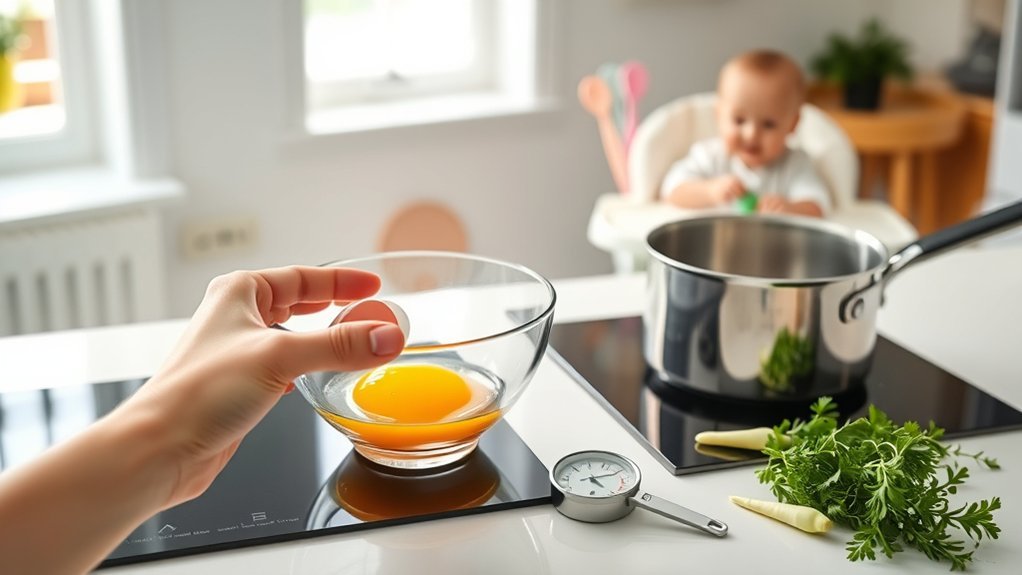
Eggs can be a nutritious early food once your baby is developmentally ready for solids, usually at about 6 months. The safest approach is to offer a small amount of fully cooked egg in a soft, manageable texture, supervise every bite, and watch for signs of an allergic reaction. Babies with severe eczema, a known food allergy, or a previous immediate reaction should receive individualized guidance from their pediatrician.
Quick Answer
Most babies can try fully cooked egg at about 6 months, once they can sit with support, control their head, and swallow food. Begin with a small taste of mashed egg or moist scrambled egg. Keep your baby upright, supervise closely, and seek emergency help for breathing trouble, facial swelling, or other severe symptoms.
Key Takeaways
- Introduce fully cooked egg when your baby is developmentally ready for complementary foods, usually at about 6 months and never before 4 months.
- Buy clean, uncracked eggs from a refrigerated case and store them at 40°F or below.
- Cook individual eggs until the yolk and white are firm. Mixed egg dishes, such as casseroles, should reach 160°F.
- Serve egg in a soft texture that matches your baby’s eating skills, and supervise while your baby sits upright.
- Begin with a small taste, watch for a reaction, and continue offering egg routinely if it is tolerated.
- Call 911 for trouble breathing or swallowing, tongue or lip swelling, faintness, blue or pale coloring, or rapidly worsening symptoms.
At a Glance
| Time Required | About 10–20 minutes, depending on the cooking method |
| Difficulty | Easy |
| Tools Needed | Clean saucepan or skillet, fork, bowl, clean utensils, and an optional food thermometer for mixed egg dishes |
| Cost | The cost of one egg plus any foods used to adjust the texture |
Medical note: General feeding guidance may not fit babies who were born prematurely or who have swallowing problems, severe eczema, a diagnosed food allergy, or a previous immediate reaction to food. Ask your pediatrician or pediatric allergist how to introduce egg in those situations.
Nutritional Benefits of Eggs for Babies
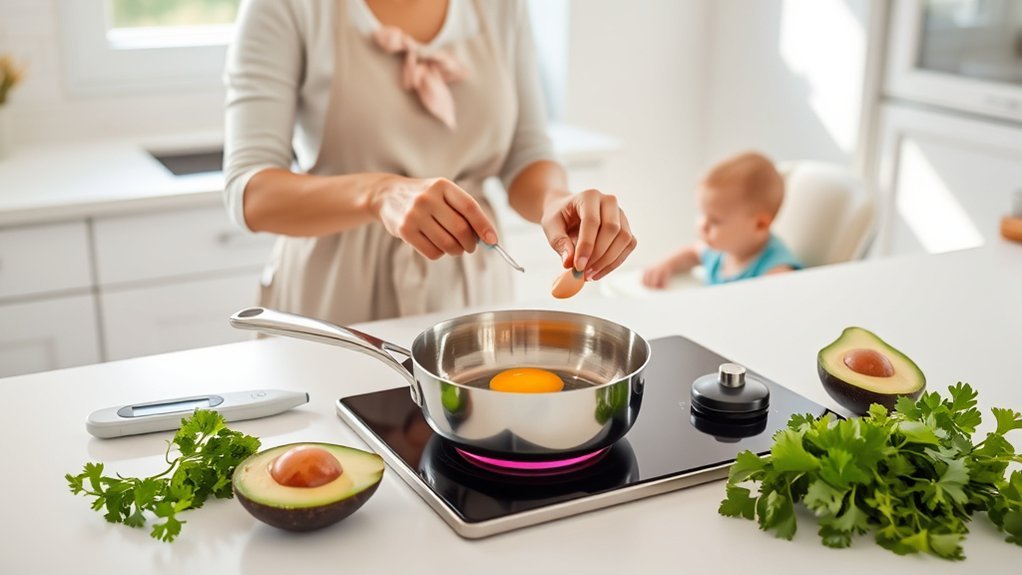
Eggs provide protein, fat, choline, vitamin B12, riboflavin, selenium, and several other nutrients that support normal growth. One large egg contains about 6 grams of protein, although a baby may eat only a small portion when first trying it.
Egg is especially useful as a source of choline, a nutrient involved in the nervous system and cell structure. According to the National Institutes of Health, one large hard-boiled egg provides about 147 milligrams of choline.
Egg also contains a modest amount of iron, but it should not be your baby’s only iron-containing food. Continue offering iron-rich options such as iron-fortified infant cereal, meat, fish, beans, lentils, and tofu in textures your baby can manage.
Egg can add protein and choline to a baby’s diet, but variety still matters. Complementary foods should add to—not immediately replace—breast milk or infant formula.

Power your essentials anywhere with a 999Wh pure sine wave power station delivering up to 1000W continuous with 2000W surge. It supports fast charging via USB-C PD 60W and USB-A QC 18W, plus simultaneous output for multiple devices through AC, USB, wireless, and car/DC ports. Recharge using AC, car, or solar with a built-in MPPT controller and dual cooling fans, while the upgraded battery management system protects against surges, short circuits, and overheating.

MONTESSORI MUSICAL SENSORY PLAY: Four wooden egg shakers produce gentle rhythmic sounds that introduce babies to music, listening, and sensory exploration

🥚 EARLY PROBLEM SOLVING: The Peek 'n Peep Eggs encourages problem-solving in children. Once all the eggs and shells are removed, they have to match the shells to the shapes in the cartons and match the faces of the chicks to the faces on the eggshells.
When Is It Safe to Start Eggs?
Most babies can begin eating fully cooked egg when they are ready for complementary foods, usually at about 6 months. The Centers for Disease Control and Prevention advises against introducing solid food before 4 months.
Look for developmental readiness rather than relying on age alone. Your baby should be able to:
- Sit upright alone or with support.
- Control their head and neck.
- Open their mouth when food is offered.
- Swallow food instead of automatically pushing it out with the tongue.
- Move food from the front of the mouth toward the back to swallow.
A previous allergy is not a developmental readiness test. However, talk with your pediatrician before introducing egg if your baby has severe or persistent eczema, a diagnosed food allergy, or an immediate reaction to another food.
Current guidance does not support delaying egg after a baby is ready in an attempt to prevent allergy. The American Academy of Pediatrics recommends introducing common allergens in baby-safe forms and keeping tolerated foods in the diet routinely.
How to Introduce Egg for the First Time
- Choose the right time. Offer egg when your baby is feeling well and you have time to watch closely during and after the meal.
- Cook the egg fully. The yolk and white should be firm, and scrambled egg should not be wet or runny.
- Prepare a safe texture. Mash hard-cooked egg with a little breast milk, prepared formula, water, or plain yogurt your baby has already tolerated. Moist scrambled egg is another option.
- Start with a small taste. Offer a small spoonful rather than a full serving.
- Watch for symptoms. Stop feeding egg if hives, swelling, repeated vomiting, coughing, wheezing, unusual lethargy, or another concerning symptom develops.
- Increase gradually if tolerated. You can offer a larger developmentally appropriate portion at later meals.
- Keep egg in the routine. Once your baby tolerates egg, continue serving it regularly as part of a varied diet rather than introducing it once and then avoiding it for months.
Pro Tip: Introduce egg by itself or with foods your baby has already eaten. This makes it easier to identify the likely cause if a reaction occurs.
Buying Eggs Safely

Follow the FDA’s egg-safety guidance when shopping and storing eggs:
- Buy eggs only from a refrigerator or refrigerated display case.
- Open the carton and check that the shells are clean and uncracked.
- Check the carton date for quality and stock rotation, but do not treat the date as proof that the eggs are free of bacteria.
- Refrigerate eggs promptly at 40°F or below.
- Keep eggs in their original carton rather than moving them to the refrigerator door.
- Use refrigerated shell eggs within about three weeks for best quality.
Organic, cage-free, free-range, brown, and conventional eggs all require the same safe handling. “Organic” describes how the eggs were produced; it does not guarantee that they are free from Salmonella.
Storing Cooked Eggs and Leftovers
- Refrigerate cooked egg within two hours, or within one hour if the surrounding temperature is above 90°F.
- Use hard-cooked eggs within one week.
- Use refrigerated leftover egg dishes within three to four days.
- Store baby portions separately before feeding. Discard food left on the baby’s plate because saliva may have contaminated it.
- Reheat previously cooked egg dishes thoroughly. FDA guidance recommends reheating cooked egg dishes to 165°F.
- Do not freeze raw eggs in their shells. If freezing uncooked whole egg, remove it from the shell and beat the yolk and white together first.
Cooking Eggs Safely
Raw shell eggs may contain Salmonella even when the shell looks clean. Wash your hands, utensils, equipment, and work surfaces with hot, soapy water before and after they touch raw egg.
Cooking Temperature Guidelines
- Scrambled, fried, boiled, or poached eggs: Cook until the white and yolk are firm. Scrambled egg should be fully set and not runny.
- Casseroles and mixed egg dishes: Cook to an internal temperature of 160°F and check the center with a food thermometer.
- Reheated egg dishes: Reheat thoroughly to 165°F.
- Recipes normally served raw or undercooked: Use pasteurized shell eggs or pasteurized egg products, although babies should still be served a fully cooked preparation.
There is no single boiling time that works for every egg and kitchen. Egg size, starting temperature, altitude, and cooking method all affect the time required. For a baby, check that the white and yolk are completely firm instead of relying only on a timer.
Warning: Do not serve babies raw egg, runny scrambled egg, soft-boiled egg with a liquid yolk, homemade raw-egg mayonnaise, raw batter, or another preparation containing unpasteurized undercooked egg.
Safe Egg Preparation Techniques
Use a clean bowl and utensils, keep raw egg away from foods that will not be cooked, and wash any surface touched by raw egg. Do not wash shell eggs before storing them because splashing can spread bacteria around the sink and kitchen.
Cook only the amount you need when possible. If you prepare extra egg, cool it promptly in a clean, shallow container and refrigerate it.
How to Serve Eggs to Babies Safely

The safest texture depends on your baby’s current eating skills. Egg should be soft, moist, and easy to mash between your fingers.
Egg Textures for Different Feeding Skills
- Beginning spoon-fed eater: Finely mash a fully hard-cooked egg with breast milk, prepared formula, water, or another familiar food until smooth and moist.
- Baby managing thicker textures: Offer soft scrambled egg in very small, moist curds.
- Baby beginning finger foods: Cut a soft, fully cooked omelet into wide strips that the baby can grasp. The strip should break apart easily when pressed between your fingers.
- Baby with a developing pincer grasp: Offer small, soft pieces of omelet or scrambled egg.
Hard-cooked egg can become dry and crumbly. Mash it with moisture rather than handing a beginning eater a large, rubbery piece.
Follow the CDC’s choking-prevention guidance at every meal:
- Seat your baby upright in a secure high chair or feeding seat.
- Do not feed your baby while they are lying down, crawling, walking, riding in a stroller, or traveling in a moving car.
- Keep the meal calm and avoid rushing.
- Watch your baby continuously while they eat.
- Prepare food in the right size, shape, and texture for your baby’s development.
Note: Gagging can be noisy and may occur as babies learn to manage texture. Choking may be silent and can prevent breathing or crying. Caregivers should learn infant choking first aid and CPR from a qualified instructor.
How to Incorporate Eggs Into Balanced Meals
Egg can be combined with foods your baby has already tolerated. Keep the texture soft and avoid adding unnecessary salt or sugar.
- Mix mashed egg with cooked sweet potato, squash, avocado, or peas.
- Serve soft scrambled egg with iron-fortified oatmeal.
- Add finely chopped spinach, broccoli, or another soft vegetable to a fully cooked omelet.
- Pair egg with an iron-rich food such as meat, lentils, beans, tofu, or fortified infant cereal.
- Add a vitamin C-rich food such as soft-cooked broccoli, mashed berries, tomato, or fruit puree to meals containing plant-based iron.
- Serve egg with soft whole-grain toast only when your baby can manage that texture safely.
Continue breast milk or iron-fortified infant formula while complementary foods are introduced. Egg is nutritious, but no single food provides everything a growing baby needs.
Signs of Egg Allergy in Babies
Egg is a common food allergen. A reaction may affect the skin, digestive system, breathing, or circulation. Possible symptoms include:
- Hives, widespread redness, or an itchy rash
- Swelling of the face, lips, tongue, or eyelids
- Vomiting, diarrhea, or stomach pain
- Coughing, wheezing, hoarseness, or throat tightness
- Trouble swallowing or breathing
- Sudden paleness, blue coloring, weakness, limpness, confusion, or loss of consciousness
- In babies, unusual repetitive tongue movements, intense crying, back arching, or a sudden decrease in muscle tone
For a mild, isolated symptom, stop feeding egg and contact your pediatrician for advice before serving it again. Do not attempt to diagnose an egg allergy by repeatedly testing the food at home.
Warning: Trouble breathing or swallowing, wheezing, tongue or lip swelling, faintness, blue or very pale coloring, or rapidly worsening symptoms may indicate anaphylaxis. Use prescribed epinephrine immediately if your child has it, and call 911. Antihistamines are not a substitute for epinephrine in anaphylaxis.
Frequently Asked Questions
Can babies eat eggs every day?
A baby who tolerates egg can eat it regularly, including on consecutive days, as part of a varied diet. Follow your baby’s hunger and fullness cues rather than requiring a full egg. Continue offering other protein, iron, fruit, vegetable, grain, breast milk, or formula choices.
What if my baby refuses to eat eggs?
Do not force the food. Try a different safe texture on another day, such as moist scrambled egg, mashed hard-cooked egg, or a soft omelet strip. Other protein and choline sources include meat, fish, tofu, beans, yogurt, soy foods, and other foods appropriate for your baby.
Are organic eggs safer for babies?
Not necessarily. Organic certification describes production and handling standards; it does not guarantee that an egg is free from Salmonella. Choose refrigerated, clean, uncracked eggs and cook them thoroughly whether they are organic, conventional, cage-free, or free-range.
Can I freeze cooked eggs for later use?
Some cooked egg preparations can be frozen, but the texture may become rubbery or watery. For the best baby-friendly texture, prepare small fresh batches or refrigerate cooked egg promptly. Use hard-cooked eggs within one week and other cooked egg dishes within three to four days.
How do I know if an egg is fresh?
Check that the shell is clean and uncracked, review the carton date, and store the egg correctly. A float test may suggest that an egg is older because its internal air cell has grown, but it cannot prove that the egg is safe or free from bacteria.
Can babies eat runny or soft-boiled eggs?
For the safest approach, serve babies eggs with fully firm whites and yolks. Avoid runny scrambled egg, liquid yolks, raw batter, and recipes containing raw or undercooked unpasteurized egg.
Should I ask a doctor before giving my baby egg?
Most developmentally ready babies can try fully cooked egg without testing. Speak with your pediatrician first if your baby has severe or persistent eczema, a diagnosed food allergy, a previous immediate food reaction, swallowing difficulties, or another condition affecting feeding.
Conclusion
Most babies can safely try egg at about 6 months when they show the skills needed for complementary feeding. Use refrigerated, uncracked eggs; cook the yolk and white until firm; and serve a soft texture your baby can manage while sitting upright. Begin with a small taste and keep egg in the diet if it is tolerated.
Stop feeding egg if a possible reaction occurs. Contact your pediatrician for mild symptoms, and call 911 for breathing trouble, tongue or lip swelling, faintness, or other signs of anaphylaxis. With careful preparation and supervision, egg can be a useful source of protein, choline, and variety in your baby’s meals.
Sources
- U.S. Food and Drug Administration: What You Need to Know About Egg Safety — buying, refrigeration, cooking, storage, and reheating guidance.
- Centers for Disease Control and Prevention: When, What, and How to Introduce Solid Foods — timing, readiness signs, allergen introduction, and safe textures.
- Centers for Disease Control and Prevention: Choking Hazards — food preparation, upright seating, supervision, and choking prevention.
- American Academy of Pediatrics: When to Introduce Egg and Other Common Food Allergens — early allergen introduction and routine continued servings.
- American Academy of Pediatrics: Food Allergies in Children — symptoms, anaphylaxis, epinephrine, and emergency care.
- National Institutes of Health Office of Dietary Supplements: Choline Fact Sheet — choline’s role and the choline content of cooked egg.