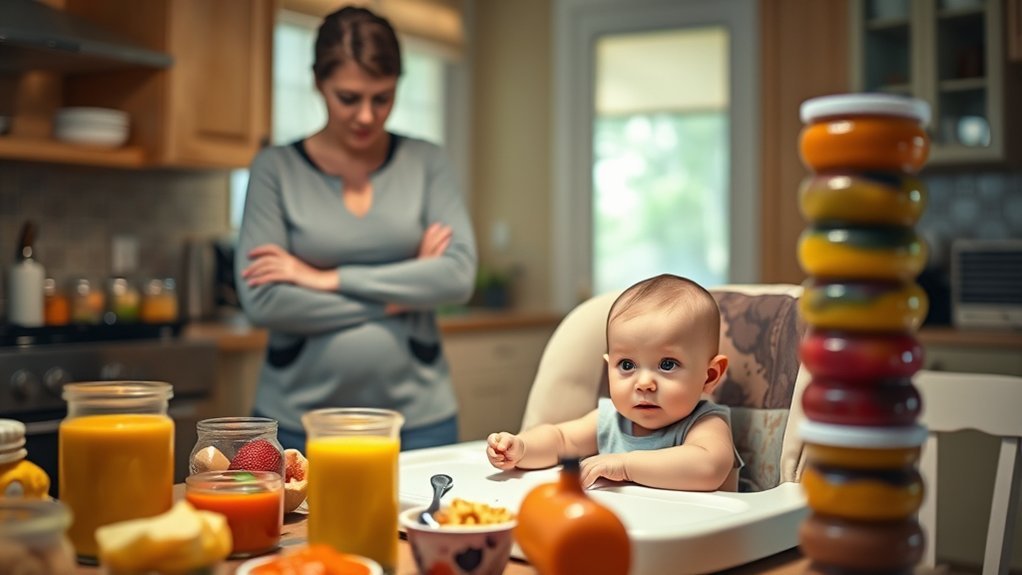
Starting solids is less about reaching a certain date and more about matching food to your baby’s development. Most babies are ready at about 6 months, and starting before 4 months is not recommended. Safe feeding also means keeping breast milk or iron-fortified formula as the main source of nutrition, choosing nutrient-dense foods, using the right textures, and staying close during every bite.
Quick Answer
The biggest mistakes when starting solids are beginning before your baby is developmentally ready, serving unsafe shapes or textures, replacing too much breast milk or formula, delaying common allergens without a medical reason, and pressuring your baby to eat. Start slowly at about 6 months, supervise closely, and follow hunger and fullness cues.
Key Takeaways
- Start at about 6 months when your baby can sit upright with support, control their head and neck, reach for food, and swallow instead of pushing food back out.
- Breast milk or iron-fortified infant formula should remain the main source of nutrition through 12 months while solids gradually increase.
- Offer soft, developmentally appropriate foods. There is no universal rule that every piece must be smaller than a baby’s fingertip.
- Include iron- and zinc-rich foods early, and introduce common allergens in safe forms rather than delaying them without a medical reason.
- Always seat your baby upright, supervise every bite, learn the signs of choking, and consider an infant CPR and choking-response course.
At a Glance
| Time Required | About 10–20 minutes for an unhurried first meal |
| Difficulty | Moderate; readiness, texture, and close supervision matter |
| Tools Needed | Stable high chair with harness, infant spoon or open cup, bib, and easy-clean mat |
| Cost | Low; soft family foods and iron-fortified infant cereal can work well |
Medical note: This guide provides general education, not individual medical advice. Ask your pediatrician or feeding specialist for a personalized plan if your baby was born prematurely, has poor growth, severe eczema, a known food allergy, low muscle tone, repeated coughing during feeds, or trouble sitting and swallowing.
Understanding Your Baby’s Readiness for Solids
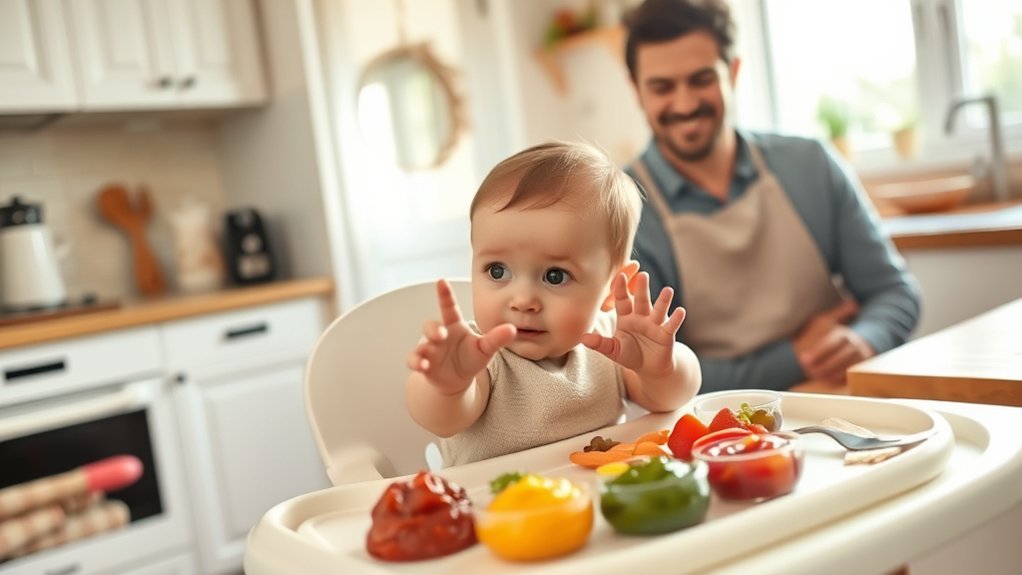
Most babies can begin foods other than breast milk or infant formula at about 6 months. The CDC advises against introducing solids before 4 months. Age alone is not enough, though. Look for several readiness signs working together:
- Your baby can sit upright alone or with support and maintain steady head and neck control.
- Your baby opens their mouth for food and brings objects to their mouth.
- Your baby reaches for or grasps food and shows interest when others eat.
- Your baby moves food from the front to the back of the tongue and swallows it instead of pushing it back out.
The loss of the tongue-thrust reflex is useful, but it should not be treated as the only test. A baby who still slumps, cannot control their head, or repeatedly coughs during feeds may need more time or an assessment from a health professional.
Pro Tip: Try the first meal when your baby is alert and calm—not exhausted, very hungry, or already upset. A small milk feed beforehand can take the edge off hunger so learning feels easier.

Power your essentials anywhere with a 999Wh pure sine wave power station delivering up to 1000W continuous with 2000W surge. It supports fast charging via USB-C PD 60W and USB-A QC 18W, plus simultaneous output for multiple devices through AC, USB, wireless, and car/DC ports. Recharge using AC, car, or solar with a built-in MPPT controller and dual cooling fans, while the upgraded battery management system protects against surges, short circuits, and overheating.

MESS-FREE SUCTION PLATES FOR TODDLERS - Voted Best Baby Suction Plate by The Bump in 2023, this set of 3 WeeSprout silicone suction plates with lids encourage independent eating without the mess. Place your suction plate on any flat surface for an extra secure grip that won’t budge. And each plate comes with a lid to store leftovers for later.

Toddler cutlery set: Each baby utensils set has 2 fun color combinations, both include 2 toddler plates and 2 spoons and 2 forks, designed for toddlers learning to self-feed, giving babies more opportunities to eat independently.
Avoiding Common Mistakes When Introducing Solids
Introducing solids is a learning process, not a race. These are the most common mistakes to avoid.
1. Starting by age alone
Beginning before 4 months is not recommended, but waiting for a six-month birthday without checking developmental readiness is also a mistake. Use both age and readiness signs.
2. Letting solids replace too much milk too soon
During the second half of the first year, solids complement breast milk or formula rather than replace it. The Dietary Guidelines for Americans, 2025–2030 state that breast milk or infant formula remains the main source of nutrition through 12 months.
3. Offering only fruit or low-iron foods
Avocado, banana, and vegetables can be part of a healthy start, but babies also need iron- and zinc-rich choices. Include foods such as iron-fortified infant cereal, finely prepared meat, beans, lentils, eggs, fish, and full-fat plain yogurt in safe textures.
4. Using a one-size-fits-all food-size rule
The original advice to keep every piece smaller than a baby’s fingertip is too simple and can be misleading. Food size should match the feeding method and your baby’s skills. Early finger foods are often soft, finger-length strips that a baby can grasp. Once a baby develops a pincer grasp, small soft pieces may be easier to pick up. In every case, avoid hard, round, coin-shaped, sticky, or rubbery foods.
5. Serving thick nut butter or whole nuts
Whole nuts, chopped nuts, and spoonfuls of thick nut butter are choking hazards. Thin smooth nut or seed butter with warm water, breast milk, formula, or a familiar puree until it is easy to swallow. Never give whole peanuts to a baby.
6. Forcing bites or using constant distraction
Pressure can turn meals into a struggle. Offer food, then let your baby decide whether and how much to eat. Stop when your baby closes their mouth, turns away, pushes food away, arches, or becomes upset. Screens and toys can also hide these fullness cues.
7. Delaying common allergens without a medical reason
Current guidance does not support delaying foods such as egg, peanut, dairy, wheat, sesame, soy, fish, or shellfish once a baby is ready for solids. Babies with severe eczema, egg allergy, or another high-risk history need medical guidance before peanut introduction.
8. Adding honey, juice, sugar, or too much salt
Do not give honey before 12 months because of the risk of infant botulism. The CDC recommends no juice before 12 months and no added sugars for children younger than 2. Avoid heavily salted and highly processed foods.
9. Feeding in an unsafe position
A baby should sit upright in a stable high chair or another safe feeding seat. Do not offer food while your baby is lying down, crawling, walking, riding in a stroller, or sitting in a moving car.
10. Expecting large portions or clean meals
Early meals may be only a few tastes. Touching, smearing, dropping, and spitting food out are normal parts of learning. Focus on skill-building and exposure rather than a clean tray or an empty bowl.
The Importance of a Safe Feeding Setup

A safe setup supports posture, lets your baby use their hands, and helps you respond quickly if a problem occurs. A secure suction-based plate can reduce spills, but it is optional. The chair and your supervision matter more than any branded accessory.
| Feeding Tool | Benefits |
|---|---|
| Stable high chair with harness | Keeps your baby upright and secure |
| Foot support | Improves stability and reduces slumping |
| Soft-tipped spoon | Supports gentle spoon-feeding and practice |
| Short, easy-grip utensil | Helps small hands practice self-feeding |
| Open cup or straw cup | Builds drinking skills when offered with meals |
| Bib and silicone mat | Makes normal mess easier to manage |
Keep food within reach, remove distractions, and stay at arm’s length. Check that the harness is fastened and that your baby is not leaning back or sliding down.
Warning: Never leave a baby alone with food, even for a moment. The CDC recommends upright seating, calm meals, and continuous supervision. Learn infant choking first aid and CPR from a qualified instructor before an emergency happens.
Introducing Foods Gradually to Your Baby
A gradual approach gives your baby time to practice and makes it easier to notice a reaction. Use this simple process:
- Choose a calm time. Seat your baby upright when they are awake and comfortable.
- Start small. Offer a few tastes and work up toward about 1 to 2 tablespoons. Do not expect your baby to finish a serving.
- Begin with a nutrient-dense food. Iron-fortified oatmeal, soft egg, pureed meat, mashed beans, or lentils are useful choices.
- Introduce one new single-ingredient food at a time at first. The CDC suggests waiting 3 to 5 days between new foods so it is easier to connect a reaction with a food.
- Follow your baby’s cues. Continue while your baby leans forward, opens their mouth, or reaches for food. Stop when they turn away, close their mouth, or lose interest.
- Increase texture as skills improve. Move from smooth purees to mashed, lumpy, finely chopped, and soft finger foods rather than staying with thin purees for months.
Food acceptance often takes repetition. The current federal dietary guidance notes that a child may need about 8 to 10 exposures before being willing to try a new food. Reoffer rejected foods without pressure, sometimes in a different texture or alongside a familiar food.
Choosing Nutrient-Dense First Foods
There is no required order for first foods. Aim for variety while giving special attention to iron and zinc, especially for babies who receive mostly breast milk. Rotate foods from several groups instead of relying on fruit puree or rice cereal alone.
| Food Group | Baby-Safe Examples | Preparation |
|---|---|---|
| Iron and zinc | Iron-fortified oat cereal, beef, chicken, beans, lentils, egg | Puree, mash, shred finely, or cook until very soft |
| Vegetables and fruit | Sweet potato, broccoli, peas, pear, avocado, banana | Cook hard produce until fork-soft; mash or cut safely |
| Dairy | Plain full-fat yogurt, soft pasteurized cheese | Serve without added sugar and in a non-choking form |
| Whole grains | Oat, barley, multigrain infant cereal, soft pasta | Cook until soft; thin cereal with breast milk, formula, or water |
| Healthy fats | Avocado, olive oil mixed into food, thinned nut or seed butter | Mash well; thin sticky spreads before serving |
If you use infant cereal, the CDC recommends offering a variety such as oat, barley, and multigrain instead of relying only on rice cereal. This helps reduce repeated exposure to arsenic from one grain and broadens flavor and texture experience.
Embracing Messiness as Part of Learning

Starting solids can be a messy adventure, and that mess has a purpose. Touching, squeezing, smelling, and tasting food helps your baby learn about texture while practicing hand-to-mouth coordination and self-feeding.
A messy tray is not proof that a meal failed. Early feeding success is measured in safe practice, curiosity, and repeated exposure—not in how much food disappears.
Food on the floor and smeared across the tray is normal. Use a washable bib, place an easy-clean mat under the chair, and offer small portions so you can add more without wasting a full bowl. Avoid claiming that messiness will prevent future sensory problems; it supports practice, but feeding development is different for every child.
How to Model Good Mealtime Habits for Your Baby
Babies learn by watching. Shared meals give them a chance to see chewing, cup drinking, utensil use, and relaxed conversation.
- Eat together when possible. Sit facing your baby and let them watch you eat.
- Demonstrate simple actions. Show how to scoop, bring food to your mouth, chew, and sip.
- Offer similar foods in a safe form. Your baby can share parts of the family meal when the texture is appropriate and the food is not heavily salted.
- Keep your face and voice calm. Gagging can look dramatic, but panic may make the meal more stressful. Stay attentive and know the difference between gagging and choking.
- Respect “all done.” Ending a meal when your baby shows fullness teaches that their body cues matter.
Introducing Allergens Safely and Monitoring Reactions
Common allergens include peanut, egg, cow’s milk products, wheat, soy, sesame, tree nuts, fish, and shellfish. Once a baby is ready for solids, delaying these foods has not been shown to prevent allergy. The safest timing depends on the baby’s risk:
- Severe eczema, egg allergy, or previous reaction: Speak with your pediatrician or allergist before peanut introduction. Testing or supervised feeding may be recommended, and peanut may be introduced as early as 4 to 6 months.
- Mild to moderate eczema: Peanut-containing foods are generally introduced at about 6 months in an infant-safe form, with medical guidance when needed.
- No high-risk history: Introduce common allergens with other complementary foods at about 6 months, one at a time, once your baby is developmentally ready.
The American Academy of Pediatrics recommends safe forms such as fully cooked egg, smooth peanut butter thinned into cereal or puree, plain yogurt, soft wheat cereal, finely flaked boneless fish, and smooth sesame paste thinned to a swallowable texture. Do not use an arbitrary “1/8 teaspoon” rule for every allergen; follow your clinician’s instructions if your baby is high risk.
Introduce an allergen when your baby is healthy and when you can watch them closely. If it is tolerated, keep serving it as a normal part of the diet rather than treating it as a one-time test.
Warning: Stop feeding and seek medical advice for hives, facial swelling, repeated vomiting, or other concerning symptoms. Trouble breathing or swallowing, swelling of the lips or tongue, blue or pale color, sudden limpness, or symptoms affecting more than one body system may signal anaphylaxis. Use prescribed epinephrine immediately if available and call 911. Antihistamines do not replace epinephrine for anaphylaxis. See the AAP’s emergency guidance.
Encouraging Exploration and Preventing Choking
Exploration is healthy, but food must be prepared for your baby’s current skills. A food that is soft is not automatically safe if it is round, sticky, or served in a large chunk.
Use safe textures and shapes
- Cook firm vegetables and fruit until they can be mashed easily with a fork.
- Mash smooth foods or offer soft finger-length pieces for an early self-feeder.
- Cut grapes, cherry tomatoes, berries, and other round foods lengthwise into developmentally appropriate pieces.
- Shred or finely chop meat and remove every bone from fish.
- Thin nut and seed butters; never serve a thick spoonful.
- Avoid whole nuts, popcorn, hard candy, raw carrot or apple chunks, hot-dog rounds, tough meat, large cheese chunks, and other foods listed in the CDC choking-hazard guide.
Know gagging versus choking
Gagging is a protective reflex and is often noisy. A gagging baby may cough, sputter, make sounds, or turn red. Choking may be quiet. A choking baby may be unable to breathe, cough effectively, cry, or make noise and may turn blue, gray, or pale. Do not put your fingers into the baby’s mouth unless you can clearly see and safely remove the object; blind finger sweeps can push it deeper.
Warning: If your baby cannot breathe, cough, cry, or make sound, treat it as choking and call 911. Follow the infant choking steps you learned in a certified first-aid course. Do not rely on an article as a substitute for hands-on training.
Foods and Drinks to Avoid During the First Year
- Honey before 12 months: Honey can contain spores that cause infant botulism. This includes foods sweetened with honey.
- Cow’s milk as a main drink before 12 months: Yogurt and pasteurized cheese can be offered earlier, but breast milk or iron-fortified formula should remain the main milk drink. The CDC recommends waiting until 12 months for cow’s milk or fortified milk alternatives as a beverage.
- Juice before 12 months: Whole fruit is preferred. Juice is unnecessary after 12 months and should remain limited.
- Added sugars and caffeinated drinks: These are not recommended for infants and young children.
- Unpasteurized foods and drinks: Avoid raw milk, unpasteurized juice, and foods made with unpasteurized ingredients because they may contain harmful bacteria.
- Raw or undercooked animal foods: Cook eggs, meat, poultry, fish, and shellfish thoroughly.
- High-choking-risk foods: Avoid or modify hard, round, sticky, chewy, and tough foods.
Serve food from a clean dish rather than feeding directly from a jar that will be saved. The FDA advises discarding food left on a baby’s serving dish because saliva can introduce bacteria. Refrigerate perishable food promptly and throw away anything that has sat at room temperature for more than two hours.
Frequently Asked Questions
How do I choose the right first foods for my baby?
Choose soft, nutrient-dense foods that match your baby’s skills. Include an iron-rich option such as iron-fortified infant cereal, finely prepared meat, beans, lentils, or egg. Add vegetables, fruit, whole grains, full-fat plain yogurt, and healthy fats over time. There is no required order.
When should I start spoon-feeding?
Most babies are ready at about 6 months when they can sit upright with support, control their head and neck, and swallow food. Start with a soft spoon and a small amount. Stop when your baby closes their mouth, turns away, or becomes upset.
Can I mix different foods together?
Yes, after your baby has tolerated the ingredients separately. Starting with one new ingredient at a time makes it easier to identify a reaction. Once foods are familiar, combine them into balanced meals, such as lentils with sweet potato or plain yogurt with mashed pear.
How do I know if my baby is allergic to a food?
Possible signs include hives, swelling, vomiting, diarrhea, coughing, wheezing, or trouble swallowing. Stop the food and contact your pediatrician for mild or uncertain symptoms. Trouble breathing, lip or tongue swelling, blue or pale color, sudden limpness, or symptoms in more than one body system require emergency action and a call to 911.
What should I do if my baby rejects a food?
Stay calm, end the attempt without pressure, and offer the food again another day. It may take 8 to 10 exposures before a child accepts a new food. Try a different safe texture or pair a small amount with a familiar food, but never force a bite.
Should I give water with meals?
You can offer small sips of water in an open or straw cup once your baby starts solids, but water should not replace breast milk or formula. Ask your pediatrician about the amount if your baby is younger than 12 months or has a medical condition.
Is baby-led weaning safer than purees?
Neither approach is automatically safer. Purees, mashed foods, finger foods, or a combination can work when the baby is ready, the texture and shape are appropriate, and an adult supervises closely. Choose the method that fits your baby’s development and your family’s routine.
Conclusion
Starting solids is a gradual skill-building stage, not a test of how much your baby can eat. Wait for readiness, keep breast milk or formula at the center of nutrition, offer iron-rich and varied foods, and use safe textures and shapes. Let your baby explore without pressure, introduce allergens thoughtfully, and stay close enough to respond to choking or an allergic reaction. Patience, repetition, and a calm setup matter far more than a spotless tray.
Sources
- CDC: When, What, and How to Introduce Solid Foods — readiness signs, timing, first foods, allergens, and food preparation.
- CDC: Choking Hazards — safe seating, supervision, food preparation, and foods to avoid or modify.
- Dietary Guidelines for Americans, 2025–2030 — infant nutrition, early allergens, nutrient-dense foods, and repeated exposure.
- American Academy of Pediatrics: Introducing Common Allergens — allergen timing and infant-safe preparation.
- American Academy of Pediatrics: Anaphylaxis in Infants and Children — reaction signs and emergency response.
- FDA: Food Safety Once Baby Arrives — honey, pasteurization, storage, reheating, and contamination prevention.