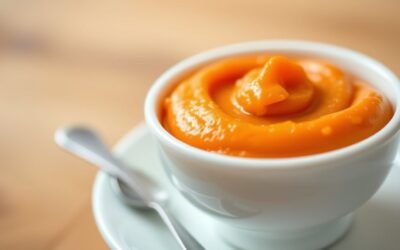
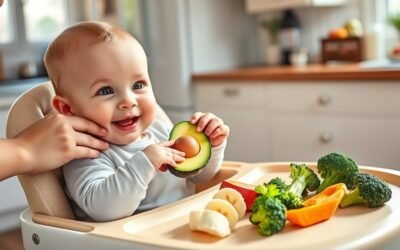
Organic Stage 1 baby food can be a useful option when your baby is ready to begin solid foods, but the organic label should not be treated as a guarantee of better nutrition or complete safety. The best first foods are developmentally appropriate, varied, nutrient-dense, affordable for your family, and prepared and stored safely.
Quick Answer
Organic Stage 1 baby food follows USDA organic-production rules and may reduce exposure to some pesticide residues, but it is not automatically more nutritious or free of heavy metals. Choose smooth foods when your baby is developmentally ready, prioritize iron-rich and varied ingredients, check labels, and follow safe feeding and storage practices.
Key Takeaways
- USDA Organic is a production and labeling standard, not a guarantee that baby food contains more nutrients or no heavy metals.
- Most babies can begin smooth or mashed foods at about six months when they show developmental-readiness signs.
- Prioritize dietary variety and iron-rich foods instead of choosing a product based only on an organic claim.
- Organic foods can still contain allergens, naturally occurring toxic elements, and permitted agricultural substances.
- Follow food-specific refrigerator limits, serve food from a separate bowl, and supervise your baby throughout every meal.
Medical note: This article provides general education and is not a substitute for individualized medical advice. Ask your pediatrician about starting solids if your baby was born prematurely, has poor growth, has swallowing or developmental difficulties, has severe eczema, or has a known or suspected food allergy.
Why Choose Organic Stage 1 Baby Food?
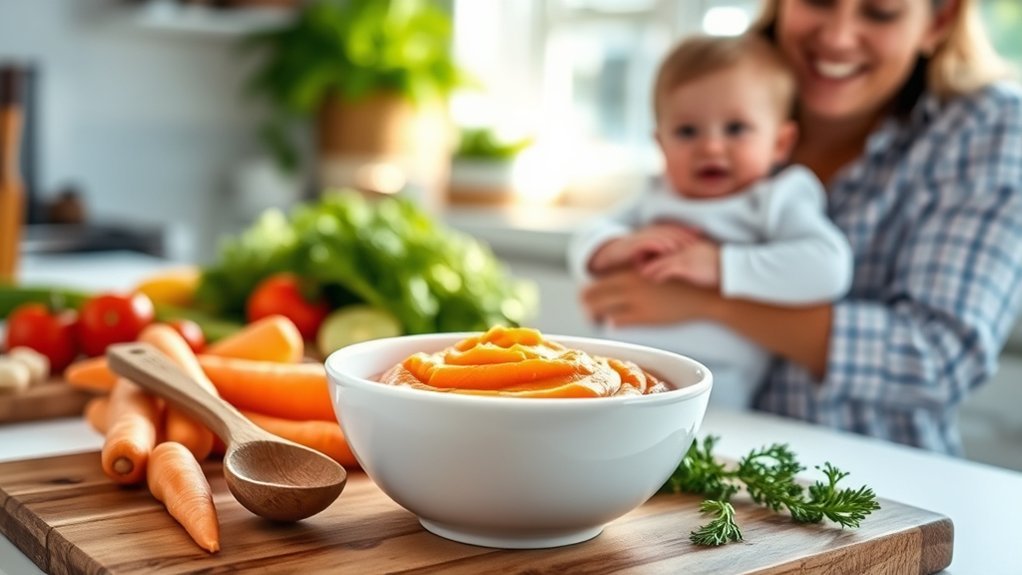
You may prefer organic baby food because of how its ingredients are grown and processed. The USDA organic standards require certified operations to follow specific production, handling, recordkeeping, and inspection rules.
Organic production restricts most synthetic pesticides and fertilizers, prohibits genetic engineering, and includes practices intended to conserve resources and support ecological balance. However, certain substances are permitted under the USDA National List, and organic food is not guaranteed to be free from every pesticide residue or environmental contaminant.
Choosing organic is optional. A safe, varied diet made with conventional foods can also meet your baby’s needs. Do not feel pressured to buy organic products when they are unavailable or strain your household budget.
Note: “Stage 1” usually describes a very smooth puree marketed for beginning eaters. Package stages vary by manufacturer, so use your baby’s developmental skills and your pediatrician’s guidance rather than relying only on the number printed on a jar or pouch.

Power your essentials anywhere with a 999Wh pure sine wave power station delivering up to 1000W continuous with 2000W surge. It supports fast charging via USB-C PD 60W and USB-A QC 18W, plus simultaneous output for multiple devices through AC, USB, wireless, and car/DC ports. Recharge using AC, car, or solar with a built-in MPPT controller and dual cooling fans, while the upgraded battery management system protects against surges, short circuits, and overheating.

Beech-Nut's deliciously pureed organic carrots baby food features a smooth texture for baby

MADE WITH USDA CERTIFIED ORGANIC & NON-GMO SIMPLE INGREDIENTS: Beech-Nut Organics baby food is made with real organic apple cooked over indirect heat to preserve color, flavor and nutrients.
Nutrition: Organic Versus Conventional Baby Food
Organic and conventional baby foods can both provide useful nutrients. Research has found some compositional differences between individual organic and conventional foods, but a 2024 comprehensive systematic review did not find evidence of general nutritional superiority across organic foods.
The ingredient itself usually matters more than the farming label. A plain organic apple puree and a plain conventional apple puree are both mostly fruit. Neither is an important source of iron, protein, or fat, while an iron-fortified cereal, meat puree, bean puree, or lentil puree can provide nutrients that fruit alone does not.
At about six months, babies need an outside source of iron, particularly when they receive mostly human milk. The CDC recommends iron-rich foods, iron-fortified infant cereals, or supplements when advised by a health professional.
The most useful nutrition question is not simply “Is it organic?” but “What nutrients and food variety does this add to my baby’s diet?”
How Organic Baby Food Affects Chemical Exposure
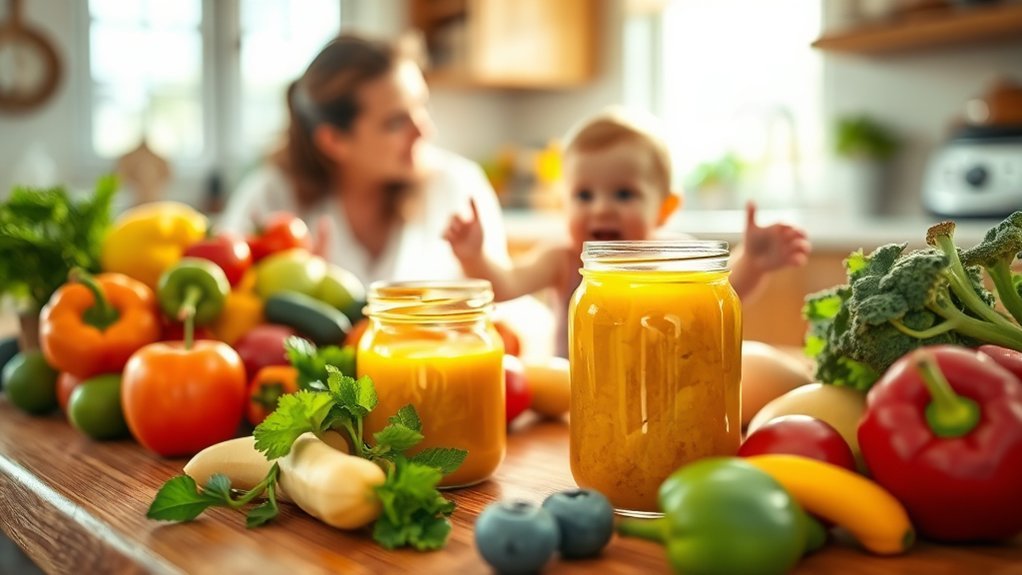
USDA organic production limits the use of many synthetic pesticides. It does not mean that no pest-control products are used. Under the USDA rules for crop production, synthetic substances are generally prohibited unless specifically allowed, while natural substances are generally allowed unless specifically prohibited.
Heavy metals are a separate issue. Lead, arsenic, cadmium, and mercury occur in the environment and may enter crops through soil or water. They can therefore be found in organic and conventional foods. The organic seal does not certify a product as heavy-metal-free.
Warning: Do not rely on an organic seal, a “natural” claim, or a picture of produce as proof that a product has no lead, arsenic, cadmium, mercury, allergens, or microbial contamination.
| Issue | USDA Organic Baby Food | Conventional Baby Food |
|---|---|---|
| Production standard | Must comply with USDA organic rules when certified. | Must comply with applicable general food and agricultural rules. |
| Pesticides | Most synthetic substances are prohibited, with listed exceptions. Residues are not guaranteed absent. | Approved pesticides may be used within applicable requirements and tolerances. |
| Genetic engineering | Prohibited in certified organic production. | Ingredients may or may not come from genetically engineered crops. |
| Heavy metals | May be present because organic certification is not a heavy-metal guarantee. | May also be present through soil, water, and processing. |
| Nutrition | Depends on the ingredients, recipe, processing, and serving size. | Also depends on the ingredients, recipe, processing, and serving size. |
How Organic Farming Can Benefit the Environment
USDA organic standards require practices intended to cycle resources, conserve biodiversity, and preserve ecological balance. Depending on the crop and farm, organic practices may support healthier soil, reduce the use of certain synthetic inputs, and provide habitat for beneficial organisms.
Environmental results still vary by farm, location, yield, transportation, water use, and production method. Organic should therefore be described as a defined farming system rather than a promise that every organic product has a smaller environmental footprint.
- Restricted inputs: Most synthetic herbicides, insecticides, and fertilizers are prohibited unless specifically allowed.
- Soil stewardship: Organic systems commonly use crop rotation, cover crops, compost, and other soil-building practices.
- Biodiversity goals: Certified operations must use practices consistent with conserving natural resources and ecological balance.
Understanding Organic Certification for Baby Food
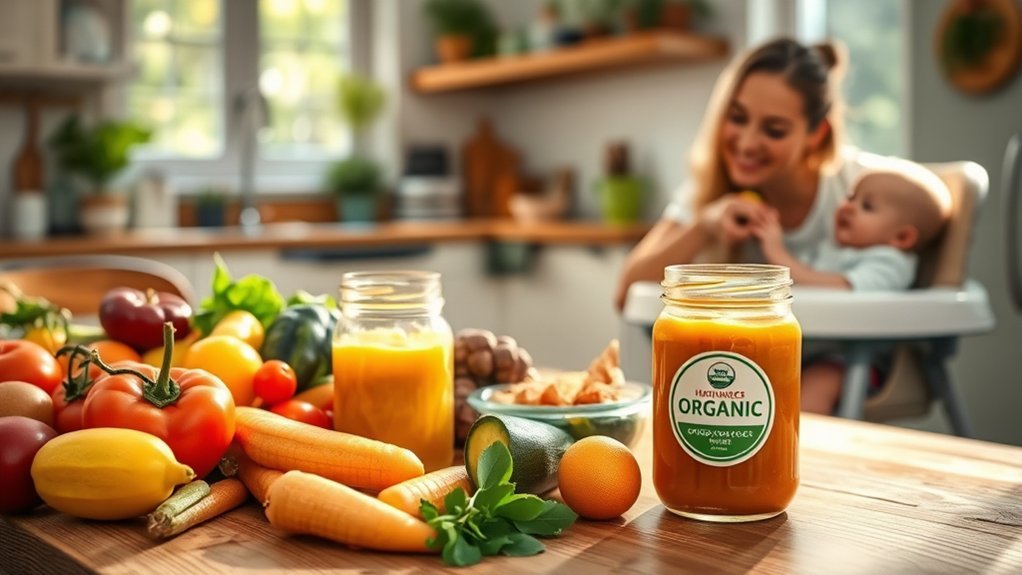
Certification helps you verify that a product follows defined organic-production and labeling requirements. It should be one part of your buying decision rather than your only safety check.
Why Certification Standards Matter
A certified product must be reviewed by an accredited certifying agent and supported by records that trace ingredients and handling. Organic operations are also subject to inspections and enforcement.
For a multi-ingredient product to use the word “organic” and display the USDA Organic seal, at least 95% of its ingredients must be certified organic, excluding salt and water. The remaining portion is subject to detailed restrictions.
USDA Organic Labels Explained
- 100 Percent Organic: All ingredients must be certified organic, excluding salt and water.
- Organic: At least 95% of ingredients must be certified organic, excluding salt and water. The USDA seal may be displayed.
- Made With Organic: At least 70% of ingredients must be certified organic. The USDA Organic seal cannot be displayed.
- Specific organic ingredients: Products below the 70% threshold may identify individual organic ingredients but cannot present the complete product as organic.
You can confirm these distinctions through the USDA organic labeling rules.
Testing for Heavy Metals
Heavy-metal testing is not the same as organic certification. Some manufacturers voluntarily publish testing policies or batch reports, but the usefulness of those reports depends on the sampling method, laboratory, detection limits, metals tested, and whether the report matches the product lot you purchased.
In January 2025, the FDA issued final guidance on lead in processed foods for babies and young children. The action levels are 10 parts per billion for many fruits, vegetables, mixtures, yogurts, puddings, and meats, and 20 parts per billion for single-ingredient root vegetables and dry infant cereals.
FDA’s lead action levels are intended to encourage continued reductions by manufacturers; they do not mean that foods below the levels contain no lead.
The practical goal is to reduce repeated exposure from any one ingredient. Offer foods from different food groups and rotate grains rather than serving the same rice-based food every day.
Common Myths About Organic Baby Food
Myth: Organic Food Always Justifies the Higher Price
Organic products may cost more, and there is no reliable evidence that buying them will produce future medical savings. Spend according to your family’s needs. A varied conventional diet is preferable to a narrow organic diet that limits important foods because of cost.
To manage expenses, compare unit prices, use store brands, buy only the organic items that matter most to you, and prepare suitable foods at home when doing so is safe and practical.
Myth: All Organic Baby Food Is Completely Safe
Organic foods can contain allergens, heavy metals, naturally occurring toxins, and harmful microbes. Packaging can also become damaged or a product may be recalled. Check the ingredient and allergen statements, confirm that seals and lids are intact, and review the FDA recall list when you hear about a possible problem.
Myth: Homemade Is Always Better
Homemade baby food gives you control over ingredients and texture, but it requires careful washing, cooking, blending, cooling, and storage. Commercial food offers convenience, sealed portions, and standardized textures. Neither choice is automatically best for every family.
Do not add honey to homemade or commercial baby food before 12 months. Organic honey carries the same infant-botulism risk as conventional honey.
Myth: Organic Food Prevents Allergies
An organic version of milk, egg, wheat, peanut, soy, sesame, fish, shellfish, or tree nuts can still trigger an allergic reaction. Organic status does not change the food proteins responsible for allergy.
Current guidance recommends introducing age-appropriate allergenic foods along with other complementary foods rather than delaying them without a medical reason. Speak with your pediatrician before introducing peanut if your baby has severe eczema, an egg allergy, or another significant risk factor.
How to Choose Organic Stage 1 Baby Food
- Confirm readiness: Look for good head and neck control, the ability to sit with support, interest in food, and the ability to swallow food rather than push it out.
- Check the organic claim: Look for the USDA Organic seal and the accredited certifier’s name when you want a certified product.
- Read the full ingredient list: “Organic” does not mean single-ingredient. Check for added sweeteners, salt, flavors, thickeners, and allergens.
- Prioritize useful nutrients: Include iron-rich foods instead of relying mainly on fruit and vegetable purees.
- Match the texture to your baby: Beginning foods should be smooth, mashed, or otherwise prepared so they are easy to swallow.
- Inspect the package: Do not use jars with popped lids, leaking pouches, broken seals, swelling, unusual odors, or visible damage.
- Check dates and recalls: Follow the manufacturer’s storage directions and investigate any current recall notice.
- Consider testing transparency carefully: Prefer clear, product-specific explanations over vague “tested for safety” marketing claims.
Pro Tip: Put the amount your baby is likely to eat into a clean bowl and refrigerate the untouched remainder immediately. Feeding directly from a jar or pouch introduces saliva and bacteria into the remaining food.
Useful Organic Stage 1 Food Choices
There is no single “best” first food or required order for most babies. Aim for variety across food groups while keeping each food’s texture appropriate for your baby.
- Single-ingredient vegetables: Smooth sweet potato, squash, peas, green beans, or carrots can introduce savory flavors. Rotate root vegetables rather than serving them at every meal.
- Single-ingredient fruits: Pear, apple, banana, peach, prune, and avocado can add variety, although fruit should not replace iron-rich foods.
- Iron-fortified infant cereals: Offer oat, barley, multigrain, and other fortified cereals rather than using only rice cereal.
- Protein-rich purees: Smooth meat, bean, lentil, or tofu purees can provide iron, zinc, and protein when prepared appropriately.
- Plain dairy foods: Plain yogurt without added sugar can be introduced before 12 months when developmentally appropriate, although cow’s milk should not replace breast milk or formula as a drink before the first birthday.
Brands such as Earth’s Best and Happy Baby sell products labeled as organic in the United States, but a brand name alone is not a safety ranking. Ingredients, suppliers, recipes, testing policies, and recalls can change. Compare the current package rather than relying on an old recommendation.
Tips for Transitioning Your Baby to Solid Foods Safely
The CDC recommends beginning complementary foods at about six months. Introducing solids before four months is not recommended. Your baby should also show readiness signs:
- Sits alone or with support and has steady head and neck control.
- Opens their mouth when food is offered.
- Swallows food instead of automatically pushing it out.
- Brings objects toward their mouth and shows interest in eating.
Begin with small amounts. One or two teaspoons may be enough for an early meal. Breast milk or iron-fortified infant formula should remain the main source of nutrition while your baby gradually learns to eat complementary foods.
Offer one new single-ingredient food at a time initially and wait three to five days before another new food. This makes it easier to identify a possible reaction. Potentially allergenic foods can be introduced in safe forms along with other foods unless your child’s clinician recommends a different plan.
Move from smooth purees to thicker mashed and lumpy textures as your baby develops the skills to manage them. Baby-led feeding can also use soft, appropriately shaped foods, but the food must match the baby’s developmental ability.
Warning: Always seat your baby upright and supervise every bite. Do not offer whole nuts, spoonfuls of nut butter, uncut grapes, raw apple or carrot pieces, popcorn, hard candy, chunks of meat or cheese, or other hard, round, sticky, or difficult-to-swallow foods.
Avoid honey before 12 months. Avoid foods with added sugars, and do not give juice before 12 months. Cow’s milk should not be used as the main drink before the first birthday, although suitable dairy foods may be introduced earlier.
Safe Storage and Handling
Wash your hands before preparing or serving baby food. Use clean utensils and containers, and refrigerate opened or freshly prepared food promptly.
| Opened or Freshly Made Food | Refrigerator | Freezer |
|---|---|---|
| Strained fruits and vegetables | 2 to 3 days | 6 to 8 months |
| Strained meats and eggs | 1 day | 1 to 2 months |
| Meat and vegetable combinations | 1 to 2 days | 1 to 2 months |
| Homemade baby food | 1 to 2 days | 3 to 4 months |
These times follow the FDA’s baby-food storage guidance. Use the manufacturer’s directions when they are more restrictive.
- Do not leave perishable baby food at room temperature for more than two hours.
- Discard food that has been in contact with your baby’s mouth.
- Do not refrigerate a partially eaten serving for another meal.
- Label homemade food with the preparation date.
- Cool cooked food promptly before refrigerating or freezing it.
Long-Term Eating Habits and Food Variety
Introducing many nutritious tastes and textures can help your baby become familiar with a varied diet. That benefit comes from repeated, pressure-free exposure to different foods, not from organic certification itself.
Organic food has not been shown to guarantee healthier lifelong eating habits or prevent food allergies. You can support healthy development by offering vegetables, fruits, iron-rich proteins, fortified grains, and suitable allergenic foods while responding to your baby’s hunger and fullness cues.
Avoid pressuring your baby to finish a serving. Appetite varies from meal to meal. Your role is to offer safe, nutritious choices; your baby can decide how much to eat.
Frequently Asked Questions
Can I make organic Stage 1 baby food at home?
Yes. Use certified organic ingredients if you want the food itself to be organic. Wash produce, cook foods until soft when needed, puree them to a safe texture, use clean equipment, cool the food promptly, and refrigerate homemade baby food for no more than one to two days.
How do I store opened organic baby food?
Refrigerate untouched food promptly in a covered container. Strained fruits and vegetables generally keep for two to three days, meats or eggs for one day, and meat-and-vegetable combinations for one to two days. Discard food that has been fed directly from the container.
What ingredients are common in Stage 1 baby food?
Common options include smooth sweet potato, squash, peas, carrots, pears, apples, bananas, prunes, avocado, iron-fortified cereals, meat, beans, and lentils. Offer foods from several groups rather than relying mostly on fruit purees.
Can organic baby food contain allergens?
Yes. Organic milk, egg, wheat, soy, sesame, peanut, tree nuts, fish, and shellfish contain the same allergenic proteins as conventional versions. Read the allergen statement and ask your pediatrician for guidance if your baby has severe eczema or a known allergy.
How do I know whether baby food is truly organic?
Look for the USDA Organic seal and the name of an accredited certifying agent. A product labeled “organic” must contain at least 95% certified organic ingredients, excluding salt and water. “Made with organic” products contain at least 70% organic ingredients and cannot display the USDA seal.
Does organic baby food contain less lead or arsenic?
Not necessarily. Heavy metals can occur naturally in soil and water, so they may enter both organic and conventional foods. Reduce repeated exposure by offering a varied diet, rotating grains, and avoiding reliance on one ingredient or food category.
When can my baby start Stage 1 food?
Most babies can begin complementary foods at about six months when they can control their head and neck, sit with support, show interest in food, and swallow food rather than push it out. Do not introduce solids before four months.
Is organic rice cereal a good first food?
Iron-fortified rice cereal can be one option, but it should not be the only grain served. Rotate oat, barley, multigrain, and other fortified cereals to improve variety and reduce repeated exposure to arsenic associated with rice.
Conclusion
Organic Stage 1 baby food can fit into a healthy first-food plan, especially when organic farming practices matter to your family. It does not guarantee better nutrition, prevent allergies, or eliminate heavy metals.
Focus first on developmental readiness, iron-rich foods, dietary variety, safe textures, allergen awareness, careful storage, and your baby’s hunger and fullness cues. Organic and conventional foods can both be reasonable choices when they are selected and served safely.
Sources
- USDA Agricultural Marketing Service — Labeling Organic Products — organic-content thresholds and use of the USDA seal.
- USDA Agricultural Marketing Service — Synthetic Substances in Crop Production — allowed and prohibited substances in organic production.
- U.S. Food and Drug Administration — Lead Action Levels for Baby Foods — January 2025 action levels for processed foods intended for babies and young children.
- Centers for Disease Control and Prevention — Introducing Solid Foods — readiness, first foods, allergens, grain variety, and safe textures.
- U.S. Food and Drug Administration — Safe Storage of Baby Food — refrigerator and freezer limits for opened and homemade foods.
- Heliyon — 2024 Systematic Review of Organic and Conventional Food Nutrition — evidence on whether organic foods are generally more nutritious.