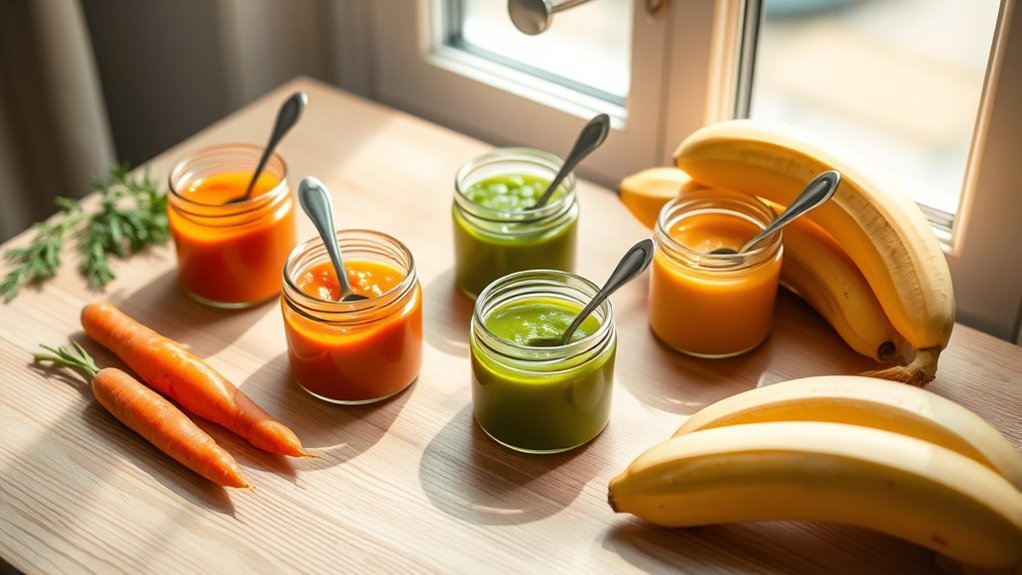
Choosing Stage 1 organic baby food is less about finding one perfect brand and more about matching a safe texture to your baby’s developmental readiness and nutritional needs. Organic certification can be a useful shopping preference, but it does not guarantee higher nutrition, zero pesticides, zero heavy metals, or an allergen-free product. A strong first-food plan includes iron-rich foods, varied ingredients, safe textures, and continued breast milk or infant formula.
Quick Answer
The best Stage 1 organic baby food has a smooth, age-appropriate texture, a short and clearly labeled ingredient list, no added sugar, and useful nutrients such as iron. Most babies start solids at about 6 months when developmentally ready. Organic certification is optional and does not replace careful label reading, food variety, or pediatric guidance.
Key Takeaways
- Most babies are ready for complementary foods at about 6 months; starting before 4 months is not recommended.
- Choose iron-rich foods regularly instead of relying only on fruit and vegetable purees.
- USDA organic certification describes how ingredients were produced; it does not guarantee better nutrition or zero contaminants.
- Use developmental readiness, ingredient labels, texture, storage instructions, and allergen information rather than the stage number alone.
- Introduce common allergens in safe, non-choking forms when your baby is ready, unless your pediatrician recommends a different plan.
- Breast milk or infant formula remains an important source of nutrition while solid foods are gradually introduced.
At a Glance
| Time Required | About 10–15 minutes to review a label and prepare the first serving |
| Difficulty | Easy; seek medical guidance for prematurity, swallowing concerns, severe eczema, or a known food allergy |
| Tools Needed | Upright high chair, small bowl, soft spoon, bib, clean storage container, and age-appropriate food |
| Cost | Varies by brand and format; compare price per ounce and avoid buying large quantities before your baby accepts a food |
Note: This guide provides general educational information. A pediatrician or pediatric dietitian can give individualized advice for premature babies, poor growth, swallowing difficulties, severe eczema, known allergies, or other medical concerns.
Understanding Stage 1 Organic Baby Food
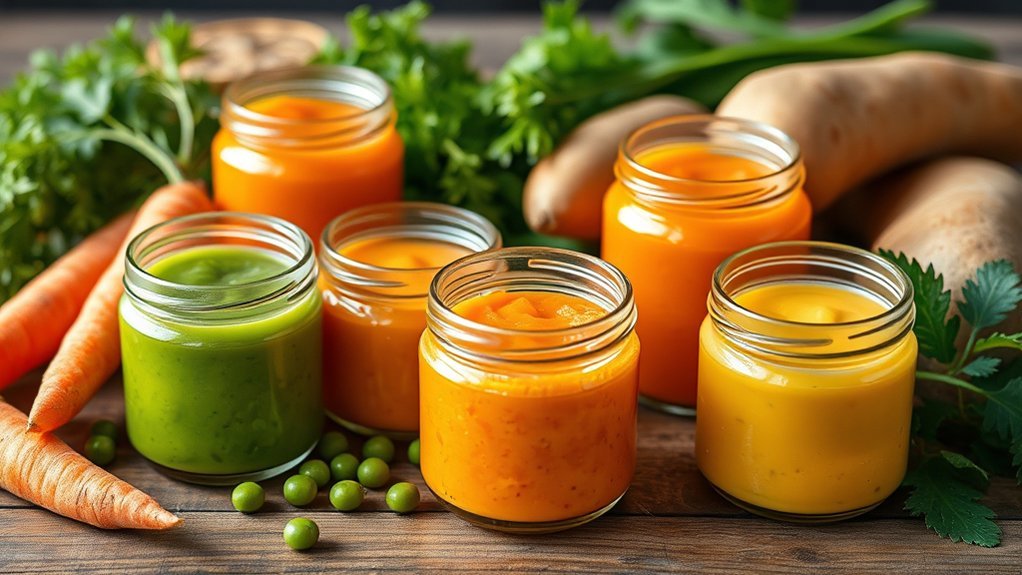
“Stage 1” generally describes smooth, thin purees marketed for babies beginning complementary foods. It is not a universal medical standard, and textures can differ between brands. Check the actual food consistency and your baby’s feeding skills instead of relying only on the number printed on the package.
The Centers for Disease Control and Prevention recommends beginning foods other than breast milk or infant formula at about 6 months, once a baby shows developmental readiness. Introducing solids before 4 months is not recommended.
Early options may include smooth iron-fortified cereal, pureed meat, mashed beans, lentils, tofu, well-cooked egg, plain full-fat yogurt, avocado, banana, peas, pears, carrots, or sweet potato. Fruit and vegetable purees can be useful, but they should not crowd out iron-rich foods.

Power your essentials anywhere with a 999Wh pure sine wave power station delivering up to 1000W continuous with 2000W surge. It supports fast charging via USB-C PD 60W and USB-A QC 18W, plus simultaneous output for multiple devices through AC, USB, wireless, and car/DC ports. Recharge using AC, car, or solar with a built-in MPPT controller and dual cooling fans, while the upgraded battery management system protects against surges, short circuits, and overheating.

7G OF PROTEIN FOR BABY: Beech-Nut Meat Baby Food is a savory blend of real pureed chicken & chicken broth. Each jar contains 7 grams of protein to help keep baby full.

ON THE GO BABY FOOD: Gerber Stage 1 Baby Food Puree Tubs are designed for ease and convenience. These tubs are the perfect on the go baby food, made in a portable and easy-to-store format for busy parents
What USDA Organic Means
A product labeled “organic” must meet federal production and handling requirements. A multi-ingredient product displaying the USDA Organic seal must contain at least 95% certified organic ingredients, excluding salt and water. Products labeled “made with organic” follow different rules and cannot display the USDA seal.
According to the USDA organic-labeling standards, organic certification regulates farming and processing practices. It does not mean that a food is pesticide-free, more nutritious, free of allergens, or free of naturally occurring environmental contaminants.
| The USDA Organic Seal Does Mean | It Does Not Automatically Mean |
|---|---|
| The product follows federal organic production and handling rules | The food contains more vitamins, protein, or iron |
| At least 95% of qualifying ingredients are certified organic when the seal is used | No pesticides of any kind were used |
| Excluded genetic-engineering methods are prohibited under organic rules | The product is allergen-free or suitable for every baby |
| The producer and handler are subject to certification requirements | The food has zero lead, arsenic, cadmium, or mercury |
Nutritional Benefits of Organic Baby Food
Organic baby food can be a reasonable choice for families who prefer certified organic farming practices. However, the word “organic” should not distract from the factors that most directly affect a first food’s nutritional value: the ingredients, iron content, texture, serving variety, added sugar, sodium, and how the food fits into the baby’s overall diet.
Does Organic Baby Food Have Higher Nutrient Content?
Current evidence does not show that organic baby food consistently provides a meaningful nutritional advantage over comparable conventional food. The American Academy of Pediatrics has noted that measured nutrient differences are generally small, inconsistent, or difficult to connect to better health outcomes.
A conventional iron-fortified oatmeal cereal, meat puree, or bean puree may provide more useful first-food nutrition than an organic fruit pouch with little iron. Compare the Nutrition Facts panel and ingredient list rather than assuming the organic option is always more nutrient-dense.
Around 6 months, developmental readiness, iron-rich foods, safe textures, and dietary variety matter more than whether every jar carries an organic seal.
Organic Does Not Mean Allergen-Free
Organic products can contain milk, egg, wheat, soy, sesame, peanuts, tree nuts, fish, or shellfish. A product is only free from a specific allergen when its ingredients, allergen statement, and manufacturing information support that conclusion.
Single-ingredient purees can make it easier to identify the cause of a reaction during the first few introductions. They do not prevent allergies, however, and an organic diet has not been shown to protect a child from food allergy or sensitivity.
Organic Farming Practices
Organic farming standards address soil management, biodiversity, allowed inputs, crop production, livestock practices, and handling. Families may value those practices for environmental or personal reasons. That preference can be part of the decision, but it should be separated from unsupported claims that organic food guarantees better growth, brain development, allergy prevention, or contaminant-free ingredients.
Signs Your Baby Is Ready for Stage 1 Foods
Most babies begin complementary foods at about 6 months. Age is only one part of the decision. Look for several feeding-readiness skills together and discuss concerns with your baby’s clinician.
Physical Development Milestones
Your baby may be ready when they can:
- Sit upright alone or with support and remain stable during feeding
- Control their head and neck
- Bring objects toward their mouth
- Reach for or grasp food and other objects
- Swallow food instead of repeatedly pushing it out with the tongue
Doubling birth weight should not be treated as a required stand-alone test. Current CDC guidance focuses on developmental feeding skills. Premature babies may need readiness assessed using corrected age and their individual development.
Interest in Adult Food
Interest can support the readiness decision. Your baby may watch others eat, lean toward food, open their mouth for a spoon, or reach toward the table. Interest alone is not enough if head control, upright positioning, or swallowing skills are not yet present.
Spoon-Feeding Ability
Offer a small amount on a spoon while your baby is awake, calm, and seated upright. A ready baby can usually close their lips around the spoon and move at least some food toward the back of the mouth. Spitting out a new texture does not always mean the baby dislikes it; feeding is a new motor skill that takes practice.
Warning: Always feed your baby seated upright with close adult supervision. Never feed a baby while lying down, riding in a car seat, crawling, or walking. Whole nuts, thick spoonfuls of nut butter, hard raw produce, whole grapes, popcorn, and firm round food pieces are choking hazards.
Nutritional Priorities for First Foods
Complementary food adds nutrients and feeding experience; it does not immediately replace breast milk or infant formula. Milk feeds remain important while the amount and variety of solids gradually increase.
Prioritize Iron-Rich Foods
At about 6 months, babies need reliable sources of iron in addition to their usual milk feeds. The FDA advises offering iron-fortified grain cereals or other iron-containing foods to babies older than 6 months.
| Food Type | Stage 1 Preparation | Why It Helps |
|---|---|---|
| Iron-fortified oatmeal, barley, or multigrain infant cereal | Mix to a smooth consistency with breast milk, prepared formula, or water as directed | Provides iron in an easy first-food texture |
| Beef, turkey, chicken, or other tender meat | Cook fully and puree smoothly with enough liquid | Provides iron, zinc, protein, and other nutrients |
| Beans or lentils | Cook until very soft and blend or mash smoothly | Provides plant protein, iron, and fiber |
| Well-cooked egg | Mash with water, breast milk, formula, or another familiar puree | Provides protein and introduces a common allergen in a safe texture |
| Tofu or plain full-fat yogurt | Mash until smooth; use pasteurized yogurt without added sugar | Adds protein and texture variety; yogurt also introduces dairy |
| Vegetables and fruits | Cook firm produce until soft, then puree; naturally soft fruit can be mashed | Adds varied flavors, vitamin C, fiber, and other nutrients |
Rice cereal can be part of a varied diet, but it should not be the only infant cereal. Rotate oatmeal, barley, multigrain cereals, and other age-appropriate foods rather than relying heavily on one grain or ingredient.
Foods to Avoid or Limit
- Honey before 12 months: Honey can contain spores that cause infant botulism.
- Cow’s milk as a drink before 12 months: Pasteurized yogurt and cheese may be introduced earlier, but cow’s milk should not replace breast milk or infant formula as the main drink before age 1.
- Added sugar and sweetened drinks: Babies do not need them.
- High-sodium foods: Choose products without added salt when practical.
- Unpasteurized foods: Avoid unpasteurized milk, juice, cheese, or other products.
- Choking shapes and textures: Modify hard, sticky, round, or tough foods before serving.
The CDC provides additional guidance on foods and drinks to avoid or limit.
How to Choose Safe and Healthy Purees
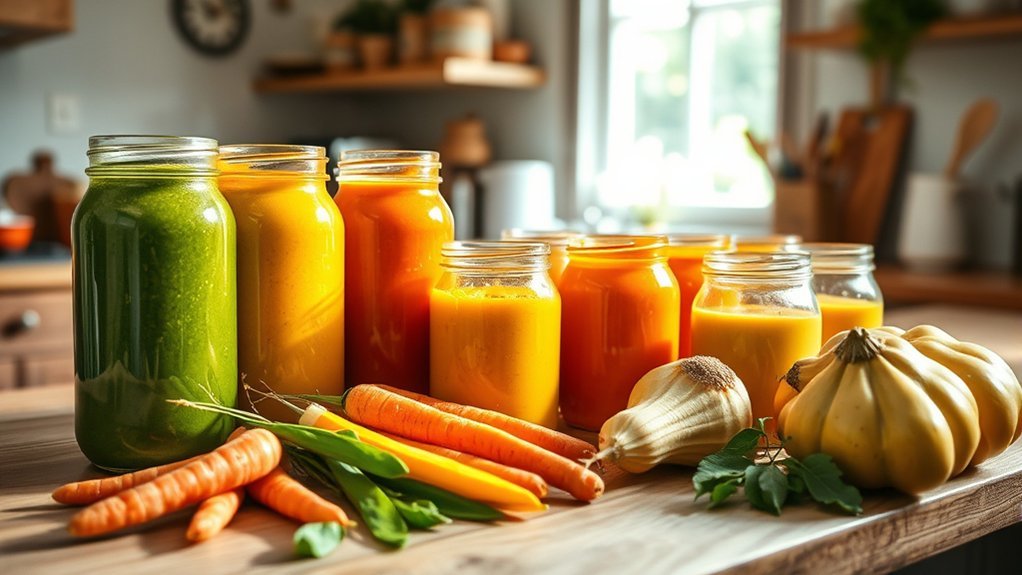
Choosing safe and healthy purees becomes easier when you use the same checklist for every jar, pouch, bowl, or frozen meal.
| What to Check | What to Look For |
|---|---|
| Texture | A smooth consistency your baby can safely manage, followed by gradual texture progression as skills improve |
| Ingredient list | Clearly named whole foods and no unnecessary sweeteners; single-ingredient products can simplify early reaction tracking |
| Nutrition | Regular iron-rich choices instead of an all-fruit rotation |
| Organic claim | The USDA Organic seal when certified organic production is important to your family |
| Allergen statement | Any milk, egg, wheat, soy, sesame, peanut, tree nut, fish, or shellfish ingredient |
| Packaging | An intact seal, no swelling, leaking, rust, cracks, or damaged lids, and a usable date that has not passed |
| Storage | Clear instructions for shelf-stable, refrigerated, or frozen food and safe use after opening |
| Testing transparency | A specific contaminant-testing policy, named laboratory practices, internal limits, or recent published results rather than vague “clean” language |
| Value | Price per ounce, usable serving size, storage needs, and whether your baby is likely to finish the package safely |
Pro Tip: Do not stock up on a large case before your baby tries the flavor and texture. Product preferences can change quickly, and refrigerated or opened food may have a short usable life.
What Heavy-Metal Testing Can and Cannot Tell You
Lead, arsenic, cadmium, and mercury can enter crops from soil, water, and the wider environment. Organic farming does not eliminate this exposure. No responsible manufacturer can promise that every food contains absolutely zero naturally occurring heavy metals.
In January 2025, the FDA issued final lead action levels for processed foods intended for babies and young children. The levels include 10 parts per billion for several categories and 20 parts per billion for single-ingredient root vegetables and dry infant cereals. These are regulatory action levels, not a guarantee that every product below them is risk-free.
To reduce repeated exposure from any one source:
- Serve a variety of fruits, vegetables, proteins, and grains.
- Do not use rice cereal as the only infant cereal.
- Alternate root vegetables with other vegetables.
- Choose whole foods and iron-rich options from several food groups.
- Review a company’s current testing policy rather than relying on the word “organic.”
Organic Brand and Format Examples
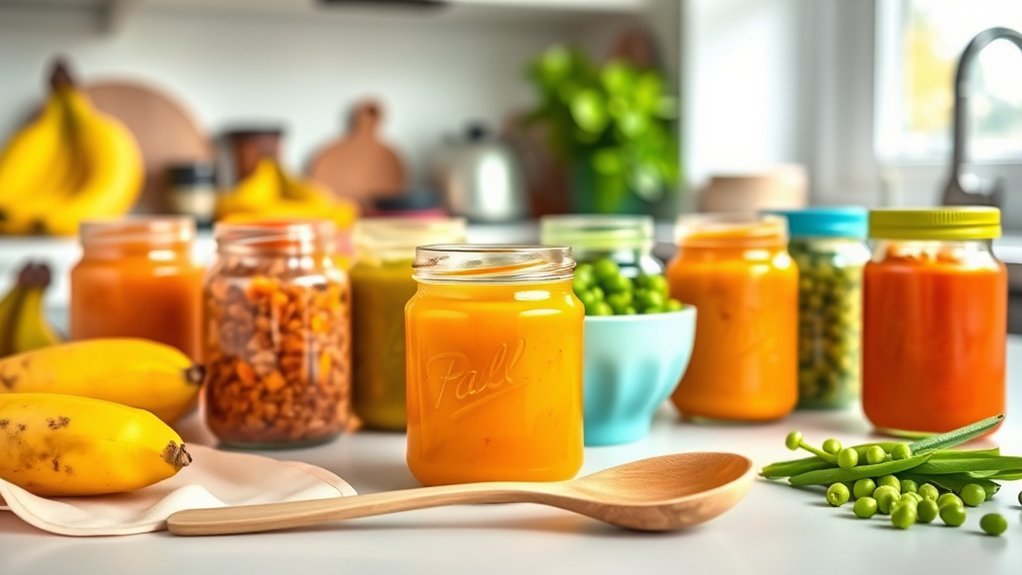
No brand is automatically the safest or best choice for every baby. Product lines, ingredients, stages, and availability change, so check the current package before buying. The following examples show how common organic formats differ rather than ranking them by marketing claims or temporary prices.
| Brand | Current Format Examples | What to Check |
|---|---|---|
| Happy Baby Organics | Stage-labeled fruit or vegetable purees, including single-ingredient choices | Confirm whether the specific item is a single food, a blend, a jar, or a pouch; do not confuse Stage 1 puree with Stage 1 infant formula |
| Once Upon a Farm | Refrigerated organic fruit, vegetable, and protein blends | Many products contain several ingredients; follow refrigeration and time-out-of-refrigeration instructions carefully |
| Beech-Nut Organics | Organic jarred purees with simple fruit and vegetable combinations | Stages and textures vary; many current organic jars are blended rather than single-ingredient |
| Serenity Kids | Shelf-stable savory vegetable and meat-and-vegetable pouches | Review multi-ingredient recipes and allergen statements; the company publishes a finished-product testing policy, but that does not make every product suitable for every baby |
| Cerebelly | Shelf-stable organic vegetable, fruit, bean, and nutrient-fortified blends | Most products are multi-ingredient and may contain legumes, seeds, oils, or other components that should be read carefully during early introductions |
| Tiny Organics | Frozen, textured plant-based meals and finger-food-style options | These are generally more textured than a traditional smooth Stage 1 puree and may fit better after a baby develops the needed oral and self-feeding skills |
Prices vary by retailer, package size, subscription, and location. Compare price per ounce and account for refrigeration, freezer space, leftovers, and whether the product contains enough iron or protein to serve a useful role in your baby’s diet.
Tips for Introducing New Flavors to Your Baby
Begin with a small amount—often 1 or 2 tablespoons—and let your baby decide whether to eat more. The CDC recommends watching hunger and fullness cues rather than pressuring a baby to finish a container.
- Choose a calm time. Start when your baby is awake, comfortable, and not extremely hungry or tired.
- Offer a small taste. Place a small amount on a spoon and allow time to explore it.
- Introduce one new food at a time initially. Waiting 3–5 days between early new foods can make reactions easier to identify.
- Repeat without pressure. A baby may need several calm exposures before accepting a flavor.
- Include savory foods early. Rotate vegetables, iron-rich foods, and less-sweet options instead of serving mostly fruit.
- Advance the texture. Move from smooth puree to thicker mash, soft lumps, finely chopped food, and safe finger foods as feeding skills develop.
The CDC’s texture guidance encourages exposure to smooth, mashed, lumpy, finely chopped, and ground foods as development allows. Remaining on thin purees longer than needed can limit practice with new mouth movements.
Pro Tip: For early spoon practice, squeeze pouch food into a bowl instead of routinely letting your baby suck directly from the pouch. This allows you to check the food, control the amount, combine it with an iron-rich option, and help your baby experience the smell and appearance of the meal.
How to Introduce Foods While Watching for Allergens
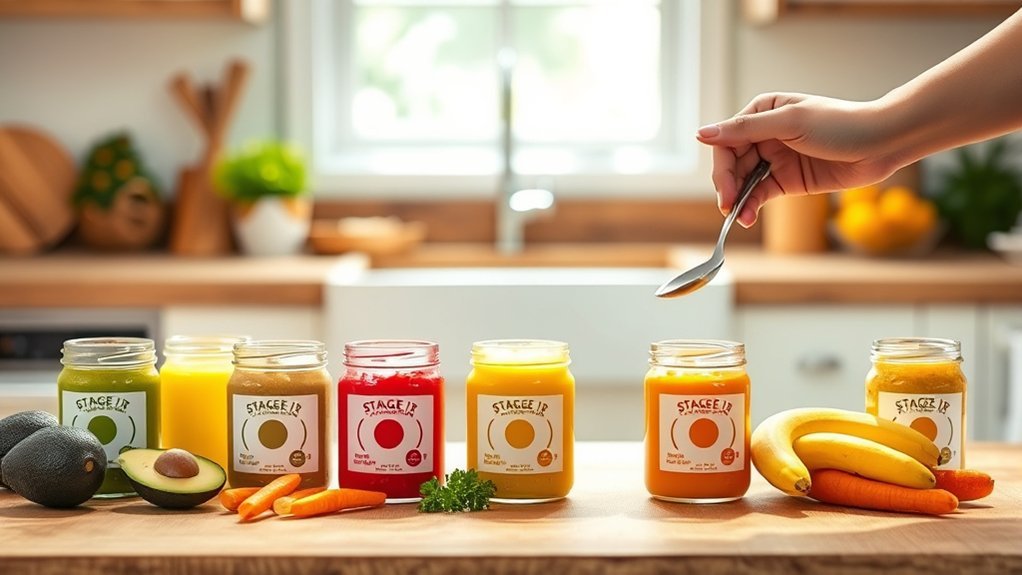
Common food allergens include milk, egg, peanut, tree nuts, wheat, soy, sesame, fish, and shellfish. These foods generally do not need to be delayed once a baby is developmentally ready for solids, but they must be served in an age-appropriate, non-choking form.
Safe Allergen-Introduction Steps
- Introduce other complementary food first so you know your baby can swallow a puree or mash.
- Choose one allergenic food and offer it at home when your baby is healthy and you can observe them.
- Start with a very small taste, then offer more gradually if there is no reaction.
- Use a safe form, such as smooth peanut butter thinned with warm water or familiar puree, or fully cooked egg mashed to the proper consistency.
- Never offer whole nuts or a thick spoonful of nut butter.
- If the food is tolerated, continue including it in the diet in an age-appropriate form instead of treating the first taste as a one-time test.
Babies with severe eczema, an existing egg allergy, or a previous immediate food reaction should have a clinician-directed plan before peanut or other high-risk allergen introduction. The NIAID peanut-allergy prevention guidelines recommend earlier, supervised planning for some high-risk infants.
Symptoms to Watch For
Possible food-allergy symptoms include hives, facial or lip swelling, repetitive vomiting, diarrhea, coughing, wheezing, throat tightness, difficulty swallowing, breathing trouble, sudden drooling, unusual sleepiness, or a baby becoming pale, floppy, or difficult to wake.
Warning: Trouble breathing, throat or tongue swelling, wheezing, collapse, or symptoms affecting more than one body system may indicate anaphylaxis. Use prescribed epinephrine immediately if your child has it, call 911, and seek emergency care. Do not wait to see whether a severe reaction improves on its own.
Homemade Stage 1 Purees and Safe Storage
Homemade puree allows you to control the ingredients and texture, but it is not automatically safer or more nutritious than commercial baby food. Clean preparation, proper cooking, rapid cooling, and short storage times are essential.
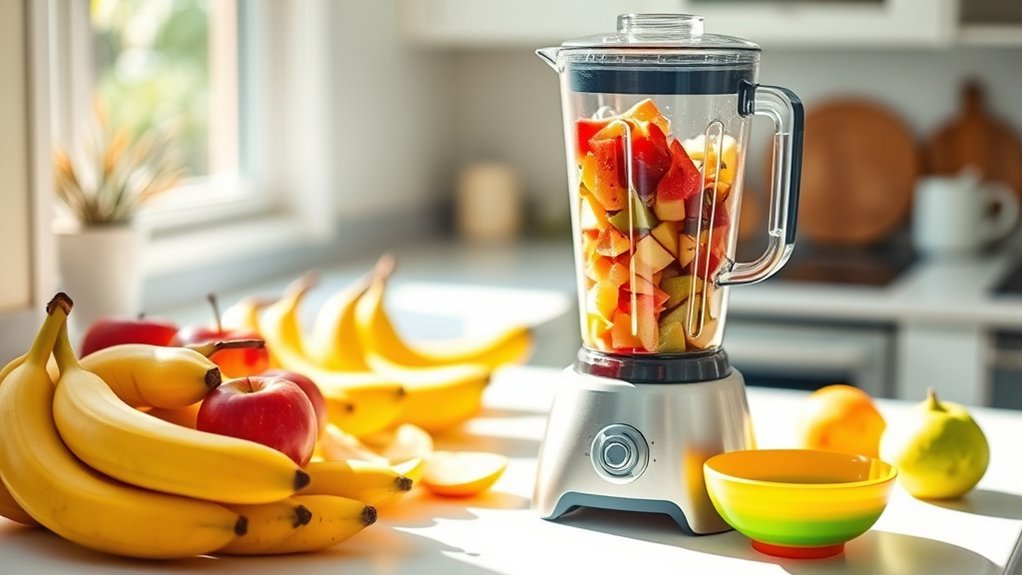
Simple Homemade Puree Method
- Wash your hands, utensils, blender, work surface, and produce.
- Peel and remove pits, seeds, bones, skin, or tough parts as needed.
- Steam, bake, simmer, or otherwise cook firm foods until completely tender. Cook meat and egg fully.
- Blend with enough water, breast milk, or correctly prepared infant formula to create a smooth texture.
- Serve a small portion in a separate bowl.
- Cool and store unused food promptly rather than returning saliva-contaminated leftovers to the main container.
Easy single-food options include smooth avocado, pear, apple, sweet potato, pea, lentil, bean, chicken, turkey, or beef puree. For better nutritional balance, rotate produce with iron-rich foods instead of serving fruit at every meal.
Safe Storage Times
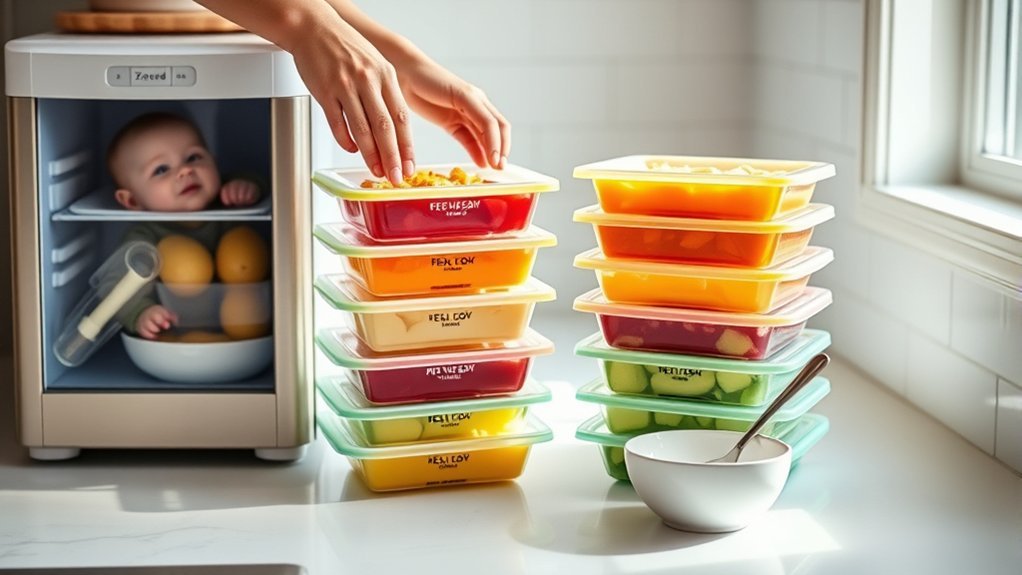
Utah State University Extension’s home-prepared baby-food guidance recommends refrigerating most homemade purees for no more than 2 days and using homemade meat puree within 24 hours. Frozen portions can generally be kept for about 3–4 months for best quality.
- Use shallow, airtight, dated containers.
- Keep the refrigerator at 40°F or below and the freezer at 0°F or below.
- Freeze small portions so you only thaw what is needed.
- Thaw in the refrigerator, under cold running water, or during reheating—not on the counter.
- Do not refreeze a thawed portion.
- Discard food left at room temperature for more than 2 hours, or more than 1 hour in temperatures above 90°F.
- Follow the package instructions for opened commercial jars, pouches, bowls, and refrigerated products because storage limits differ.
Common Stage 1 Feeding Mistakes
- Starting by age alone: Wait for developmental readiness and do not begin before 4 months.
- Serving only fruit: Include iron-rich cereals, meats, beans, lentils, tofu, or egg.
- Assuming organic means allergen-free: Read every ingredient and allergen statement.
- Treating a stage label as a safety guarantee: Check the actual texture and your baby’s skills.
- Staying on thin purees too long: Gradually thicken and vary textures as your baby develops.
- Feeding directly from a package and saving it: Saliva can contaminate the remaining food; portion what you need into a clean bowl.
- Forcing another bite: Stop when your baby turns away, closes their mouth, pushes food away, or becomes upset.
- Buying based on health claims alone: Compare the ingredient list, Nutrition Facts, allergens, storage instructions, and current testing disclosures.
Frequently Asked Questions
How can I tell if a brand tests for heavy metals?
Look for a current testing policy that names the contaminants tested, whether finished products or only ingredients are tested, the laboratory standards used, testing frequency, internal limits, and whether recent results or certificates are publicly available. A vague “clean” or “tested” claim provides less useful information. Organic certification alone does not verify low heavy-metal levels.
Are there any organic baby-food brands to avoid?
Avoid choosing or rejecting an entire brand based only on reputation. Skip any package that is swollen, leaking, cracked, unsealed, expired, improperly refrigerated, or subject to a recall. Also avoid products with an unsuitable texture, an undeclared or unsafe allergen for your child, unclear ingredients, or storage requirements you cannot follow.
What are the best homemade baby-food recipes for Stage 1?
Useful first purees include iron-fortified oatmeal, smooth lentils, beans, beef, turkey, chicken, avocado, peas, pear, apple, or sweet potato. Cook foods fully when needed and blend them to a smooth consistency. Rotate iron-rich foods with fruits and vegetables instead of relying on sweet produce alone.
How can I store homemade baby food safely?
Refrigerate most homemade purees promptly in shallow, airtight containers and use them within 2 days; use meat puree within 24 hours. Freeze small portions for longer storage, thaw them safely in the refrigerator or during reheating, and do not refreeze thawed or saliva-contaminated food.
Can organic baby food help with allergies or sensitivities?
Organic certification does not prevent food allergy or guarantee that a product is free from milk, egg, wheat, soy, sesame, peanuts, tree nuts, fish, or shellfish. Read the complete label and introduce allergens in safe forms when your baby is ready. Seek medical guidance for severe eczema, a known allergy, or a previous reaction.
Does a Stage 1 label mean the food is suitable at 4 months?
No. Stage labels are manufacturer categories and do not replace developmental readiness. Most babies begin solids at about 6 months, and foods should not be introduced before 4 months. Check head control, upright sitting ability, swallowing skills, and your pediatrician’s advice.
Is rice cereal safe for a baby?
Iron-fortified rice cereal can be one food in a varied diet, but it should not be the only cereal or iron source. Rotate it with oatmeal, barley, multigrain cereal, meat, beans, lentils, tofu, and other age-appropriate foods to reduce repeated exposure from a single ingredient.
Conclusion
Stage 1 organic baby food can be a convenient part of starting solids, but the organic seal is only one piece of the decision. Begin at about 6 months when your baby shows developmental readiness, continue breast milk or infant formula, serve iron-rich foods regularly, vary grains and produce, and progress textures as feeding skills improve.
Read each product’s ingredient list, allergen statement, storage instructions, and current testing disclosures. Introduce new foods calmly, use non-choking forms, watch your baby’s cues, and seek individualized medical guidance when allergy risk, prematurity, swallowing concerns, or growth problems are present.
Sources
- CDC: When, What, and How to Introduce Solid Foods — starting age, developmental readiness, new-food timing, and allergen introduction
- CDC: Choking Hazards — unsafe shapes, textures, and feeding precautions
- USDA Agricultural Marketing Service: Labeling Organic Products — requirements for organic and “made with organic” labels
- FDA: Action Levels for Lead in Processed Food Intended for Babies and Young Children — 2025 lead action levels and regulatory context
- NIAID: Addendum Guidelines for the Prevention of Peanut Allergy — peanut introduction guidance for infants at different risk levels
- American Academy of Pediatrics: Organic Food—Nutritional and Environmental Considerations — evidence concerning nutrition, pesticide exposure, and organic-food claims