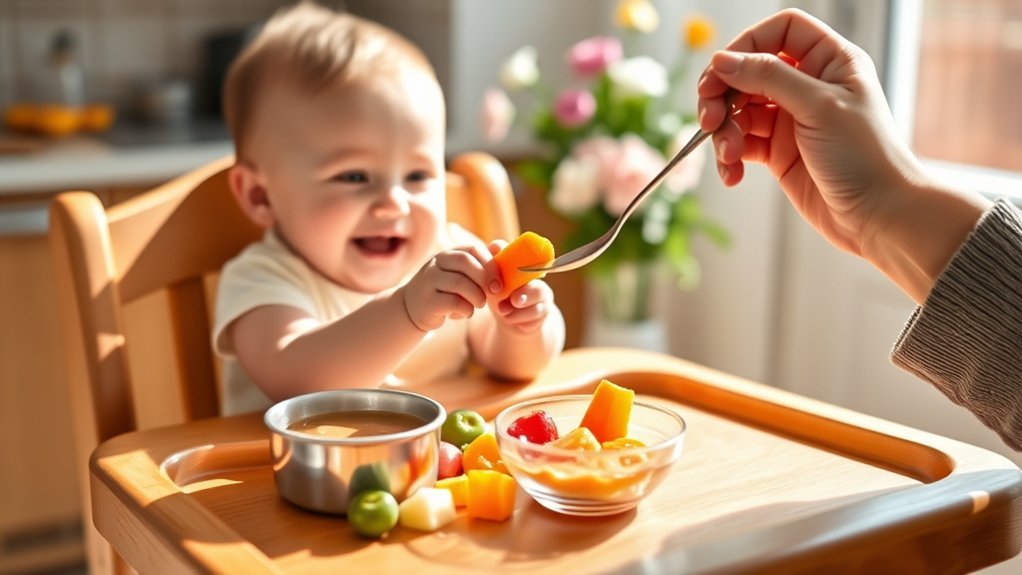

Most babies are ready to begin solid foods at about 6 months, but age is only part of the decision. Your baby should also have steady head and neck control, sit upright with support, open their mouth for food, and swallow instead of pushing food back out. Start slowly, keep breast milk or infant formula as the main source of nutrition, and match every food’s texture and shape to your baby’s skills.
Quick Answer
Introduce solid foods at about 6 months when your baby shows developmental readiness. Begin with small amounts of soft, nutrient-dense food, including iron-rich choices. Offer one new food at a time, supervise every bite, avoid choking hazards, and continue breast milk or infant formula as the main nutrition through the first year.
Key Takeaways
- Most babies start solids at about 6 months; foods should not be introduced before 4 months.
- Readiness depends on feeding skills, not a specific weight or whether your baby has doubled their birth weight.
- There is no required first-food order. Include iron- and zinc-rich foods from the start.
- Introduce common allergens in baby-safe forms when other solids begin, with special medical guidance for babies at higher allergy risk.
- Prevent choking by seating your baby upright, preparing food for their developmental level, and supervising continuously.
- Avoid honey before 12 months, unpasteurized foods, juice before age 1, and cow’s milk as a drink before 12 months.
At a Glance
| Time Required | About 5–15 minutes to prepare a simple first food; begin with a short, calm meal |
| Difficulty | Beginner, with continuous adult supervision |
| Tools Needed | Upright high chair with harness, small bowl, soft spoon, open cup or training cup, fork or blender if needed |
| Cost | Low to moderate; many safe first foods can come from the family’s regular groceries |
Note: This guide provides general education, not individual medical advice. Ask your pediatrician before starting solids if your baby was born prematurely, has poor growth, swallowing or muscle-control problems, severe eczema, a known food allergy, or another medical condition that affects feeding.
When Is Your Baby Ready for Solid Foods?
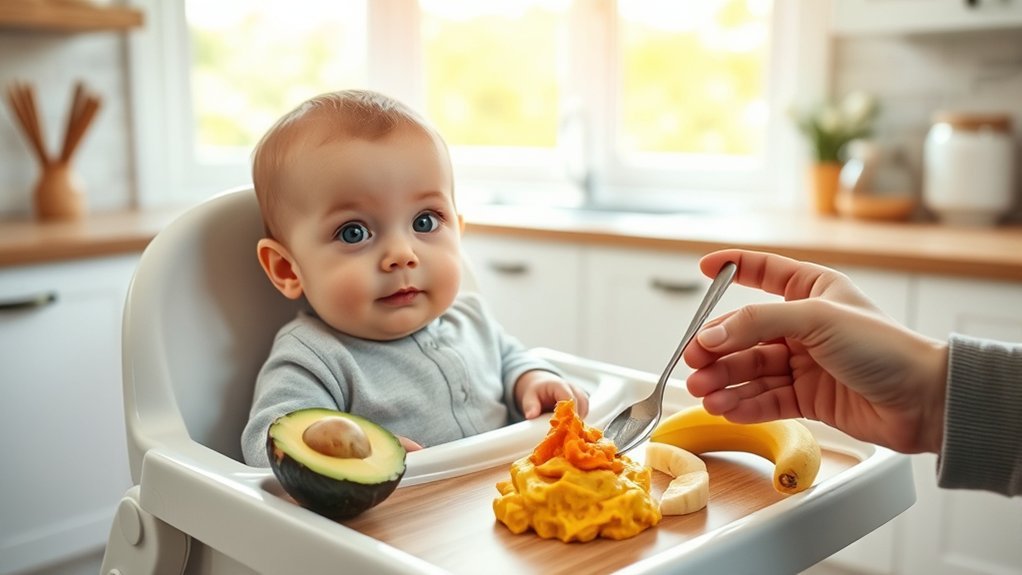
The Centers for Disease Control and Prevention recommends beginning foods other than breast milk or infant formula at about 6 months. Starting before 4 months is not recommended. A baby who is close to 6 months but cannot yet sit upright with support or control their head and neck may need more time.
Weight alone does not show that a baby can eat safely. Doubling birth weight or reaching 13 pounds has appeared in older readiness lists, but current guidance focuses on developmental feeding skills. Your baby’s clinician can help if age, growth, and feeding skills do not line up.
Breast milk, infant formula, or both should remain your baby’s main source of nutrition from 6 through 12 months. Solid foods are complementary: they add nutrients and practice while gradually becoming a larger part of the diet.
Signs of Readiness for Introducing Solids
Look for several readiness signs together rather than relying on one milestone.
| Readiness Sign | What It Looks Like |
|---|---|
| Stable sitting | Your baby can sit alone or with support and stay upright for feeding. |
| Head and neck control | Their head stays steady instead of falling forward or to the side. |
| Interest in food | They watch food, reach toward it, or open their mouth when food is offered. |
| Swallowing skill | They move food toward the back of the mouth and swallow rather than repeatedly pushing it onto the chin. |
| Hand-to-mouth coordination | They bring objects to the mouth and try to grasp food or toys. |
Teething, waking more often at night, or wanting extra milk are not reliable signs that a baby needs solids. Solid foods also should not be used as a sleep aid.
First Foods to Consider for Your Baby
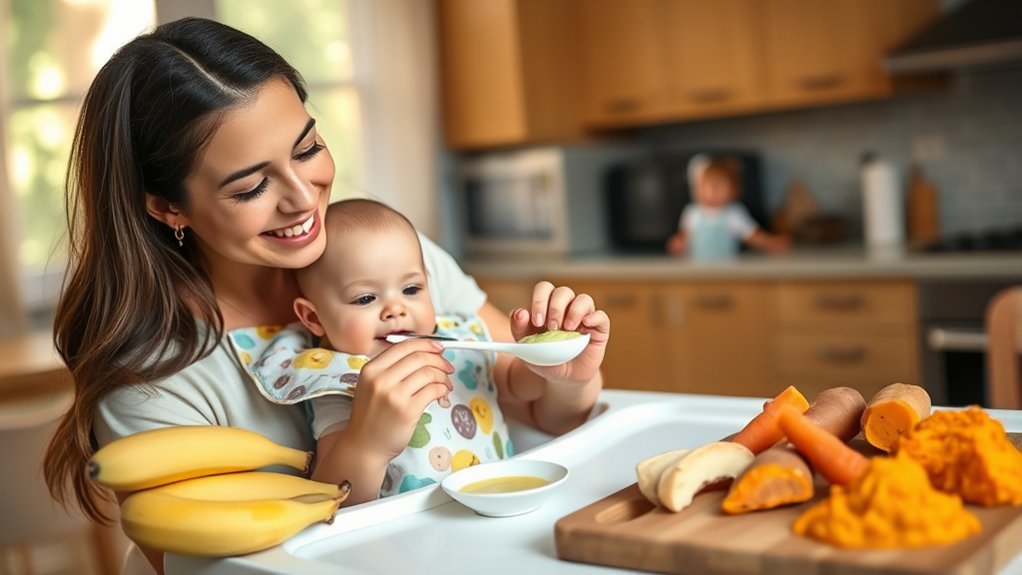
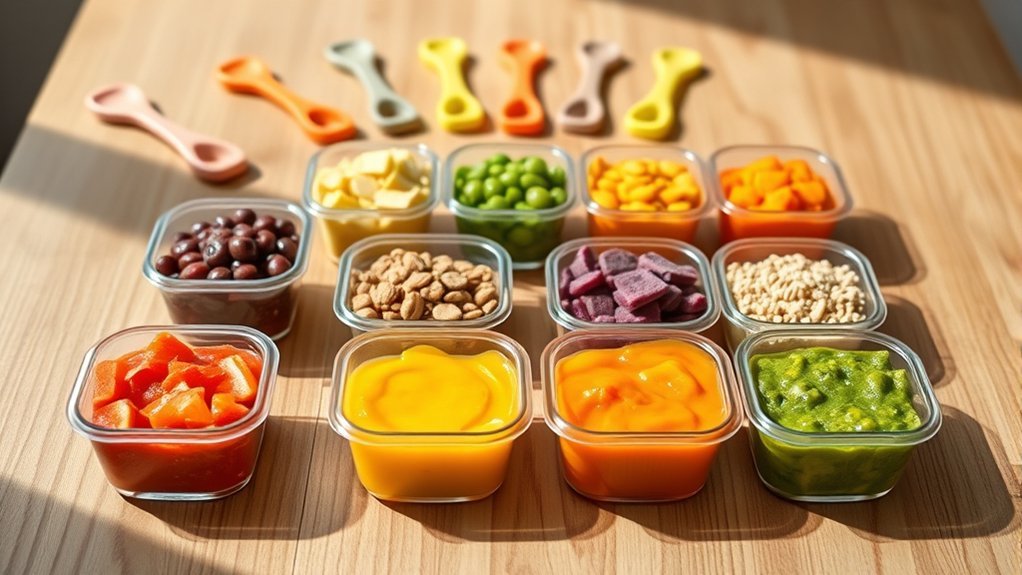
There is no required order for first foods. Purees are one option, but developmentally ready babies may also begin with mashed foods or soft, appropriately shaped finger foods. Choose nutrient-dense foods from several groups and change the texture as your baby’s skills improve.
Include an iron- or zinc-rich food often, especially if your baby receives mostly human milk. Good choices include:
- Iron-fortified infant oatmeal, barley, or multigrain cereal mixed to a smooth texture
- Pureed, mashed, finely shredded, or very tender meat, poultry, or low-mercury fish
- Mashed beans, lentils, or tofu
- Well-cooked egg
- Plain, pasteurized yogurt or soft pasteurized cheese without added sugar
Fruits and vegetables such as avocado, banana, pear, peas, sweet potato, squash, and well-cooked broccoli add flavor, texture, and nutrients. If you use infant cereal, offer a variety instead of relying only on rice cereal to reduce unnecessary arsenic exposure.
Pro Tip: Pair an iron-rich food with a fruit or vegetable rich in vitamin C, such as mashed lentils with soft-cooked tomato or iron-fortified oatmeal with mashed strawberries.
Safe Tips for Preparing Solid Foods for Your Baby
Food must be soft enough for your baby’s current eating skills. At first, mash, puree, or strain foods until smooth. As chewing and tongue control improve, move to thicker, lumpier, finely chopped, or ground textures rather than staying with thin purees for months.
- Wash your hands, work surface, utensils, and your baby’s bowl before preparing food.
- Cook meat, poultry, fish, and eggs thoroughly. Use pasteurized milk products.
- Cook firm fruits and vegetables until they mash easily with a fork.
- Remove bones, tough skin, hard pits, seeds, gristle, and thick fat.
- Thin smooth nut or seed butter with warm water, breast milk, formula, or puree. Never serve a thick spoonful.
- Cut grapes, cherry tomatoes, berries, and similar round foods lengthwise into small pieces. Never serve them whole.
- Keep your baby upright and buckled into a high chair. Do not feed while they are lying down, crawling, walking, or riding in a vehicle.
Food size is not one-size-fits-all. A younger baby using a whole-hand grasp may handle a very soft finger-length strip, while a baby with a pincer grasp may manage small, soft pieces. Texture, shape, softness, and supervision matter more than a single “fingertip-size” rule.
Serve a small portion in a separate bowl. Refrigerate perishable food promptly, discard food left at room temperature for more than two hours, and throw away food that has been in contact with your baby’s saliva rather than saving it for another meal.
Warning: Never leave a baby alone with food, even for a moment. Whole nuts, popcorn, whole grapes, raw apple or carrot chunks, hot-dog rounds, hard candy, chunks of meat or cheese, and thick spoonfuls of nut butter are choking hazards.
Introducing New Foods: A Step-by-Step Guide
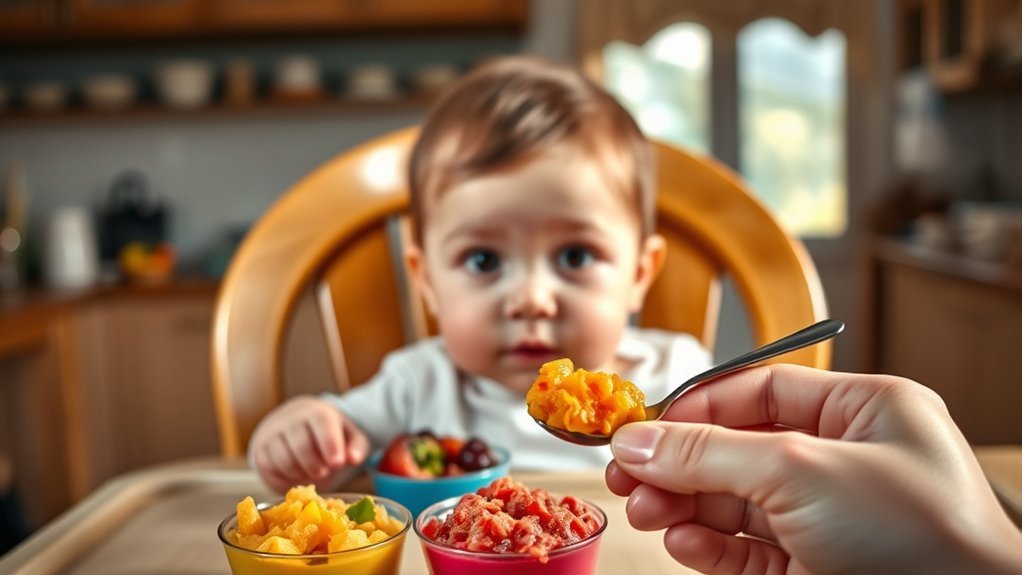
Step 1: Confirm Readiness
Check that your baby is about 6 months old and shows the readiness signs above. Choose a time when your baby is alert, calm, and not extremely hungry or tired.
Step 2: Set Up Safe Seating
Seat your baby upright in a stable high chair and fasten the harness. Remove distractions and keep the meal within arm’s reach so you can watch every bite.
Step 3: Choose One Simple Food
Start with one single-ingredient food in a safe texture. A small amount of iron-fortified oatmeal, mashed beans, pureed meat, mashed avocado, or well-cooked egg can work. No specific food group must come first.
Step 4: Offer a Small Amount
Begin with 1 or 2 teaspoons, then increase gradually toward 1 or 2 tablespoons as your baby shows interest. Let your baby lean toward the spoon or bring food to their own mouth. Stop when they close their mouth, turn away, push food away, or lose interest.
Step 5: Add Variety Gradually
At first, offer one new single-ingredient food at a time and wait 3 to 5 days before another new food so a reaction is easier to identify. Once several foods are tolerated, combine them and continue adding new tastes and textures.
Step 6: Keep Practicing
A baby may need many calm exposures before accepting a new taste. A surprised face does not always mean dislike. Do not pressure, force, bribe, or hide food in your baby’s mouth.
How Much and How Often Should You Feed Solids?
Start small. The CDC suggests beginning with 1 or 2 tablespoons and watching hunger and fullness cues. During the early weeks, one short meal a day may be enough. Gradually move toward two and then three meals as interest, skills, and appetite grow.
From 6 to 12 months, breast milk or iron-fortified infant formula remains the main source of nutrition. Offer milk feeds on your baby’s usual schedule and let solids expand gradually rather than replacing milk suddenly. Between 6 and 12 months, you may also offer 4 to 8 ounces of plain water a day from an open cup or training cup, often with meals.
Appetite changes from day to day. Follow your baby’s cues instead of expecting a fixed serving at every meal.
Moving From Purees to Textured Foods
Babies learn by practicing with different textures. Begin with smooth mashed, pureed, or strained foods if needed, then progress to thicker mashes, soft lumps, finely chopped foods, and safe finger foods as oral and hand skills develop.
Some coughing, gagging, or spitting up can happen while a baby learns a new texture. Persistent coughing during meals, a wet or gurgly voice or cry, repeated chest infections, poor weight gain, or frequent choking needs prompt medical assessment.
Spoon-feeding and baby-led feeding can both work. Many families use a mixed approach. The safest method is the one that matches the baby’s development, provides enough iron-rich food, and uses careful preparation and continuous supervision.
Top Mistakes Parents Make When Introducing Solids
Ignoring Readiness Cues
Starting because the calendar says “6 months” without checking posture, head control, and swallowing can make feeding harder and less safe. Waiting for coordinated readiness signs helps your baby manage food more effectively.
Using Weight as the Main Test
Reaching 13 pounds or doubling birth weight does not prove that a baby can sit, control the head, or move food safely. Use developmental feeding skills and your clinician’s advice instead.
Introducing Multiple New Foods Simultaneously
Offering several unfamiliar ingredients at once can make it difficult to identify the cause of a reaction. Use single-ingredient foods at first. After those foods are tolerated, combining them is fine.
Delaying Allergens Without a Medical Reason
There is no evidence that delaying baby-safe forms of egg, dairy, wheat, soy, peanut, or fish beyond the period when solids begin prevents allergy. Introduce them one at a time in safe forms. Babies with severe eczema or egg allergy need individualized peanut-introduction guidance.
Failing to Supervise Eating
Stay within arm’s reach and watch continuously. Screens, walking around, feeding in a reclined seat, or turning away to prepare another item can delay recognition of choking.
Forcing Bites or Ignoring Fullness
Pressure can turn meals into a struggle. Offer the food, but let your baby decide whether and how much to eat. Closing the mouth, turning the head, slowing down, or pushing food away are common fullness cues.
Keeping an Eye Out for Allergies and Reactions
Introduce common allergens when your baby begins other solid foods, not as whole nuts, thick nut butter, or other choking hazards. Safe examples include well-cooked egg, plain yogurt, thinned smooth peanut butter, wheat cereal, tofu, and well-cooked flaked fish.
Offer a new allergen at home when your baby is healthy and you can observe them. Begin with a small amount. If tolerated, keep the food in the regular diet rather than serving it only once.
Babies with severe eczema, egg allergy, or a previous immediate food reaction should be evaluated before peanut introduction. Follow the clinician’s plan rather than trying a home challenge on your own.
Possible food-allergy symptoms include hives, facial swelling, repeated vomiting, coughing, wheezing, trouble breathing or swallowing, pale or bluish skin, sudden limpness, or unusual sleepiness.
Warning: Trouble breathing, swelling of the tongue or throat, bluish or very pale skin, collapse, or symptoms affecting more than one body system may signal anaphylaxis. Use prescribed epinephrine immediately according to your baby’s emergency plan and call 911. For a mild isolated reaction, stop the food and contact your child’s clinician before offering it again.
Gagging vs. Choking: Know the Difference
Gagging is a protective reflex while babies learn to move food. A gagging baby may cough, make noise, push the tongue forward, or turn red. Stay calm and let the baby work the food forward; putting fingers into the mouth can push food deeper.
Choking means the airway is blocked. A choking baby may be unable to breathe, cry, cough effectively, or make noise; they may turn blue, become limp, or lose consciousness. This is an emergency.
Gagging is usually noisy. Severe choking may be silent because little or no air is moving.
Learn infant CPR and choking first aid from a qualified instructor before solids begin. If your baby cannot breathe, cry, or cough effectively, start age-appropriate first aid and call 911.
Foods and Drinks to Avoid or Limit
- Honey before 12 months: Honey can cause infant botulism, even when it is cooked or mixed into food.
- Cow’s milk as a drink before 12 months: Plain yogurt and pasteurized cheese can be offered earlier, but cow’s milk should not replace breast milk or infant formula as a beverage.
- Juice before 12 months: Whole fruit is a better choice. Avoid fruit drinks and other sweetened beverages.
- Unpasteurized food or drink: Avoid raw milk, unpasteurized juice, and unpasteurized cheese or yogurt.
- Added sugar and high-sodium foods: Choose plain foods and check labels on packaged products.
- High-mercury fish: Avoid shark, swordfish, king mackerel, marlin, orange roughy, Gulf of Mexico tilefish, and bigeye tuna.
- Caffeinated drinks: Do not give coffee, tea, soda, energy drinks, or other caffeinated beverages.
- Choking hazards: Avoid whole nuts, popcorn, hard candy, whole grapes, raw hard produce, hot-dog rounds, chunks of meat or cheese, and thick spoonfuls of nut butter.
Creating a Positive Feeding Experience
A calm, responsive routine helps your baby build eating skills and trust their appetite.
- Eat together when possible. Babies learn by watching family members eat.
- Follow hunger and fullness cues. Offer food without pressure and stop when your baby signals they are done.
- Expect mess. Touching, smearing, smelling, and dropping food are normal parts of learning.
- Repeat foods without forcing them. Acceptance may take many exposures.
- Keep portions small. You can always offer more, which reduces waste and pressure.
Use a soft spoon if spoon-feeding, and let your baby hold another spoon when ready. Avoid scraping food off the upper lip or placing a spoon deep into the mouth; wait for your baby to open and close their lips around it.
What Are Ideal Finger Foods for Babies?
Finger foods can begin when your baby can sit upright, reach for food, grasp it, and bring it to the mouth. That may happen before or after 9 months. Choose foods that are soft enough to squash easily between your thumb and forefinger.
Good options include:
- Very soft avocado, banana, pear, peach, or cooked apple
- Soft-cooked broccoli florets, sweet potato, zucchini, carrot, or peas
- Well-cooked pasta or strips of soft toast
- Well-cooked egg strips or small pieces
- Finely shredded tender meat or soft flakes of low-mercury fish with bones removed
- Soft beans gently flattened with a fork
- Pasteurized soft cheese in safe pieces
For a baby using a whole-hand grasp, foods may be offered as soft finger-length pieces that extend beyond the fist. Once the pincer grasp develops, move toward small, soft bite-size pieces. Continue to avoid round, firm, sticky, hard, or tough foods.
What to Expect After Starting Solids
Stool often becomes firmer, stronger-smelling, and more varied in color after solids begin. Small pieces of undigested food can appear. These changes are usually normal.
Offer varied fiber-rich foods and small sips of water with meals if stools become firm. Contact your clinician for blood in the stool, persistent vomiting or diarrhea, dehydration, significant pain, poor intake, poor growth, or constipation that does not improve.
Temporary food refusal is common during illness, teething, or developmental changes. Keep milk feeds going and return to calm, low-pressure food practice when your baby feels better.
Frequently Asked Questions
Can I start baby food before 6 months?
Most babies should start at about 6 months when they are developmentally ready. Foods should not be introduced before 4 months. If a clinician recommends starting between 4 and 6 months for a specific medical reason, follow that individualized plan.
How do I know if my baby dislikes a food?
A single grimace is not proof of dislike; new flavors often cause surprised expressions. Turning away, closing the mouth, or repeatedly refusing may mean your baby is finished or not interested today. Try the food again another time without pressure.
What equipment do I need for feeding solids?
Use a stable upright high chair with a working harness, a washable bib, a small bowl, a soft spoon, and an open or training cup. A fork is enough for many mashed foods; a blender or food processor is optional.
Should I blend all foods for my baby?
No. Smooth purees can be useful at first, but babies also need practice with thicker mashes, soft lumps, finely chopped foods, and safe finger foods as their skills develop. Match texture to your baby rather than using age alone.
How can I make feeding time more enjoyable?
Choose a time when your baby is rested, sit together, keep portions small, allow safe exploration, and stop when fullness cues appear. Avoid pressure, screens, and rushing.
When should I introduce peanut, egg, and other allergens?
Introduce common allergens in developmentally appropriate forms when other solids begin, one at a time. Use well-cooked egg and thinned smooth peanut butter rather than whole nuts or thick spoonfuls. Ask a clinician first if your baby has severe eczema, egg allergy, or a previous immediate reaction.
Is gagging normal when starting solids?
Occasional gagging can happen while a baby learns a new texture. Gagging is usually noisy and may include coughing or tongue thrusting. Choking may be silent and requires immediate action if your baby cannot breathe, cry, or cough effectively.
Can babies have honey or cow’s milk?
Do not give honey in any form before 12 months. Cow’s milk should not be used as a drink before 12 months, although plain pasteurized yogurt and cheese can be introduced earlier in safe textures.
How much food should I offer at first?
Begin with 1 or 2 teaspoons and increase gradually as your baby shows interest. Many babies work toward 1 or 2 tablespoons, but appetite varies. Breast milk or infant formula remains the main nutrition through 12 months.
Conclusion
Starting solids is a gradual learning process, not a race. Begin at about 6 months when your baby has the needed feeding skills, offer small amounts of soft nutrient-dense food, and let hunger and fullness cues guide the meal. With safe preparation, regular exposure to varied foods, timely allergen introduction, and close supervision, you can help your baby build eating skills and a positive relationship with food.
Sources
- CDC: When, What, and How to Introduce Solid Foods — timing, readiness, first foods, allergens, and preparation
- CDC: How Much and How Often to Feed — starting portions, milk as primary nutrition, and feeding rhythm
- CDC: Choking Hazards — high-risk foods and safe preparation
- CDC: Foods and Drinks to Avoid or Limit — honey, milk, juice, unpasteurized foods, sodium, sugar, and mercury
- American Academy of Pediatrics: Starting Solid Foods — iron and zinc, allergen timing, finger foods, and texture progression
- American Academy of Pediatrics: Anaphylaxis in Infants and Children — severe allergy symptoms and emergency response