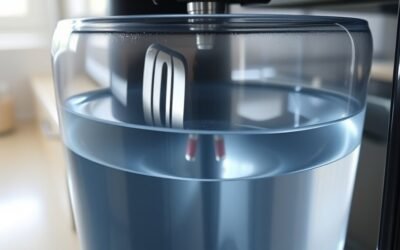


White flakes in your coffee often stem from mineral deposits in hard water, mainly calcium and magnesium. These accumulate due to lack of regular cleaning and maintenance. To address this, use a vinegar solution or commercial descaler regularly, and consider switching to filtered or distilled water. It’s also essential to clean the water reservoir and internal components to prevent buildup. By understanding these causes and fixes, you can learn more about effective long-term maintenance for your machine.
Key Takeaways
- White flakes in coffee are mainly mineral deposits from hard water, primarily calcium carbonate and magnesium.
- Regular cleaning and descaling every 1-3 months can prevent mineral buildup.
- Use a vinegar solution or commercial descalers to dissolve existing flakes effectively.
- Switching to filtered or distilled water significantly reduces the formation of white flakes.
- Conduct routine inspections and maintenance to ensure optimal coffee maker performance and coffee quality.
Identifying and Solving White Flakes in Your Coffee Maker

If you’ve noticed white flakes in your coffee maker, it’s essential to understand that these are often mineral deposits, primarily calcium carbonate and magnesium, that accumulate over time.
This issue arises especially if you consistently use hard water without regular machine inspection or cleaning. To combat this, consider employing descaling solutions, either commercial products or a simple mixture of citric acid and water.
Regular maintenance, including the use of filtered or distilled water, can greatly reduce the formation of these flakes, ensuring your coffee maker operates efficiently.
If white flakes persist despite your efforts, it might indicate a manufacturing residue or a deeper issue within the machine, signaling the need for further inspection or even replacement.
Effective Cleaning Methods to Remove Flakes
To effectively remove white flakes from your coffee maker, it’s essential to implement a systematic cleaning approach that targets mineral buildup. Begin by running a solution of equal parts water and white vinegar through the machine. Alternatively, consider using a commercial descaling solution, following the manufacturer’s instructions. After descaling, run several cycles of clean water to rinse out any residues. Regular maintenance tips include cleaning the water reservoir and internal tubing to prevent mineral accumulation. Additionally, switching to filtered or distilled water can drastically reduce flake formation and prolong your coffee maker’s lifespan.
| Cleaning Method | Description |
|---|---|
| Vinegar Solution | Equal parts water and vinegar to dissolve flakes |
| Commercial Descaler | Follow instructions for best results |
| Rinse Cycles | Run clean water to eliminate residues |
| Regular Reservoir Cleaning | Keep water reservoir free of minerals |
| Filtered Water Usage | Reduces flake formation |
Identify and Prevent Limescale Buildup

Limescale buildup in your coffee maker can greatly impact both the machine’s performance and the quality of your coffee, especially when using hard water rich in minerals like calcium and magnesium.
To combat this, implement effective limescale prevention strategies. Regular cleaning and descaling every 1-3 months using citric acid or commercial solutions can considerably help.
Implement effective limescale prevention with regular cleaning and descaling every 1-3 months for optimal coffee maker performance.
Additionally, using filtered or distilled water guarantees mineral content reduction, minimizing limescale deposits. Remember to adhere to your coffee maker’s manufacturer instructions for ideal maintenance.
Establish a monthly deep cleaning routine alongside daily upkeep to preserve coffee quality and prevent limescale-related issues.
How Water Quality Affects White Flakes in Your Coffee Maker?
Water quality plays a significant role in the formation of white flakes in your coffee maker. If you live in an area with hard water, high levels of dissolved minerals like calcium and magnesium can lead to limescale buildup.
When heated, these minerals precipitate and accumulate as solid deposits within your machine. The mineral content in your water directly impacts how quickly this buildup occurs, potentially affecting your coffee’s taste and your coffee maker’s lifespan.
To mitigate these issues, consider using filtered or distilled water, which has lower mineral content. Regular descaling with vinegar or commercial descalers is also essential in hard water regions to maintain peak performance and prevent white flakes from forming.
Long-Term Care Tips to Prevent White Flakes in Your Coffee Maker

While many people enjoy a good cup of coffee, few consider the long-term care required to keep their coffee makers free from white flakes. To guarantee peak performance, prioritize preventative maintenance.
Start by regularly using filtered or distilled water to reduce mineral buildup. Implement a monthly deep cleaning routine with a citric acid and water mixture to effectively eliminate limescale deposits. Always follow your manufacturer’s cleaning instructions for the best results.
Additionally, conduct routine inspections of your water filters, replacing them as needed to maintain water quality and minimize residue. If you live in an area with hard water, consider descaling your coffee maker more frequently to combat rapid mineral accumulation.
Taking these steps will keep your coffee maker in top shape.
Frequently Asked Questions
Can White Flakes Affect the Taste of My Coffee?
Yes, white flakes can affect your coffee flavor. They’re often due to particle buildup, which can introduce bitterness or unwanted tastes. Regular cleaning of your coffee maker can help maintain a better tasting brew.
Are White Flakes Harmful to My Health?
White flakes aren’t generally harmful to your health, but they can indicate underlying issues. To guarantee safety, regularly clean your coffee maker and monitor for any persistent flakes, addressing potential health concerns proactively.
How Often Should I Clean My Coffee Maker?
You should clean your coffee maker every month for peak performance. Regular maintenance tips include descaling and washing removable parts. This frequency guarantees better taste and prevents buildup, keeping your coffee experience enjoyable and healthy.
Do Different Coffee Types Produce More Flakes?
Yes, different coffee types can produce more flakes. A finer coffee grind often leads to greater residue, especially with certain brew methods. Experimenting with grind size and brewing technique can help minimize those pesky flakes.
Can I Use Vinegar to Clean My Coffee Maker?
Yes, you can use vinegar to clean your coffee maker. Vinegar benefits include breaking down mineral buildup. For best performance, clean your coffee maker every month to maintain its efficiency and extend its lifespan.
Conclusion
In the battle against white flakes in your coffee, knowledge is your strongest weapon. By understanding the causes—from limescale buildup to water quality—you can reclaim the purity of your brew. Regular cleaning and proactive care will keep your coffee maker functioning like a well-tuned instrument, ensuring every cup sings with flavor. So, take these insights to heart and brew with confidence, knowing you’ve banished those pesky flakes for good. Your morning ritual deserves nothing less.