
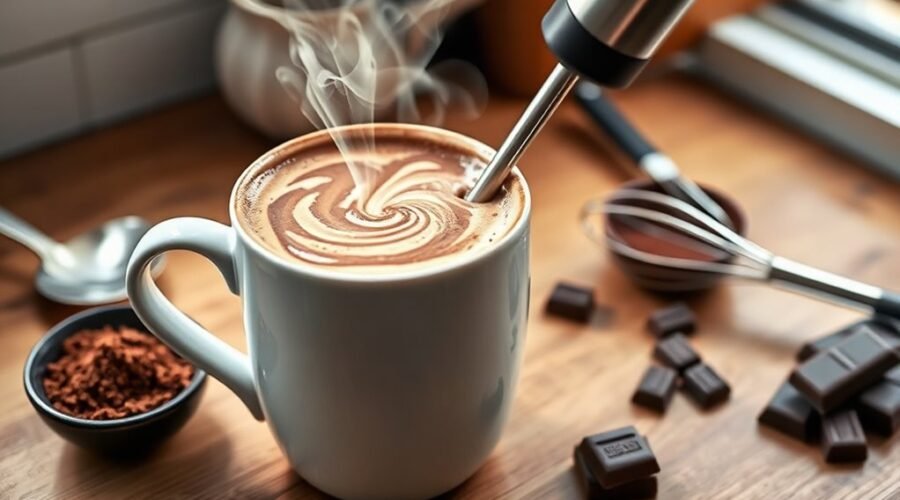
Making milk frother hot chocolate is one of the fastest ways to get a lump-free, café-style mug with velvety microfoam at home. For safe, smooth results, always use sifted cocoa powder or finely grated chocolate—and add it after the milk begins warming—because large chocolate chips can jam magnetic whisk coils or scorch non-stick frother bases. Keep the milk below boiling (around 150°F–160°F) and stay under the max fill line to prevent overflows.
How Milk Frother Hot Chocolate Works
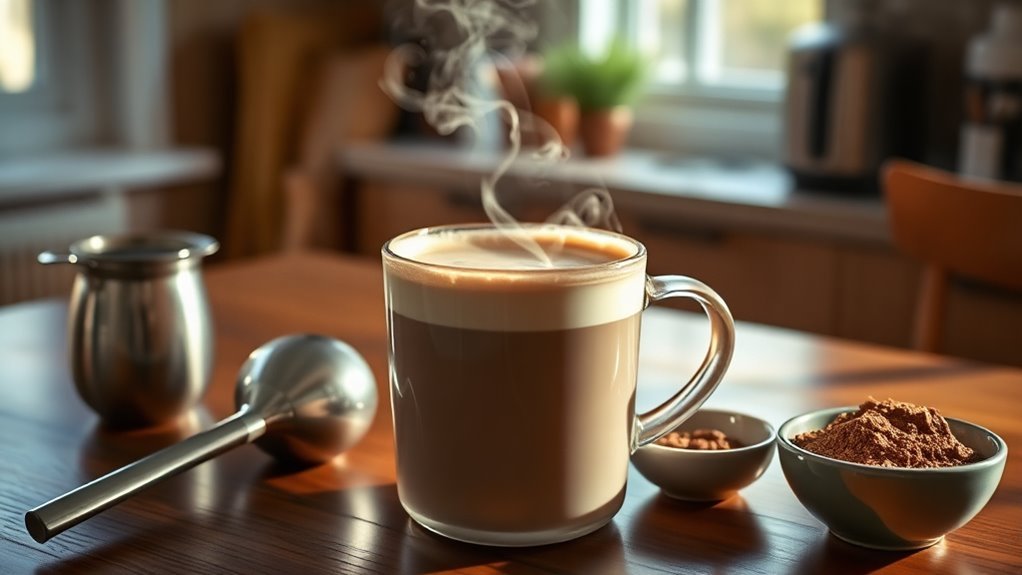
A milk frother rapidly agitates warm milk with a spinning coil or whisk, simultaneously breaking up cocoa clumps and folding tiny air bubbles into the liquid. Unlike hand-stirring with a spoon—which often leaves powdery pockets floating on top—high-speed whisking suspends cocoa particles evenly for a glossy, uniform texture.
How you prepare it depends on the style of frother on your counter:
| Frother Type | Heats Milk? | Best Chocolate Form | Key Limitation |
|---|---|---|---|
| Handheld Wand | No (heat on stove/microwave) | Cocoa powder or pre-melted paste | Can splatter if mug is overfilled |
| Electric Magnetic Jug | Yes (typically 140°F–160°F) | Sifted cocoa powder or finely grated chocolate | Large chips can jam the whisk or scorch non-stick coating |
| Espresso Steam Wand | Yes (live steam) | Dissolved cocoa slurry in pitcher | Requires immediate purge and wipe to prevent clogs |
If you already own an espresso machine with a steam wand, you can apply the same microfoam principles covered in our guide on how to use an espresso machine to steam hot cocoa directly in a stainless pitcher.
Cocoa Powder vs. Chocolate Chips: Appliance Safety Rules
Not every chocolate format belongs inside an electric frother. Manufacturers explicitly distinguish between fine powders, shaved chocolate, and solid chunks because heating elements and magnetic impellers react very differently to dense solids:
- Use sifted cocoa powder or hot cocoa mix first: Unsweetened Dutch-processed cocoa yields a mellow, dark profile, while natural cocoa tastes brighter. Sifting prevents dry clumps from clinging to the whisk ring.
- Finely grate bar chocolate if you want richer body: If you prefer real dark or milk chocolate over powder, shave it finely with a microplane or chef’s knife and add it after the milk has warmed slightly so it melts immediately into the vortex.
- Keep whole chocolate chips out of magnetic-whisk jugs: Unless your manual explicitly lists a chocolate-chunk program, heavy chips sink to the bottom, block the magnetic whisk from spinning, and scorch onto non-stick heating plates.
- Respect the hot-chocolate fill line: Many jugs have a lower maximum capacity for frothing than for plain heating. Overfilling causes hot dairy and cocoa to spill onto the electric base.
Choosing the Best Milk for Creamy Microfoam
Milk protein traps air bubbles while fat delivers a plush mouthfeel. Selecting the right base helps your frother create stable foam without turning watery:
- Whole dairy milk: Produces the richest, glossiest microfoam with balanced natural sweetness.
- 2% or skim milk: Creates taller, stiffer foam, though the drink feels lighter on the palate.
- Barista-blend oat milk: The most reliable dairy-free choice; added stabilizers help it steam and froth cleanly without splitting.
- Almond or soy milk: Works well if kept below 150°F, as overheating can cause plant proteins to curdle when mixed with acidic natural cocoa.
If you enjoy experimenting with dairy and oat milk ratios in chilled drinks too, our cold brew latte recipe breaks down how each milk style changes sweetness and body.
Step-by-Step: How to Make Milk Frother Hot Chocolate
This base ratio serves one 8–10 oz mug and prevents clumping or scorching:
- Measure your ingredients: 1 cup (240 ml) cold milk, 1.5–2 tablespoons sifted unsweetened cocoa powder (or 2 tablespoons finely grated dark chocolate), 1–2 teaspoons sugar or maple syrup, a tiny pinch of fine salt, and ¼ teaspoon vanilla extract.
- Start warming the milk: For an electric jug frother, pour milk to the frothing fill line and start the warm-froth cycle. For a handheld wand, warm the milk on the stovetop or microwave until steaming (about 150°F–160°F—never boiling).
- Add cocoa after warming starts: In an electric jug, sprinkle sifted cocoa and sweetener into the moving vortex once the milk is warm so powder does not stick to the dry base. With a handheld wand, whisk the cocoa and sweetener with 2 tablespoons of hot milk in your mug first to form a smooth paste, then add the rest of the milk.
- Froth to silky microfoam: Hold a handheld wand just below the surface for 15–20 seconds to pull in fine air, then dip it deeper for 10 seconds to fold the foam into the cocoa. Let an electric jug finish its automatic cycle.
- Finish and serve: Stir in vanilla extract and a pinch of cinnamon or sea salt after frothing so delicate aromatics stay bright, then top with shaved chocolate or marshmallows.
Troubleshooting Common Issues & Frother Care
Even simple recipes can go sideways if temperature or cleanup is overlooked. Use this quick checklist to fix common problems:
- Grainy or clumpy bottom: Always sift cocoa powder and pre-dissolve it in a splash of warm milk before frothing, or add it gradually while the whisk is already spinning.
- Flat, bubble-free mug: Start with cold, fresh milk (older milk foams poorly) and confirm the spring coil is attached to your electric jug’s whisk if you want thick foam rather than plain heated milk.
- Burnt smell or brown film on the base: You likely used unmelted chocolate chips or ran back-to-back cycles without rinsing. Soak the jug interior with warm soapy water for 5 minutes and wipe with a soft nylon sponge—never scrape with metal utensils.
Regular post-use rinsing prevents sticky protein buildup on any hot-beverage appliance; for broader upkeep habits across countertop brewers, check our coffee maker maintenance tips.
Pros and Limitations of Using a Milk Frother
- Pros: Eliminates powdery lumps in under 2 minutes, creates café-style microfoam without a steam wand, and scales easily from single mugs to small batches.
- Limitations: Electric jugs have modest single-cup capacities, non-stick bases cannot tolerate whole chocolate chunks unless specifically rated, and cocoa residue requires immediate hand-washing.
Frequently Asked Questions
Can you put chocolate chips directly into an electric milk frother?
Avoid dropping whole chocolate chips into most electric jug frothers unless the manufacturer specifically approves chocolate chunks for that model. Large chips can jam magnetic whisk coils, fail to melt evenly, or scorch onto non-stick heating bases. Use sifted cocoa powder or finely grated chocolate added once the milk starts warming instead.
Can I froth cold milk for hot chocolate?
Yes. You can froth cold milk with a handheld wand or cold-foam setting to create a light topper for hot chocolate, or warm the milk first on the stovetop before whisking. Cold milk generally forms tighter microfoam with dairy and barista-style oat milk.
Is a milk frother safe to use with almond or oat milk?
Yes, milk frothers work with almond, oat, and soy milks, though foam texture varies by protein and fat content. Barista-blend oat milk usually produces the creamiest microfoam, while standard almond milk makes thinner foam that settles faster. Always stay below the frother's maximum fill line.
How do I clean sticky cocoa from a milk frother without damaging it?
Rinse the whisk or carafe immediately after pouring so cocoa and milk proteins do not bake onto the surface. Wash the interior gently with warm water, a drop of mild dish soap, and a soft sponge—never use abrasive pads on non-stick coatings or submerge an electric base in water.
Can I make milk frother hot chocolate without a microwave?
Yes. An electric heating milk frother warms and whisks the milk in one cycle. If you use a handheld battery wand, warm your milk in a small saucepan on the stovetop until steaming (around 150°F–160°F, not boiling), whisk in your cocoa paste, and froth right in the mug.
