
If your baby chokes on purees, stay calm and assess the situation. Gagging is normal and often clears itself, but true choking is silent. If your baby can’t breathe or make sounds, support their chest and deliver five sharp back blows followed by five chest thrusts. Avoid blind sweeps of the mouth. Supervise meals, choose soft foods, and cut them into small pieces for safety. There’s more you can learn about preventing choking and ensuring mealtime safety.
Key Takeaways
- Stay calm and observe your baby for signs of gagging versus choking, as gagging is normal while learning to eat.
- If choking occurs, remove the baby from their high chair and support their chest and chin before acting.
- Administer five sharp back blows between the shoulder blades, followed by five chest thrusts if choking persists.
- Avoid blind sweeps of the mouth to prevent pushing the obstruction deeper; instead, focus on back blows and chest thrusts.
- Regularly offer safe, soft foods and ensure they are cut into small pieces to reduce choking risks during mealtime.
Understanding the Difference Between Gagging and Choking

While introducing solid foods to your baby can be an exciting milestone, it’s important to understand the distinction between gagging and choking.
The gag reflex, located further forward in infants, is a normal response that protects them from choking by pushing food forward. You might notice loud coughing or gurgling sounds, which indicate that your baby is simply learning to eat.
In contrast, choking is silent and poses an immediate danger; the lack of sounds and a bluish skin color signal a critical situation.
Prioritizing infant safety means observing your baby closely during mealtime. Recognizing these differences empowers you to remain calm and respond appropriately, ensuring your little one can explore solid foods safely and confidently.
Identifying Gagging: Signs and How to React
When your baby gags, it’s important to recognize the signs and know how to respond appropriately.
Look for loud coughing, watering eyes, and the baby pushing food out with their tongue, as these indicate they can still breathe.
Staying calm and allowing your infant to self-regulate is key, as this normal reflex usually resolves on its own.
Recognizing Gagging Symptoms
Gagging is a common part of your baby’s journey as they learn to eat solids, and recognizing the signs can help you respond appropriately. The gagging reflex is a normal reaction that helps manage food intake, often triggered by new food textures or flavors.
You’ll notice loud coughing, watering eyes, and retching noises during these episodes. Your baby’s skin may appear red, indicating they’re still breathing, unlike choking, which is silent and may cause bluish skin.
While gagging can be alarming, it’s a natural learning process. However, if gagging becomes frequent or concerning, consult your pediatrician.
Stay calm, allowing your baby to navigate this experience independently—it’s essential for their development and confidence in eating.
Appropriate Reactions to Gagging
As your baby explores new foods, knowing how to react during a gagging episode is essential for their safety and confidence. Gagging is a normal reflex, often marked by loud coughing, watering eyes, and tongue movements to push food out.
During these moments, stay calm and allow your baby to manage the situation independently, avoiding finger sweeps that might push food further down. Effective mealtime management means observing your child closely, distinguishing between typical gagging and potential choking.
If you notice excessive gagging or signs of distress, such as frequent coughing or discomfort, consult a pediatrician to rule out issues like gastroesophageal reflux (GER). Your understanding and support can help your baby navigate the journey of solid foods with ease.
Differentiating Gagging From Choking
Understanding the differences between gagging and choking can greatly enhance your confidence during mealtimes with your baby. Here’s how to identify each:
- Gagging: Loud coughing, red eyes, food expulsion.
- Choking: Silent, no sounds, difficulty breathing, possible bluish tint.
- Signs of Gagging: Distress like watering eyes, retching.
- Signs of Choking: Gasping, inability to move, no noise.
- Gag Reflex: Located farther forward in infants, leading to more frequent gagging.
Stay calm during gagging; it’s a natural reflex that helps prevent choking.
Intervening too quickly can escalate to silent choking.
Recognizing these signs prepares you to act effectively, ensuring your baby’s safety and your peace of mind.
Immediate Actions to Take if Your Baby Is Choking
When your baby is choking, quick and decisive action is vital to guarantee their safety.
First, remove them from their high chair, supporting their chest and chin with one hand. Administer five sharp back blows between the shoulder blades using the heel of your hand, checking for obstruction after each blow.
If choking persists, perform five chest thrusts by placing two fingers just below the nipple line and pushing inward and slightly upward.
Always call for emergency help if necessary, and be ready to perform CPR if your baby loses consciousness or stops breathing.
Stay calm and avoid blind sweeps of the mouth, as this may worsen the situation. Effective emergency response is significant for choking prevention.
Choose Safe Foods and Avoid Choking Hazards

Choosing safe foods for your baby is essential in preventing choking incidents, especially during the shift to solids. By making informed decisions, you can minimize choking hazards.
Focus on these safe food choices:
- Ripe bananas
- Avocados
- Well-cooked sweet potatoes
- Soft, mashed fruits
- Cooked, finely shredded meats
Avoid high-risk choking foods such as whole grapes, hot dogs, hard candies, and raw vegetables, as these can obstruct your baby’s airway.
Always cut foods into small, manageable pieces and supervise meal times, ensuring your baby is seated upright. Familiarize yourself with choking signs, as choking can be silent and serious.
Choking Prevention Tips for Mealtime Safety
To guarantee mealtime safety for your baby, it’s essential to implement several choking prevention strategies that minimize risks during feeding. Always guarantee mealtime supervision so you can quickly respond to any incidents. Offer soft food options that can be easily mashed with their gums, cutting food into small pieces. Avoid whole grapes, raw carrots, and nuts, which are common choking hazards.
| Safety Tip | Description |
|---|---|
| Supervise During Meals | Always keep a watchful eye on your baby. |
| Offer Soft Foods | Choose foods that can be easily mashed. |
| Cut Food into Small Pieces | Prevent choking by cutting food appropriately. |
| Ensure Upright Position | Keep your baby seated in a highchair. |
Get Ready: CPR and First Aid Tips Every Parent Should Know
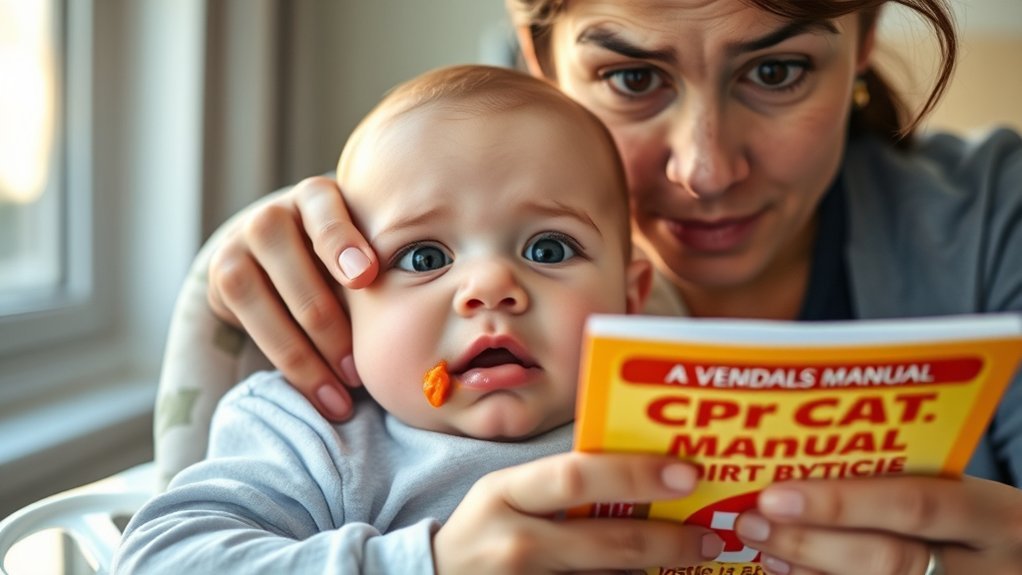
Every parent should prioritize learning CPR and first aid, as these essential skills can make a significant difference in emergencies, especially when it comes to choking incidents.
Familiarizing yourself with critical techniques and signs of choking can empower you to act swiftly. Here are key points to remember:
- Learn CPR techniques tailored for infants and young children.
- Practice the Heimlich maneuver and back blows regularly.
- Distinguish between gagging and choking; the latter requires immediate action.
- Recognize signs of choking: gasping, bluish skin, and inability to cry.
- Refresh your CPR and first aid training every few years for confidence.
Frequently Asked Questions
What Are the Signs of a Choking Emergency in Infants?
You’ll notice choking signs like inability to cough, breath, or cry. Look for a blue-tinged face and frantic movements. Stay calm, and be ready for emergency response actions to guarantee your infant’s safety.
How Can I Prepare for Emergencies While Feeding My Baby?
In a heartbeat, you can prepare for emergencies by creating an emergency kit. Follow feeding guidelines closely, keeping essential items handy. This proactive approach guarantees you stay calm and ready for any situation while feeding your baby.
Should I Use a Baby Seat During Feeding to Prevent Choking?
Yes, using a baby seat during feeding enhances feeding safety. It keeps your baby secure, reducing the risk of choking. Make certain the seat supports proper posture, allowing your baby to swallow comfortably and safely.
What Age Is Safe to Introduce Solid Foods to My Baby?
You can safely introduce solid foods around six months, when your baby shows feeding readiness, like sitting up and reaching for food. Follow solid food guidelines to guarantee a smooth, enjoyable change for both of you.
How Can I Teach My Older Child About Choking Hazards?
To teach your older child about choking hazards, engage them in safety education. Use visuals to illustrate risks, discuss choking awareness openly, and role-play scenarios, empowering them to recognize dangers and respond appropriately.
Conclusion
In the delicate journey of parenthood, your baby’s safety is the lighthouse guiding you through stormy seas. By understanding the signs of gagging and choking, knowing immediate actions to take, and choosing safe foods, you can navigate mealtime with confidence. Remember, preparing for emergencies with CPR knowledge is like having a lifebuoy at the ready. Your vigilance and care not only protect your child but also weave a safety net of love around their exploration of food.