To prevent food allergies in your baby, introduce allergenic foods like peanuts, eggs, and dairy around six months. Start with small amounts, allowing 3-5 days between each new food to monitor for reactions. Watch for signs of readiness, such as sitting up and showing interest in food. Keep a food diary to track any allergic reactions, and always consult a healthcare professional for guidance. There’s more to discover about safely introducing these foods into your baby’s diet.
Key Takeaways
- Introduce allergenic foods like peanuts and eggs around six months to reduce the risk of allergies.
- Start with small amounts, introducing one allergenic food at a time, and wait 3-5 days before adding another.
- Monitor for allergic reactions for up to two hours after introducing new foods, looking for symptoms like hives or vomiting.
- Maintain a food diary to track introduced foods and any reactions for better monitoring and consultation with healthcare professionals.
- Consult a healthcare professional for tailored reintroduction plans after any allergic reactions to ensure safety.
Why Early Allergen Introduction Matters

When you introduce allergenic foods to your baby early, ideally around six months, you greatly reduce their risk of developing food allergies.
Studies indicate that early allergen exposure, particularly to peanuts and eggs, can decrease the risk of peanut allergies by up to 81%.
Recent guidelines recommend actively offering these foods to promote ongoing ingestion, essential for shaping your baby’s immune response.
Start with very small amounts and gradually increase both frequency and quantity.
Morning or post-nap is the best time for introduction, allowing for close monitoring of any reactions.
Regular exposure—2-3 times a week—helps maintain tolerance and prevent allergies.
Following these guidelines guarantees a proactive approach to your baby’s dietary health and freedom from potential food restrictions.
Signs Your Baby Is Ready for Solid Foods
Recognizing when your baby is ready for solid foods is essential for their development.
Look for signs of interest in food, such as reaching for items on your plate and opening their mouth for a spoon.
Additionally, make certain they can sit up with minimal support and exhibit good head and neck control, as these are key indicators of readiness.
Developmental Readiness Indicators
By around 6 months of age, most babies show clear signs they’re ready to start solid foods. Key developmental readiness indicators include the ability to sit up with minimal support and exhibit good head and neck control.
During this time, your baby should be able to move food to the back of their mouth and swallow instead of pushing it out with their tongue. Additionally, look for feeding milestones such as your baby reaching for food, looking at it intently, and opening their mouth when offered a spoon.
If your baby isn’t showing interest in solid foods by 7 months, consulting a healthcare professional is advisable to guarantee proper baby food progression and address any concerns.
Interest In Food
As babies approach the 6-month mark, their interest in food becomes more pronounced, signaling readiness for solid foods. You might notice your baby looking at food on your plate, reaching for it, or even opening their mouth when offered a spoon.
These behaviors indicate a desire for sensory exploration, which is essential for developing healthy eating habits. It’s important to introduce baby food no earlier than 4 months to guarantee proper developmental readiness and minimize choking risks.
Around 6 months, consider introducing allergenic foods, like well-cooked eggs and smooth peanut butter, especially if there are allergy concerns in your family.
If your baby isn’t engaging with solids by 7 months, consult a healthcare professional to guarantee timely intervention.
Ability To Sit
A baby’s ability to sit up with minimal support is an essential sign of readiness for solid foods. This developmental milestone indicates that your baby has achieved sufficient sitting stability, allowing them to safely manage swallowing.
Look for these key signs:
- Good Head and Neck Control: Your baby should hold their head upright and stable.
- Minimal Support: They can sit with just a little assistance from supportive seating, like a high chair.
- Engagement with Food: They actively reach for food or open their mouth when offered a spoon.
If your baby isn’t eating solids by 7 months, it’s wise to consult a healthcare professional.
Current Guidelines for Introducing Allergenic Foods
Introducing allergenic foods early, specifically around 6 months of age, is now recommended to help prevent food allergies in infants.
Current guidelines emphasize introducing common allergen types such as peanuts and eggs to high-risk infants actively. You should follow a feeding schedule that includes regular ingestion of these foods, offering them at least 2-3 times a week after the initial introduction.
Start with small quantities, like mixing 1/8 teaspoon of peanut butter into porridge, and gradually increase if no reactions occur. It’s essential to introduce one allergenic food at a time, waiting several days before adding another to monitor for any potential reactions.
Avoiding allergens in early life is no longer advised, as delays don’t prevent allergies.
How to Safely Introduce Allergenic Foods

When you’re ready to introduce allergenic foods to your infant, starting around 6 months of age is essential for preventing future allergies.
Here’s how to guarantee allergen safety through gradual exposure:
- Start Small: Begin with tiny amounts, like 1/8 tsp of peanut butter mixed into porridge, to gauge your infant’s tolerance.
- Introduce One at a Time: Focus on one allergenic food per week while you can add multiple non-allergenic foods, allowing you to monitor reactions effectively.
- Regular Exposure: Aim to offer allergenic foods 2-3 times per week, gradually increasing the serving size if no adverse reactions occur.
Always consult your pediatrician, especially if there’s a family history of allergies, to develop a safe and effective feeding strategy.
What to Watch For: Allergic Reactions
How can you tell if your baby is having an allergic reaction? After introducing common allergens, monitor your baby closely for up to two hours.
Look for reaction symptoms such as swelling, hives, vomiting, diarrhea, or unusual behavioral changes like irritability or lethargy. Minor redness around the mouth may signal skin irritation, not a true allergy.
However, severe reactions, including anaphylaxis, require immediate medical attention. If you observe any of these symptoms, stop feeding your baby the allergenic food right away and seek medical advice.
Always introduce allergenic foods one at a time, allowing several days to monitor for potential reactions before trying another new food. Your vigilance is key in ensuring your baby’s safety.
How to Safely Reintroduce Foods After an Allergic Reaction
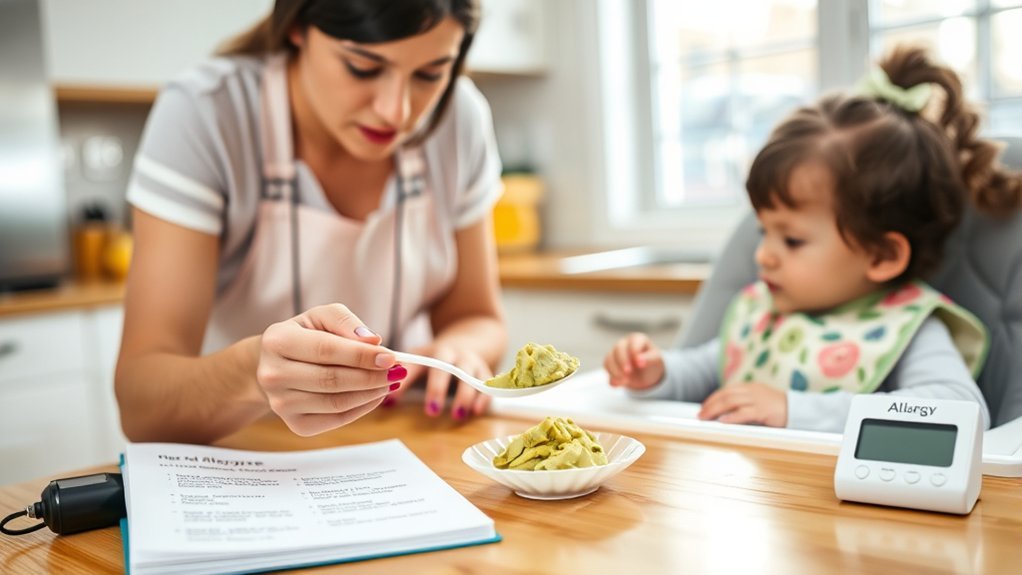
After identifying an allergic reaction, it’s important to approach the reintroduction of allergens with caution.
Follow these steps for safe reintroduction:
- Consult a healthcare professional: Prioritize allergen testing and get tailored advice based on your child’s reaction history.
- Start small: Introduce very small amounts of the allergenic food, waiting at least a few days between each new introduction to monitor for adverse reactions.
- Keep a food diary: Document any symptoms and reactions to help track progress and communicate effectively with your healthcare provider.
Observe your infant closely for any symptoms, which can appear within minutes to two hours after ingestion.
If a mild reaction occurs, avoid that food until you can consult your provider for a safe reintroduction plan.
Resources for Parents: Recipes for Introducing Allergenic Foods
Introducing allergenic foods to your infant can feel intimidating, but utilizing reliable resources can simplify the process.
The “Eat Early. Eat Often.” resource offers practical recipes, including peanut butter recipes that mix thinned peanut butter into porridge, starting around 6 months. For low-risk infants, regular exposure—ideally 2-3 times a week—helps promote allergenic food safety.
The Solid Starts App provides step-by-step guidance and emphasizes the importance of consistent introduction. Additionally, videos on safely serving peanut products offer visual support for parents.
You can also access FAQs and educational materials to clarify how to introduce common allergens like eggs and dairy, ensuring you’re well-informed about the process and prepared for potential reactions.
Frequently Asked Questions
Can I Introduce Multiple Allergenic Foods at Once?
You shouldn’t introduce multiple allergenic foods at once. Instead, use food introduction strategies that allow for gradual exposure. Start with one allergenic food combination to monitor for reactions before adding additional foods.
What Should I Do if My Baby Refuses Allergenic Foods?
When your baby turns away from allergenic flavors, think of a curious explorer. Offer those baby food treasures again, mixing them with familiar tastes, and patiently encourage discovery. Persistence often leads to delightful new adventures in eating.
Are There Any Foods to Avoid When Introducing Allergens?
You should avoid foods like peanuts, tree nuts, eggs, and fish initially. Use safe introduction methods, gradually offering small amounts while monitoring for reactions. This approach helps prevent potential allergic responses and promotes your baby’s healthy development.
How Can I Tell if My Baby Has a Food Intolerance?
About 6-8% of children experience food intolerances. Recognizing symptoms like bloating or irritability is essential. Testing methods include elimination diets or medical assessments, helping you identify triggers and guarantee your baby’s comfort and health.
What Age Is Too Late to Introduce Allergenic Foods?
It’s never too late to introduce allergenic foods, but earlier exposure often aids in allergy prevention. Timing matters; introducing these foods around six months can help reduce the risk of developing food allergies later.
Conclusion
In summary, traversing the world of baby food allergies can feel like crossing a tightrope over a pit of hungry lions, but it doesn’t have to be intimidating. By following current guidelines and introducing allergenic foods safely, you’re setting the stage for your baby’s culinary adventures while minimizing the risk of allergic reactions. Remember, vigilance is key, and with the right resources, you can transform potential pitfalls into stepping stones toward a lifetime of healthy eating.