
Creating a baby food allergy plan for daycare means preparing for both everyday prevention and a possible emergency. Your child should have a written, clinician-approved allergy and anaphylaxis emergency plan, appropriate prescribed medication, clear food rules, and caregivers who understand the plan. You should also agree with the daycare on label checks, cross-contact prevention, communication, and what happens during meals, snacks, field trips, and special events.
Quick Answer
A daycare food allergy plan should identify your child’s allergens, symptoms, prescribed emergency treatment, medication location, emergency contacts, safe-food rules, and cross-contact precautions. Review it with everyone who may care for your child, confirm that trained staff can quickly reach the medication, and update the plan whenever your child’s medical instructions change.
Key Takeaways
- Ask your pediatrician or allergist to complete a written Food Allergy & Anaphylaxis Emergency Care Plan that lists allergens, symptoms, medication instructions, and emergency contacts.
- Make sure lead teachers, substitutes, floaters, administrators, and food-service staff understand your child’s plan and know where prescribed emergency medication is kept.
- For anaphylaxis or other severe symptoms, staff should follow the child’s emergency plan immediately. Epinephrine is the first-line treatment for anaphylaxis and should not be delayed in favor of an antihistamine.
- Reduce accidental exposure by preventing food sharing, checking labels every time, washing hands with soap and water, and cleaning food-contact surfaces to prevent cross-contact.
- Review the plan whenever allergens, medication, dosing, contact information, or daycare arrangements change, and renew it with your child’s healthcare professional as recommended.
At a Glance
| Time Required | About 30–60 minutes to organize daycare information, plus any time needed for your child’s healthcare professional to complete or update the medical plan. |
| Difficulty | Moderate — the main work is coordinating medical instructions with daycare procedures. |
| Tools Needed | Written emergency care plan, prescribed medication, emergency contacts, safe-food instructions, and daycare medication/meal forms. |
| Cost | Planning itself is usually free; medical visits, prescriptions, or extra medication devices depend on your child’s care and insurance. |
Medical Safety Warning: This article provides general information and does not replace your child’s individualized medical instructions. If severe symptoms or anaphylaxis occur, daycare staff should follow the clinician-written emergency plan immediately. Epinephrine is the first-line treatment for anaphylaxis. Antihistamines are not a substitute for epinephrine when anaphylaxis is occurring.
Essential Facts About Food Allergies for Parents
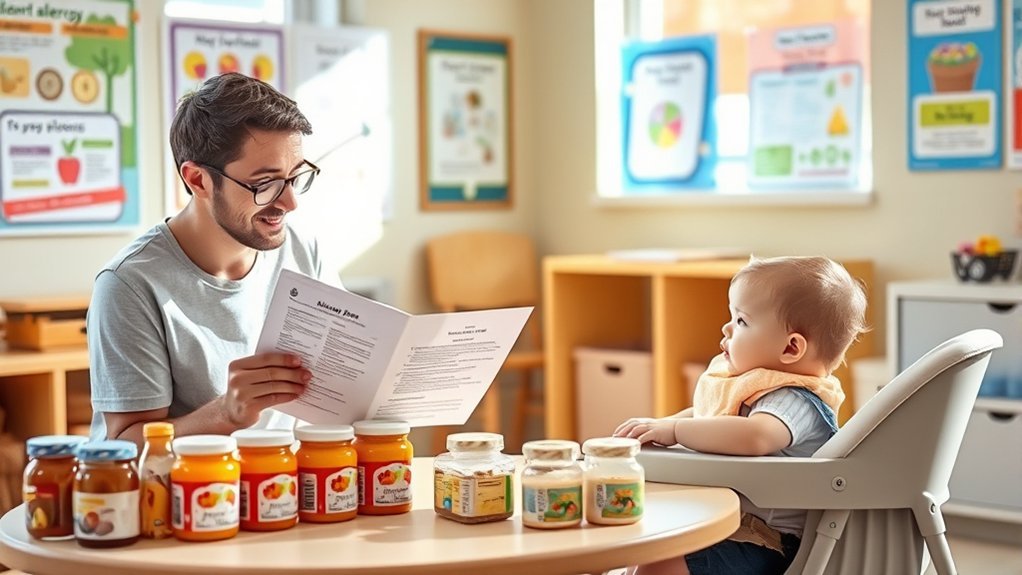
Food allergy is common enough that every daycare should have a clear prevention and emergency process. According to the CDC National Center for Health Statistics, 5.3% of U.S. children ages 0–17 had a diagnosed food allergy in 2024.
The nine major food allergens recognized under U.S. federal packaged-food labeling law are milk, egg, fish, Crustacean shellfish, tree nuts, peanuts, wheat, soybeans, and sesame. Sesame has been included as the ninth major allergen for labeling purposes since January 1, 2023. Your child can also be allergic to foods outside this list, so the daycare must follow your child’s specific diagnosis rather than relying only on the major-allergen list.
Food-allergy reactions can affect the skin, stomach, mouth, throat, lungs, heart, or multiple body systems. Symptoms and severity can also change from one reaction to another. That unpredictability is why the CDC recommends food-allergy planning in early care and education settings that covers daily management, emergency response, staff education, family education, and a safer environment.
A daycare allergy plan needs to answer two questions before an emergency occurs: how will exposure be prevented, and exactly what will staff do if a reaction begins?
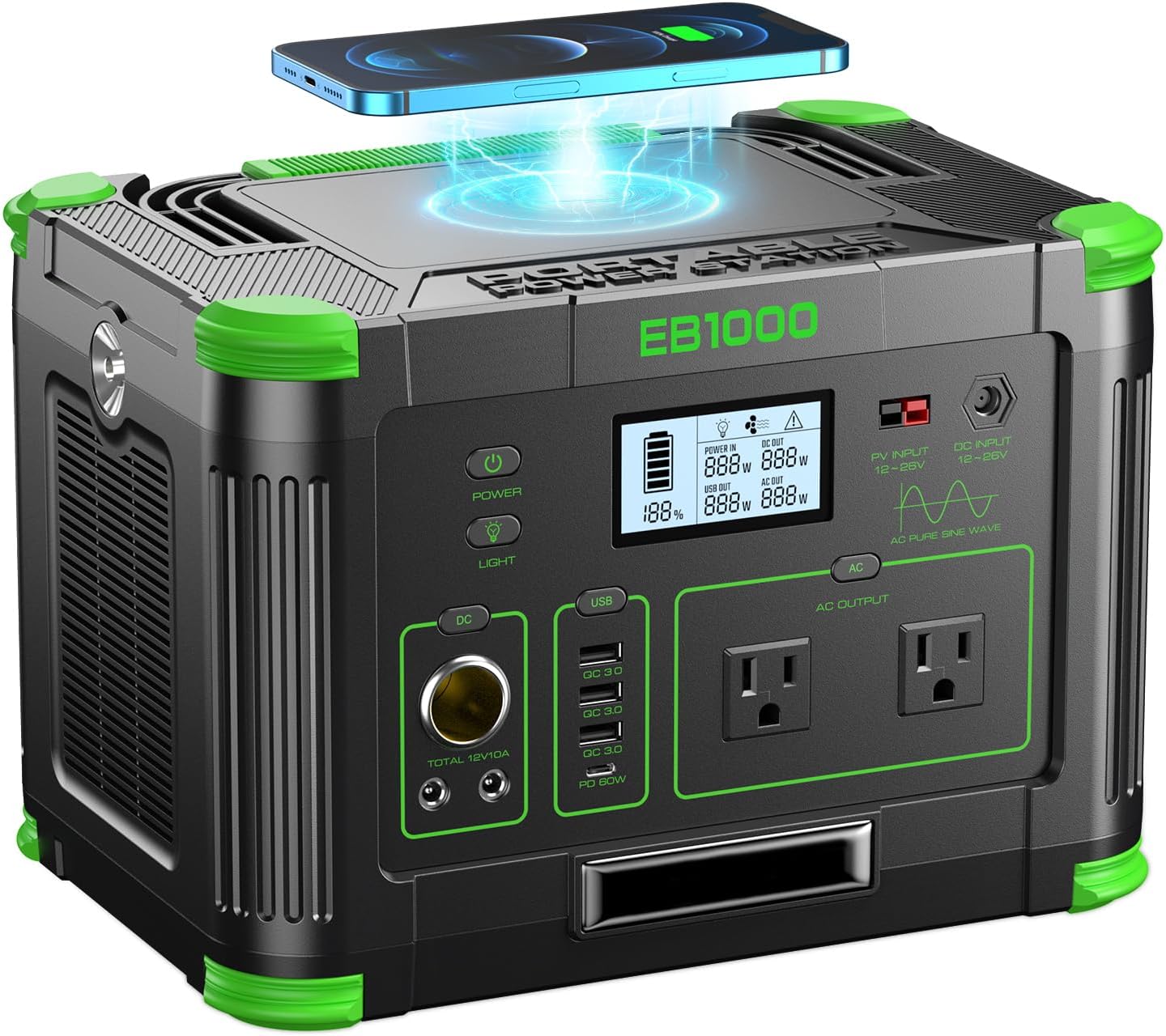
Power your essentials anywhere with a 999Wh pure sine wave power station delivering up to 1000W continuous with 2000W surge. It supports fast charging via USB-C PD 60W and USB-A QC 18W, plus simultaneous output for multiple devices through AC, USB, wireless, and car/DC ports. Recharge using AC, car, or solar with a built-in MPPT controller and dual cooling fans, while the upgraded battery management system protects against surges, short circuits, and overheating.

Avoid Costly Allergy Mistakes: Designed to help caregivers, parents, and event hosts clearly identify children’s food allergies during group meals, parties, and daycare activities.

HARDCASE PROTECTION FOR TWO LIFE-CRITICAL AUTO-INJECTORS: Unlike soft fabric pouches that crush in a school bag or backpack, Mymedibag's rigid hard shell keeps two EpiPens, Auvi-Q, or Anapen auto-injectors safe from impact, pressure, and accidental damage. Internal insulation also helps reduce short-term temperature swings during everyday outings.
Understand Daycare Rights and Rules
Food-allergy accommodations are not governed by one identical rule for every U.S. daycare. State and territory licensing requirements differ, and some programs are legally exempt from licensing.
Under the Americans with Disabilities Act, many covered child care centers must make reasonable modifications for children with disabilities, and federal guidance specifically addresses children with severe food allergies. However, the rule is more nuanced than saying every center must accommodate every dietary restriction. Coverage, reasonable-modification requirements, and exemptions depend on the program and circumstances. Review the U.S. Department of Justice child care guidance and your state’s child-care licensing requirements when questions arise.
Creating a Solid Allergy Action Plan
Your child should have an individualized written Food Allergy & Anaphylaxis Emergency Care Plan, sometimes called a Food Allergy Action Plan. Ask your pediatrician or allergist to complete the plan rather than creating medical treatment instructions yourself.
The plan should clearly identify:
- Your child’s diagnosed food allergens.
- Typical mild and severe reaction symptoms.
- Exactly when prescribed medication should be given.
- The name, dose, and method of administration for each medication.
- What staff should do after treatment.
- Parent or guardian emergency contacts.
- Your child’s healthcare professional contact information.
- Any relevant asthma or other medical information that affects emergency care.
Include allergy symptoms and immediate management steps in the plan, along with written instructions from your child’s healthcare professional.
Prepare Medication Before the First Day
If your child has prescribed emergency medication, confirm that the daycare has the required authorization forms and can store the medication in a location that is quickly accessible to trained staff while remaining safely out of children’s reach. Storage requirements vary by state and program.
Check medication expiration dates regularly. Replace expired medication promptly and update the daycare whenever the prescribed drug, dose, device, or instructions change.
Ask how medication will stay with your child during:
- Playground time.
- Field trips.
- Transportation.
- Visits to another classroom.
- Emergency evacuation.
Pro Tip: Do a physical walk-through with the director. Ask them to show you where your child’s emergency plan and medication will be kept and who can reach them immediately during meals, outdoor play, nap time, and off-site activities.
Daycare Food Allergy Checklist Before the First Day
Use this checklist before your child starts care:
- Provide the completed clinician-signed allergy and anaphylaxis emergency plan.
- Complete the daycare’s medication authorization forms.
- Supply prescribed emergency medication in accordance with daycare and state requirements.
- Give staff a current parent/guardian and healthcare-provider contact list.
- Identify every food and ingredient your child must avoid.
- Agree on safe meals, snacks, beverages, substitutions, and formula or milk alternatives when relevant.
- Confirm how ingredient labels are checked and documented.
- Ask how the center prevents food sharing and cross-contact.
- Confirm that substitutes and float staff can access the plan.
- Discuss birthdays, holiday parties, cooking activities, sensory play, and food used in crafts.
- Confirm what happens if your child has a possible exposure but no immediate symptoms.
- Ask how incidents and reactions are documented and reported to you.
Communicating Food Allergies to Daycare Staff
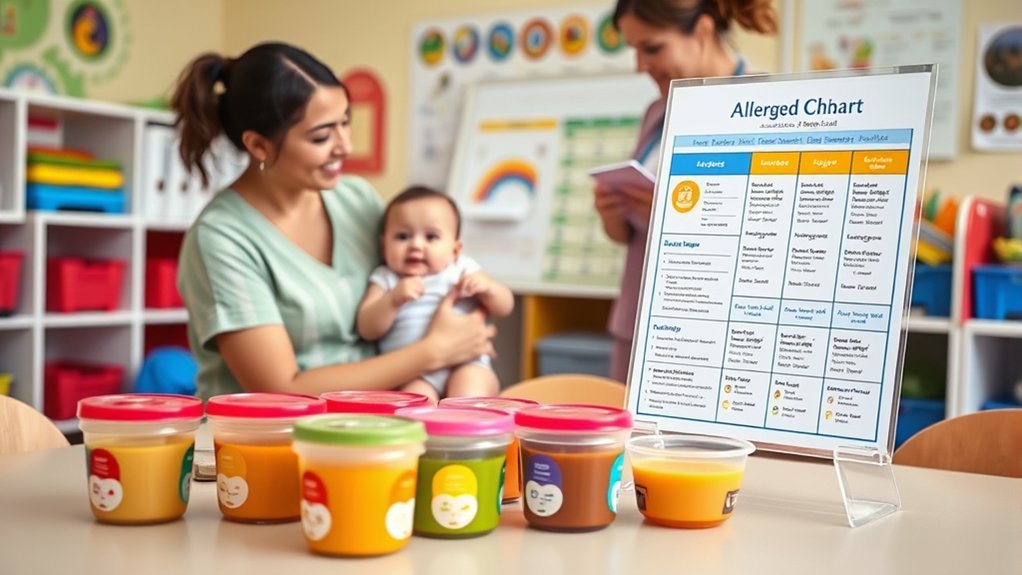
Clear communication should begin before your child’s first day and continue whenever anything changes. Do not assume that telling the director means every teacher, substitute, kitchen worker, or transportation staff member has received the same information.
Share Allergy Details Clearly
Tell staff the exact allergen rather than using broad labels such as “sensitive to dairy” when your child has a diagnosed milk allergy. Explain the foods and ingredients that must be avoided and how your child has reacted in the past.
Also tell caregivers how your child communicates discomfort. A toddler may not say “my throat feels tight.” They may scratch their tongue, become unusually quiet, drool, cry, cough, vomit, tug at their mouth, or use a phrase that only your family recognizes.
Your child’s previous reaction pattern can help staff understand what to watch for, but it cannot predict exactly how the next reaction will look. Staff should follow the written plan rather than waiting for a familiar symptom sequence.
Discuss Emergency Procedures Together
Ask the daycare to walk through a realistic reaction scenario with you. Everyone responsible for your child should know who retrieves medication, who stays with your child, who calls emergency services, who contacts you, and who supervises the other children.
| Key Element | What Staff Need to Know | Action |
|---|---|---|
| Specific Allergies | Every diagnosed allergen and foods that must be avoided | Prevent exposure and cross-contact |
| Mild Symptoms | Symptoms identified as mild on your child’s written plan | Follow the individualized plan exactly and continue observing |
| Severe Symptoms / Anaphylaxis | Examples may include trouble breathing, throat tightness, significant swelling, collapse, or symptoms involving multiple body systems | Follow the emergency plan immediately and administer prescribed epinephrine when the plan indicates it |
| Emergency Medication | Exact location and prescribed device | Keep it rapidly accessible to trained staff |
| Emergency Communication | Who calls emergency services and the parent | Follow the written plan and daycare emergency policy without delay |
Provide a Written Allergy Action Plan
Give the daycare a current copy of the clinician-completed plan and confirm which staff members can access it. The plan should be easy for caregivers to find during an emergency rather than buried in paperwork that only an administrator can reach.
Ask how the daycare communicates allergy information to substitutes and new staff. Depending on privacy rules and your permission, allergy information may also need to be visible in food-preparation or serving areas so staff do not accidentally give your child an unsafe meal.
Preventing Food Allergen Cross-Contact at Daycare
A food can contain none of your child’s allergen as an intentional ingredient and still become unsafe through cross-contact. Cross-contact occurs when an allergen is unintentionally transferred from one food, utensil, surface, or hand to another food.
Ask the daycare how it handles:
- Shared cutting boards, knives, serving utensils, and trays.
- High chairs, tables, counters, and food-preparation surfaces.
- Shared containers such as butter, spreads, dips, or condiments.
- Children touching one another’s food.
- Food dropped or smeared on tables and toys.
- Cooking or baking projects.
- Food-based sensory bins, play dough, or craft materials when relevant to your child’s allergy.
The FDA has found that proper cleaning of food-contact surfaces can reduce allergen transfer. Staff should follow the facility’s food-safety and sanitation procedures and use separate preparation practices when required by the child’s plan.
Handwashing and Food Sharing
Children and caregivers should wash hands with soap and water before and after eating or handling food. Hand sanitizer is useful for reducing many germs, but it should not be treated as a replacement for proper handwashing when the goal is to remove food residue from hands.
Daycare staff should also discourage children from sharing food, cups, bottles, utensils, or pacifiers.
Note: A “nut-free” or “allergy-aware” policy can reduce some exposures, but it does not guarantee an allergen-free environment. Your child still needs an individualized prevention and emergency plan.
Checking Food Labels and Daycare Snacks
For packaged foods, caregivers should read the ingredient label every time the product is served. Recipes and manufacturing practices can change even when the package looks familiar.
The FDA explains that major allergens may be declared in the ingredient list or in a separate “Contains” statement. Staff should therefore read the complete ingredient list as well as any Contains statement rather than looking at only one part of the label.
Precautionary statements such as “may contain” or “made in a facility with” are voluntary and do not provide a standardized measure of risk. Follow your child’s allergist-approved avoidance instructions when deciding whether a food with precautionary labeling is acceptable.
Pro Tip: Ask the daycare to keep packaging for any unfamiliar snack until your child has finished eating. That gives staff and parents a way to recheck ingredients immediately if a question or reaction occurs.
Questions to Ask Daycare About Food Allergies
Before enrollment or when a new allergy is diagnosed, ask the director these questions:
- Who is trained to recognize and respond to anaphylaxis?
- Who can administer my child’s prescribed emergency medication?
- Where will the medication be kept?
- Can trained staff reach it immediately in the classroom, playground, cafeteria, and on field trips?
- How do substitutes learn about my child’s allergy?
- How are ingredient labels checked?
- How do you prevent food sharing and cross-contact?
- What happens during birthdays, holidays, and classroom cooking projects?
- What is the procedure after a suspected accidental exposure?
- How and when will you notify me of an exposure or reaction?
- How does the allergy plan travel with my child during transportation and field trips?
- Which state licensing rules govern allergy plans and medication administration here?
Federal child-care health-and-safety requirements include training related to prevention and response to emergencies caused by food and allergic reactions for staff in covered licensed settings, but specific implementation varies. Childcare.gov provides state-specific licensing and training information.
Monitoring Your Child’s Food Reactions
Keeping accurate notes can help you and your child’s healthcare professional identify patterns and update the daycare plan. A food diary is useful documentation, but it does not diagnose a food allergy by itself.
Recognizing Allergic Symptoms Early
Possible food-allergy symptoms can include hives, itching, swelling, vomiting, abdominal symptoms, coughing, wheezing, trouble breathing, throat symptoms, dizziness, or collapse. Your child’s plan should identify which symptoms require which response.
Because reactions can vary, staff should not assume that a future reaction will be as mild as a previous one. They should also avoid waiting for a rash before acting if another severe symptom is present.
Warning: Do not delay prescribed epinephrine for anaphylaxis while waiting to see whether an antihistamine works. Daycare staff should follow the child’s written emergency instructions and the facility’s emergency-response policy immediately.
Documenting Food Exposure Events
When a possible exposure or reaction occurs, record enough detail for your child’s healthcare professional and daycare to understand what happened. Include the food, brand, ingredient information, amount eaten if known, time of exposure, symptoms, medication given, and outcome.
| Date / Time | Food / Exposure | Symptoms | Action Taken | Outcome |
|---|---|---|---|---|
| Example Day 1 | Packaged snack; brand and ingredients recorded | Record observed symptoms or “none” | Document steps taken under the care plan | Record recovery and follow-up |
| Example Day 2 | Possible cross-contact at lunch | Record exact signs and timing | Document monitoring or treatment specified by plan | Record parent/medical follow-up |
If your child is trying a food they have never eaten before, follow your pediatrician or allergist’s advice about when and where to introduce it. Do not ask daycare staff to improvise a first exposure or reintroduce a known or suspected allergen without appropriate medical guidance.
Teaching Your Child About Food Safety
Even very young children can begin learning simple food-allergy safety habits. The goal is not to make a toddler responsible for preventing a medical emergency; adults remain responsible. Instead, give your child a few repeatable rules that become stronger as they grow.
Teach age-appropriate phrases such as:
- “I have a food allergy.”
- “Is this safe for me?”
- “I need my teacher.”
- “My mouth feels funny.”
- “I don’t share food.”
Teach your child to check with a trusted adult before eating unfamiliar food and not to trade snacks with friends.
As your child becomes old enough to help read labels, teach them that the entire ingredient list matters. A Contains statement can make major allergens easier to spot, but it is not the only place an allergen can be declared.
Handwashing with soap and water before and after eating is another useful habit. Younger children will still need direct adult supervision and help.
Handling Birthdays, Field Trips, and Special Events
Routine meals are only part of daycare allergy safety. Unexpected food often appears during birthdays, holidays, cooking lessons, fundraisers, and parent visits.
Agree in advance on whether:
- Your child may eat only food supplied from home.
- The daycare may provide preapproved packaged foods.
- You will keep a labeled supply of safe backup snacks at the center.
- Parents must notify the daycare before bringing classroom treats.
- Teachers must contact you before serving an unfamiliar item.
For trips and transportation, confirm that the allergy plan, emergency contacts, and prescribed medication stay accessible to the staff member responsible for your child.
Where to Find Support and Resources for Food Allergies
Your child’s pediatrician or allergist should remain the primary source for diagnosis, medication decisions, and individualized treatment instructions. A local pediatric practice, including a practice such as Capital Area Pediatrics if it is already part of your child’s care, may help coordinate documentation, but the plan should come from the healthcare professional who knows your child’s allergy history.
National resources can help with broader planning:
| Resource | How It Helps |
|---|---|
| CDC | Guidance for managing food allergies in schools and early care and education programs. |
| FDA | Current U.S. packaged-food allergen labeling information. |
| ADA.gov | Federal guidance on disability access and reasonable modifications in covered child care programs. |
| Childcare.gov | Links to state and territory licensing, health, safety, and staff-training requirements. |
| Food Allergy Research & Education | Food Allergy & Anaphylaxis Emergency Care Plan and practical family/caregiver education. |
Frequently Asked Questions
How can I ensure staff understands my child’s allergies?
Meet with the director and primary caregivers before your child starts. Review the written emergency plan, allergens, symptoms, medication location, safe-food rules, and emergency roles. Ask how substitutes, floaters, kitchen staff, and transportation staff receive the same information.
What should I include in the allergy care plan?
The clinician-completed plan should identify the allergens, symptoms, medication and dosing instructions, when emergency treatment is required, emergency contacts, and relevant medical information. Daycare-specific paperwork should also address medication storage, meals, snacks, cross-contact precautions, trips, and communication.
Can daycare provide allergy-safe snacks?
A daycare can often provide foods that fit your child’s plan, but “allergy-safe” should not be treated as a guarantee. Agree on approved foods and substitutions, require label checks, and ask how the center prevents cross-contact. Some families instead supply all snacks or keep preapproved backup foods at the center.
How often should we review the allergy action plan?
There is no universal six-month rule. Review the plan with your child’s healthcare professional during routine renewal and update it sooner whenever allergens, symptoms, medication, dose, device, emergency contacts, or other medical instructions change. Give the daycare the updated version immediately.
What should I do if my child has an allergic reaction?
Follow your child’s clinician-written emergency plan. For anaphylaxis or severe symptoms, prescribed epinephrine should be given immediately when the plan directs it. Daycare staff should then follow the plan and applicable emergency procedures, including contacting emergency medical services and the parent or guardian as required.
How can daycare prevent allergen cross-contact?
Useful controls include washing hands with soap and water, cleaning food-contact surfaces, separating allergen-safe food preparation when required, preventing food sharing, using clean utensils, and checking labels each time food is served. The exact precautions should match your child’s individualized plan.
Should my child’s allergy medication go on field trips?
Emergency medication should remain available wherever your child is being cared for, subject to the prescribing instructions and applicable daycare or state requirements. Confirm before each trip which trained adult will carry or have immediate access to the medication and emergency plan.
Conclusion
A strong daycare food allergy plan combines prevention, preparation, and a clear emergency response. Give the daycare a current clinician-written plan, confirm that prescribed medication is immediately accessible to trained staff, set clear food and cross-contact rules, and make sure substitutes and off-site caregivers receive the same information.
Keep communication active as your child grows. Update the plan when medical instructions change, teach your child simple age-appropriate food-safety habits, and document any accidental exposures or reactions. Those steps give caregivers the information they need to protect your child without relying on guesswork.
Sources
- CDC National Center for Health Statistics — Diagnosed Allergic Conditions in Children Ages 0–17: United States, 2024 — current U.S. childhood food-allergy prevalence.
- CDC — Food Allergies in Schools and Early Care and Education Programs — prevention, staff preparation, and emergency planning.
- U.S. Food and Drug Administration — Have Food Allergies? Read the Label — major allergens and packaged-food label reading.
- U.S. Department of Justice — Child Care Centers and the Americans with Disabilities Act — reasonable modifications and severe food allergies in covered programs.
- Childcare.gov — Staff Qualifications and Required Training — child-care health, safety, medication, and allergic-reaction training requirements.
- American Academy of Pediatrics — Guidance on Completing a Written Allergy and Anaphylaxis Emergency Plan — individualized plans and epinephrine as first-line anaphylaxis treatment.