

Choking hazards in baby food can be serious. Avoid whole grapes, sticky foods, and hard items like popcorn when feeding your child. Cut food into small pieces, and supervise mealtime to guarantee safe eating. It’s important to recognize choking signs, such as difficulty breathing or a bluish tint to the lips. By creating a safe eating environment and learning first aid, you can be better prepared for emergencies. Discover more tips to keep your little one safe.
Key Takeaways
- Avoid high-risk foods like whole grapes, hot dogs, and sticky items for children under four years old.
- Cut foods into small, manageable pieces and supervise children during mealtime to prevent choking.
- Cook vegetables until soft and remove pits or seeds from fruits to reduce choking hazards.
- Recognize choking symptoms such as difficulty breathing, gasping, and bluish lips for quick response.
- Enroll in CPR and First Aid courses to prepare for choking emergencies and ensure child safety.
Understanding Choking Hazards in Baby Food
When it comes to feeding your little one, understanding choking hazards in baby food is essential for their safety.
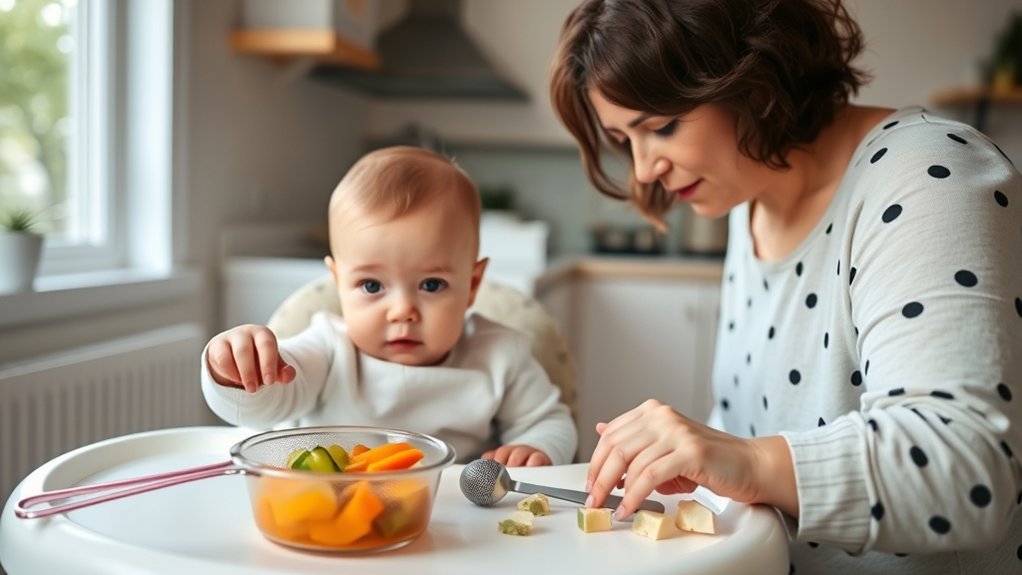
Choking prevention starts with recognizing which food textures can pose risks. Avoid hard, round items like whole grapes and hot dogs, as their shapes can block airways. Sticky foods, such as spoonfuls of peanut butter and gummy candies, can also be dangerous.
Make it a habit to cut food into small, manageable pieces, especially for round items like grapes and cherry tomatoes. Always supervise your child during mealtime; infants may try to swallow food whole if not chewed properly.
Gradually introducing various textures, while ensuring soft fruits and vegetables are cut appropriately, can greatly reduce choking hazards and promote safer eating experiences.
Common Foods to Avoid for Choking Hazards
Recognizing the common foods that pose choking hazards is essential for keeping your child safe during mealtime.
Avoid offering whole grapes, uncut cherry tomatoes, and raw carrots, as their shape and firmness can cause serious choking risks for children under four. Whole nuts and large chunks of meat, like hot dogs, should be cut into small pieces to enhance food texture safety.
Sticky foods, such as peanut butter and gummy candies, can easily block airways, so it’s best to steer clear of these. Additionally, always remove pits or seeds from fruits like cherries and watermelon.
Finally, hard foods like popcorn and certain candies should be strictly avoided to minimize choking incidents. Your vigilance can make mealtime safer for your little one.
Safe Food Preparation Techniques for Babies
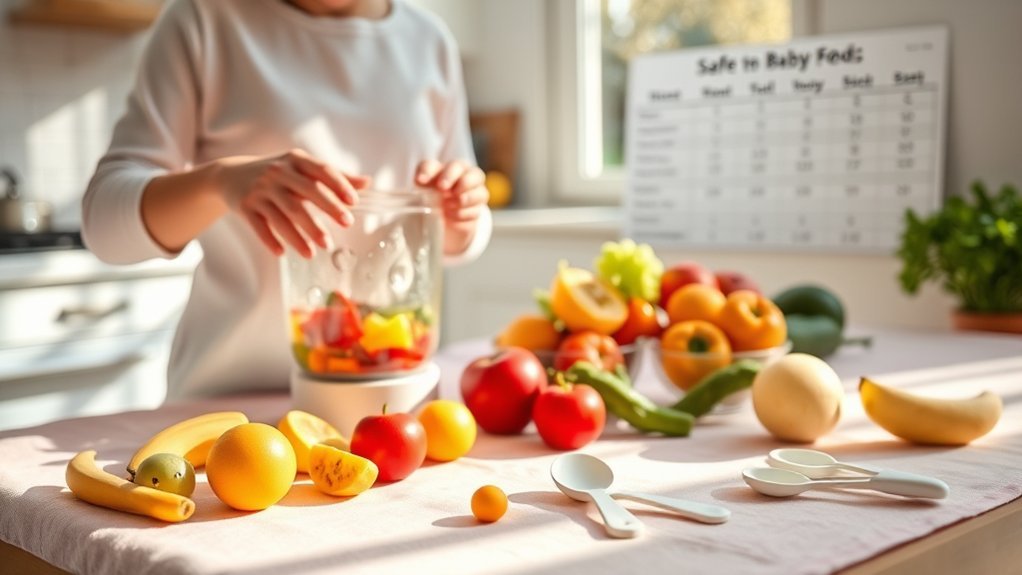
To guarantee mealtime is safe for your baby, it’s crucial to employ effective food preparation techniques. Focus on creating appropriate baby food textures and using proper food cutting techniques to minimize choking risks.
Ensuring mealtime safety for your baby requires careful food preparation and appropriate texture to minimize choking risks.
- Cut food into small, manageable pieces, especially high-risk items like hot dogs and grapes.
- Mash or puree foods to reduce choking likelihood during self-feeding.
- Cook vegetables until soft to eliminate hard or raw hazards.
- Verify foods are age-appropriate and avoid shapes that block airways, like whole grapes.
- Regularly consult trusted sources like USDA WIC for updated guidelines.
Practical Tips for Promoting Safe Eating Habits in Babies
Creating safe eating habits for your baby builds on the foundation of proper food preparation. Start by cutting food into small, bite-sized pieces and avoid round or hard foods like whole grapes and raw carrots.
Supervise mealtime, making sure your little one is seated and focused. When practicing baby led weaning, gradually introduce various textures, beginning with soft, cooked vegetables and fruits.
Steer clear of smooth or sticky foods that could block airways. Educate caregivers about specific choking hazards, such as nuts and popcorn, especially for kids under four.
Encourage slow eating by teaching your baby to chew thoroughly and swallow before talking or laughing. These practices help foster independence and promote a safer eating experience.
Recognizing Choking Symptoms and Responding Quickly

When your baby starts eating solid foods, being aware of choking symptoms is essential for their safety.
Recognizing choking signs early can save lives, so keep an eye out for:
- Difficulty breathing or gasping
- Coughing that becomes weak or ineffective
- A bluish tint around the lips or face
- Inability to cry or make sounds
- Clutching the throat
If your child can cough or cry, encourage them to keep doing so.
However, if they can’t breathe, act quickly. For infants under one, use back blows and chest thrusts. For older children, the Heimlich maneuver is vital.
Remember, quick emergency response can prevent serious harm, as brain damage can occur within four minutes without oxygen.
Stay vigilant and prepared!
Choosing Safe Toys for Your Child
When choosing toys for your child, it’s essential to check the packaging for age recommendations to guarantee safety and prevent choking hazards.
Always look for toys that meet safety standards and are free from small parts that could be swallowed.
Toy Safety Standards
Choosing safe toys for your child is essential to ensuring their well-being and minimizing choking hazards. To help you make informed choices, keep these key points in mind:
- Always select toys labeled with age recommendations to suit your child’s developmental stage.
- Regularly inspect toys for small or removable parts, discarding any broken items immediately.
- Avoid toys with small parts, like marbles or small balls, which can lead to accidental ingestion.
- Be cautious with toy packaging; avoid plastic wraps that pose choking risks and check for safety warnings.
- Stay updated on safety standards from organizations like the Consumer Product Safety Commission (CPSC) to know about toy recalls and safety certifications.
Your vigilance can protect your child from choking hazards while they play.
Age-Appropriate Toys
How can you guarantee that the toys you select for your child aren’t only enjoyable but also safe? Start by following the manufacturer’s age recommendations, ensuring the toys suit your child’s developmental stage.
Avoid toys with small detachable parts, like action figures or dolls, as they pose choking hazards for children under 3. Regularly inspect your child’s toys for any loose or broken pieces, and practice proper toy maintenance to keep them safe.
Keep small items, such as coins and buttons, out of reach to prevent accidental choking. Be cautious with toys from vending machines, as they may contain dangerous small parts.
Prioritizing safe toy selection helps create a secure play environment for your child.
Preventing Choking Hazards at Home
Creating a safe environment for your child is essential in preventing choking hazards at home. Implementing effective choking prevention strategies can help safeguard your little one.
Establishing a secure home environment is crucial for preventing choking hazards for your child.
Here are some child safety measures to take into account:
- Keep small objects like coins, balloons, and toys with tiny parts out of reach.
- Regularly inspect toys for loose or broken parts and remove hazards.
- Avoid giving children under four years old foods known to be choking risks, such as whole grapes and nuts.
- Childproof your home by securing sharp objects and removing small furniture.
- Supervise meal times to guarantee children eat safely, without distractions.
Creating a Safe Eating Environment for Your Child
Creating a safe eating environment for your child is essential to prevent choking hazards.
Always supervise your little one during meals and guarantee that food is cut into small, manageable pieces to make it easier for them to chew and swallow.
Meal Time Supervision
While mealtime can be a joyful experience for you and your child, it’s essential to prioritize supervision to prevent choking hazards. Close monitoring is vital, as most choking incidents happen when kids eat unattended.
To create a safe eating environment, consider these tips:
- Make sure your child sits upright while eating.
- Eliminate distractions like toys or screens for distraction reduction.
- Encourage thorough chewing and discourage talking or laughing with food in their mouths.
- Regularly check that food is cut into appropriate sizes.
- Engage in meal planning to serve safe, age-appropriate foods.
Safe Food Preparation
To guarantee your child’s mealtime is safe, proper food preparation is essential. Always cut food into small, manageable pieces. Avoid round or firm items like whole grapes and hot dogs, which can pose choking risks.
Focus on meal planning by preparing soft, cooked fruits and vegetables instead of raw options, making them easier for your child to chew and swallow. Steer clear of sticky foods, such as spoonfuls of peanut butter or chewy candies, that can block airways.
Ascertain your child sits upright while eating and supervise closely to eliminate distractions. Encourage them to focus on their food, avoiding running or playing during mealtime.
These steps help create a safe eating environment where your child can thrive.
Importance of Supervision During Mealtimes
Supervision during mealtimes is essential, as many choking incidents happen when children aren’t closely monitored.
Keeping a watchful eye on your little one guarantees they chew and swallow their food properly before engaging in play or conversation.
With effective meal supervision, you can intervene quickly if choking occurs, safeguarding your child’s health.
Effective meal supervision allows for quick intervention during choking incidents, ensuring your child’s safety and well-being.
- Eliminates distractions for focused eating
- Reinforces safe eating practices and proper sitting
- Encourages mindful eating habits
- Reduces the risk of choking incidents
- Promotes a sense of security and trust
Resources for Learning First Aid and CPR for Parents
Keeping a watchful eye on your child during mealtimes is just the first step in guaranteeing their safety. To effectively respond to choking emergencies, consider enrolling in CPR and First Aid classes through organizations like the American Red Cross.
Understanding the Heimlich maneuver is vital for both infants and older children. Many local community centers and hospitals offer free or low-cost CPR training sessions specifically designed for parents and caregivers.
Additionally, online courses provide flexible learning options, allowing you to grasp choking prevention and emergency response techniques at your own pace. Regularly practicing these skills and reviewing first aid procedures will empower you to handle emergencies confidently and guarantee your child’s safety during mealtimes.
Frequently Asked Questions
What Age Can My Baby Start Eating Solid Foods Safely?
Your baby can start solid food introduction around six months, but it’s essential to assess their developmental readiness. Look for signs like sitting up independently and showing interest in your food. Trust your instincts!
How Can I Tell if Food Is Too Hard for My Baby?
To determine if food’s too hard for your baby, check the food texture; it should be soft and easily mashable. Watch for choking signs like coughing or gagging, indicating it’s time to reconsider the food choice.
Are There Specific Allergies to Watch for With New Foods?
Yes, watch for allergy symptoms like hives or swelling when introducing new foods. Start solids around six months, introducing one food at a time, allowing a few days to monitor for any adverse reactions.
How Can I Encourage My Baby to Chew Their Food?
Encourage your baby to chew by introducing various food textures. Offer soft, textured foods that require chewing techniques, like mashed fruits or finely chopped veggies. Make mealtime fun and engaging, fostering their exploration and confidence with food.
What Should I Do if My Baby Refuses to Eat Solid Foods?
If your baby’s turning up their nose at solid foods, try mixing it up! Explore different textures, flavors, and meal time routines. Gradually introduce new baby food preferences, and stay patient—Rome wasn’t built in a day!
Conclusion
To sum up, being aware of choking hazards can make a significant difference in your baby’s safety during mealtimes. Did you know that about 20% of choking incidents in children under age 5 involve food? By avoiding certain foods, using safe preparation techniques, and supervising your little one while they eat, you can help prevent choking. Remember, your vigilance and knowledge are key to creating a safe eating environment for your child. Stay informed and keep your baby safe!