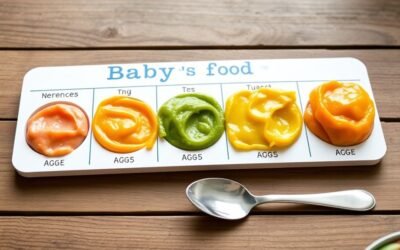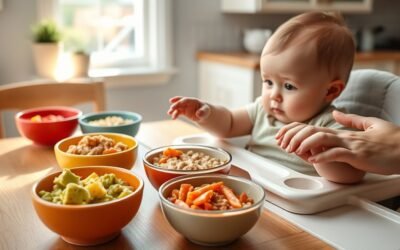

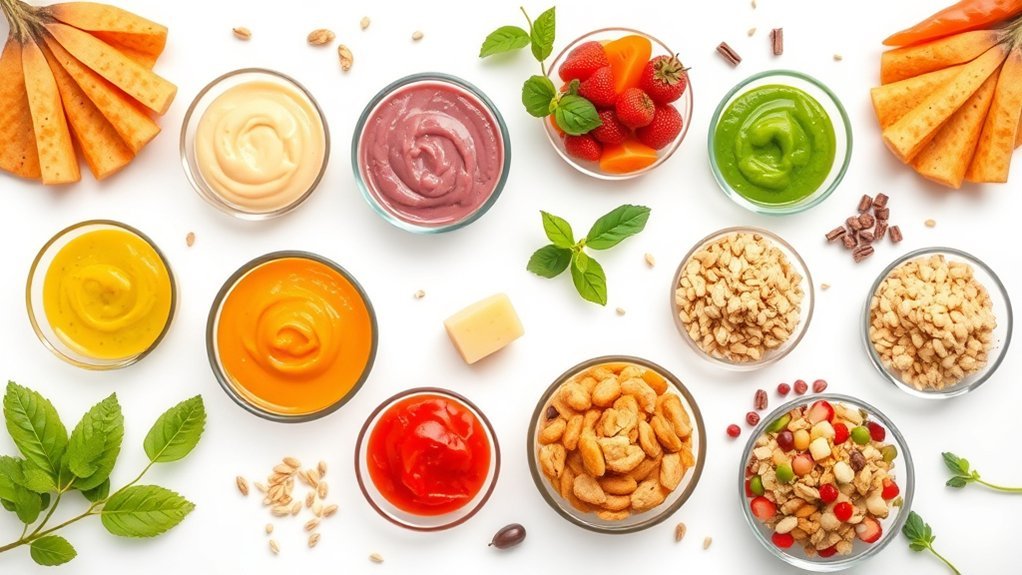
When starting baby food, begin with simple purees around 6 months, using single-ingredient options like sweet potatoes, carrots, and apples. As your baby grows, combine flavors, such as apple and carrot for 6-8 months or oats with banana for 8-10 months. At 10-12 months, introduce soft chunks and finger foods. Remember to wait 3-5 days between new foods to check for allergies. Discover more about age-appropriate combinations to guarantee your baby’s healthy development and nutrition.
Key Takeaways
- Start with single-ingredient purees like sweet potatoes and carrots for 6-month-olds to monitor allergies and ensure easy digestion.
- For 6-8 months, combine simple purees like apple and carrot or banana and avocado, focusing on smooth textures.
- Transition to thicker textures and small soft chunks for 8-12 months, including meals like oats with banana or khichdi with veggies.
- Introduce finger foods such as soft fruits and cooked meats to encourage self-feeding and develop motor skills around 8-12 months.
- Always introduce new foods one at a time, waiting 3-5 days before adding another to monitor for potential allergic reactions.
Understanding When to Start Baby Food Combinations
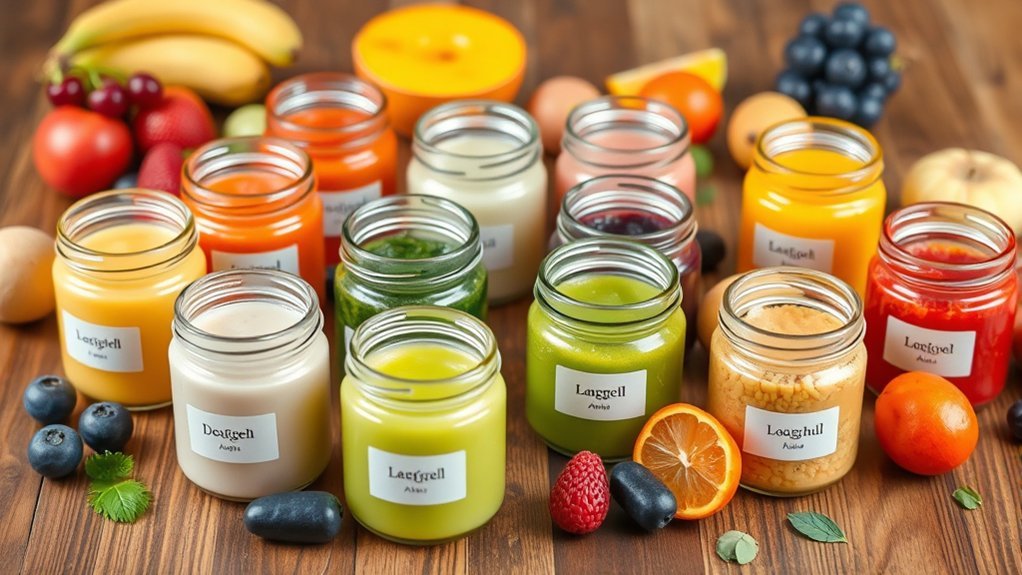
As you prepare to introduce solid foods to your baby, it’s crucial to understand when to start with combinations. Typically, you’ll begin around 6 months, ensuring your baby shows signs of solid food readiness, like sitting up with support and good head control.
Before introducing combinations, focus on single-ingredient purees. They help you monitor for potential allergies and intolerances effectively.
Keep in mind that babies should be exclusively breastfed or formula-fed for the first 4-6 months. Always consult your pediatrician beforehand to create a safe feeding plan.
Watch for readiness signs like interest in food and the disappearance of the tongue-thrust reflex—these indicators will guide you in determining the right time to explore baby food combinations confidently.
Essential First Foods for 6-Month-Olds
Once you’ve identified that your baby is ready for solid foods, it’s time to explore some great first options.
Addressing first food concerns is essential for ensuring baby food safety. Focus on introducing single-ingredient purees that are easy to digest.
Here are three essential first foods for your little one:
- Sweet Potatoes – Packed with vitamins and gentle on the tummy.
- Carrots – Smooth and rich in beta-carotene, perfect for early eaters.
- Apples – Naturally sweet and fiber-rich, they make a great puree.
Remember to introduce new foods one at a time, waiting 3-5 days to check for any allergic reactions.
Using a steamer or baby food maker can help prepare these nutritious options effectively.
Top First Foods for 6-Month-Olds
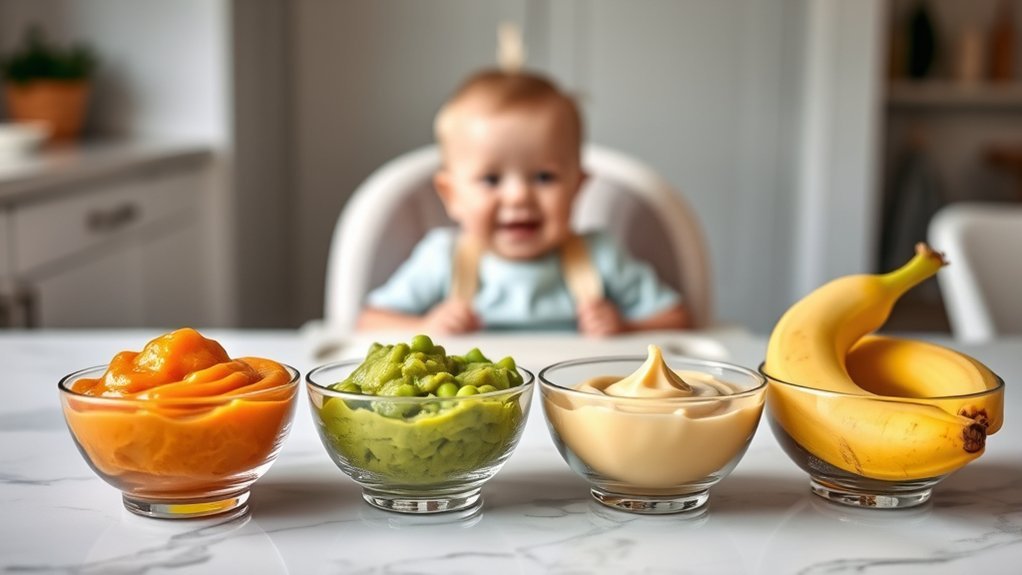
When your baby reaches 6 months, it’s time to introduce ideal first purees that are safe and nutritious.
Focus on smooth textures with options like avocado, banana, and sweet potato, which are easy for little ones to swallow.
Remember to introduce each new food individually, allowing a few days in between to monitor for any allergic reactions.
Ideal First Purees
Introducing your baby to solid foods is an exciting milestone, and starting with ideal first purees can set the foundation for healthy eating habits.
Begin with gentle, single-ingredient options that are easy to prepare and digest. Here are some great puree ideas to contemplate:
- Vegetable Puree Ideas: Pureed sweet potatoes, carrots, and peas are nutritious and smooth, making them perfect first foods.
- Fruit Puree Ideas: Applesauce or pureed pears introduce natural sweetness while being gentle on the tummy.
- Iron-Rich Options: Pureed meats or fortified baby cereals can be introduced early to support brain development.
Always introduce new purees one at a time, waiting 3-5 days to monitor for any potential reactions.
Don’t forget to consult your pediatrician for personalized guidance!
Safe Food Textures
As babies reach around 6 months, they can start exploring solid foods, and it’s important to focus on safe food textures to guarantee their successful changeover to eating.
Begin with smooth single or two-ingredient purees, like pureed meats and lentils, or soft fruits and vegetables such as avocado and sweet potato. These safe servings are rich in nutrients and aid in developing your baby’s palate.
Remember to avoid added salt, sugar, or honey. Introduce new foods one at a time, allowing 3-5 days to check for any allergic reactions.
As your baby grows, gradually increase the texture from purees to thicker consistencies, offering texture tips that promote exploration and encourage self-feeding.
Baby Food Combinations for 6-8 Months: Simple Purees
At 6-8 months, you can start offering simple purees to your baby, focusing on smooth textures that are easy to swallow.
Recipes like apple and carrot or banana and avocado are great options, allowing you to monitor for any allergic reactions.
Remember to introduce new foods one at a time, waiting 3-5 days before trying another, so you can keep track of how your baby responds.
Texture Progression Strategies
When you’re ready to start your baby’s journey into solid foods, focusing on texture progression is key.
At 6-8 months, you’ll primarily introduce thin purees, which help meet essential texture milestones. Here are some strategies to reflect upon:
- Start with Smooth, Thin Purees: Begin with single or two-ingredient combinations, like apple and carrot or banana and avocado.
- Gradually Increase Puree Thickness: As your baby becomes comfortable, slowly shift to thicker textures, ensuring they adapt well.
- Monitor Reactions: Keep an eye on how your baby responds to new flavors and textures to spot any potential allergies or sensitivities.
Avoid adding salt, sugar, or honey in these early stages for best nutrition and safety.
Easy Puree Recipes
Introducing your baby to solid foods can be an exciting adventure, especially when it comes to creating simple purees. For babies aged 6-8 months, start with thin purees made from single or two-ingredient combinations like apple + carrot or banana + avocado.
Use fresh, organic ingredients, steaming or boiling them to maintain nutrients before pureeing to a smooth texture. Gradually introduce new flavor pairings, waiting 3-5 days between new foods to monitor for allergies.
Verify purees are easy to swallow, adjusting consistency as your baby grows. For puree storage, keep homemade purees in the refrigerator for 1-2 days or freeze them in ice cube trays for convenient portions later.
Enjoy this flavorful journey with your little one!
Monitoring Allergic Reactions
As you start incorporating new food combinations for your baby, it’s important to monitor for any allergic reactions closely.
Here are some effective monitoring methods:
- Wait 3-5 Days: Introduce one new food at a time and wait several days before adding another. This helps identify any allergic reactions.
- Watch for Symptoms: Look for signs such as rashes, hives, vomiting, diarrhea, or swelling. If any occur, consult your pediatrician immediately.
- Keep a Food Log: Document what foods your baby eats and any reactions. This will help you track potential allergens over time.
Advancing Baby Food Combinations for 8-10 Months
At 8-10 months, your baby is ready to explore new textures and flavors, making this an exciting time for introducing more complex food combinations.
During this stage, babies can handle thicker textures and small soft chunks, which boosts their self-feeding skills. Consider combinations like oats with banana and cardamom or khichdi with veggies. These options not only provide essential nutrients but also promote flavor exploration.
Encourage your baby’s independence by allowing them to manage food on their own, creating a positive eating experience. Additionally, continue introducing a diverse range of foods to help shape their taste preferences and minimize picky eating later.
Always monitor portion sizes and respond to your baby’s appetite to guarantee they receive adequate nutrition.
Baby Food Combinations for Toddlers (10-12 Months)
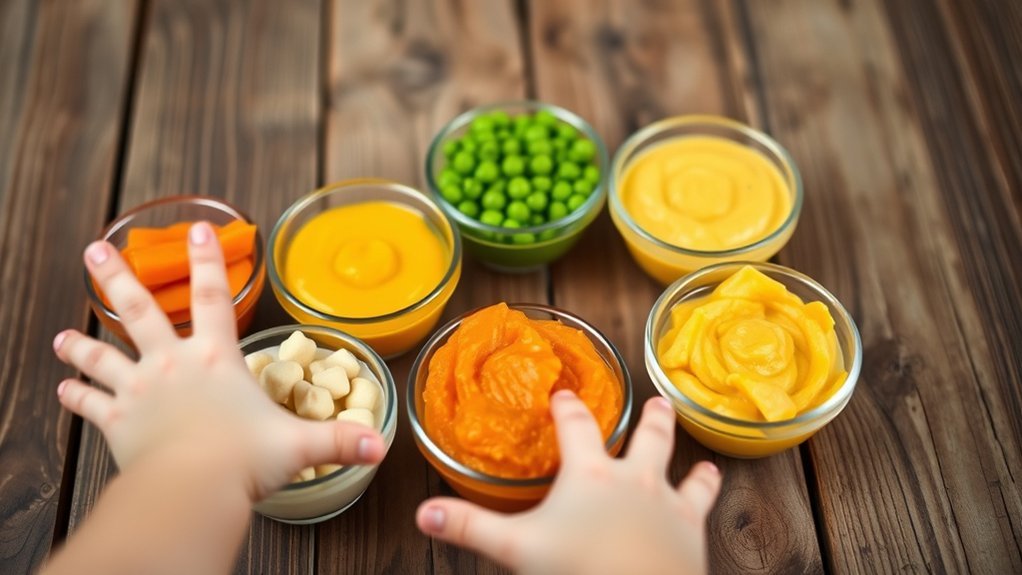
By 10-12 months, your toddler is ready to enjoy a variety of mashed or chopped food textures, marking a significant shift from purees to more complex meals.
By 10-12 months, toddlers transition to mashed and chopped foods, embracing more complex meal textures.
Here are some great toddler meal ideas to take into account:
- Soft veggie idlis: These provide a nutritious and fun texture for your little one.
- Lentil rice bowls: A balanced option that combines proteins and carbohydrates.
- Well-cooked vegetables and proteins: Small pieces promote chewing and tasting.
Encourage self-feeding techniques by offering finger foods like soft fruits, small pieces of toast, and bite-sized cooked meats.
Make sure your toddler consumes 24-32 ounces of breast milk or formula daily to support their growth, while monitoring portion sizes to suit their varying appetites.
Nutritional Benefits of Baby Food Combinations
Introducing a variety of baby food combinations not only guarantees that your little one receives essential nutrients but also plays an important role in their overall growth and development.
By mixing different food groups, you secure nutritional diversity, crucial for cognitive and physical growth. Including fiber-rich fruits and vegetables enhances digestion and helps establish healthy bowel habits early on.
Furthermore, offering an array of flavors encourages flavor exploration, allowing your child to develop taste preferences and reducing the chances of picky eating later. Different textures and tastes promote acceptance of various foods, fostering lifelong healthy eating habits.
Ultimately, these combinations help create a strong foundation for your child’s nutritional journey, supporting their wellbeing as they grow.
Safe Ways to Introduce New Foods
When you start introducing new foods to your baby, it’s important to do so thoughtfully to guarantee their safety and comfort. Follow these steps for a safe approach:
- Introduce one food at a time: Wait 3-5 days before adding another to monitor for allergic reactions. This promotes allergy awareness.
- Focus on safe food preparation: Cut foods into appropriate sizes to prevent choking hazards, and start with single-ingredient purees.
- Gradually offer varied textures: Begin with smooth purees, then progress to thicker and chunkier foods as your baby’s skills develop.
Always consult your pediatrician before introducing potentially allergenic foods like peanuts or eggs.
Always seek guidance from your pediatrician before introducing allergenic foods such as peanuts or eggs to your baby’s diet.
This tailored approach assures your baby’s health and comfort as they explore new tastes.
Frequently Asked Questions
Can I Use Frozen Fruits and Vegetables for Baby Food?
Yes, you can use frozen fruits and vegetables for baby food. Frozen food benefits include nutrient retention, making them excellent for baby nutrition. Just confirm they’re properly thawed and prepared for your little one’s enjoyment.
How Should I Store Homemade Baby Food?
Store homemade baby food in glass containers to maintain freshness. Use portion sizes that match your baby’s needs, and refrigerate for up to three days or freeze for longer storage, ensuring your little one enjoys nutritious meals.
What Are Signs of Food Allergies in Babies?
Watch closely; baby reactions to new foods can reveal allergy symptoms. Look for rashes, swelling, or digestive issues. If you notice these signs, consult a pediatrician promptly to guarantee your baby’s safety and health.
How Do I Know if My Baby Is Ready for Solids?
You’ll know your baby’s ready for solids when they can sit up independently, show interest in food, and can move purees to the back of their mouth. Look for these signs of baby readiness for solid food introduction.
Can I Mix Different Food Textures in One Meal?
Yes, you can mix different food textures in one meal. Texture blending enhances meal variety, encouraging your baby to explore new tastes and sensations. Just make certain the combinations are safe and appropriate for their developmental stage.
Conclusion
Incorporating baby food combinations into your little one’s diet can set the stage for healthy eating habits later on. By starting early and gradually introducing diverse flavors and textures, you’ll help your baby develop a palate that embraces various foods. Remember, it’s all about taking baby steps! Keep an eye on allergies and always consult your pediatrician if you’re unsure. With patience and creativity, you’ll nourish your child’s growth and make mealtime a delightful experience for both of you.