If you’re dealing with a picky eater, knowing how to introduce new flavors can make mealtimes much easier. Start with creative puree combinations, like blending pumpkin with applesauce, and pair new foods with familiar favorites. Creating a positive, distraction-free environment helps reduce anxiety around trying different foods. Remember, persistence is essential; it often takes 8 to 15 attempts for a child to accept a new food. There’s more to explore about strategies for encouraging food acceptance and making mealtime enjoyable.
Key Takeaways
- Introduce new foods alongside familiar favorites to reduce intimidation and encourage acceptance through gradual exposure.
- Use creative puree combinations, like blending veggies with sweeter fruits, to make new flavors more appealing.
- Offer visually enticing finger foods with varying textures and temperatures to promote exploration and discovery.
- Maintain a positive, distraction-free mealtime environment to foster comfort and openness to trying new foods.
- Celebrate small victories and aim for 8 to 15 exposures of new foods to increase the likelihood of acceptance.
Understanding Picky Eating in Babies

Understanding picky eating in babies can be challenging, especially as it often emerges around their first birthday when they begin to form preferences and aversions. This developmental stage is normal, but it can be frustrating when your little one refuses to try new foods, especially if siblings are more adventurous eaters.
Remember, it may take 8 to 15 exposures before your baby accepts a new flavor, so persistence is key. Creating a pleasant and distraction-free feeding environment can encourage exploration and help combat food aversions.
As you navigate this phase, focus on celebrating small victories and offering a variety of options, allowing your baby to develop healthier eating habits while embracing their unique preferences.
Recognizing the Signs of Picky Eating in Babies
How can you tell if your baby is developing picky eating habits? Watch for specific baby behaviors that indicate strong preferences, like distress when introduced to new foods.
If your little one shows avoidance or refuses to try anything outside their comfort zone, it’s a sign of picky eating. Many babies go through phases where they’ll only eat one or two foods, known as food jags, which can last for weeks.
Avoidance of new foods can indicate picky eating in babies, often leading to phases of limited food choices known as food jags.
Pay attention to feeding signals; if your baby consistently rejects various textures or flavors, it might take 8 to 15 exposures for them to accept something new.
If you notice extreme aversions or distress over a wide range of foods, consider seeking professional advice for your child’s well-being.
Creative Baby Food Ideas for Picky Eaters
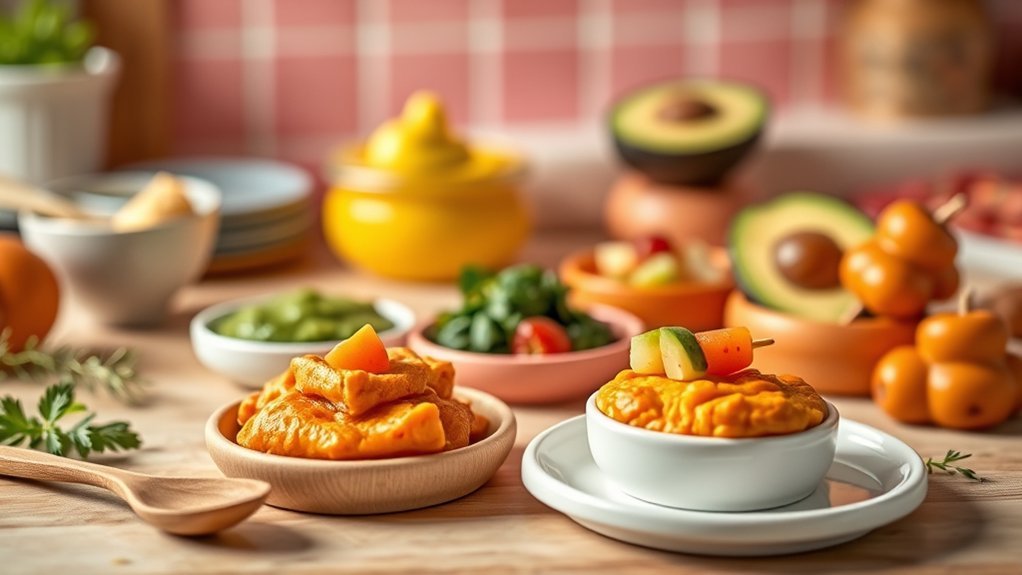
If your baby is a picky eater, creative puree combinations can help introduce new flavors without overwhelming their palate. You might try mixing pumpkin purée with applesauce or blending disliked veggies with sweeter fruits to make them more appealing.
Additionally, offering fun finger foods in visually enticing shapes can encourage your little one to explore a variety of textures and tastes.
Flavorful Puree Combinations
Introducing new flavors to picky eaters can be a challenge, but creative puree combinations can make the process enjoyable. By experimenting with diverse flavor profiles, you can discover ingredient pairings that your little one loves.
For instance, mix zucchini with apple and pumpkin purée to mask the taste of less preferred veggies. Gradually introduce single-ingredient purees over 3-5 days to help them familiarize themselves with new flavors, easing acceptance.
Steaming zucchini until soft enhances texture, making it more appealing. Don’t forget to use familiar flavors, like a favorite fruit puree, as a base to introduce new vegetables.
Finally, try varying textures and serving temperatures to see what your picky eater prefers. You’ll find delightful combinations that work!
Fun Finger Food Ideas
While managing mealtime with picky eaters can feel challenging, fun finger foods can turn the experience into a delightful adventure.
Start with soft finger foods like cooked sweet potato cubes, which are nutritious and easy for little hands to grasp. Colorful vegetable sticks, such as steamed carrots and zucchini, not only entice with their vibrant appearance but also invite exploration of new flavors.
Use cookie cutters to transform whole grain bread or cheese into fun shapes, making eating interactive. Get creative with mini pizza faces using flatbread, tomato sauce, cheese, and assorted veggies, allowing your child to engage in meal prep.
Finally, introduce fruit kebabs with banana, soft pear, and strawberries for healthy, visually appealing snacks that cater to toddler taste.
Encouraging Food Exploration in Picky Eaters
To encourage food exploration in your picky eater, start by creating a positive mealtime environment where they can feel relaxed and curious about new flavors.
Mix familiar foods with new ones, like cheese with broccoli, to make the experience less intimidating.
With time and persistence, your child can develop a taste for a variety of healthy meals.
Diverse Flavor Experiences
Exploring diverse flavors can be a game changer for picky eaters, as early exposure to a variety of vegetables and fruits before their first birthday greatly enhances their acceptance of new tastes later on.
It usually takes 15-20 exposures for a child to accept a new food, so persistence matters. To encourage taste exploration, combine new foods with familiar favorites; for instance, mix zucchini with apple puree to mask flavors. This approach can make trying new foods less intimidating.
Positive Mealtime Environment
Creating a positive mealtime environment is essential for encouraging food exploration in picky eaters. Establish consistent mealtime rituals to help your child feel secure, making them more open to trying new foods.
A distraction-free space lets them focus on food presentation, enhancing their willingness to explore various flavors and textures. Foster positive conversations about food without pressure, creating a relaxed atmosphere that reduces anxiety around new items.
Incorporate fun elements, like arranging food into shapes or using colorful plates, to engage their curiosity. Additionally, let your child participate in food preparation and selection, giving them a sense of control that can motivate them to try foods they helped create.
Empowering them this way can transform mealtime into a joyful adventure.
Common Mistakes to Avoid With Picky Eaters
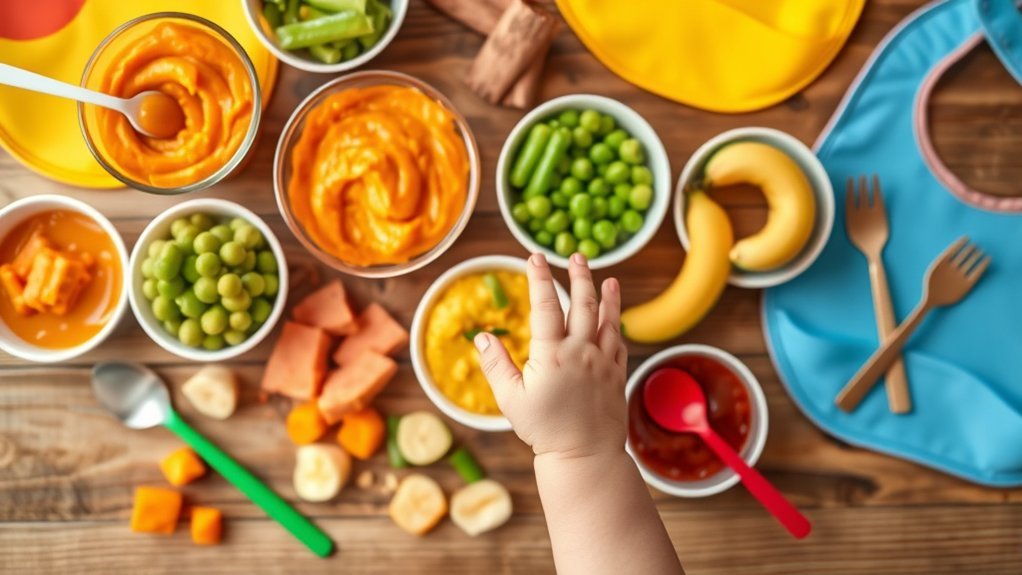
When steering through the challenges of feeding a picky eater, it is crucial to avoid common pitfalls that can hinder their willingness to try new foods. Here are some mistakes to watch out for:
| Common Mistakes | Mealtime Strategies |
|---|---|
| Making mealtime a battleground | Keep the atmosphere relaxed and positive |
| Giving up on new foods too soon | Aim for 8-15 exposures before deciding |
| Using dessert as a reward | Offer a variety of healthy options instead |
Instead of forcing bites, encourage exploration without pressure. Excessive demands can create food anxiety, while unhealthy offerings undermine your goal. Focus on fostering a love for nutritious foods, creating a joyful mealtime experience that empowers your child to embrace new flavors.
How Texture Influences Baby Food Acceptance
Understanding how texture influences baby food acceptance is essential for fostering a positive eating experience. Babies often embrace smoother purees initially, as they’re easier to manage before evolving to chunkier textures.
Research shows that introducing a texture variety gradually can enhance acceptance, so start with single-ingredient solids for 3-5 days. This builds familiarity and encourages willingness to try more complex combinations later.
Introducing a variety of textures gradually fosters familiarity, paving the way for your baby to embrace more complex flavors.
Soft, well-cooked foods like mashed bananas or steamed zucchini are typically more appealing to picky eaters due to their palatable textures.
Don’t forget to experiment with different food temperatures, as warmer options can feel creamier and more inviting. Embrace sensory exploration for a positive mealtime journey, allowing your baby to discover textures they enjoy!
Creating a Positive Mealtime Environment for Picky Eaters
A positive mealtime environment can considerably influence how picky eaters approach food. Establishing consistent mealtime routines creates a sense of security, making your child more willing to try new foods.
Set up a pleasant, distraction-free space to help them focus on their meals and ease any anxiety. Encourage positive conversations during meals, cultivating a relaxed atmosphere that invites exploration of new flavors.
Respect their hunger and fullness cues, allowing them to self-regulate their intake—this helps build a healthy relationship with food. Introduce new foods alongside familiar favorites, reducing intimidation and increasing acceptance.
Knowing When to Get Help for Picky Eating
How can you tell if your child’s picky eating has crossed the line into something that requires professional help? If your child exhibits severe symptoms, like extreme unwillingness to try new foods or distress about specific meals, it’s time to evaluate professional intervention. Observe emotional reactions and behaviors around food, as these can indicate deeper issues.
Here’s a quick guide to signs that suggest seeking help:
| Signs of Severe Picky Eating | Emotional Reactions | Need for Professional Help |
|---|---|---|
| Aversions to previously accepted foods | Distress during mealtimes | Lack of motivation to change |
| Consistent refusal of new foods | Anxiety about food-related activities | Impact on social interactions |
| Limited food variety | Tantrums or withdrawal | Unhealthy weight changes |
Recognizing these signs can empower you to seek the support your child needs.
Effective Strategies for Introducing New Flavors to Picky Eaters
While introducing new flavors to picky eaters can feel challenging, employing effective strategies can make the process smoother for both you and your child.
Start by offering new flavor pairings with familiar favorites; for instance, mix broccoli with grated cheese to enhance acceptance.
Remember that gradual exposure is key—children typically need 8 to 15 tries before they embrace a new food.
Use creative cooking methods like pureeing or blending new ingredients into dishes they already enjoy, which can help mask any off-putting flavors.
Maintain a positive mealtime environment and avoid pressuring your child, as emotional reactions can heighten aversion.
Ultimately, introduce one new food at a time while continuing to offer previously rejected items to foster familiarity and comfort.
Frequently Asked Questions
What Age Should I Start Introducing New Foods to My Baby?
You should start introducing new baby food around six months. This timing helps your baby develop taste preferences and nutritional diversity, making mealtime more enjoyable. Just remember to introduce one food at a time for safety.
How Can I Tell if My Baby Is Truly Picky or Just Exploring?
Think of your baby as a curious explorer in a vast flavor forest. If they’re sampling new tastes, they’re likely just exploring. It’s normal during developmental stages; trust the journey, and offer a variety!
Are There Specific Foods to Avoid for Picky Eaters?
You should avoid common allergens like peanuts and dairy until you know your baby’s sensitivities. Also, consider texture preferences—some kids reject purees or chunky foods, so experimenting with different consistencies can help expand their palate.
How Often Should I Offer New Foods to My Baby?
You don’t need to overwhelm your baby with new foods daily. Aim for two to three times a week, making mealtime fun with taste testing. Consistency in food frequency helps develop their palate over time.
Can I Use Store-Bought Baby Food for Picky Eaters?
Yes, you can use store-bought options for picky eaters. Look for nutritious, high-quality baby food alternatives that offer variety. Experiment with flavors and textures to encourage acceptance, making mealtime enjoyable and stress-free for both you and your baby.
Conclusion
Steering through the world of picky eating can feel overwhelming, but remember, you’re not alone in this journey. By understanding your baby’s preferences and gently encouraging exploration, you’ll set the stage for a more adventurous palate. As you implement creative food ideas and foster a positive mealtime atmosphere, you might just discover surprising outcomes. But what if the next meal becomes a breakthrough moment? Stay patient and open-minded—your persistence could reveal a world of flavors for your little one.