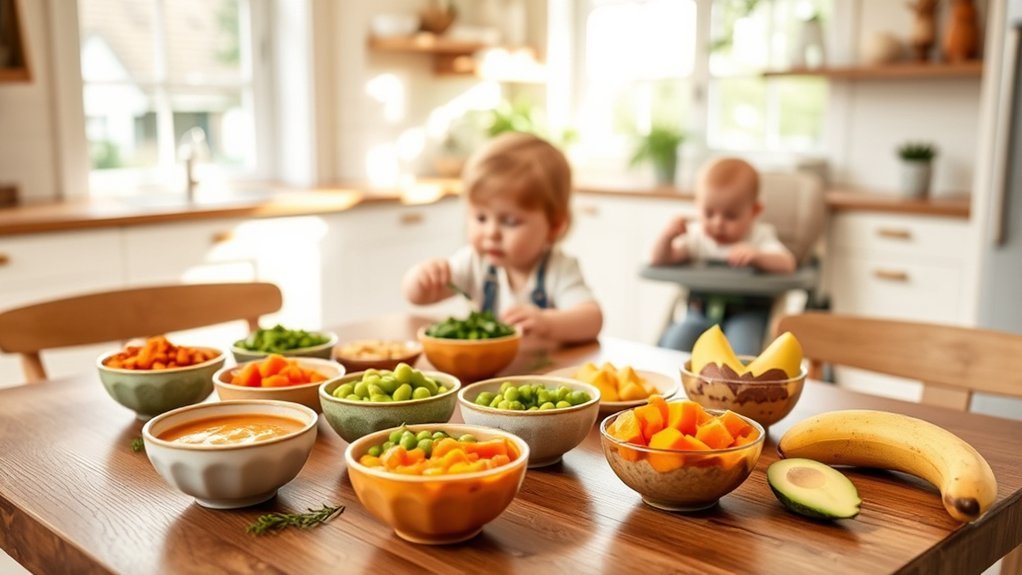
A well-planned vegetarian diet can support a baby’s growth after solid foods begin, but the details matter. From about 6 months through the first birthday, breast milk or iron-fortified infant formula remains the main source of nutrition. Complementary foods should add iron, zinc, protein, healthy fats, vitamin B12, vitamin D, calcium, iodine, and varied textures.
Quick Answer
Vegetarian baby food should combine iron-rich foods, protein, healthy fats, vitamin C-rich produce, and age-safe textures. Use breast milk or iron-fortified infant formula as the main drink until 12 months. A strictly vegan plan needs reliable vitamin B12 and professional guidance, with vitamin D and possible iron supplements based on your baby’s feeding pattern and clinician’s advice.
Key Takeaways
- Begin complementary foods at about 6 months when your baby shows developmental readiness, while continuing breast milk or iron-fortified infant formula.
- Offer an iron-rich food at most meals, such as iron-fortified infant cereal, lentils, beans, tofu, or eggs if included in your vegetarian pattern.
- Pair plant-based iron with vitamin C-rich foods, such as broccoli, strawberries, tomatoes, bell pepper, peas, or sweet potato.
- Use energy-dense foods such as avocado, full-fat plain yogurt, smooth nut or seed butter, tofu, and a small amount of olive or canola oil.
- Do not replace breast milk or infant formula with cow’s milk or plant-based beverages before 12 months.
- For a vegan baby, plan vitamin B12 carefully and work with a pediatrician or registered dietitian who understands infant plant-based nutrition.
Warning: This guide is general education, not an individual feeding prescription. Premature babies, babies with poor growth, food allergies, anemia, feeding problems, or medical conditions need a personalized plan from their pediatric care team. Never start iron, vitamin B12, iodine, or other high-dose supplements without professional guidance.
Understanding Vegetarian Diets for Babies
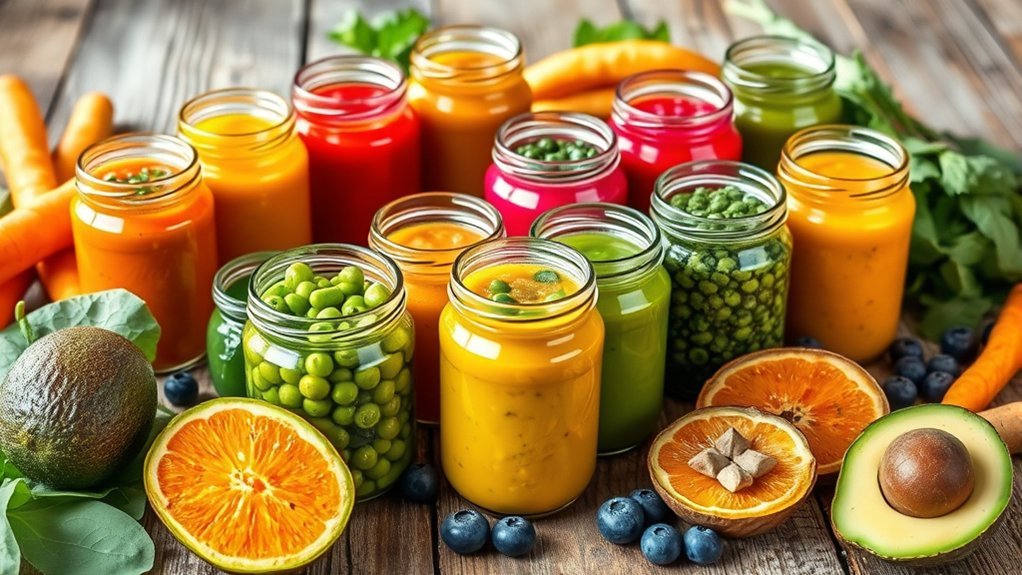
Vegetarian diets are not all the same. A lacto-ovo vegetarian diet includes dairy products and eggs. A lacto-vegetarian diet includes dairy but not eggs. A vegan diet excludes all animal-derived foods. The more foods a pattern excludes, the more carefully you need to plan nutrients and supplements.
Most babies are ready to try complementary foods at about 6 months, when they can sit with support, control their head and neck, bring objects to their mouth, and swallow food rather than push it out. The CDC’s infant-feeding guidance recommends starting around this time rather than using a fixed birthday alone.
From 6 to 12 months, breast milk or iron-fortified infant formula still supplies most nutrition. Solid foods gradually add iron, zinc, energy, protein, and eating skills. Cow’s milk and plant-based beverages should not replace breast milk or infant formula before 12 months, although pasteurized plain yogurt and cheese can be offered earlier if dairy is part of your family’s diet.
A vegetarian baby does not need a perfect food at every meal. The goal is a varied pattern that repeatedly supplies iron, protein, energy, healthy fats, and reliable sources of nutrients that are harder to obtain from plants.

Power your essentials anywhere with a 999Wh pure sine wave power station delivering up to 1000W continuous with 2000W surge. It supports fast charging via USB-C PD 60W and USB-A QC 18W, plus simultaneous output for multiple devices through AC, USB, wireless, and car/DC ports. Recharge using AC, car, or solar with a built-in MPPT controller and dual cooling fans, while the upgraded battery management system protects against surges, short circuits, and overheating.

DELICIOUS BLEND OF APPLE, BLUEBERRY & SPINACH: Each pouch contains 15% recommended daily value of Iron and Zinc, making it easy to squeeze more nutrition into your little one's day.
NUTRITIOUS: This baby food tub has 30% of the daily value of potassium
Essential Nutritional Needs in Vegetarian Baby Food
Vegetarian meal planning should go beyond protein. Iron, zinc, vitamin B12, vitamin D, calcium, iodine, choline, omega-3 fats, and total energy all matter during rapid growth. The table below summarizes the main jobs and practical food sources.
| Nutrient | Why It Matters | Vegetarian Sources for Babies | Planning Note |
|---|---|---|---|
| Iron | Supports blood production and brain development. | Iron-fortified infant cereal, lentils, beans, peas, tofu, eggs, and smooth nut or seed butter. | Plant iron is less easily absorbed. Pair it with vitamin C-rich produce and discuss supplements with your clinician. |
| Protein | Supports growth, tissues, enzymes, and immune function. | Lentils, beans, tofu, soy yogurt, plain dairy yogurt, cheese, eggs, quinoa, and smooth nut or seed butter. | Offer several sources across the day; you do not need to “combine proteins” at every meal. |
| Vitamin B12 | Supports blood cells and the nervous system. | Breast milk when the lactating parent has adequate B12, infant formula, dairy, eggs, and appropriately fortified foods. | A vegan baby needs a reliable B12 plan. Do not rely on seaweed, fermented foods, or nutritional yeast unless the label confirms fortification. |
| Vitamin D | Supports bone development and calcium use. | Infant formula and supplements; food sources are limited. | The CDC recommends 400 IU daily for babies younger than 12 months; breastfed and partially breastfed babies generally need a supplement. |
| Zinc | Supports growth, immunity, and wound healing. | Beans, lentils, tofu, eggs, dairy, smooth nut or seed butter, and fortified infant cereal. | Offer zinc-rich foods regularly because absorption from beans and grains can be lower. |
| Calcium | Supports bones, teeth, muscles, and nerves. | Breast milk or formula, plain yogurt, cheese, and calcium-set tofu. | Fortified plant beverages are not a replacement drink before 12 months. Calcium content in tofu varies, so check the label. |
| Iodine | Supports thyroid hormones and brain development. | Breast milk or formula, dairy, eggs, and carefully selected fortified foods. | Vegan families should discuss iodine with a clinician. Seaweed is not a dependable infant source because its iodine content can vary widely. |
| Healthy fats and omega-3s | Supply concentrated energy and support brain and eye development. | Avocado, smooth nut or seed butter, ground chia or flax mixed into moist food, tofu, and small amounts of canola or olive oil. | Ask a pediatric dietitian whether an algae-based DHA supplement is appropriate for a strictly vegan baby. |
Note: Nutrient needs are met by the whole daily pattern, including breast milk or formula. You do not need to calculate every milligram at home. Use the table to spot foods and nutrients that deserve regular attention.
Iron-Rich Food Sources
Iron is one of the most important nutrients to plan after about 6 months. The CDC recommends iron-rich foods, iron-fortified cereals, or clinician-directed iron drops depending on the baby’s feeding pattern and health history.
Good vegetarian options include:
- Iron-fortified infant cereal: Choose oat, barley, or multigrain varieties and rotate grains rather than serving only rice cereal.
- Lentils, beans, and peas: Cook until very soft, then puree, mash, or flatten to match your baby’s skills.
- Tofu: Use soft tofu in a mash or offer soft strips for a baby who is ready for finger foods.
- Eggs: If included in your vegetarian diet, serve fully cooked egg in a soft, age-safe texture.
- Smooth nut or seed butter: Thin it with warm water, breast milk, formula, or puree. Never offer a thick spoonful.
Pair these foods with vitamin C-rich options such as strawberries, tomatoes, broccoli, peas, bell pepper, or sweet potato. Vitamin C helps the body absorb non-heme iron from plant foods.
Protein and Calcium Sources
Babies need enough total food energy as well as protein. Legumes, tofu, soy foods, eggs, yogurt, cheese, quinoa, and smooth nut or seed butter can all contribute. A varied diet across the day supplies the needed amino acids; every meal does not need a special protein combination.
For calcium, breast milk or infant formula remains central before 12 months. If dairy is included, pasteurized plain full-fat yogurt and cheese can add protein and calcium. Vegan options include calcium-set tofu and fortified foods that are suitable for infants. Check labels because calcium levels vary widely.
Protein Sources to Include in Vegetarian Baby Food
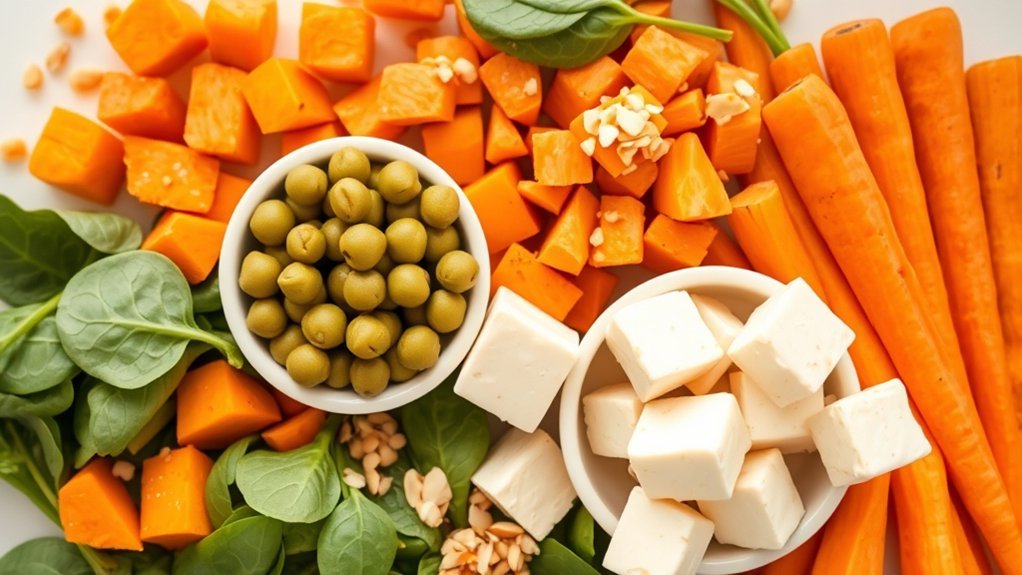
Protein supports rapid growth, but serving method matters just as much as the food itself. Use moist, soft textures and change the shape as your baby’s chewing and self-feeding skills improve.
| Protein Source | Age-Safe Serving Ideas | Extra Nutrients |
|---|---|---|
| Lentils, chickpeas, and beans | Pureed, mashed, or flattened; mix with vegetable puree or avocado. | Iron, zinc, fiber, and folate. |
| Tofu and soy foods | Soft tofu mashed into cereal or firm tofu cooked and cut into soft strips. | Iron; calcium when set with calcium salts. |
| Plain yogurt and cheese | Pasteurized plain full-fat yogurt or finely shredded/soft cheese if dairy is included. | Calcium, vitamin B12, iodine, and energy. |
| Eggs | Fully cooked and mashed, or cut into soft strips if your baby self-feeds. | Choline, vitamin B12, iodine, fat, and iron. |
| Nut and seed butters | Smooth and thinned into cereal, yogurt, or puree; never a thick spoonful. | Healthy fats, energy, protein, iron, and zinc. |
Energy-Dense Vegetarian Foods for Babies
Vegetarian foods can be high in fiber, which may fill a small stomach before a baby gets enough energy. Balance fruits, vegetables, and whole grains with calorie-dense foods that are soft and easy to eat.
Nut Butters and Spreads
Smooth peanut, almond, cashew, sunflower-seed, or sesame butter can add protein, fat, iron, and zinc. Introduce one allergen at a time in a small amount when your baby is healthy and developmentally ready for solids.
Thin smooth nut or seed butter into warm cereal, plain yogurt, fruit puree, or water until it is no longer sticky. A thin smear on soft toast may be appropriate for an experienced self-feeder, but thick globs, spoonfuls of nut butter, whole nuts, and chopped nuts are choking hazards.
Pro Tip: After an allergenic food is tolerated, keep it in the regular rotation in age-safe forms. Babies with severe eczema or an egg allergy should have a pediatric plan for peanut introduction.
Avocado and Healthy Fats
Avocado has a soft texture and provides concentrated energy from unsaturated fat. Mash it alone, blend it with lentils or beans, or spread a thin layer on a soft strip of toast. You can also add a small amount of olive or canola oil to lentil, bean, or vegetable puree.
Ground chia or flax can be stirred into moist foods, but avoid dry spoonfuls. These seeds provide alpha-linolenic acid, a plant omega-3 fat. A clinician or pediatric dietitian can help determine whether a vegan baby needs an algae-based DHA supplement.
Protein-Rich Legume Options
Lentils, chickpeas, black beans, white beans, and peas are useful sources of protein, iron, zinc, and fiber. Cook them until very soft. For younger babies, puree or mash with liquid. For babies ready for finger foods, flatten individual beans rather than serving them whole.
- Lentil puree: Cook red or brown lentils until soft, then blend with water, breast milk, formula, or vegetable puree.
- Chickpea-avocado mash: Mash very soft chickpeas with avocado until no firm pieces remain.
- Black bean and sweet potato mash: Combine mashed black beans with cooked sweet potato for iron, vitamin C, and energy.
Fun Ways to Introduce Vegetables in Vegetarian Baby Food
Offer vegetables in different colors, flavors, and textures without pressuring your baby to finish. Sweet potato, carrot, peas, broccoli, zucchini, cauliflower, and well-cooked leafy greens can be pureed, mashed, finely chopped, or served as soft finger foods.
Combining a familiar food with a new vegetable can help. Try lentils with carrot, tofu with broccoli, peas with potato, or avocado with soft-cooked spinach. Mild herbs and spices such as cinnamon, cumin, basil, dill, or garlic can add variety without added sugar or excess salt.
Repeated exposure matters. A baby may touch, smell, lick, or reject a food several times before accepting it. Keep portions small, follow hunger and fullness cues, and continue offering variety.
Easy Puree and Mash Recipes for Vegetarian Babies
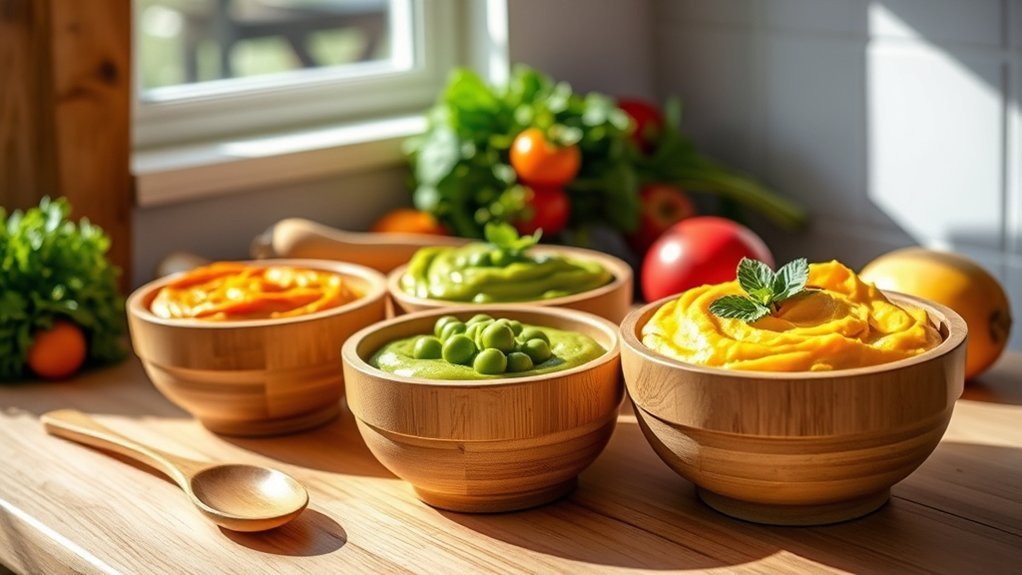
These simple recipes combine iron, protein, produce, and healthy fats. Adjust the texture with water, breast milk, or prepared infant formula. Do not use leftover milk or formula from a bottle your baby has already drunk from.
- Sweet potato and carrot puree: Steam peeled sweet potato and carrot until very soft. Blend with enough liquid to reach a safe texture. Stir in a small amount of smooth, thinned seed butter after it has been introduced safely.
- Lentil and avocado mash: Combine cooked lentils with ripe avocado. Mash until smooth or slightly lumpy, depending on your baby’s skills. Add a spoonful of tomato or broccoli puree for vitamin C.
- Spinach and pea green puree: Steam peas and a small amount of spinach until tender. Blend with water, breast milk, or prepared formula. Serve alongside iron-fortified cereal or tofu rather than treating leafy greens as the main iron source.
- Tofu, broccoli, and potato mash: Steam broccoli and potato until soft. Mash with soft tofu and a small amount of olive or canola oil.
- Oat cereal with berry and peanut: Prepare iron-fortified oat infant cereal as directed. Add mashed berry and a small amount of smooth peanut butter thinned into the cereal after peanut has been introduced safely.
How to Plan Balanced Vegetarian Meals for Your Baby
A simple meal-building formula can make planning easier:
- Start with iron or protein: iron-fortified infant cereal, lentils, beans, tofu, egg, yogurt, or smooth nut or seed butter.
- Add produce: include a vitamin C-rich fruit or vegetable when the meal contains plant iron.
- Add energy: use avocado, full-fat plain yogurt, smooth nut or seed butter, tofu, or a small amount of oil.
- Match the texture: puree, mash, mince, shred, flatten, or cut into soft pieces based on your baby’s current skills.
Begin with small amounts and let your baby decide how much to eat. Breast milk or infant formula remains the main source of nutrition through 12 months, so solid-food intake will vary from day to day.
Sample Meal Ideas by Stage
Around 6 to 8 months:
- Iron-fortified oat cereal with mashed strawberry.
- Red lentil and sweet potato puree with a small amount of olive oil.
- Plain full-fat yogurt with pear puree, if dairy is included.
- Soft tofu mashed with peas and avocado.
Around 9 to 12 months, when ready for more texture:
- Flattened black beans with soft-cooked tomato and avocado.
- Soft tofu strips with broccoli florets that squash easily between your fingers.
- Fully cooked egg strips with mashed sweet potato, if eggs are included.
- Soft pasta with lentil-tomato sauce and finely chopped vegetables.
- Iron-fortified cereal mixed with plain yogurt and thinned smooth nut butter.
Allergen and Choking Safety
Do not delay common allergenic foods simply because the diet is vegetarian. When your baby is ready for solids, introduce foods such as peanut, egg, dairy, wheat, soy, sesame, and tree nuts one at a time in safe forms. Offer the new food at home when your baby is well and you can watch for a reaction.
Babies with severe eczema, an existing food allergy, or a previous reaction need medical guidance before introducing the relevant allergen. Trouble breathing, swelling of the lips or tongue, widespread hives, repeated vomiting, sudden limpness, or unusual sleepiness can signal a severe allergic reaction; seek emergency help immediately.
Follow the CDC’s choking-prevention guidance: seat your baby upright, supervise every bite, and avoid whole nuts, thick spoonfuls of nut butter, whole beans, hard raw vegetables, popcorn, uncut round foods, and other hard or sticky pieces. Cook foods until soft and shape them for your baby’s developmental level.
Foods and Drinks to Avoid or Limit
- Honey before 12 months: Honey can cause infant botulism. This includes cooked foods made with honey.
- Cow’s milk or plant-based beverages as a main drink before 12 months: They do not replace the nutrition in breast milk or infant formula.
- Added sugars and sweeteners: Babies do not need maple syrup, agave, table sugar, or other sweeteners. Use naturally sweet fruit when flavor is needed.
- Unpasteurized foods: Avoid unpasteurized milk, cheese, yogurt, and juice because they can carry harmful bacteria.
- High-sodium foods: Limit salty packaged foods and avoid adding much salt to baby meals.
- Whole nuts and unsafe food shapes: Prepare foods to reduce choking risk.
See the CDC list of foods and drinks to avoid or limit for current safety guidance.
Common Concerns About Vegetarian Diets for Babies
Can My Baby Get Enough Iron?
Yes, but iron needs deliberate planning. Offer an iron-rich food at most meals and pair plant iron with vitamin C. Breastfed babies, premature babies, and babies with low iron stores may need clinician-directed iron drops. Do not give iron supplements on your own because too much iron can be dangerous.
Will High-Fiber Foods Fill My Baby Too Quickly?
They can. Legumes, vegetables, fruit, and whole grains are valuable, but balance them with energy-dense foods such as avocado, full-fat yogurt, tofu, smooth nut or seed butter, and small amounts of oil. Avoid making every meal a large volume of watery puree.
Does a Vegan Baby Need Supplements?
A reliable vitamin B12 source is essential in a vegan diet. Vitamin D is also commonly needed in infancy, and iron, iodine, or other supplements may be recommended based on the baby’s diet, feeding method, medical history, and test results. The exact product and dose should come from a pediatrician or registered dietitian.
Do I Need to Track Protein Grams?
Most families do not need to count grams when the baby receives breast milk or formula and eats varied protein foods. Repeatedly offer legumes, tofu, soy foods, dairy or eggs if included, and smooth nut or seed butter in age-safe forms.
When to Consult a Pediatrician for Nutritional Guidance
Discuss your plan before or soon after starting solids, especially if your baby will follow a vegan diet. Ask for a referral to a registered dietitian with pediatric experience when the diet is highly restricted or you are unsure about supplements.
Contact your baby’s healthcare professional promptly if you notice poor weight gain, a drop across growth percentiles, persistent feeding refusal, repeated vomiting or diarrhea, pale skin, unusual tiredness, developmental concerns, or symptoms after a new food. Regular well-child visits allow the care team to review growth, iron risk, feeding skills, and supplement needs.
Frequently Asked Questions
Can vegetarian babies consume honey?
No. Do not give honey before 12 months because it can cause infant botulism. Do not replace it with maple syrup, agave, or another added sweetener; babies do not need added sugars.
Are supplements needed for vegetarian babies?
Vitamin D is commonly recommended during infancy, and a vegan baby needs a reliable vitamin B12 plan. Iron, iodine, or other supplements depend on feeding method, diet, health history, and test results. Ask your pediatrician for the correct product and dose.
How should I handle possible food allergies?
Introduce one common allergen at a time in an age-safe form when your baby is healthy and ready for solids. Babies with severe eczema, an existing food allergy, or a past reaction need medical guidance. Seek emergency help for breathing trouble, lip or tongue swelling, widespread hives, repeated vomiting, limpness, or unusual sleepiness.
When can I introduce nuts?
Peanut and tree-nut products can be introduced around the time other complementary foods begin, usually about 6 months, in safe forms such as smooth butter thinned into cereal or puree. Never give whole nuts, chopped nuts, or a thick spoonful of nut butter.
What are safe finger foods for vegetarian babies?
Options include ripe avocado, very soft cooked vegetables, soft tofu strips, fully cooked egg strips if included, soft pasta, and flattened beans. The food should be soft enough to squash between your fingers, and your baby should sit upright and be supervised.
Can plant milk replace breast milk or formula?
No. Before 12 months, plant-based beverages and cow’s milk should not replace breast milk or iron-fortified infant formula. After 12 months, ask your pediatrician which fortified, unsweetened option fits your child’s diet and growth needs.
How often should I offer iron-rich foods?
Include an iron-rich food at most meals once solids are established. Rotate iron-fortified infant cereal, lentils, beans, tofu, eggs if included, and smooth nut or seed butter, and pair plant sources with vitamin C-rich produce.
Conclusion
A vegetarian baby can eat a varied, nourishing diet when breast milk or iron-fortified formula remains the foundation through 12 months and complementary foods are planned around iron, protein, energy, healthy fats, and hard-to-get micronutrients. Use age-safe textures, introduce allergens thoughtfully, avoid honey and unsafe milk substitutes, and seek professional help for a vegan plan or any growth, allergy, or feeding concern.
Sources
- CDC — When, What, and How to Introduce Solid Foods — timing, readiness, textures, allergens, cereals, and milk guidance.
- CDC — Iron and Infant Nutrition — iron-rich foods and when supplements may be considered.
- CDC — Choking Hazards — safe food preparation and foods to avoid.
- CDC — Foods and Drinks to Avoid or Limit — honey, added sugars, sodium, and beverage safety.
- NIH Office of Dietary Supplements — Vitamin B12 — B12 functions, sources, and infant needs.
- ESPGHAN Nutrition Committee — Vegan Diet and Nutritional Status in Children — evidence review and clinical considerations for vegan diets.