Nitrates occur naturally in soil, water, and many vegetables. For most healthy babies who begin solid foods at about 6 months, ordinary age-appropriate servings of vegetables are not a reason for alarm. The more important preventable risk is using nitrate-contaminated private well water to prepare infant formula or food, especially for a baby younger than 6 months.
Quick Answer
Nitrates in baby food rarely cause problems when a healthy, developmentally ready baby begins varied solid foods at about 6 months. The greater concern is nitrate-contaminated well water used for formula. Test private wells annually, never boil water to remove nitrate, and seek emergency care for blue or gray skin or breathing trouble.
Key Takeaways
- Babies generally begin complementary foods at about 6 months, when they are developmentally ready.
- Nitrate-contaminated well water used to mix formula is a better-established risk than ordinary vegetable servings.
- The federal drinking-water limit is 10 mg/L for nitrate measured as nitrogen; ask the laboratory how your result is reported.
- Boiling does not remove nitrate and can increase its concentration as water evaporates.
- Cool homemade baby food promptly, portion it with clean utensils, refrigerate it for no more than 1 to 2 days, or freeze it for 1 to 2 months.
- Blue or gray skin, breathing difficulty, marked weakness, or unusual sleepiness requires immediate medical care.
At a Glance
| Time Required | About 10 minutes to review feeding and storage practices; laboratory well testing takes longer |
| Difficulty | Easy |
| Tools Needed | Clean utensils and containers; a state-certified laboratory test if your home uses a private well |
| Cost | No cost to review a public-water report; private-well laboratory fees vary by location |
Medical note: This article provides general safety information and is not a diagnosis or a substitute for your pediatrician’s advice. Ask your baby’s clinician before introducing solids early or changing the diet of a premature, medically fragile, or chronically ill infant.
What Are Nitrates and Nitrites?

Nitrate is a naturally occurring form of nitrogen found in soil, groundwater, vegetables, and the human body. Nitrate itself is relatively stable. Bacteria in food, water, or the digestive tract can convert some nitrate into nitrite.
Nitrite can change normal hemoglobin into methemoglobin. Hemoglobin carries oxygen through the blood, while methemoglobin cannot carry oxygen effectively. A high methemoglobin level causes methemoglobinemia, sometimes called blue baby syndrome.
Young infants are more vulnerable because their digestive and enzyme systems are still developing. Illnesses that cause diarrhea, dehydration, infection, or metabolic acidosis can increase vulnerability further.
For infants, the most clearly established preventable nitrate risk is contaminated water used to prepare formula—not a normal serving of vegetables introduced at the usual age.
Which Babies Are at Highest Risk?
The greatest concern is an infant younger than 6 months who drinks formula prepared with nitrate-contaminated water. The risk is especially important for babies who are premature, dehydrated, acutely ill, or experiencing diarrhea or infection.
The CDC recommends introducing foods other than breast milk or infant formula at about 6 months, when a baby shows developmental readiness. This timing means most babies should not be eating vegetable purées during the age when they are most vulnerable to nitrate-related methemoglobinemia.
Breast milk or properly prepared infant formula remains the main source of nutrition during early infancy. Formula is safe when it is mixed exactly as directed with water from a safe source.
High-Nitrate Vegetables: What Parents Should Know

Leafy greens and some root vegetables can contain more nitrate than other foods. Examples may include spinach, beets, lettuce, celery, carrots, squash, and green beans. The amount varies widely with the plant variety, soil, fertilizer use, season, harvest conditions, and storage.
That does not mean healthy babies must avoid these vegetables after beginning solids at about 6 months. Vegetables provide important nutrients and can be included as part of a varied diet in an age-appropriate texture.
The practical safety steps are to:
- Wait until your baby is developmentally ready for complementary foods, usually at about 6 months.
- Offer a varied diet instead of serving large amounts of one vegetable repeatedly.
- Wash produce under clean running water and remove damaged or spoiled portions.
- Cook food safely and cool any batch that will not be served immediately.
- Discard purée that smells unusual, has been left at room temperature too long, or has touched the baby’s used spoon.
Fresh and frozen vegetables can both be appropriate. Frozen vegetables are convenient and can reduce food waste, but freezing does not guarantee a lower nitrate concentration.
Safe Water for Formula and Baby Food
Public water systems must monitor regulated contaminants, including nitrate. Private wells are not routinely regulated in the same way, so the well owner is responsible for testing and maintenance.
The EPA maximum contaminant level for nitrate is 10 milligrams per liter when measured as nitrogen. Laboratory reports may label this result as “nitrate-N,” “NO3-N,” or “nitrate as nitrogen.”
Note: A report that measures the complete nitrate ion may use a different numerical limit, approximately 45 mg/L as nitrate. Do not compare numbers until the laboratory or health department confirms which unit and reporting method were used.
Do not use private well water for infant formula or baby food when the nitrate result exceeds the applicable limit. If the result is unknown, questionable, or being retested, use water recommended by your local health department or use ready-to-feed formula that requires no added water.
Warning: Do not boil water to remove nitrate. Boiling can kill many germs, but it does not remove chemical contaminants. As water evaporates, the nitrate concentration can become higher.
How to Test Private Well Water for Nitrates
The CDC recommends testing every private well for nitrate at least once each year. Testing is also important when:
- A baby or pregnant person begins living in the home.
- The well has been flooded.
- The well, pump, or plumbing has been repaired.
- The water changes in color, odor, or taste.
- Nearby fertilizer use, animal waste, septic problems, or land disturbance raises a contamination concern.
- Local officials report groundwater problems.
Contact your state or local health department for a list of state-certified drinking-water laboratories. Obtain the laboratory’s collection bottle and follow its instructions exactly. Required flushing time, refrigeration, preservatives, delivery time, and sample location can differ by laboratory.
Ask the laboratory to explain:
- Whether the result is reported as nitrate-N or as the full nitrate ion.
- Whether nitrite was tested separately.
- Whether coliform bacteria or other local well contaminants should also be tested.
- Whether a repeat confirmation sample is needed.
Pro Tip: Keep the laboratory report with your home records and note the sampling date, result, unit, and treatment system in use. A statement such as “8 mg/L nitrate” is incomplete until you know whether it means nitrate as nitrogen or the complete nitrate ion.
What to Do if Nitrate Levels Are High
Stop using the affected water for drinking, cooking, infant formula, baby food, ice, and cleaning items that go directly into a baby’s mouth until your health department confirms what uses are safe.
The EPA advises against mixing water containing more than 10 mg/L nitrate as nitrogen with infant formula or food. Depending on local advice, safer temporary options may include:
- Ready-to-feed infant formula that does not require added water.
- Appropriate bottled water from a verified source.
- Water from a tested public supply.
- Water from another well that has been tested and confirmed safe.
Ordinary refrigerator filters and activated-carbon pitcher filters are designed mainly to improve taste or odor and should not be assumed to remove nitrate. The CDC identifies ion exchange, reverse osmosis, and distillation as possible nitrate-treatment methods, but the specific system must be certified for nitrate reduction, correctly maintained, and verified with post-treatment laboratory testing.
Do not rely on appearance, taste, or smell. Water with excessive nitrate can look and taste normal.
How to Prepare and Store Homemade Baby Food Safely

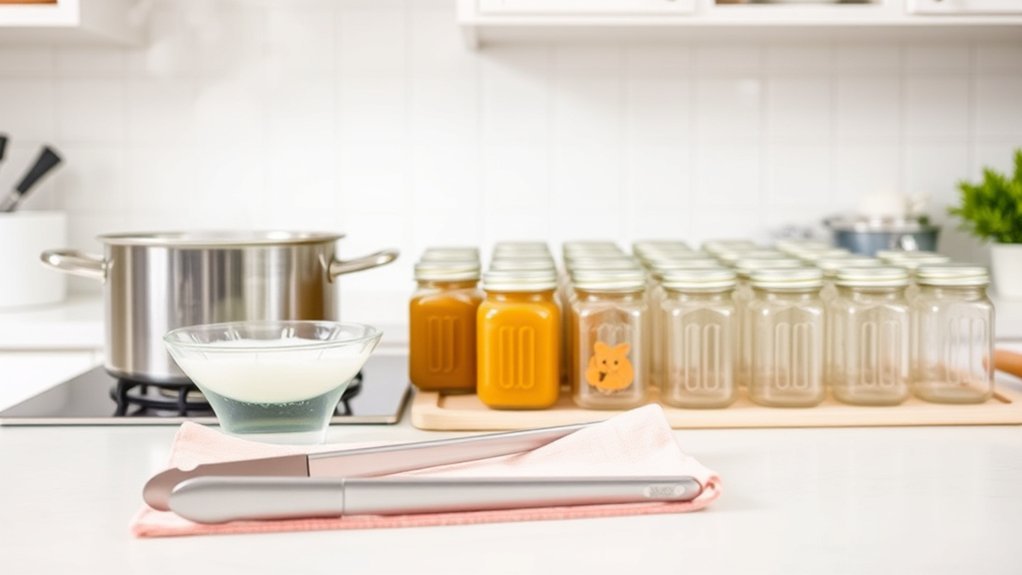
Safe handling helps control bacterial growth that could spoil food or convert nitrate into nitrite. Use clean hands, utensils, preparation surfaces, containers, and safe water.
- Wash the produce. Rinse vegetables under clean running water. Remove soil, bruised areas, and spoiled portions.
- Cook until tender. Steam, roast, or boil the vegetable until it can be safely mashed or puréed. Cooking may change nitrate levels, but it should not be treated as a guaranteed nitrate-removal method.
- Use safe liquid. Thin the purée with breast milk, properly prepared formula, or water confirmed safe for infant use.
- Serve a separate portion. Place only the amount needed for the feeding in the baby’s bowl.
- Cool extra food promptly. Divide a large batch into shallow, clean containers so it cools quickly.
- Label the container. Write the food and preparation date on each portion.
- Store it safely. Follow the FoodSafety.gov guidance for homemade baby food: refrigerate it for no more than 1 to 2 days or freeze it for 1 to 2 months.
- Reheat only what you need. Stir well and test the temperature before feeding.
Discard food left at room temperature for more than two hours, or more than one hour when the surrounding temperature is above 90°F. Do not save food from the baby’s bowl after feeding because saliva can introduce bacteria.
Do not refreeze food that has been fully thawed and warmed. When unsure about the storage history, discard the food.
Are Commercial Baby Foods Safe?
Commercial baby foods sold in the United States are subject to federal food-safety requirements. Manufacturers are responsible for identifying and controlling chemical, microbial, and physical hazards, and the FDA can act when a product is unsafe.
However, there is no useful nitrate number on most baby-food labels. Naturally occurring nitrate is not normally declared in the Nutrition Facts panel or ingredient list, and there is no general consumer-label method for identifying which jar contains the most nitrate.
When selecting commercial baby food:
- Choose a texture and age range appropriate for your baby.
- Check that the seal and packaging are intact.
- Follow opening, refrigeration, and disposal instructions.
- Do not buy bulging, leaking, cracked, or damaged containers.
- Check current FDA recall notices when a product is the subject of a safety alert.
- Use a clean spoon and avoid feeding directly from a container you plan to save.
Commercial baby food can be a safe and convenient option, but it should still be handled according to the package directions.
Symptoms That Need Emergency Care
Methemoglobinemia reduces the blood’s ability to deliver oxygen. Symptoms may appear suddenly and can be difficult to judge by appearance alone, especially across different skin tones.
Warning: Call emergency services immediately if a baby develops blue, gray, or unusually pale lips or skin; trouble breathing; marked weakness; unusual sleepiness; confusion; collapse; or a rapid heartbeat after consuming food, formula, or water that may contain excessive nitrate or nitrite. Do not wait for a home test or try to treat the condition yourself.
Vomiting, diarrhea, dehydration, or infection may also increase an infant’s vulnerability. Tell emergency clinicians about the baby’s age, symptoms, formula type, water source, recent foods, medications, and any available well-water results.
Safe Feeding Practices With Nitrates
- Begin complementary foods at about 6 months when your baby is developmentally ready.
- Offer varied vegetables rather than relying heavily on one purée.
- Use only safe, correctly measured water to prepare formula.
- Test private well water for nitrate at least annually.
- Do not boil water as a nitrate treatment.
- Use a certified laboratory and confirm how the nitrate result is reported.
- Cool and store homemade baby food promptly.
- Discard food contaminated by the baby’s saliva.
- Follow your pediatrician’s advice for premature or medically fragile infants.
Frequently Asked Questions
Can nitrates affect older children or adults?
Very high nitrate or nitrite exposure can cause methemoglobinemia in people of any age, but infants younger than 6 months are more vulnerable. Nitrate naturally present in a varied vegetable-rich diet is not usually a concern for healthy older children or adults. Anyone with blue or gray skin, breathing trouble, collapse, or severe weakness needs emergency care.
What symptoms indicate a possible nitrate-related problem in an infant?
Warning signs include blue, gray, or unusually pale lips or skin; difficulty breathing; rapid heartbeat; unusual sleepiness; weakness; confusion; or collapse. Seek emergency medical care immediately rather than waiting to see whether the symptoms improve.
Are there vegetables that are safer for homemade baby food?
A healthy baby who begins solids at about 6 months can generally eat a varied selection of properly prepared fruits and vegetables. Nitrate concentrations vary too much to classify every carrot, sweet potato, pea, or leafy green as consistently high or low. Variety, safe water, clean preparation, prompt cooling, and proper storage are more practical safeguards.
How can I identify commercial baby foods with high nitrates?
You generally cannot determine the naturally occurring nitrate concentration from the label because manufacturers do not normally list it. Choose age-appropriate products from reputable manufacturers, inspect the packaging, follow storage directions, and check FDA recall notices when a product is under investigation.
Do cooking methods reduce nitrate levels in vegetables?
Boiling vegetables may move some nitrate into the cooking water, but the amount varies and cooking is not a dependable nitrate-control method. Steaming may retain more water-soluble compounds than boiling. Most importantly, boiling nitrate-contaminated drinking water does not make it safe and may concentrate the nitrate.
Can I use private well water to mix infant formula?
Use private well water only after a state-certified laboratory confirms that it meets nitrate and microbiological safety requirements. Test at least annually and after flooding, repairs, or major changes. When results are high, unknown, or questionable, follow local health advice and use a safe alternative or ready-to-feed formula.
Does freezing homemade baby food remove nitrates?
No. Freezing slows microbial growth and makes batch storage more convenient, but it does not guarantee nitrate removal. Cool the food promptly, freeze it in clean portions, label the date, and use homemade baby food within 1 to 2 months for best quality and safety.
Conclusion
Nitrates are a normal part of many vegetables, and healthy babies beginning complementary foods at about 6 months do not usually need to avoid nutritious produce. The most important preventive step is making sure that water used for infant formula and food is safe.
Test private wells every year, confirm the laboratory’s reporting units, and never boil water in an attempt to remove nitrate. Prepare homemade baby food with clean equipment, cool it promptly, store it for the recommended time, and discard portions contaminated by saliva. Seek emergency help immediately if a baby develops blue or gray coloring, breathing trouble, severe weakness, or unusual sleepiness.
Sources
- U.S. Environmental Protection Agency: National Primary Drinking Water Regulations — federal nitrate and nitrite limits and infant health risks.
- U.S. Environmental Protection Agency: Private Wells and Drinking Water Safety and Infants — guidance on well water used for infant formula and food.
- Centers for Disease Control and Prevention: Guidelines for Testing Well Water — annual testing and state-certified laboratory guidance.
- Centers for Disease Control and Prevention: Infant Formula Preparation and Storage — safe water, formula mixing, and ready-to-feed options.
- Centers for Disease Control and Prevention: When, What, and How to Introduce Solid Foods — current timing for complementary foods.
- FoodSafety.gov: Food Safety for Children Under Five — refrigerator and freezer storage guidance for homemade baby food.