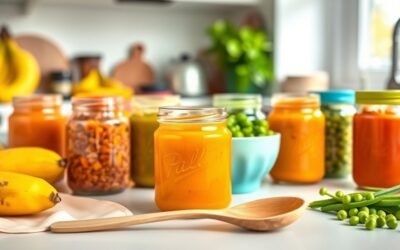


Portion sizes are vital for your baby’s health and help them learn hunger cues. For babies aged 6 to 12 months, start with 1-2 tablespoons of solids and gradually increase as their appetite grows. Measure accurately using tablespoons and observe their reactions to determine appropriate portions. Pay attention to fullness cues, like turning their head or playing with food. If you want to know more about essential sizes and meal ideas, keep exploring!
Key Takeaways
- For 6-8 months, offer 1-2 tablespoons of solids once daily, alongside 18-40 oz of breast milk/formula.
- At 8 months, provide two solid meals daily with 18-32 oz of breast milk/formula.
- From 9-12 months, serve three meals and 2-3 snacks daily, maintaining 18-32 oz of milk intake.
- Recommended portion sizes include 4-6 tablespoons of grains and 2-4 tablespoons of vegetables.
- Measure portions using standard tablespoons, adjusting based on the baby’s appetite and fullness cues.
Why Portion Sizes Are Important for Your Baby

When it comes to feeding your baby, understanding portion sizes is crucial for their health and development. Proper portion control helps your little one learn to recognize hunger and fullness cues, which is important as they shift to solid foods.
By around 8 months, babies typically enjoy two solid meals a day, expanding to three meals and snacks by 12 months. Starting with 1 to 2 tablespoons of food allows for gradual increases as their appetite grows.
Monitoring these portions not only prevents overfeeding or underfeeding but also introduces a variety of textures and flavors. Establishing appropriate feeding routines with age-appropriate portions fosters healthy eating habits that can last a lifetime, empowering your baby to develop a positive relationship with food.
Essential Portion Sizes for Babies Aged 6 to 12 Months
When your baby reaches 6 to 12 months, it’s essential to establish appropriate portion sizes and meal frequencies.
Aim for 2 to 3 meals and 1 to 2 snacks daily, starting with 1 to 2 tablespoons of solid food and gradually increasing as their appetite grows.
Always watch for signs of fullness to tailor portions to your baby’s individual needs.
Recommended Food Amounts
At 6 to 12 months, your baby’s nutritional needs evolve considerably, making it crucial to understand recommended food amounts. Focus on food variety and establish feeding routines to support your baby’s growth.
| Age | Recommended Food Amounts |
|---|---|
| 6 – 8 months | 18-40 oz breast milk/formula; 1-2 tbsp solids once daily |
| 8 months | 18-32 oz breast milk/formula; 2 meals of solids daily |
| 9 – 12 months | 18-32 oz breast milk/formula; 3 meals & 2-3 snacks daily |
| Grains | 4-6 tbsp |
| Vegetables | 2-4 tbsp |
As you introduce textured foods, monitor your baby’s hunger and fullness cues, adjusting portion sizes as needed. This approach guarantees balanced meals while embracing your baby’s growing appetite.
Meal Frequency Guidelines
As your baby shifts from infancy to early toddlerhood, understanding meal frequency and portion sizes becomes essential for their growth and development.
By 6 to 8 months, you should aim for 2 solid food meals a day, introducing a variety of proteins, vegetables, fruits, and grains, while maintaining daily breast milk or formula intake of 18 to 40 ounces.
At 8 to 12 months, increase to 3 meals and 1 to 2 snacks, keeping milk intake between 18 to 32 ounces.
Start solid food portions at 1 to 2 tablespoons, gradually increasing as your baby shows readiness.
Aligning your baby’s meal timing with family meals not only fosters healthy eating habits but also encourages food exploration and connection.
Signs of Fullness
Understanding the signs of fullness is essential for you as your baby navigates the shift to solid foods between 6 to 12 months.
Pay attention to your baby’s fullness cues, which can include turning their head away from food, refusing to open their mouth, leaning back in their chair, or playing with utensils instead of eating. These behaviors signal that they may have had enough.
By 8 months, your baby typically enjoys two solid meals daily, and by 12 months, three meals plus snacks.
Individual hunger and fullness cues vary, so stay attuned to your baby’s unique eating habits.
Introducing one new food at a time can help you track their preferences while fostering healthy eating habits.
How to Measure Baby Food Portion Sizes Accurately
To measure baby food portions accurately, you’ll need measuring spoons or a kitchen scale for consistency.
Start with recommended portion sizes of 1 to 2 tablespoons for babies aged 6 to 12 months and adjust based on their appetite.
Using child-sized dishes can also help you visually gauge appropriate portions and promote self-serving.
Measuring Tools Needed
Accurately measuring baby food portion sizes is essential for ensuring your little one gets the right amount of nutrition. To do this effectively, you’ll need a few key measuring tools.
Measuring spoons or cups are perfect for serving 1 to 2 teaspoons for your 4- to 6-month-old, gradually increasing to 1 to 2 tablespoons as they grow. A kitchen scale is invaluable for weighing solid foods, helping you align portions with recommendations for babies aged 6 to 12 months.
Using small, child-sized bowls helps control portions and makes mealtime less overwhelming. When introducing new foods, measure single portions to monitor reactions and allergies, and track total daily intake to adjust based on your baby’s appetite and cues.
Portion Size Guidelines
When it comes to measuring portion sizes for baby food, following specific guidelines can help guarantee your little one receives the right nutrition at each stage of their development.
Here are some key points to take into account:
- For 6 to 8 months, start with 1 to 2 tablespoons of solid food once daily.
- By 8 to 12 months, aim for 2 to 3 meals, increasing to 3 to 4 tablespoons per meal.
- Use standard utensils like teaspoons and tablespoons for consistency.
- Pay attention to your baby’s hunger and fullness cues, allowing for self-regulation.
- Adjust portion size variations based on your baby’s unique growth patterns and dietary needs.
Signs Your Baby Is Full: Listening to Their Cues
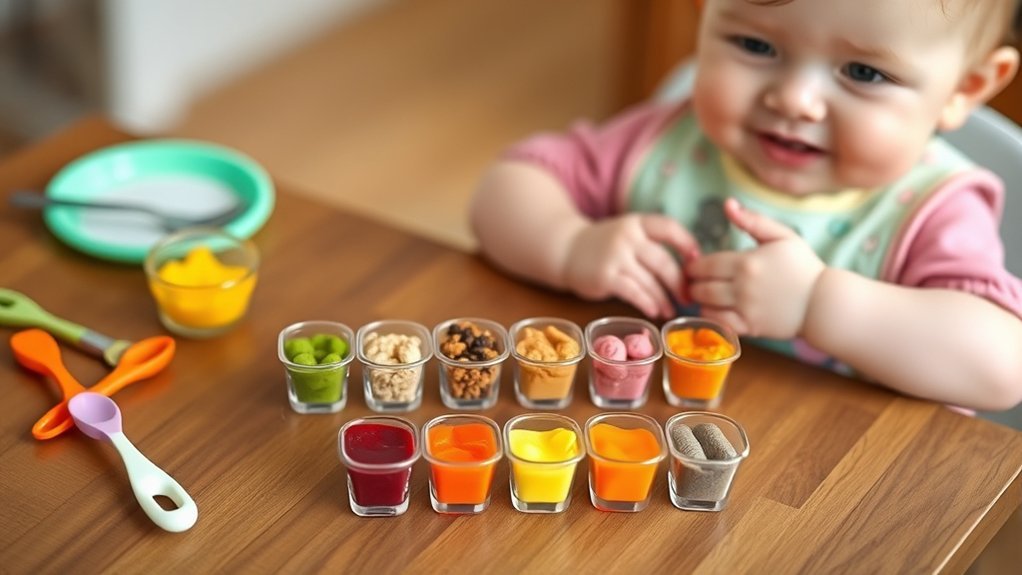
How can you tell when your baby is full? Pay attention to specific fullness indicators during baby feeding.
If your little one turns their head away from food or refuses to open their mouth for more, it’s a clear sign they’ve had enough. Leaning back in their chair or playing with utensils instead of eating are also cues to note.
Respecting these signals is essential to avoid overfeeding and helps create a positive feeding experience. As your baby grows, these cues may become more pronounced, so stay observant.
Responding appropriately to their fullness cues fosters self-regulation and can promote a healthy, lifelong relationship with food and eating.
How to Encourage Healthy Eating Habits
To foster healthy eating habits in your baby, it’s important to create a supportive environment that encourages exploration and self-regulation.
Here are some strategies to promote healthy food exploration and positive mealtime experiences:
- Allow your baby to respond to their hunger and fullness cues.
- Introduce a variety of textures and flavors, including proteins, veggies, fruits, and grains.
- Create family meals to foster a communal eating atmosphere.
- Avoid pressure or bribing, which can lead to food aversions.
- Encourage self-feeding with soft, manageable pieces to build fine motor skills.
Sample Meal Ideas for Babies Aged 6 to 12 Months
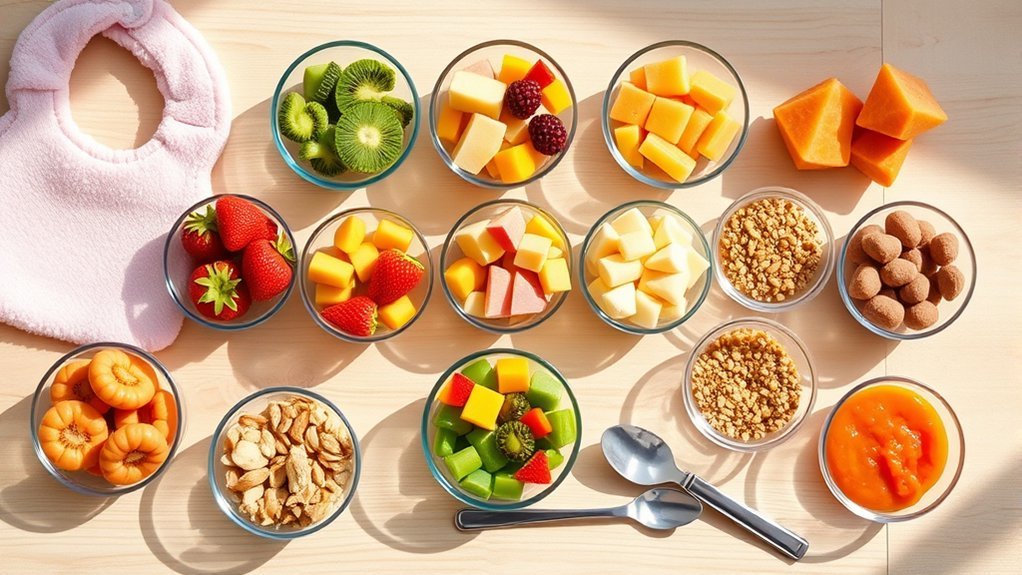
At 6 to 12 months, introducing a variety of foods can help your baby develop a taste for different flavors and textures.
For babies aged 6 to 9 months, try soft fruits like mashed bananas, pureed sweet potatoes, or iron-fortified cereals, starting with 1 to 2 tablespoons each.
As they grow, meals for 9 to 12 months can include chopped peaches, finely minced chicken, or soft oatmeal, increasing portions to 2 to 3 tablespoons.
Offer 3 meals and 1 to 2 nutritious snacks daily, aligning mealtimes with family for shared experiences.
Remember to introduce new baby food recipes gradually, allowing 3 to 5 days between foods to monitor for allergies and adjust portion sizes based on your baby’s hunger cues.
Moving From Purees to Table Foods: Key Considerations
As your baby becomes accustomed to a variety of flavors and textures, moving from purees to table foods can be an exciting next step.
Here are key considerations to keep in mind:
Key considerations include starting with soft foods, monitoring cues, and introducing new items gradually.
- Start with soft, easily mashable foods like ripe bananas or cooked sweet potatoes.
- Aim for bite-sized pieces to guarantee they’re manageable and safe.
- Monitor your baby’s hunger and fullness cues to encourage self-regulation.
- Introduce new foods one at a time, waiting three to five days to check for allergies.
- Gradually increase meal sizes to 2 to 3 tablespoons as their appetite grows.
Frequently Asked Questions
How Do I Know if My Baby Is Ready for Solids?
You’ll know your baby’s ready for solids when they can sit up, show interest in food, and have good head control. Look for signs like reaching for your food or opening their mouth when offered.
Can I Mix Different Foods Together for My Baby?
Absolutely, you can mix different foods for your baby! Flavor mixing helps introduce new tastes and textures, making meals more enjoyable. Just make certain that the combinations are safe and appropriate for their developmental stage.
What Foods Should I Avoid Giving My Baby?
You’ll definitely want to avoid choking hazards like whole grapes and nuts, plus allergenic foods such as egg whites and shellfish. Stick to safe options and introduce new foods slowly for your baby’s well-being.
How Often Should I Introduce New Foods?
You should introduce new foods gradually, ideally every three to five days. This timing recommendation helps you monitor for allergies and guarantees your baby’s digestive system adapts well to each new food introduction.
Is It Safe to Give My Baby Finger Foods?
Yes, it’s safe to give your baby finger foods when they show signs of readiness. Verify they’re soft enough for your baby’s chewing skills, and always supervise to maintain finger food safety during mealtime.
Conclusion
Incorporating appropriate portion sizes for your baby is like laying a strong foundation for a house; it sets the stage for healthy growth and development. By understanding essential portion sizes and measuring accurately, you’ll nurture their appetite and foster positive eating habits. Pay attention to their cues, and don’t hesitate to introduce new foods as they shift from purees to table foods. With patience and creativity, you’ll guide your little one toward a lifetime of healthy eating.