

Baby food portion sizes are starting points, not strict targets. Most babies begin solids at about 6 months when they show developmental readiness, then slowly eat more as their skills and appetite grow. Offer small amounts, keep breast milk or iron-fortified formula as the main source of nutrition through 12 months, and let your baby’s hunger and fullness cues guide the final amount.
Quick Answer
Start with 1 to 2 tablespoons of one or two foods at a meal when your baby is ready for solids, usually around 6 months. Offer more only when they show hunger. Gradually build toward regular meals while breast milk or iron-fortified formula remains their main nutrition through 12 months.
Key Takeaways
- Begin with about 1 to 2 tablespoons per food and serve more only if your baby remains interested.
- Breast milk or iron-fortified infant formula remains the main source of nutrition from 6 to 12 months.
- Increase meal frequency, portion size, and texture gradually instead of following one rigid chart.
- Include an iron-rich food often, such as meat, beans, egg, tofu, or iron-fortified infant cereal.
- Stop feeding when your baby closes their mouth, turns away, pushes food away, or otherwise signals fullness.
Note: This guide is for generally healthy, full-term babies. A premature baby or a baby with poor growth, swallowing problems, food allergies, or another medical condition may need an individualized feeding plan from a pediatrician or registered dietitian.
Why Portion Sizes Are Important for Your Baby

Small portions make it easier for your baby to explore food without feeling overwhelmed. They also reduce waste and give you a clear way to offer more when your baby is still hungry.
The goal is not to make your baby finish a measured amount. It is to practice responsive feeding: you choose what safe foods to offer and when to offer them, while your baby decides whether to eat and how much. The CDC advises caregivers to begin with 1 to 2 tablespoons and watch for hunger and fullness cues rather than requiring a clean plate.
As solid foods become more familiar, portions usually grow, textures become more varied, and meals begin to resemble family meals. This gradual process supports chewing skills, self-feeding, food acceptance, and a positive relationship with eating.

Power your essentials anywhere with a 999Wh pure sine wave power station delivering up to 1000W continuous with 2000W surge. It supports fast charging via USB-C PD 60W and USB-A QC 18W, plus simultaneous output for multiple devices through AC, USB, wireless, and car/DC ports. Recharge using AC, car, or solar with a built-in MPPT controller and dual cooling fans, while the upgraded battery management system protects against surges, short circuits, and overheating.

Effortless Meal Preparation: Streamline your baby's nutrition with our 3 Pack Silicone Freezer Tray. Batch prepare baby food, purees, breastmilk, and more for efficient and convenient meal planning.

Effortless Meal Preparation: Streamline your baby's nutrition with our 3 Pack Silicone Freezer Tray. Batch prepare baby food, purees, breastmilk, and more for efficient and convenient meal planning.
Before You Measure Portions: Readiness and Milk Come First
Signs Your Baby Is Ready for Solid Foods
Most babies are ready for solid foods at about 6 months. The CDC recommends looking for developmental readiness rather than using age alone. Your baby should be able to:
- Sit upright alone or with support and keep steady head and neck control.
- Open their mouth when food is offered.
- Bring objects toward their mouth and try to grasp food or toys.
- Move food from the front of the tongue toward the back and swallow it instead of pushing it out.
Do not start solids before 4 months. If your baby is near 6 months but cannot sit with support or control their head, ask their pediatrician before beginning.
Breast Milk or Formula Remains the Main Food
The Dietary Guidelines for Americans, 2025–2030 state that breast milk or infant formula remains the main source of nutrition through 12 months while complementary foods are introduced. Continue breastfeeding on cue or offer properly prepared iron-fortified formula according to your baby’s hunger and fullness signals.
A universal ounce range does not fit every baby, especially because direct breastfeeding is not normally measured in ounces. Formula-fed babies often drink less formula as solid food intake rises. If a formula-fed baby suddenly takes much more or much less than usual, or is not growing as expected, discuss it with their pediatrician rather than changing portions on your own.
Essential Portion Sizes for Babies Aged 6 to 12 Months
The chart below gives practical starting portions for healthy babies. It is normal for a baby to eat more at one meal and less at the next. Offer a small serving first, then refill the bowl or plate when your baby shows continued hunger.
| Age and Stage | Starting Portion | Meal Rhythm | Texture |
|---|---|---|---|
| About 6 to 8 months | Begin with 1 to 2 tablespoons of each food. Add another spoonful when hunger cues continue. | Start with one calm practice meal, then move toward 2 to 3 solid-food opportunities as interest and skill grow, alongside milk feeds. | Smooth puree, mashed food, or very soft food that is easy to swallow. |
| About 8 to 9 months | Offer about 2 to 4 tablespoons of each food when wanted. Some meals will be smaller. | Usually 2 to 3 meals or food opportunities, plus regular breast milk or formula feeds. | Thicker mash, soft lumps, shredded foods, and graspable soft finger foods. |
| About 9 to 12 months | Start with 2 to 4 tablespoons of each item and offer seconds. A hungry baby may eat more than this. | Work toward 3 meals. Add 1 or 2 small snacks only when your baby is hungry between meals and milk feeds. | Finely chopped, minced, shredded, or soft bite-size family foods. |
The exact amount depends on growth, activity, milk intake, illness, teething, and the food’s energy density. The CDC recommends offering something to eat or drink every 2 to 3 hours as babies move toward a regular meal-and-snack routine, but milk feeds still count in that daily pattern.
Recommended Food Amounts by Food Type
There is no need to hit a fixed number of tablespoons from every food group each day. A simple meal can include one iron-rich food plus one or two foods from other groups:
- Iron-rich food: Start with 1 to 2 tablespoons of finely minced meat, mashed beans or lentils, tofu, egg, or iron-fortified infant cereal.
- Vegetable or fruit: Start with 1 to 2 tablespoons of mashed, grated, or safely cut produce.
- Grain or starchy food: Start with 1 to 2 tablespoons of oatmeal, soft pasta, rice, potato, or another soft grain or starch.
- Dairy food: Offer a small amount of pasteurized plain full-fat yogurt or soft cheese if tolerated. Cow’s milk is acceptable in food, but not as the main drink before 12 months.
- Healthy fat: Small amounts of avocado, olive oil mixed into food, or smooth nut or seed butter thinned to a safe consistency can add energy and variety.
Meal Frequency Guidelines
Meal frequency should increase gradually. A new eater may begin with one short practice meal. As skills improve, offer food at two and then three predictable times each day. By late infancy, many babies eat breakfast, lunch, and dinner with the family and may need a small snack between meals.
Avoid constant grazing. A predictable rhythm of milk feeds, meals, and optional snacks helps your baby arrive at the table hungry enough to eat while still allowing them to stop when full.
Hunger and Fullness Cues
Your baby may be hungry when they reach for food, lean toward the spoon, open their mouth, become excited at the sight of food, or use sounds and gestures to ask for more. Your baby may be full when they close their mouth, turn away, push food away, slow down, lean back, or lose interest in eating.
Playing with food can be part of normal learning, so look at the full pattern rather than treating one behavior as proof. When several fullness cues appear, end the meal without pressure.
How to Measure Baby Food Portion Sizes Accurately
Measuring can help you learn what a small infant serving looks like, but it should not become a rule your baby must meet. Use measurements to prepare an initial portion, then respond to your baby’s cues.
Measuring Tools Needed
Standard measuring spoons and cups are enough. A child-size bowl or divided plate can make small servings easier to see. A kitchen scale is optional and usually unnecessary unless a clinician has asked you to track exact intake.
| 1 tablespoon | 3 teaspoons |
| 2 tablespoons | 1 fluid ounce or 1/8 cup |
| 4 tablespoons | 1/4 cup |
| 8 tablespoons | 1/2 cup |
A Simple Portioning Method
- Place 1 to 2 tablespoons of each food in the bowl or on the tray.
- Offer the food slowly and allow time for your baby to swallow.
- When the serving is gone, pause and look for hunger cues.
- Add another 1 to 2 tablespoons if your baby reaches, opens their mouth, or signals for more.
- Stop when your baby closes their mouth, turns away, pushes food away, or becomes upset.
Pro Tip: Serve a little less than you expect your baby to eat and keep extra food in a separate clean container. You can add seconds without contaminating the unused portion with saliva from the spoon.
What to Include in Baby Food Portions
Variety matters more than perfect measuring. Across the day, offer foods from several groups and make room for iron- and zinc-rich choices. Good options include meat, poultry, fish lower in mercury, egg, beans, lentils, tofu, nut or seed butters prepared safely, iron-fortified infant cereal, vegetables, fruits, whole grains, plain full-fat yogurt, and cheese.
Breastfed babies and babies who drink less than 32 ounces of formula per day may need 400 IU of vitamin D daily under current federal guidance. Some babies also need iron supplementation. Ask your pediatrician before starting or changing a supplement.
Signs Your Baby Is Full: Listening to Their Cues
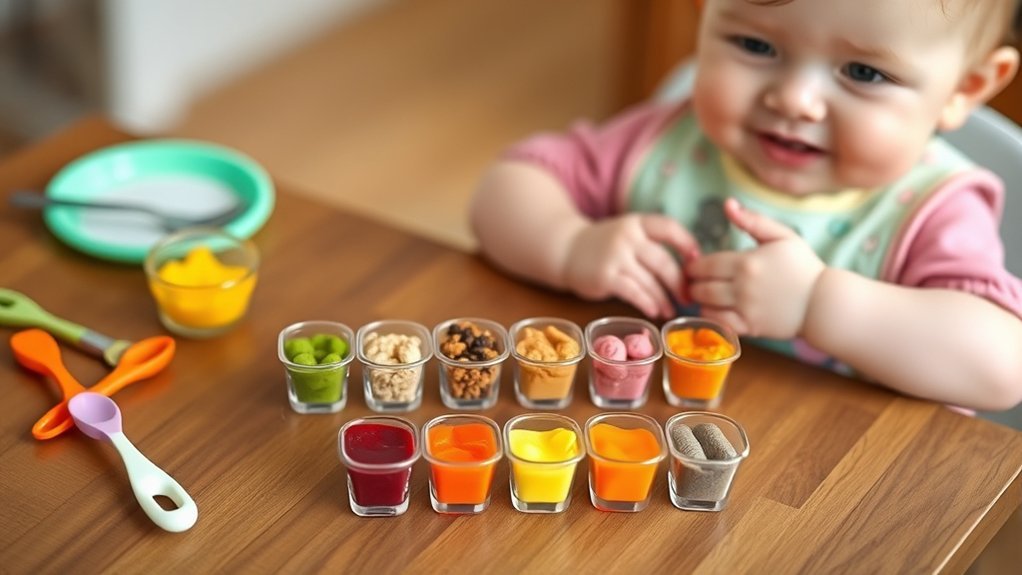
The CDC lists closing the mouth, turning the head away, and pushing food away as common fullness signals in babies and toddlers. Your baby may also slow down, lean back, stop reaching for food, or become more interested in the tray than the meal.
Respecting these signals helps your baby practice self-regulation. Do not use distraction, bribing, or repeated spooning to make them finish. If a meal ends after only a few bites, continue the usual milk and meal routine and try again later.
How to Encourage Healthy Eating Habits
- Eat together when practical: Family meals give your baby a chance to watch how others eat.
- Offer variety without pressure: A food may need to appear many times before your baby accepts it.
- Advance textures: Move from smooth purees to mashed, lumpy, and soft finger foods as skills develop.
- Encourage self-feeding: Let your baby touch safe food, hold a preloaded spoon, and practice drinking from an open or straw cup.
- Keep meals calm: Seat your baby upright, reduce distractions, and allow enough time to chew and swallow.
- Avoid using food as a reward: This can interfere with attention to hunger and fullness cues.
Introducing New Foods and Common Allergens
At first, the CDC advises offering one single-ingredient food at a time and waiting 3 to 5 days before another new food so reactions are easier to identify. Once several foods are tolerated, you can combine familiar ingredients.
Do not routinely avoid egg, peanut, dairy, wheat, sesame, fish, or shellfish simply because they are common allergens. Current federal guidance recommends introducing potentially allergenic foods with other complementary foods at about 6 months in safe forms. Examples include fully cooked egg, smooth peanut butter thinned with water or milk, plain yogurt, and finely flaked low-mercury fish.
If your baby has severe eczema, an existing egg allergy, or a previous food reaction, ask their pediatrician how and when to introduce peanut and other allergens. After an allergenic food is tolerated, it can become part of your baby’s varied diet unless their clinician advises otherwise.
Warning: Stop feeding and seek urgent medical help if a new food is followed by trouble breathing, swelling of the lips or tongue, sudden weakness, repeated vomiting, or rapidly spreading hives. Mild symptoms should also be reported to your baby’s clinician before the food is offered again.
Sample Meal Ideas for Babies Aged 6 to 12 Months
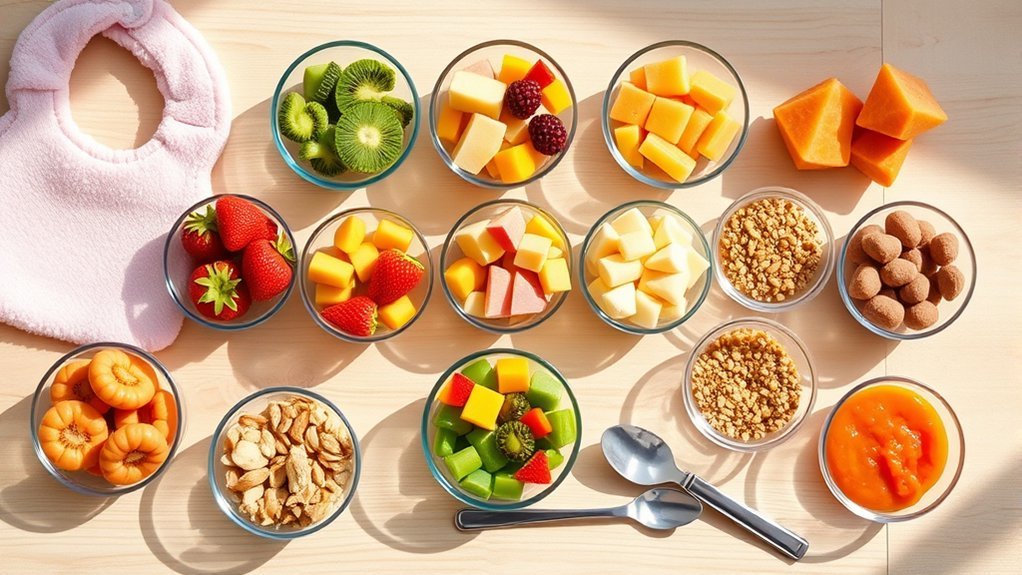
These examples show how to combine food groups. Begin with small servings and offer more when your baby remains hungry.
About 6 to 8 Months
- 1 to 2 tablespoons of iron-fortified oat cereal mixed to a smooth texture, plus mashed pear.
- Pureed lentils with mashed sweet potato and a small spoonful of plain full-fat yogurt.
- Finely pureed chicken with soft mashed avocado.
About 8 to 10 Months
- Soft scrambled egg pieces, mashed avocado, and ripe banana.
- Shredded chicken, mashed beans, and very soft broccoli florets.
- Thick oatmeal with smooth peanut butter thinned and mixed in, plus mashed berries.
About 10 to 12 Months
- Finely chopped meatball, soft pasta, and peas gently flattened with a fork.
- Toast strips spread with a thin layer of smooth nut or seed butter, plus soft fruit.
- Plain full-fat yogurt with soft diced peach and a small serving of oatmeal.
Offer small sips of plain water in a cup with meals once solids begin, while breast milk or formula remains the main drink.
Moving From Purees to Table Foods: Key Considerations
Texture should change as your baby’s oral and hand skills improve. Smooth puree can be useful at the start, but babies also need chances to practice thicker, lumpier, and graspable foods.
A safe portion is not only the right amount; it is also the right shape, softness, and texture for your baby’s current eating skills.
- Cook foods until they are soft enough to mash easily with a fork.
- Remove bones, pits, tough skins, and hard seeds.
- Shred meat and poultry finely or offer very soft strips appropriate for your baby’s grasp.
- Cut round foods such as grapes and cherry tomatoes into small lengthwise pieces.
- Thin nut or seed butter; never offer a thick spoonful.
- Keep your baby seated upright and supervise every bite.
Gagging and choking are not the same. Review the CDC choking-prevention guidance, learn infant first aid, and never leave a baby alone with food.
Foods and Drinks to Avoid Before 12 Months
The CDC recommends avoiding or limiting several foods and drinks during infancy:
- Honey: Do not give honey before 12 months because of infant botulism risk.
- Cow’s milk or plant drinks as the main beverage: Wait until 12 months. Pasteurized yogurt and cheese can be offered earlier.
- Fruit or vegetable juice: Do not offer juice before 12 months; whole fruit is a better choice.
- Added sugars and heavily salted foods: Babies have little room for foods that displace nutrient-dense choices.
- Unpasteurized milk, juice, yogurt, or cheese: These can contain harmful bacteria.
- High-mercury fish: Avoid king mackerel, marlin, orange roughy, shark, swordfish, Gulf of Mexico tilefish, and bigeye tuna.
- Choking hazards: Avoid whole nuts, popcorn, hard raw produce, uncut grapes, round sausage slices, chunks of meat or cheese, and thick spoonfuls of nut butter.
When to Call Your Baby’s Health Care Professional
Ask for medical guidance when your baby regularly coughs, chokes, arches, or vomits during meals; refuses most textures; takes unusually long to eat; has fewer wet diapers; seems weak or unusually sleepy; loses weight; or is not following their expected growth pattern. Prompt help is also important after any suspected allergic reaction.
Frequently Asked Questions
How do I know if my baby is ready for solids?
Most babies are ready at about 6 months when they can sit upright with support, control their head and neck, open for food, bring objects to their mouth, and swallow food instead of pushing it out. Readiness matters more than reaching an exact birthday.
Can I mix different foods together for my baby?
Yes. Introduce single-ingredient foods at first so reactions are easier to identify. After your baby has tolerated the ingredients separately, combine them in safe textures, such as oatmeal with mashed fruit or lentils with sweet potato.
What foods should I avoid giving my baby?
Avoid honey, juice, unpasteurized foods, high-mercury fish, and cow’s milk as the main drink before 12 months. Also avoid hard, round, sticky, or tough choking hazards. Do not routinely avoid cooked egg, peanut, dairy, wheat, fish, or shellfish unless your baby’s clinician advises it.
How often should I introduce new foods?
At first, offer one new single-ingredient food and wait 3 to 5 days before another so you can watch for a reaction. Once several foods are tolerated, combinations are fine. Common allergens should be introduced around 6 months in safe forms rather than intentionally delayed.
Is it safe to give my baby finger foods?
Yes, when your baby can sit upright, reach for food, and bring it to their mouth. Choose foods that are soft enough to mash between your fingers, prepare them in a safe shape, and supervise continuously while your baby eats.
What if my baby wants more than the suggested portion?
Offer more in small refills when your baby continues to reach, open their mouth, or signal for food. The suggested tablespoons are starting amounts, not limits. Stop when fullness cues appear.
What if my baby eats very little at one meal?
Appetite can change with teething, sleep, illness, and recent milk intake. End the meal calmly and offer food again at the next planned time. Contact your pediatrician if low intake continues, wet diapers decrease, or growth is a concern.
Does my baby need a kitchen scale for food portions?
Usually not. Measuring spoons, cups, and a small bowl are enough to learn what starter portions look like. Use a scale only when a health professional asks you to track exact intake for a medical reason.
Conclusion
Baby food portions should grow with your baby, not according to a rigid quota. Start with 1 to 2 tablespoons, offer more when hunger cues continue, and stop when your baby signals fullness. Keep breast milk or iron-fortified formula central through 12 months, serve a variety of nutrient-dense foods in safe textures, and ask your baby’s clinician for help when feeding, growth, or allergy concerns arise.
Sources
- Dietary Guidelines for Americans, 2025–2030 — breastfeeding, formula, complementary foods, vitamin D, allergens, and nutrient-dense food guidance.
- CDC: How Much and How Often to Feed — starter portions and responsive meal routines.
- CDC: When, What, and How to Introduce Solid Foods — readiness, new-food timing, allergens, and texture preparation.
- CDC: Signs Your Child Is Hungry or Full — responsive feeding cues.
- CDC: Choking Hazards — safe food shape, size, texture, and supervision.
- CDC: Foods and Drinks to Avoid or Limit — honey, cow’s milk, juice, added sugar, sodium, unpasteurized foods, and mercury.