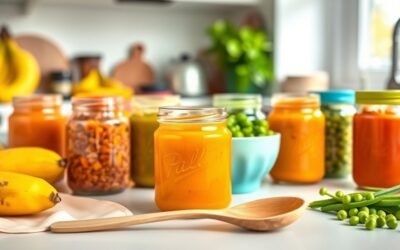

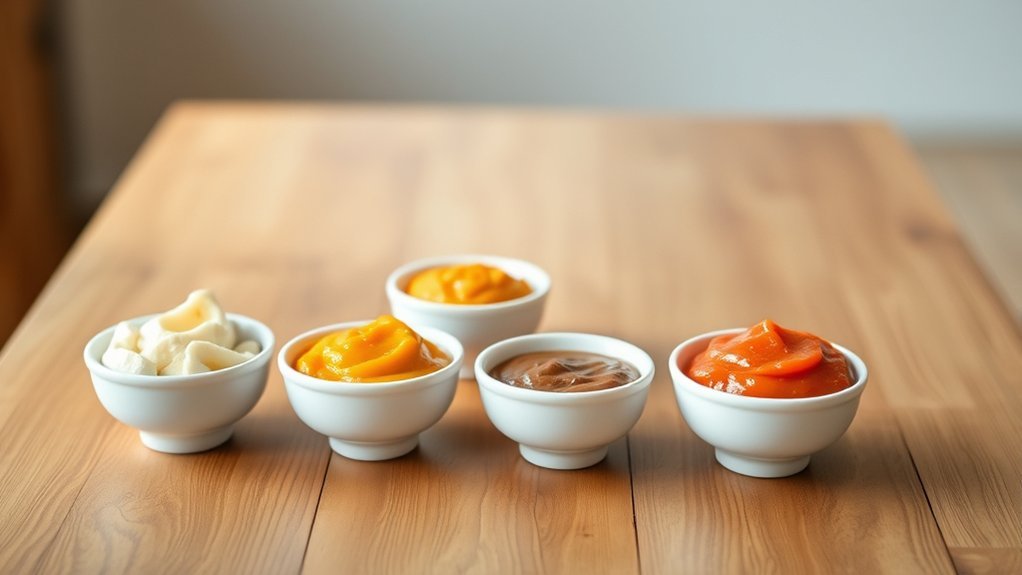
For baby food portion sizes by age, start with 1 to 2 teaspoons of single-ingredient purees for your 4 to 6-month-old. Gradually increase to 1 to 2 tablespoons as they show readiness. By 8 months, aim for two solid meals daily, and by 12 months, three meals. Guarantee a balanced mix of proteins, vegetables, fruits, and grains. Monitoring their hunger and fullness signals is key to healthy eating. Discover more about portions and nutritional balance for each stage.
Key Takeaways
- For 4-6 month-olds, start with 1-2 teaspoons of single-ingredient purees and gradually increase to 1-2 tablespoons.
- By 8 months, aim for two solid meals daily, increasing to three by 12 months.
- Introduce new foods one at a time, waiting three to five days to monitor reactions.
- Offer toddlers 1-4 tablespoons of various foods, including 1/4 to 1/2 cup of fruits and vegetables per meal.
- Maintain 18 to 32 ounces of breast milk or formula daily for infants, alongside solid foods as they grow.
Understanding Baby Food Portion Sizes: A Guide for Parents
As you start introducing solid foods to your baby, understanding appropriate portion sizes is essential for their development. Begin with 1 to 2 teaspoons of single-ingredient purees, gradually increasing to 1 to 2 tablespoons as your baby shows signs of fullness.
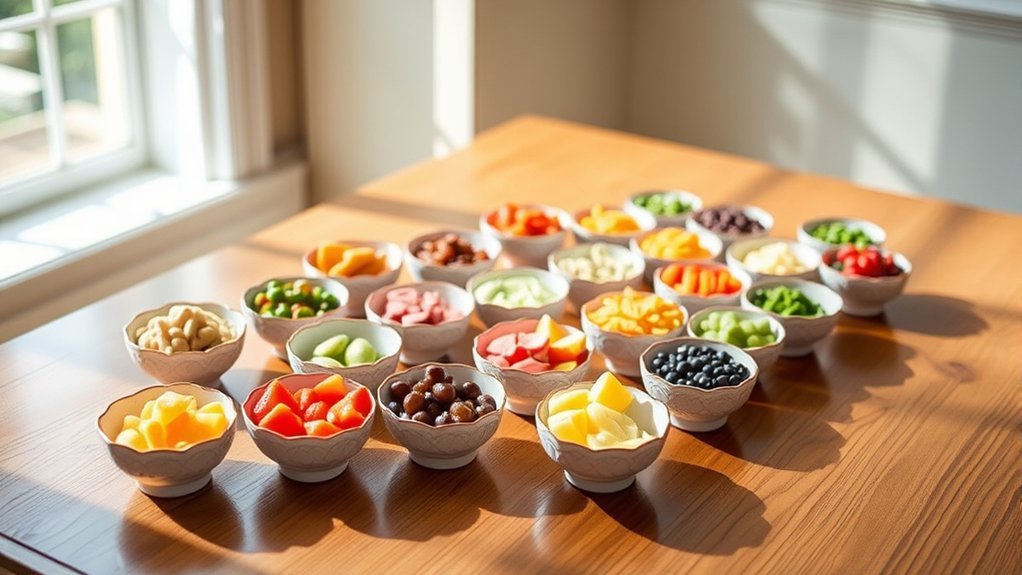
By 8 months, aim for two solid meals daily, mixing proteins, vegetables, fruits, and grains while introducing textures. This helps your little one explore diverse flavors and develop their palate.
By 8 months, introduce two daily meals with a variety of proteins, vegetables, fruits, and grains to enhance your baby’s palate.
At 8 to 12 months, consider adding a third meal and snacks, focusing on avoiding added sugars and scrutinizing Nutrition Facts labels.
Throughout this journey, be attentive to your baby’s hunger and fullness cues, adjusting portion sizes to support their unique growth and appetite changes.
Baby Food Portion Sizes for 4-6 Month-Olds: What to Expect?
When you’re ready to introduce solids to your 4- to 6-month-old, you’ll want to start with small portions of purees, typically 1 to 2 teaspoons. As your baby shows readiness, gradually increase to 1 to 2 tablespoons.
Here are some key points to keep in mind:
- Choose single-ingredient purees like pureed mango, banana, or sweet potatoes.
- Introduce one new food at a time.
- Wait three to five days between new food introductions for monitoring allergies.
- Watch for signs of fullness, like turning their head away or refusing to open their mouth.
- Remember, breast milk or formula is still the primary source of nutrition at this stage.
Enjoy this exciting time of first food introductions!
Transitioning to Solid Foods: Serving Sizes for 6-12 Month-Olds

Making the shift to solid foods for your 6- to 12-month-old is an exciting milestone, and understanding proper serving sizes is essential for their growth and development.
By around 8 months, your baby should be having two solid meals daily, gradually increasing to three meals and snacks by 12 months. Start with soupy consistency foods, and as you’re introducing textures, encourage your baby to chew by gradually increasing food density.
Aim for a balanced diet with proteins, vegetables, fruits, and grains. Remember, the recommended daily amount of formula or breast milk remains 18 to 32 ounces.
Keep an eye on your baby’s fullness cues and adjust portion sizes, as each baby has unique eating habits and needs.
Encouraging Healthy Eating: Portion Guidelines for Toddlers
Encouraging healthy eating habits in toddlers is essential for their development and can be achieved by understanding appropriate portion sizes. Here are some guidelines to help you promote mealtime routines:
- Offer 1 to 4 tablespoons of various foods based on your child’s appetite.
- Aim for 1/4 to 1/2 cup of fruits and vegetables at each meal.
- Include whole milk (16 to 24 ounces daily) until age 2 for essential fats.
- Serve grains about the size of your child’s fist, around 1/4 to 1/2 cup.
- Encourage self-serving with child-sized utensils to foster independence.
Recognizing Your Baby’s Hunger Signals: Tips for Monitoring Fullness

How can you tell if your baby is full? Look for specific fullness cues such as turning their head away from food, refusing to open their mouth, or leaning back in their chair.
When your baby starts playing with utensils or food instead of eating, it’s a clear sign they’re satisfied.
Start feeding with 1 to 2 teaspoons of single-ingredient puree for 4- to 6-month-olds, gradually increasing to 1 to 2 tablespoons as they show readiness.
By monitoring these cues, you foster healthy eating habits and support your baby’s self-regulation of food intake.
Following your baby’s fullness signals allows you to avoid overfeeding and encourages a positive relationship with food, enhancing your feeding strategies.
Frequently Asked Questions
How Do I Know if My Baby Is Ready for Solids?
You’ll know your baby’s ready for solids when they show readiness signs like sitting up, reaching for food, or showing interest in what you’re eating. Pay attention to these baby cues for a smooth shift.
Can I Mix Different Foods for My Baby?
Oh sure, let’s throw everything in a blender and call it gourmet! Actually, mixing different foods for your baby is great for flavor exploration. Just make certain they’re safe combinations and watch for any allergies.
What Are Some Allergenic Foods to Introduce Early?
You can safely introduce allergenic foods like peanuts, eggs, and dairy early, ideally around six months. Allergy testing can help determine sensitivities, but early introduction may reduce the risk of developing allergies. Always consult your pediatrician.
How Often Should I Feed My Baby Solids?
You should aim to feed your baby solid foods about two to three times a day, gradually introducing a feeding schedule that complements their milk intake. Listen to their cues, and adjust as needed for growth.
What Should I Do if My Baby Refuses to Eat?
If your baby refuses to eat, observe their hunger cues and try different feeding strategies, like offering new textures or flavors. Stay patient and relaxed; this encourages a positive relationship with food for your little one.
Conclusion
Ultimately, understanding baby food portion sizes helps you nurture your little one’s growth and development. As you introduce new flavors and textures, keep an eye on their hunger cues. Are they reaching for more or pushing food away? Trust your instincts and adapt to their needs. Remember, every baby is unique, so flexibility is key. By following these guidelines, you’re paving the way for healthy eating habits that can last a lifetime.