

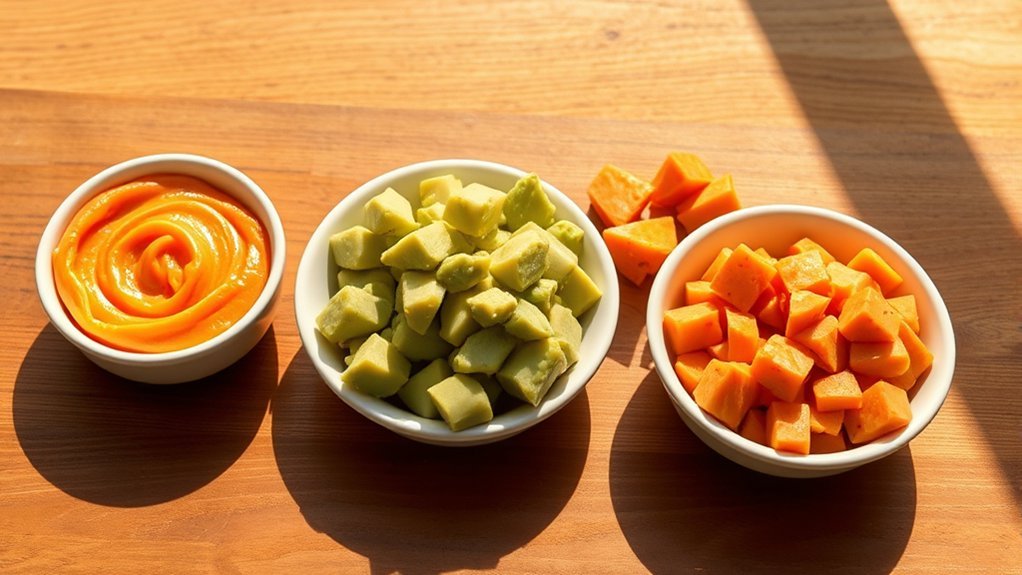
Understanding baby food texture progression is essential for your child’s safety and development. Start with smooth purees at 4-6 months, then gradually introduce mashed foods and chunkier textures by 6-12 months. Offer soft finger foods between 8-10 months as your baby learns to self-feed. By 10-12 months, provide bite-sized pieces. Always be mindful of choking hazards and create a positive mealtime environment. There’s so much more to explore about this exciting journey!
Key Takeaways
- Begin introducing smooth purees at 4-6 months, gradually increasing to 1-2 tablespoons, while focusing on identifying allergies.
- At 6-8 months, offer mashed or chunkier purees to encourage texture exploration and support self-feeding development.
- Introduce soft finger foods at 8-10 months to enhance chewing skills and promote fine motor development through interactive mealtime experiences.
- By 9-11 months, look for signs of readiness for bite-sized foods, encouraging practice with smaller pieces to improve coordination and manipulation.
- At 10-12 months, shift to bite-sized soft foods, combining familiar and new options to foster healthy eating habits and minimize choking risks.
Understanding Baby Food Texture Progression

As you begin introducing solid foods to your baby around 4-6 months, understanding the progression of food textures is essential for their development.
Starting with smooth purees, you’ll help identify any potential allergies while ensuring your baby gets used to new flavors.
Beginning with smooth purees can help detect allergies and introduce your baby to a world of new flavors.
As they reach 6-9 months, chunky purees and soft mashed foods come into play, helping develop important chewing and swallowing skills.
By 8-9 months, soft finger foods allow for baby-led weaning, encouraging exploration and self-feeding.
This variety not only enhances flavor exposure but also promotes autonomy in eating.
Gradually exposing your little one to diverse textures helps prevent picky eating down the road, fostering healthy dietary preferences that can last a lifetime.
Ideal Food Textures for 4 to 6 Months
Introducing solids to your baby between 4 to 6 months is an exciting milestone, and choosing the right food textures is crucial for their development. At this stage, focus on thin consistency purees that are smooth and free of lumps to help identify potential allergies.
Here are some ideal puree recipes to start with:
- Applesauce
- Mashed bananas
- Pureed carrots
- Pureed meats
Begin with small amounts (1-2 teaspoons) and gradually increase to 1-2 tablespoons as your baby becomes comfortable.
Remember, breast milk or iron-fortified infant formula should still be their primary nutrition source, with solids complementing the diet.
Create a pleasant feeding environment to enhance their eating experience and guarantee they enjoy this new adventure!
Introducing New Foods for 6 to 8 Months

At around 6 to 8 months, your baby’s ability to manage different textures improves greatly, making this an ideal time to introduce new foods.
Start with mashed or chunkier purees, gradually reducing blending time for smoother changes. This is a fantastic opportunity for texture exploration!
Consider offering mashed vegetables with lentils, scrambled eggs, and soft-cooked fruits like bananas and avocados. These food combinations can help your little one adjust to new sensations while keeping mealtime enjoyable.
Don’t forget to continue providing smooth purees alongside lumpier options to maintain comfort. Always supervise mealtimes, as gagging may happen while they learn to navigate these exciting new textures.
Embrace this phase—it’s a wonderful step toward self-feeding and independence!
Why Soft Finger Foods Matter for 8 to 10 Month-Olds
While your baby is exploring new flavors, soft finger foods play an important role in developing their chewing and swallowing skills. These foods not only support oral motor development but also encourage self-feeding and independence.
Soft finger foods are key for your baby’s chewing skills, promoting self-feeding and independence while exploring new flavors.
Here are some finger food benefits for your 8 to 10-month-old:
- Enhance fine motor skills with pincer grasp practice.
- Expose your baby to different textures and tastes, reducing picky eating later.
- Foster hand-eye coordination through interactive mealtime experiences.
- Provide exploration opportunities for newfound independence in feeding.
Introducing soft finger foods like cooked broccoli florets or mango spears can transform mealtime into an adventure, empowering your little one to discover and enjoy various flavors while mastering essential skills.
Recognizing Readiness for Smaller Pieces at 9 to 11 Months?
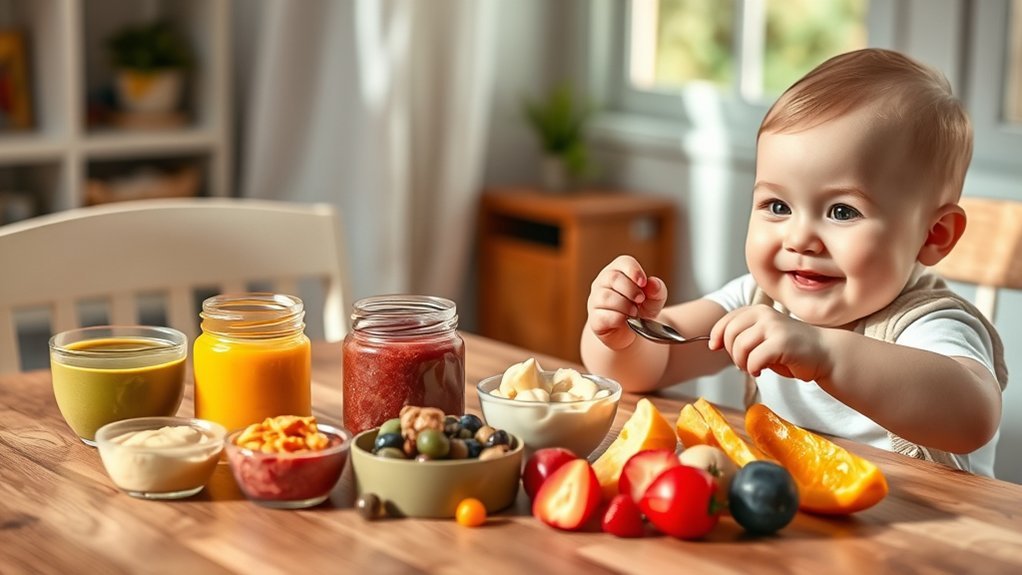
At 9 to 11 months, your baby may show readiness for smaller pieces of food as they develop the pincer grasp, allowing them to pick up bite-sized items easily.
You’ll notice signs like improved coordination and the ability to manipulate food, which are key indicators they’re ready for self-feeding.
Encouraging them to practice with these smaller pieces can enhance their chewing skills and foster independence at mealtime.
Signs of Readiness
As your baby approaches 9 to 11 months, you’ll likely notice some key signs that indicate they’re ready for smaller pieces of food.
These timing indicators are essential as you navigate this developmental milestone.
Look for the following cues:
- Reaching for Food: Your baby shows interest in grabbing food during mealtime.
- Ability to Chew: They can move food around their mouths and exhibit chewing motions.
- Pincer Grasp: By this age, they typically develop the pincer grasp, allowing them to pick up small pieces.
- Self-Feeding Interest: Your baby actively engages in trying to feed themselves.
Recognizing these signs will help you safely introduce bite-sized pieces, fostering their oral motor skills and reducing choking risks.
Encouraging Self-Feeding Skills
Encouraging your baby to self-feed can be an exciting journey, especially when you notice them showing signs of readiness for smaller pieces around 9 to 11 months.
By this age, they typically develop the pincer grasp, which allows them to pick up bite-sized pieces effectively. Offering smaller food pieces not only promotes self-feeding benefits but also enhances their chewing skills and helps them gain mealtime independence.
Look for signs like grasping and manipulating food to know when to introduce these pieces. Gradually increasing the variety of textures and sizes supports their oral motor skills, making mealtimes a fun opportunity for exploration.
As they learn to manage smaller bites, their coordination and confidence will flourish.
Transitioning to Bite-Sized Foods for 10 to 12 Months
By 10 to 12 months, most babies are ready to embrace bite-sized foods, thanks to their developing pincer grasp, which allows them to pick up smaller items with ease.
Shifting to bite-sized foods offers numerous bite-sized benefits, boosting their confidence and independence in self-feeding.
Consider these self-feeding strategies:
- Soft fruits like bananas or avocados
- Cooked vegetables such as carrots or peas
- Small pieces of protein, like chicken or tofu
- Grains, including tiny pasta or rice
Cut foods into small pieces, about the size of two adult fingers pressed together, to minimize choking risks.
Offering familiar foods alongside new ones can ease this shift while fostering healthy eating habits.
Advanced Textures for Toddlers at 12 to 24 Months
Introducing advanced textures to your toddler’s diet between 12 to 24 months is essential for developing their chewing skills and encouraging self-feeding.
At this stage, you can start offering mixed food combinations, featuring a variety of textures that promote sensory exploration. Incorporate small pieces of cooked meat, soft pasta, and finely chopped vegetables to enhance their chewing abilities.
As your child grows, they can manage more complex textures like meatballs, toast, and omelets, fostering their independence during meals. Providing these diverse foods not only supports their nutritional needs but also makes mealtime a fun and engaging experience.
Just remember to monitor food shapes and sizes to guarantee they’re safe for your little one’s developmental stage.
Watch Out for These Choking Hazards
As your little one explores new foods, it’s vital to be aware of common choking hazards that can pose serious risks.
Small, round foods like grapes and cherry tomatoes, along with sticky items such as nut butter, can easily obstruct their airway.
Common Choking Hazards
When it comes to feeding your baby, being aware of common choking hazards is essential for their safety. Practicing choking prevention and food safety is vital.
Here are four common choking hazards to watch out for:
- Small, round foods: Whole grapes, nuts, and popcorn can easily block your baby’s airway.
- Sticky foods: Peanut butter and marshmallows can create a plug in their throat, posing a serious risk.
- Hard foods: Raw carrots and hard candies are tough for babies to chew and swallow.
- Slippery foods: Whole cherry tomatoes and olives can slide down quickly, increasing choking chances.
Always supervise mealtime and cut food into appropriate sizes to minimize risks. Your vigilance can make a significant difference!
Safe Food Preparation Tips
Being aware of choking hazards is only the first step in ensuring your baby’s safety during mealtime. For effective food safety, prepare meals in sizes your baby can easily grasp—think of two adult fingers pressed together.
Stick-shaped foods like roasted vegetable spears or banana strips are ideal for self-feeding and reducing choking risks. Avoid small, round, and slippery items that can easily block their airway.
While larger pieces aren’t necessarily a risk, steer clear of foods that can become sticky and form a dangerous plug. Always supervise your little one while they eat, and provide age-appropriate shapes and textures during meal prep to promote safe self-feeding practices.
Empower your baby to enjoy mealtime confidently!
Tips for Encouraging Self-Feeding and Exploration
Encouraging self-feeding and exploration in babies is essential for their development, particularly as they begin to grasp food and experiment with different textures.
To support this journey, consider these tips:
- Offer stick-shaped foods like roasted vegetable spears or banana segments; they’re easier for little hands to grasp.
- Provide a variety of textures, including soft finger foods and meltable solids, to promote food exploration and enhance chewing skills.
- Embrace messiness; allowing babies to experiment fosters sensory development and builds confidence in eating.
- Introduce new foods alongside familiar favorites to ease the shift into diverse textures and flavors.
Creating a Positive Mealtime Environment for Your Baby
Creating a positive mealtime environment is essential for your baby’s development and enjoyment of food. A pleasant, distraction-free mealtime atmosphere encourages your little one to focus on their meals, fostering positive eating habits.
Use colorful, engaging feeding mats to stimulate sensory exploration, making mealtime inviting and fun. Allow your baby to self-feed with age-appropriate utensils; this not only builds confidence but also promotes independence in handling various textures.
Serve a mix of familiar favorites alongside new foods to ease changes and maintain comfort. Embrace the messiness that comes with learning, as it supports sensory development and encourages experimentation with different flavors and textures.
Frequently Asked Questions
What Signs Indicate My Baby Is Ready for New Textures?
Watch for baby cues like reaching for food, showing interest in your meals, or trying to chew. If they can mash food with their gums, they’re likely ready for new textures. Trust their texture readiness!
How Can I Safely Prepare Homemade Baby Food?
To safely prepare homemade baby food, you’ll want to use fresh ingredients, steam or bake them, and blend to desired textures. Always prioritize food safety by washing hands and utensils thoroughly before cooking.
What Are Common Allergens in Baby Food to Watch For?
Watch for common allergens like peanut allergies, dairy sensitivities, egg intolerance, wheat reactions, and soy allergies when introducing baby food. Always consult your pediatrician before introducing new ingredients to guarantee your baby’s safety and health.
How Long Should I Wait Before Introducing New Foods?
When introducing new foods, wait about three to five days before trying another. For instance, if you give your baby avocado, observe for reactions. This food introduction timeline guarantees you catch any issues amid gradual texture changes.
Can I Mix Different Textures in One Meal?
Absolutely, you can mix different textures in one meal! Combining smooth purees with soft chunks or mashed foods encourages exploration of texture combinations, helping your baby develop their chewing skills and enjoy diverse flavors.
Conclusion
As you guide your baby through their food texture journey, think of it as planting a garden. Each new texture is a seed that helps them grow and explore the world of flavors. By nurturing their development with appropriate foods and a positive mealtime atmosphere, you’re fostering their independence and love for healthy eating. Just like a garden flourishes with care, your baby’s palate will blossom into a delightful array of tastes and experiences.