
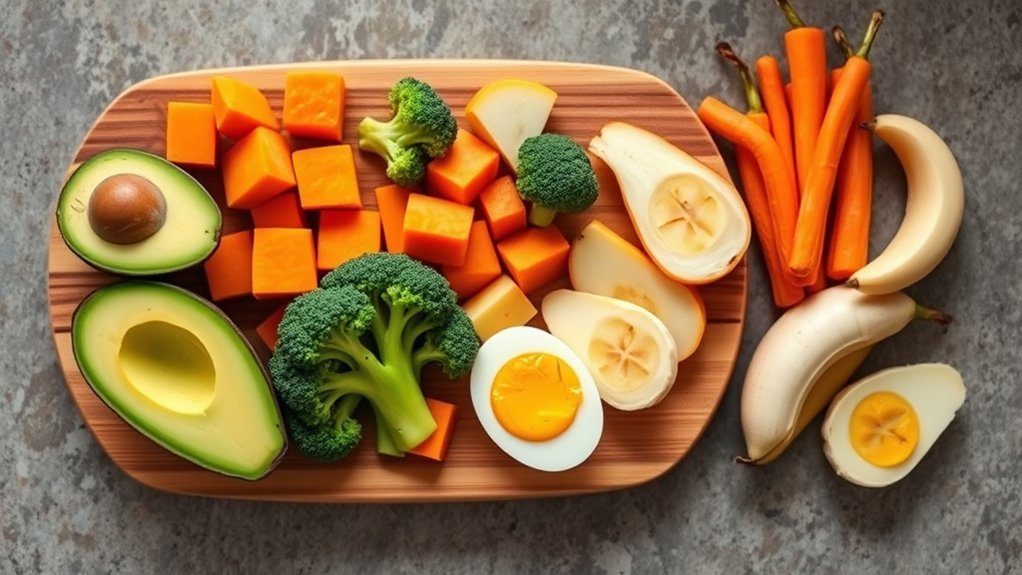
For a successful baby-led weaning journey, start with foods like soft-cooked meats, beans, and avocados. Make certain your baby can sit independently and shows interest in food. Safety is key: cut foods into finger-sized pieces, avoid choking hazards, and monitor your baby closely. Introduce allergenic foods like eggs and peanuts early to help reduce allergy risks. Keeping mealtimes messy can be part of the fun! Learn more about essential foods and tips for a smooth changeover.
Key Takeaways
- Start with iron-rich foods like meat, beans, and lentils to support your baby’s nutritional needs.
- Introduce fruits and vegetables, cut into finger-sized pieces, for easy grasping and chewing.
- Include healthy fats such as avocado and nut butter to promote energy and brain development.
- Gradually introduce allergenic foods like eggs and peanuts, monitoring for any adverse reactions.
- Ensure a safe eating environment, free of choking hazards, and supervise mealtime for comfort.
Understanding Baby-Led Weaning and Its Benefits
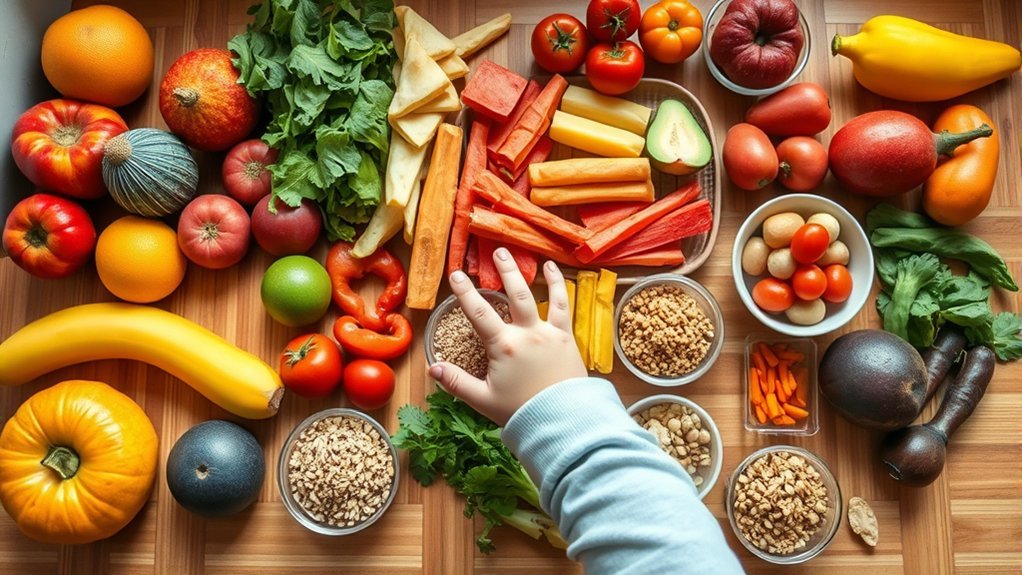
When you consider introducing solid foods to your baby, understanding baby-led weaning (BLW) can be incredibly beneficial.
BLW emphasizes self-feeding, allowing your baby to explore whole foods, typically starting around six months. A benefit analysis reveals that this method enhances motor skills and hand-eye coordination as infants learn to grasp and manipulate food.
This practice fosters better eating habits and can reduce picky eating later. Research shows that babies practicing BLW may have lower obesity rates, as they effectively self-regulate hunger and fullness cues.
Additionally, offering a variety of foods guarantees your baby receives essential nutrients and develops diverse taste preferences.
Remember to prioritize safety by providing appropriately sized foods and supervising meal times.
When Should You Start Baby-Led Weaning? Signs of Readiness
How can you tell if your baby is ready for baby-led weaning? Look for these key readiness signs:
| Sign | Description | Importance |
|---|---|---|
| Independent Sitting | Your baby can sit up without support. | Indicates stability for self-feeding. |
| Loss of Tongue Thrust Reflex | Baby no longer pushes food out with their tongue. | Allows for easier acceptance of solids. |
| Interest in Table Foods | Your baby reaches for or watches others eat. | Shows curiosity and readiness to explore new tastes. |
Creating a positive mealtime environment is essential, so make sure your baby isn’t overly tired or hungry. Always consult with a pediatrician to tailor your approach to your baby’s unique needs.
Recommended First Foods for Baby-Led Weaning

Once you’ve identified that your baby is ready for baby-led weaning, it’s important to choose the right first foods to support their growth and development.
Opt for nutrient-dense foods that include iron-rich options and protein sources. Here’s a list of recommended first foods:
- Meat and poultry – Great sources of iron and protein.
- Beans and lentils – Packed with iron and essential nutrients.
- Fish and eggs – Excellent protein sources, also rich in healthy fats.
- Avocado and nut butter – Provide healthy fats for energy and nutrient absorption.
Incorporating these foods helps guarantee your baby gets the nutrients needed for brain development and overall growth while allowing them to explore new flavors and textures.
The 100 Foods to Introduce Before Baby’s First Birthday Checklist
Introducing a variety of foods before your baby’s first birthday is vital for their growth and development.
The “100 Foods to Introduce Before Baby’s First Birthday” checklist helps you explore essential first foods, including allergenic options like peanuts and eggs, to support healthy eating habits.
Essential First Foods
The first year of your baby’s life is essential for developing their taste preferences and nutritional foundation, and a diverse range of foods can make all the difference.
Introducing important first foods promotes nutritional balance and invites flavor exploration. Here are four key options to include:
- Iron-rich foods: Meat, poultry, beans, and lentils.
- Protein sources: Fish, eggs, and dairy.
- Fruits: Offer a variety like bananas, avocados, and berries in manageable pieces.
- Vegetables: Introduce sweet potatoes, zucchini, and carrots to engage their palate.
Following the 100 Foods checklist helps you track your baby’s food journey, ensuring they receive the crucial nutrients they need during this important developmental stage.
Allergenic Foods Guidance
As you explore a variety of first foods for your baby, it’s important to contemplate allergenic foods as part of their diet.
The 100 Foods to Introduce Before Baby’s First Birthday checklist recommends introducing common allergens like cow’s milk, eggs, peanuts, tree nuts, fish, shellfish, soy, and sesame around six months of age.
Start with small amounts, monitoring for any allergic reactions such as skin rashes or vomiting. Regularly offering these foods can help minimize the risk of allergies later.
Pediatricians support early allergen introduction, and research suggests that timely exposure fosters better tolerance.
Remember to serve nuts and seeds crushed or ground to prevent choking hazards, ensuring safety while exploring new flavors.
Variety and Texture
To guarantee your baby develops a well-rounded palate, offering a variety of foods and textures is key.
Texture exploration supports your baby’s motor skills and helps them adapt to solid foods. Introducing diverse flavors is crucial for growth and development.
Here’s a simple checklist to guide you:
- Fruits and Vegetables: Start with purees, then progress to soft finger foods like avocado and banana.
- Proteins: Include iron-rich foods like beans, lentils, and meats early on for brain development.
- Grains: Introduce whole grains like oats and quinoa for added nutrition.
- Healthy Fats: Incorporate avocado and nut butter to aid in energy and nutrient absorption.
Flexibility is essential; adapt based on your baby’s readiness and preferences while ensuring flavor variety.
How to Safely Prepare Foods for Baby-Led Weaning
When preparing foods for baby-led weaning, it’s essential to prioritize safety by ensuring all items are well-cooked and cut into appropriate sizes.
Choose soft textures and safe cooking methods, like steaming or baking, to make them easier for your baby to chew and swallow.
Always supervise your little one during mealtime to keep them safe as they explore new foods.
Food Safety Guidelines
Ensuring food safety during baby-led weaning is essential for your baby’s health and development. Here are key guidelines to follow:
- Cook foods thoroughly to soften them, making them easier for your baby to chew and swallow.
- Cut foods into finger-sized pieces to promote self-feeding while minimizing choking hazards.
- Avoid hard, round, or small foods (like whole grapes or nuts) that pose a higher choking risk.
- Supervise your baby closely during mealtime to help them learn safe eating behaviors and be ready to respond in case of choking.
Appropriate Food Textures
As your baby begins the journey of baby-led weaning, it’s important to offer foods with appropriate textures that support their development and safety.
Start with smooth purees and gradually introduce mashed foods and soft finger foods, following a clear texture progression. Cut foods into finger-length strips or small pieces to minimize choking hazards.
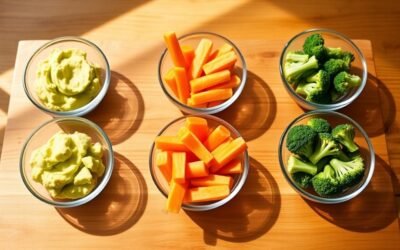
Cook vegetables like carrots and broccoli until they’re soft enough for your baby to mash with their gums, and make sure meats are tender and shredded.
Avoid hard, round, or sticky foods like whole nuts or grapes, as they pose choking risks.
Always supervise your baby during meals and pay attention to their cues, making certain they’re comfortably managing the textures and enjoying diverse food combinations.
Cooking Methods for Safety
Selecting the right cooking methods is key to preparing foods safely for baby-led weaning. You want to make sure that your baby can explore flavors without the risk of choking. Here are some essential tips:
- Steam vegetables: Cook them until soft and easily squishable, like carrots and broccoli.
- Use proper cutting techniques: Cut foods into appropriate sizes—aim for pieces roughly the size of your baby’s fist for easy grasping.
- Avoid choking hazards: Stay away from hard, round foods or those with tough skins, like whole grapes and nuts.
- Monitor temperature: Always let foods cool considerably after cooking to prevent burns.
Allergenic Foods to Introduce in Baby-Led Weaning
When should you start introducing allergenic foods during baby-led weaning? Pediatric guidelines recommend beginning around 6 months of age as part of your food introduction timeline.
Common allergenic foods include cow’s milk, eggs, wheat, peanuts, tree nuts, fish, shellfish, soy, and sesame. It’s essential to introduce these foods one at a time, starting with small amounts.
Monitor your baby for any signs of allergic reactions, like skin rashes or gastrointestinal symptoms. Regularly offering these foods after the initial introduction is key to allergy prevention strategies, promoting tolerance, and reducing the likelihood of developing food allergies.
Always consult with a healthcare provider for personalized advice, especially if there’s a family history of allergies.
Practical Tips for Managing Messy Mealtimes During Weaning

Introducing allergenic foods can be a messy but important part of your baby’s weaning journey.
Embrace the chaos of messy meals by creating an environment that fosters sensory exploration while making clean-up easier. Here are some practical tips:
- Designate a specific eating area, like a highchair with a mat, to contain mess.
- Use bibs with a catch pocket to minimize spills and protect clothing.
- Keep a damp cloth or wipes handy for quick clean-ups of sticky fingers.
- Opt for easy-to-clean materials, like silicone mats and dishwasher-safe utensils.
Encouraging your baby to explore food with their hands not only enhances their sensory development but also makes mealtimes more enjoyable for both of you.
Monitoring for Allergic Reactions During Baby-Led Weaning
As you begin the journey of baby-led weaning, monitoring for allergic reactions becomes essential, especially when introducing allergenic foods. Start by introducing one food at a time in small amounts.
Common allergenic foods include cow’s milk, eggs, wheat, peanuts, tree nuts, fish, shellfish, soy, and sesame, ideally around six months of age. Keep a close eye on your baby for any allergy signs like skin rashes, diarrhea, vomiting, or respiratory issues.
If you notice any adverse reactions, contact your healthcare provider immediately for guidance. Regularly offering tolerated allergenic foods can help reduce the risk of developing allergies later in life.
Frequently Asked Questions About Baby-Led Weaning
What should you know about baby-led weaning (BLW)? This approach starts around 6 months when babies show readiness signs. Here are some common questions and answers to guide you:
- Is choking a risk? Research indicates that BLW doesn’t increase choking risks when safe foods are given and babies are watched.
- When should I introduce allergenic foods? Foods like peanuts and eggs should be introduced early to help prevent food allergies.
- Do babies need teeth? No, babies can manage soft foods with their gums, so offer manageable pieces.
- What’s the role of breastmilk/formula? These should remain the primary nutrition source during your baby’s mealtime routines.
Using effective baby-led weaning strategies can empower your feeding journey!
Frequently Asked Questions
Can I Combine Baby-Led Weaning With Traditional Spoon-Feeding?
Yes, you can combine baby-led weaning with spoon-feeding techniques. This approach offers baby led benefits, allowing your child to explore textures while still receiving essential nutrients, ensuring a balanced and enjoyable feeding experience for both of you.
What Should I Do if My Baby Refuses Certain Foods?
If your baby refuses certain foods, try offering different food alternatives. Research shows about 25% of toddlers exhibit food neophobia. Use refusal strategies like repeated exposure and making meals fun to encourage acceptance.
How Can I Ensure My Baby Is Getting Enough Nutrition?
To guarantee your baby’s getting enough nutrition, focus on meal variety and maintain a nutritional balance. Offer diverse foods, including fruits, vegetables, grains, and proteins, while observing your baby’s preferences and adjusting accordingly for ideal health.
Is It Safe for My Baby to Eat Meat During Weaning?
Yes, it’s safe for your baby to eat meat during weaning. Just like a knight chooses strong armor, opt for tender, well-cooked meats. They’re excellent protein sources, ensuring your little one’s nutritional journey is robust and secure.
How Do I Clean up After Messy Mealtimes Effectively?
To clean up after messy mealtimes, try using a high chair mat, damp cloths, and a handheld vacuum. Implementing these cleaning strategies makes messy clean-up quicker, so you can enjoy more time with your baby.
Conclusion
Incorporating baby-led weaning can be a rewarding experience for both you and your little one. Research shows that children who engage in this method may develop healthier eating habits and are less likely to be picky eaters later on. By introducing a variety of foods and textures, you’re setting the stage for a positive relationship with food. Remember, patience and supervision are key as your baby explores new tastes and experiences. Enjoy this exciting journey together!