It’s normal for babies to refuse new foods, and you’re not alone in this experience. To encourage your little one to explore tastes, try introducing new foods gradually—aim for 10-15 exposures. Create a positive mealtime atmosphere by making it fun and relaxed. Pair unfamiliar foods with their favorites and allow sensory exploration. Remember, patience is key; it may take time for your baby to come around. Keep exploring these ideas to make mealtime a success.
Key Takeaways
- Introduce new foods gradually, aiming for 10-15 exposures to increase acceptance over time.
- Create a positive mealtime atmosphere by minimizing pressure and encouraging playful interactions.
- Pair unfamiliar foods with familiar favorites to ease anxiety and encourage exploration.
- Present food in fun shapes and colorful arrangements to capture your baby’s interest.
- Allow sensory exploration by letting your baby touch and squish various textures during mealtime.
Why Babies Refuse Food and How to Overcome It
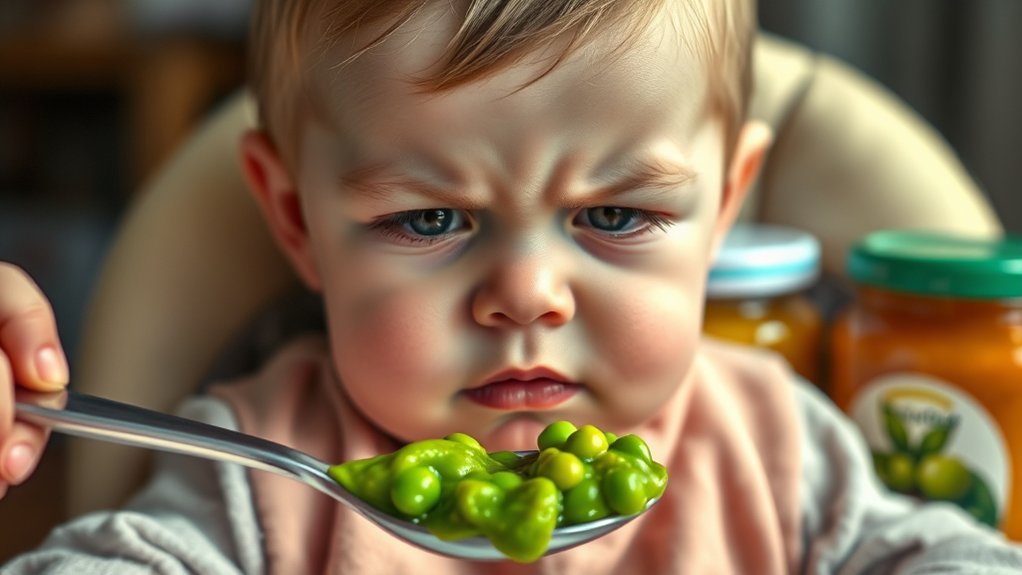
When your baby refuses new foods, it can be disheartening, especially since this behavior is often a normal part of their development.
It’s common for babies to refuse new foods; this behavior is a natural part of their growth and development.
Food neophobia, which peaks around age two, makes them wary of unfamiliar tastes and textures. This fear response leads them to assess food based on sensory properties like color and shape, causing them to reject items outright.
To help your little one, remember that it usually takes 8 to 15 exposures before acceptance. Create a calm mealtime atmosphere, as pressure can exacerbate refusal.
Additionally, model positive eating behaviors and encourage sensory exploration through fun food-related activities. By fostering familiarity, you empower your baby to embrace new flavors and textures, making mealtime more enjoyable for everyone.
Effective Strategies to Encourage Your Baby to Try New Foods
Understanding your baby’s reluctance to try new foods is the first step toward making mealtime more enjoyable.
To encourage your little one to explore new taste preferences, consider these effective strategies:
- Gradually introduce new foods, offering them 10-15 times.
- Create a positive mealtime atmosphere with playful interactions.
- Pair new foods with familiar favorites to ease anxiety.
- Allow your baby to explore food at their own pace, avoiding pressure.
- Track exposures with an exposure monitor to adapt your approach.
Make Mealtime Fun and Engaging

Making mealtime fun and engaging can turn the challenge of trying new foods into an exciting adventure for your baby.
By using playful food exploration techniques, creative presentations, and engaging activities, you can spark their interest and curiosity.
Playful Food Exploration Techniques
Although mealtime can sometimes feel like a battle, turning it into a playful experience can make all the difference for your baby’s food exploration. By incorporating fun and engaging techniques, you can spark curiosity and joy around new foods.
- Use playful sounds and gestures to make mealtime fun.
- Present food in fun shapes or creative arrangements to entice interest.
- Allow sensory exploration by letting your baby touch and squish different textures.
- Engage in cooking or gardening activities to foster excitement for trying new foods.
- Encourage self-feeding with larger pieces, promoting independence and experimentation.
These playful presentation techniques not only enhance comfort but also create a loving environment where your baby feels liberated to explore new flavors.
Creative Food Presentation Ideas
Creating a fun and engaging mealtime experience can be as simple as incorporating a few creative food presentation ideas. Start by serving food in fun shapes using cookie cutters or arranging them into playful designs on the plate. This can easily capture your baby’s attention and make mealtime enjoyable.
Utilize vibrant colors by combining various fruits and vegetables, creating visually appealing dishes that entice your baby to explore their food. Present meals in small, manageable portions with colorful, child-friendly utensils to encourage self-feeding.
Themed meals, like “rainbow day,” where only colorful foods are offered, can create an exciting atmosphere that encourages your baby to try new items. Embrace these ideas, and watch your baby delight in mealtime!
Engaging Mealtime Activities
When you turn mealtime into an engaging activity, your baby is more likely to explore new foods with curiosity and enthusiasm. Incorporate playful sounds, gestures, and even mealtime songs to create a lively atmosphere.
Transform food into fun shapes or colorful arrangements to spark interest. Allow your baby to touch and play with their food, promoting sensory play that encourages acceptance.
Consider these engaging activities:
- Involve your baby in cooking or gardening.
- Use storytelling to relate fun narratives to the food.
- Create a themed mealtime adventure.
- Introduce silly voices or characters for each food item.
- Encourage exploration through different textures and colors.
With these tactics, mealtime becomes a delightful experience for both you and your baby!
Tips for Altering Food Textures

To help your baby embrace new foods, consider altering their textures, as many little ones are more inclined to try familiar or softer options.
Start by blending disliked foods into favorites, like mixing pureed vegetables into pasta or omelets. This way, you can introduce new tastes without overwhelming them.
Blend disliked foods into favorites, like pureed veggies in pasta or omelets, to gently introduce new tastes.
Gradually offer texture variations, such as roasted instead of steamed veggies, to spark their interest. Serving food in fun shapes or arranging it creatively on the plate can enhance its visual appeal, enticing your baby to explore these new textures.
Additionally, O’Farm’s Meal Starters provide convenient options for incorporating fruits and veggies in different textures, making healthy eating an enjoyable adventure for your little one.
How to Know When to Get Help With Feeding Challenges?
Feeding your baby can be a joyful journey, but it can also come with challenges that may leave you feeling uncertain about what’s normal.
Knowing when to seek professional intervention is essential for your peace of mind. Here are some signs of concern to watch for:
- Your baby gags, retches, or vomits at the sight of food.
- They refuse solid foods after 8 months or swallow chewable food whole by 12 months.
- There’s a lack of weight gain despite adequate nutrition.
- Extreme reluctance to try new foods or aversions to previously accepted ones.
- Frustration persists despite creating a positive mealtime atmosphere.
If you notice any of these signs, don’t hesitate to consult a pediatrician for support and guidance.
The Importance of Patience and Persistence in Introducing New Foods
Introducing new foods to your baby can feel challenging, especially when they show reluctance or outright refusal. Remember, it often takes 10 to 15 exposures before they accept a new food. Using patience techniques and persistence practices can transform mealtime struggles into opportunities for growth.
| Exposure Attempts | Tips for Success | Positive Environment |
|---|---|---|
| 1-5 | Try different textures | Keep a calm atmosphere |
| 6-10 | Pair with familiar foods | Use playful engagement |
| 11-15 | Offer in small amounts | Celebrate small wins |
Stay consistent and track exposures to monitor progress. A stress-free setting can enhance their willingness to try new flavors. Embrace the journey; your patience and persistence will pay off!
Frequently Asked Questions
Can I Mix New Foods With Breastmilk or Formula?
Yes, you can mix new foods with breastmilk or formula. Experiment with food combinations to make them more appealing. These feeding strategies can help your baby gradually accept new flavors and textures without pressure.
What Age Should I Start Introducing Solids?
You should start introducing solids around six months. Following solid food guidelines, begin with single-grain cereals or pureed fruits and veggies. These first food choices help your baby explore flavors and textures, fostering a positive eating experience.
How Do Allergies Affect Food Introduction?
Allergies can complicate food introduction; you’ll want to watch for allergy symptoms like hives or swelling. Start with common food triggers, introducing one at a time, to identify any reactions and guarantee safety.
Are There Specific Foods to Avoid Initially?
You should avoid strong flavors like spices and sour fruits initially. Instead, focus on smooth textures to introduce, like pureed veggies or fruits. Gradually, you can explore new tastes as your baby becomes more comfortable.
How Can Siblings Influence a Baby’s Eating Habits?
Siblings can greatly shape your baby’s food preferences through their own choices and behaviors. Positive sibling dynamics, like sharing meals or enjoying diverse foods, encourage your baby to explore new flavors and develop healthier eating habits.
Conclusion
In the journey of introducing new foods to your baby, patience is your best ally. Just like planting seeds in a garden, it takes time and care for them to flourish. Embrace the process, keep mealtimes fun, and remember that every small victory counts. If you find yourself facing persistent challenges, don’t hesitate to seek help. With a little persistence and creativity, you’ll help your baby develop a healthy relationship with food that lasts a lifetime.