When your baby refuses spoon feeding, it’s important to recognize that this is part of their growth, not a rejection of food. Look for signs of readiness like improved coordination, sitting upright, and interest in food. Encourage self-feeding by introducing finger foods, which lets them explore on their own terms. Create a calm mealtime atmosphere and avoid pressuring them to eat. Keep in mind the signs of distress that may indicate a need for professional guidance, and you’ll discover more helpful tips soon.
Key Takeaways
- Recognize refusal as a sign of developing independence; allow for self-feeding to foster autonomy and reduce pressure.
- Use gentle spoon feeding techniques and engage baby’s interest with diverse flavors and textures.
- Create a calm mealtime environment, minimizing distractions to promote focus on feeding.
- Encourage exploration by letting the baby touch food in the bowl and wait for them to open their mouth.
- Consult a doctor if solid food refusal persists after 8 months or if there are signs of distress during mealtime.
Signs Your Baby Is Ready for Spoon Feeding

As your baby approaches six months, you might notice several signs indicating they’re ready for spoon feeding.
Look for improved coordination, like using their upper lip to take food from a spoon and moving it to the back of their mouth. You might see less food on their face and more being successfully ingested, which are strong baby feeding cues.
Also, your little one should be able to sit upright and show genuine interest in the foods you offer.
It’s important not to rush this process, as introducing solids too early can hinder their self-feeding skills.
Encourage a variety of tastes and textures to support their spoon feeding readiness and help them adapt to this exciting new stage!
Understanding Baby’s Refusal of Spoon Feeding
While it’s common for babies to refuse spoon feeding, this behavior often reflects their developmental journey rather than a rejection of food.
Between 8 to 10 months, your baby’s development includes asserting independence and exploring feeding preferences. When they turn their head away or clamp their lips shut, it signals a desire for self-feeding.
Around 8 to 10 months, babies assert independence, showing a preference for self-feeding by turning away from the spoon.
Staying calm and understanding during this phase is essential; pressure to eat can lead to fussy eating habits later. Encourage exploration by offering finger foods, allowing your baby to engage with food on their terms.
Supporting their developmental milestones, like grasping and manipulating food, fosters a positive relationship with eating, empowering them in their journey toward self-sufficiency.
How to Encourage Spoon Feeding at Six Months
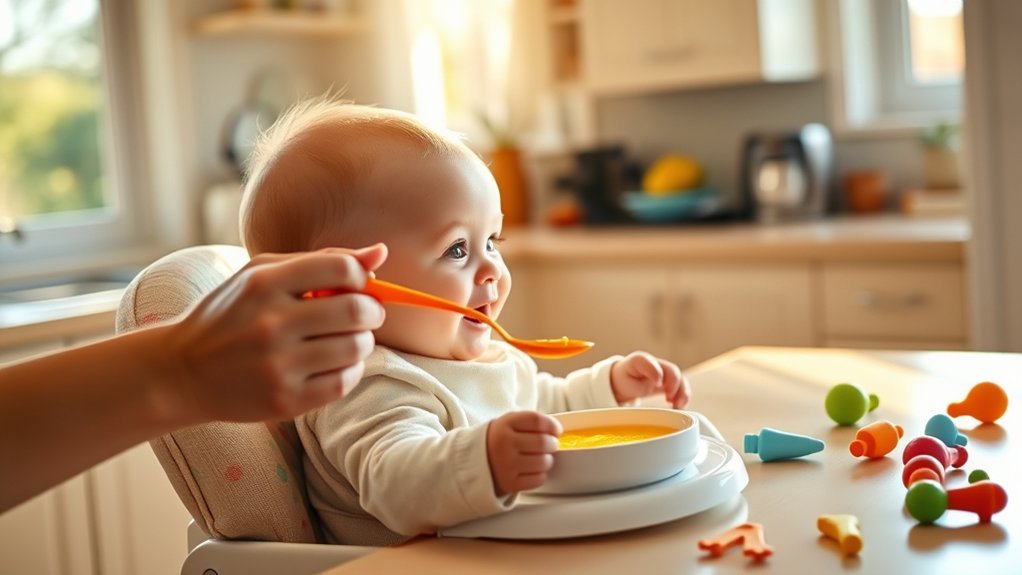
At six months, your baby is ready to start exploring spoon feeding, building on their natural curiosity and developing skills from the previous months.
To encourage this change, use gentle spoon feeding techniques, like a soft-tipped, shallow spoon that makes eating easier. Introduce engaging flavors and a variety of textures to pique their interest and broaden their palate.
Allow your baby to touch the food in their bowl, promoting exploration and engagement with their meal. It’s essential to wait for your baby to open their mouth before offering food, encouraging active participation in the feeding process.
Handling Grumpiness During Feeding
When your baby gets grumpy during feeding, creating a calm environment by minimizing distractions can make a big difference.
Pay attention to signs of refusal, like turning their head away or clamping their mouth shut, so you can respond without adding to their frustration.
Minimize Mealtime Distractions
Creating a calm and inviting mealtime environment is essential for reducing grumpiness during feeding. Start by minimizing distractions that can overwhelm your baby. Keep screens and toys out of sight to enhance the mealtime ambiance, allowing your little one to focus on the food and feeding process.
You can also employ distraction techniques, like singing softly or engaging in gentle conversation, but make sure they don’t divert attention away from the meal. Bringing your baby to the table slightly hungry can spark their interest in food, promoting engagement.
Recognize Signs of Refusal
Recognizing the signs of refusal during spoon feeding can greatly improve your baby’s mealtime experience.
Watch for baby cues like turning their head away, clamping their mouth shut, or showing disinterest in the food. These feeding signals indicate that your little one mightn’t be ready or willing to eat.
Creating a relaxed environment with minimal distractions can help alleviate grumpiness and foster positive eating experiences.
Remember, pressuring your baby to eat can lead to fussy habits. Focus on weekly food intake rather than stressing over daily amounts, and introduce new foods one at a time.
Allow multiple attempts if they refuse; this approach encourages comfort with different tastes and textures, promoting a more enjoyable feeding journey.
Why Your Baby Prefers Self-Feeding

Your baby prefers self-feeding because it fosters independence and gives them a sense of control during mealtime.
By exploring different textures and flavors on their own terms, they engage in sensory play that enhances their enjoyment of food.
This natural inclination towards self-feeding not only supports their development but also helps reduce fussiness at the table.
Independence Through Self-Feeding
Many babies prefer self-feeding as a way to assert their independence and take control of their eating experiences. This developmental milestone typically emerges between 8 to 10 months, allowing them to explore tastes and textures at their own pace. Self-feeding benefits go beyond just eating; it fosters motor skills and reduces fussiness, as research shows that babies engaging in baby-led weaning tend to be less picky.
| Self-Feeding Benefits | How It Helps Your Baby |
|---|---|
| Promotes independence | Empowers baby to make choices |
| Enhances motor skills | Improves grasp and coordination |
| Encourages varied diet | Introduces diverse flavors |
Exploration and Sensory Play
As babies explore their food, they not only satisfy their curiosity but also engage in sensory play that deepens their understanding of textures and flavors.
Self-feeding allows for rich sensory exploration, where your little one can touch, taste, and manipulate a variety of textures. Offering larger pieces of food makes it easier for them to grasp, enhancing their enjoyment of the experience.
Research shows that babies who self-feed, like through Baby Led Weaning, tend to be less fussy around food. This hands-on approach not only makes mealtime fun but also fosters essential motor skills and hand-eye coordination.
Encouraging this exploration empowers your baby, allowing them to discover the world of food on their own terms.
Preference For Control
At around 8 to 10 months, babies often show a strong preference for self-feeding, seeking to assert their independence during mealtime. This desire for control not only enhances their independence development but also comes with numerous self-feeding benefits. When your baby grabs or bats at a spoon, they’re indicating their wish to explore food on their own terms, which is essential for their growth.
| Self-Feeding Benefits | Independence Development | Positive Food Relationships |
|---|---|---|
| Enhances motor skills | Boosts confidence | Reduces mealtime pressure |
| Encourages food exploration | Fosters decision-making | Promotes variety acceptance |
| Improves sensory awareness | Builds self-esteem | Encourages healthy habits |
| Reduces fussiness | Strengthens autonomy | Creates enjoyable meals |
| Supports social skills | Nurtures self-reliance | Cultivates mindful eating |
Embracing your baby’s self-feeding journey fosters a healthier relationship with food.
Creating a Positive Mealtime Environment
Creating a positive mealtime environment is essential for encouraging your baby to engage with food and develop healthy eating habits.
Start by minimizing distractions in the mealtime atmosphere, like screens or toys, so your baby can focus on eating. Encourage them to observe you and other caregivers enjoying meals, as this modeling can spark their interest.
Maintain a calm demeanor, as your emotions influence their willingness to eat. Offer larger pieces of food that they can grasp and explore, making the experience enjoyable.
Establishing a routine, including using sign language for “all done,” helps communicate boundaries and fosters a sense of security.
When Should You Talk to a Doctor About Feeding?
When should you consider talking to a doctor about your baby’s feeding habits? If you’re facing feeding challenges, it’s crucial to be proactive.
Here are key signs to watch for:
- Your baby isn’t consuming solid foods after 8 months.
- Consistent gagging, retching, or vomiting at the sight of food.
- Refusal of textured foods or progression beyond purees by 10 months.
- Signs of distress during mealtime for both you and your baby.
- Lack of weight gain despite adequate nutrition or a history of feeding trauma.
Addressing these concerns early can help guarantee your baby meets their developmental milestones and receives the support they need.
Don’t hesitate to seek professional guidance when you feel uncertain. Your baby’s well-being is paramount.
Frequently Asked Questions
Can I Skip Spoon Feeding and Go Straight to Self-Feeding?
Yes, you can skip spoon feeding and embrace self-feeding. It fosters independence and encourages exploration. Baby-led weaning not only promotes self-regulation but also enhances fine motor skills, making mealtime a joyful experience for your baby.
What Foods Are Best for Introducing Spoon Feeding?
Start with the mantra, “You reap what you sow.” Introduce pureed fruits like apples and soft vegetables such as sweet potatoes. These nutritious options make spoon feeding enjoyable, fostering independence and a love for healthy foods.
How Long Should I Try Spoon Feeding Before Giving Up?
You should try spoon feeding for at least two weeks, allowing your baby to adjust and meet feeding milestones. Patience fosters comfort and exploration, so don’t rush—encourage them to enjoy this new experience at their pace.
Is It Normal for Babies to Refuse Spoon Feeding Occasionally?
Yes, it’s normal for babies to occasionally refuse spoon feeding. As they reach developmental milestones, they may assert their independence. Stay patient, adapt your approach, and remember, it’s part of their learning journey in baby feeding.
Can Teething Affect My Baby’s Willingness to Eat From a Spoon?
Teething can feel like a stormy sea for your baby, making spoon feeding challenging. Teething symptoms, like gum pain, may disrupt their willingness to eat. Try gentle feeding techniques to ease their discomfort and encourage eating.
Conclusion
In the grand scheme of parenting, it’s ironic that such a tiny human can wield so much power over mealtime! Remember, your baby’s refusal to spoon feed doesn’t mean they’re rejecting you; it’s just part of their journey toward independence. Embrace their preferences and keep mealtime positive. After all, feeding isn’t just about nutrition—it’s about connection. If concerns linger, don’t hesitate to consult your pediatrician. Who knew that a little spoon could stir up such big emotions?