If your baby won’t swallow purees, it could be due to various reasons like taste preferences or swallowing difficulties. Start by introducing smoother textures and gradually mix in thicker options. Use exaggerated chewing motions to demonstrate food movement, and offer sips of drink during meals to encourage swallowing. Always approach mealtime with patience and observe your baby’s cues. If concerns persist, you’ll want to explore more effective feeding strategies and signs of readiness for solids.
Key Takeaways
- Demonstrate exaggerated chewing and swallowing to model food movement during mealtime.
- Gradually introduce a variety of food textures, starting with smooth purees before moving to thicker options.
- Offer drinks during meals to help incorporate swallowing strategies and encourage fluid intake.
- Monitor baby’s cues and preferences, and approach feeding with patience to ease their reluctance to swallow.
- Consult a pediatrician if purees are consistently refused after 9 months or if there are concerns about weight or gagging.
How to Help Your Baby Swallow Purees
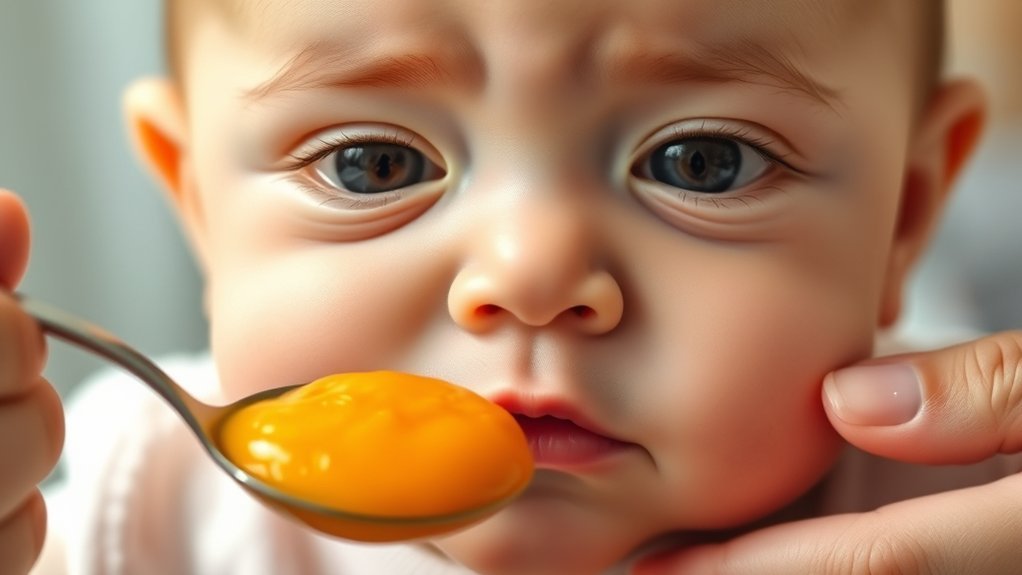
When your baby struggles to swallow purees, it’s essential to approach mealtime with patience and understanding.
Start by demonstrating exaggerated chewing techniques, showing your little one how to move food around in their mouth. Incorporate swallowing strategies by offering a drink during meals, helping them wash down the puree if needed.
Gradually introduce a variety of food textures, beginning with smoother purees and slowly adding more textured options as they gain confidence. Maintain a regular toothbrushing routine to enhance sensory awareness, making them more accustomed to food sensations.
Why Is Your Baby Pocketing Food?
If your baby is still having trouble swallowing purees, you might notice they’re pocketing food in their cheeks instead. This behavior can stem from various reasons:
- Your baby may enjoy the taste or texture, leading to reluctance to swallow.
- Swallowing difficulties due to lack of mouth and throat coordination can cause them to hold onto food.
- Discomfort from teething or previous negative feeding experiences might make them wary of swallowing.
Understanding your baby’s food preferences and their developmental stage is essential. They might simply need more time and encouragement to accept solid foods.
Be patient and supportive, as this phase is part of their journey toward developing healthy eating habits.
Signs That Indicate Readiness for Solids

As your baby approaches the six-month mark, you might start noticing signs that indicate they’re ready for solids.
Look for good head and neck control; your little one should be able to sit upright with support during feeding. Pay attention to their feeding cues—are they eyeing your plate, reaching for food, or opening their mouth when you offer a spoon? These behaviors show a keen interest in what you’re eating.
Look for signs of readiness, like good head control and keen interest in your food, as your baby approaches solids.
Additionally, they should be able to move food to the back of their mouth and swallow it effectively. If you haven’t introduced solids by seven months, consult a health professional to verify your baby’s development is on track.
Recognizing these signs can empower you both on this feeding journey.
Best Textures for Baby Foods
When introducing baby foods, starting with smooth and thin purees is key, as it helps your little one adjust to new textures.
As they grow, gradually introducing thicker purees and soft finger foods can boost their confidence and enthusiasm to explore different tastes.
Always pay attention to their responses, as some babies may need more time to adapt to lumpier textures.
Best Texture Types
Introducing the right textures in baby foods is essential for your little one’s development and comfort during mealtime. Start with smooth purees that are easy to swallow, then gradually introduce lumpier textures to support their texture progression.
This shift encourages sensory exploration and builds their chewing skills.
- Finely mashed foods: Help babies adjust to new sensations.
- Soft finger foods: Like ripe avocados or steamed carrots, promote self-feeding and enhance hand-eye coordination.
- Mixed textures: Combining familiar purees with new textures can ease hesitance.
Gradual Texture Introduction
Moving beyond smooth purees can be an exciting time for both you and your baby. Start with finely mashed foods around 8 months, allowing for a gradual texture progression. This change supports sensory exploration and helps your little one develop essential chewing skills.
By 10-12 months, introduce soft, small pieces of family foods like ripe fruits and soft-cooked vegetables. It’s important to offer a variety of textures—mashed, minced, and soft finger foods—to reduce feeding difficulties.
If your baby initially rejects lumpy foods, don’t worry; monitor their reactions and be patient. Combining pureed foods with small chunks can ease the adjustment. Celebrate these milestones, knowing you’re nurturing their relationship with food and flavors!
Safe Food Combinations
As your baby ventures into the world of solid foods, safe food combinations can play an essential role in their acceptance and enjoyment of new textures.
Start with smooth purees, gradually introducing thicker textures. Mixing familiar flavors with new ingredients can enhance acceptance. Consider these safe flavor combinations:
- Sweet potato and carrot puree
- Avocado and banana mash
- Pea puree with a hint of mint
Offering purees at the right temperature is important; neither too hot nor too cold.
You can also incorporate small lumps, like finely mashed peas or well-cooked quinoa, to help them adapt. Mixing purees with a bit of breast milk or formula can create a smoother consistency, making it easier for your baby to swallow.
When to Consult a Pediatrician for Feeding Concerns
If your baby consistently refuses purees past the age of 9 months, it’s important to consult a pediatrician to address potential developmental or feeding concerns. Early intervention is crucial to guarantee your baby meets feeding milestones and receives adequate nutrition.
| Concern | Action Needed |
|---|---|
| Refusal of purees after 9 months | Consult a pediatrician |
| Weight loss or inadequate gain | Seek medical advice promptly |
| Persistent gagging | Get a professional evaluation |
| Unresolved feeding challenges | Discuss with a healthcare pro |
Tips for Tracking Your Baby’s Eating Habits and Preferences
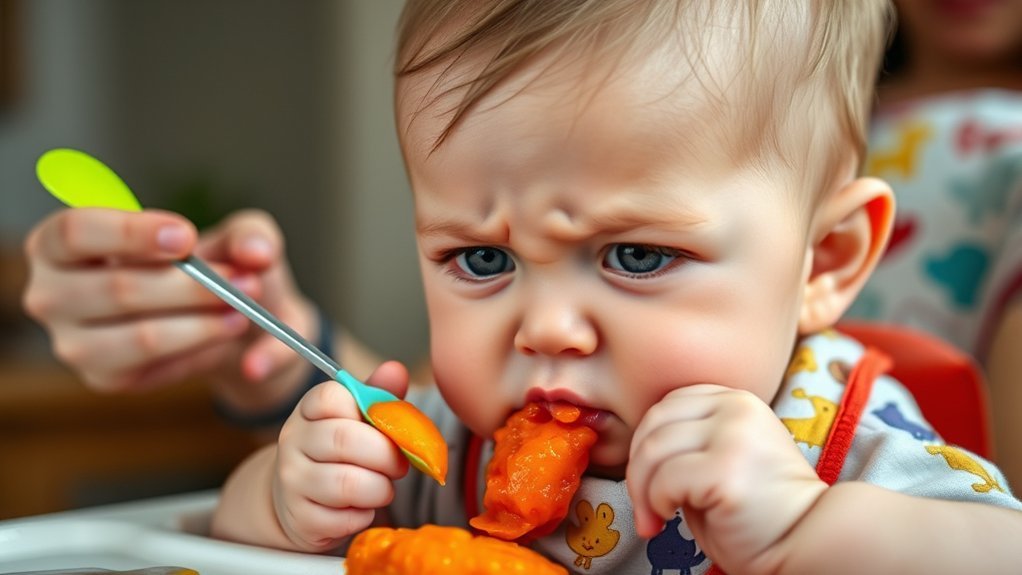
Tracking your baby’s eating habits and preferences is essential for understanding their unique needs and ensuring a positive feeding experience.
Here are some tips to help you with food tracking:
- Utilize apps like Baby Connect to document your baby’s likes and dislikes, making meal planning easier.
- Keep a feeding diary to log difficulties with specific textures, allowing you to identify patterns and make informed adjustments.
- Record reactions to new foods to monitor for potential allergies or sensitivities, ensuring you can discuss these with a healthcare provider.
Frequently Asked Questions
Can I Mix Purees With Breast Milk or Formula?
Yes, you can mix purees with breast milk or formula. This combination enhances flavor and nutrition, ensuring your baby benefits from both breast milk’s advantages and formula alternatives, making mealtime more enjoyable for them.
What Are Common Allergens to Watch for in Baby Food?
Common allergens include milk, eggs, peanuts, tree nuts, soy, wheat, fish, and shellfish. Watch for food reactions like hives, swelling, or difficulty breathing. Introducing new foods slowly helps you identify potential sensitivities in your baby.
How Can I Tell if My Baby Is Full?
You’ll know your baby’s full when they turn away from the spoon, close their mouth, or show signs of fussiness. Trust their hunger cues, and adjust the feeding schedule to respect their signals.
When Can I Introduce Finger Foods to My Baby?
You can introduce finger foods around six months, using baby-led weaning principles. Start with safe finger foods like soft fruits and steamed veggies, allowing your baby to explore textures while developing independence and confidence in eating.
What Should I Do if My Baby Refuses All Food?
If your baby refuses all food, try baby food alternatives like soft fruits or mashed vegetables. Explore different feeding strategies, like allowing self-feeding, to make mealtime enjoyable and stress-free for both of you.
Conclusion
Getting your baby to swallow purees can be a challenge, but you’re not alone—about 25% of infants struggle with this change. Remember to stay patient and observant, as every baby has their own pace. By understanding their readiness signs and experimenting with textures, you can make mealtime a positive experience. If you’re ever concerned, don’t hesitate to consult your pediatrician. With the right approach, your little one will soon be enjoying a variety of tasty purees!