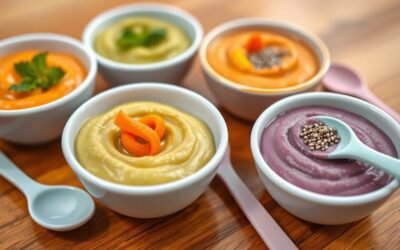
Most babies are ready to start solids between 4 to 6 months, with 6 months being ideal. Look for signs like sitting up with support, good head control, and interest in food. Make sure your baby has lost the tongue-thrust reflex to swallow safely. Introduce single-ingredient foods, waiting 3 to 5 days to monitor for allergies. It’s essential to prioritize your baby’s safety and nutrition during this stage, especially regarding food choices and preparation. There’s more to explore on this journey.
Key Takeaways
- Most babies are ready for solid foods between 4 to 6 months, with 6 months being ideal for starting solids.
- Look for signs of readiness, such as good head control and ability to sit up with support.
- Introduce single-ingredient foods one at a time, waiting 3 to 5 days to monitor for allergies.
- Avoid certain foods like honey, whole nuts, and unpasteurized products for safety and health.
- Ensure proper food preparation by cooking until soft, mashing or pureeing, and avoiding choking hazards.
Understanding Your Baby’s Readiness for Solid Foods
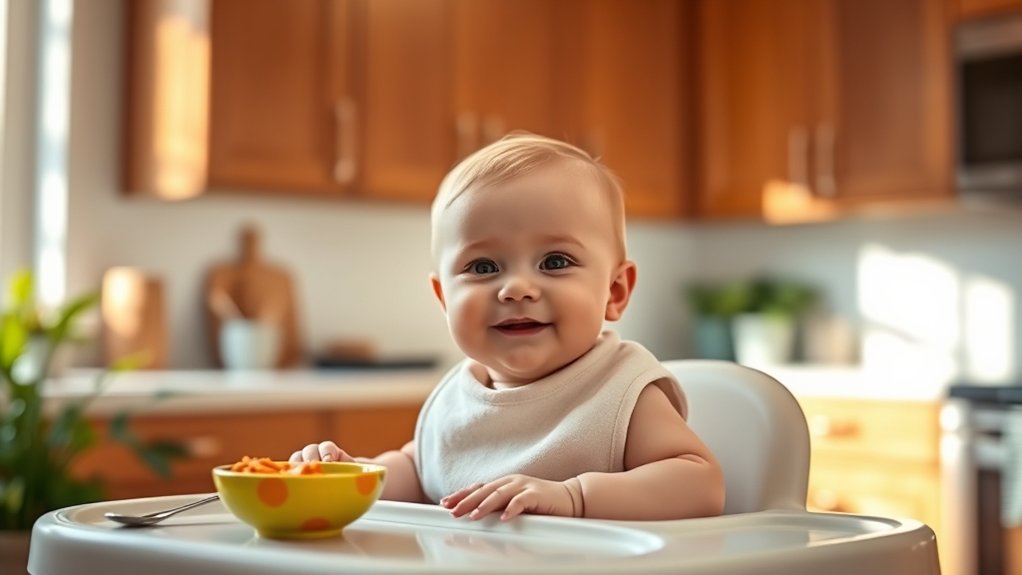
How can you tell if your baby is ready for solid foods? Look for baby cues that indicate they’re hitting key developmental milestones.
Most babies are ready between 4 to 6 months, but 6 months is ideal. Signs of readiness include sitting up with support, showing good head and neck control, and reaching for or opening their mouth for food.
It’s also vital that your baby has lost the tongue-thrust reflex, which allows them to swallow instead of pushing food out.
How to Handle Allergies and Reactions to New Foods?
Introducing your baby to solid foods can be an exciting yet intimidating experience, especially when it comes to managing potential allergies. Start by introducing single-ingredient foods one at a time, waiting 3 to 5 days before adding something new. This helps you monitor for allergy symptoms, such as hives, vomiting, or difficulty breathing.
Common allergens like dairy, eggs, and peanuts shouldn’t be delayed, as this doesn’t prevent allergies. Always have antihistamines handy during initial introductions. If your baby shows any signs of a reaction, discontinue the food immediately and consult a healthcare provider.
Keeping a food diary is essential; it tracks what your baby eats and any reactions, helping you identify potential allergens more easily.
Nutrient-Rich First Foods to Kickstart Your Baby’s Diet

Starting your baby’s journey with solid foods is an important milestone that sets the foundation for healthy eating habits. To support your baby’s growth, introduce nutrient-rich foods like iron-fortified cereals and pureed meats, as iron is essential for their developing body.
Alongside these, offer single-ingredient options like mashed bananas, avocados, and pureed sweet potatoes to guarantee a balanced diet. Remember to wait 3 to 5 days before adding new foods to monitor for allergies and guarantee tolerance.
You can also include yogurt before their first birthday, but steer clear of cow’s milk until then. Avoid added sugars, salt, and choking hazards, preparing all foods to suit your baby’s developmental stage for a safe and nourishing experience.
Safe Tips for Preparing Baby Food
Preparing baby food can feel overwhelming, but following a few simple guidelines can make it safe and enjoyable for both you and your little one. Verify all fruits and vegetables are cooked until soft for easy mashing and swallowing. Always remove skins, bones, and hard pits to prevent choking hazards.
Here’s a quick reference table for safe baby food preparation:
| Cooking Methods | Food Storage |
|---|---|
| Steam or boil foods | Store in airtight containers |
| Mash or puree | Refrigerate for up to 48 hours |
| Mix cereals with liquids | Freeze for up to 1 month |
Introduce single-ingredient foods one at a time and wait 3 to 5 days to monitor for allergies. Always prioritize hygiene to avoid contamination.
Foods to Avoid for Safety and Nutrition in Your Baby’s First Year
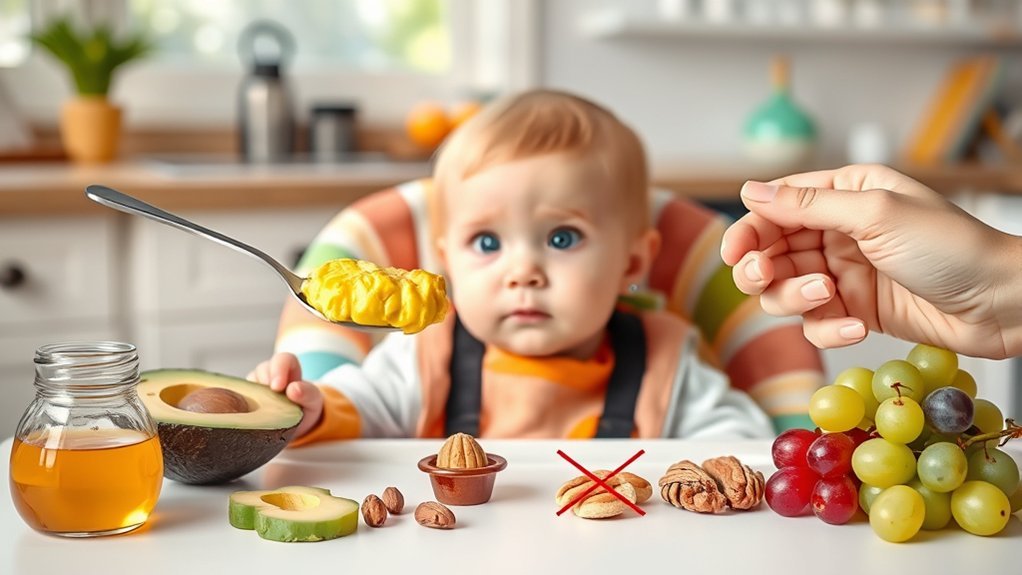
When it comes to your baby’s first foods, knowing what to avoid is just as important as what to include.
Steer clear of honey in the first year to prevent infant botulism, a serious illness. Skip foods high in added sugars or sodium, as they can lead to unhealthy eating habits and weight gain. Whole nuts, hot dogs, and whole grapes pose choking hazards, so keep those off the menu.
Unpasteurized juices and dairy products can harbor harmful bacteria, making them unsafe for your little one. You can introduce potentially allergenic foods like peanuts and eggs after initial solids are tolerated, but hold off on cow’s milk until after their first birthday.
Prioritize your baby’s safety and nutrition for a healthier start!
Frequently Asked Questions
Can Starting Solids Too Early Cause Digestive Issues?
Yes, starting solids too early can lead to digestive discomfort for your baby. Their immature digestive system may struggle with certain foods, potentially causing issues like gas or constipation. Wait until they’re developmentally ready.
How Do I Know if My Baby Is Allergic to a Food?
So, your baby’s not a fan of broccoli? Watch for food allergy symptoms like rashes or tummy troubles. If in doubt, consult a pediatrician for baby allergy testing—better safe than sorry for your little foodie!
What Are the Signs of Readiness for Solid Food?
Your baby shows readiness for solids through cues like sitting up with support, reaching for food, and displaying interest during mealtime. These developmental milestones indicate they’re prepared to explore new textures and flavors.
Can I Mix Different Foods When Starting Solids?
Yes, you can mix different foods when starting solids. Just guarantee you gradually introduce new combinations, watching for any reactions. This approach helps your baby explore flavors while promoting a positive eating experience.
How Can I Tell if My Baby Is Full?
Watch for your baby’s subtle signs: turning away, closing their mouth, or losing interest. These cues indicate fullness. Respect their feeding habits, and trust their instincts; they know when they’ve had enough.
Conclusion
In summary, introducing solids at four months can be beneficial, but it’s essential to make certain your baby is ready. For instance, imagine little Emma, who enthusiastically reached for her parents’ food, showing signs of readiness. By starting her on nutrient-rich foods like sweet potatoes, they not only satisfied her curiosity but also supported her growth. Always remember to monitor for allergies and consult your pediatrician, making this journey safe and enjoyable for both you and your baby.