Yes, baby food can cause diarrhea due to food allergies, infections, or sudden dietary changes. Look for signs like increased stool frequency, watery consistency, or irritability. To prevent problems, introduce new foods gradually and monitor your baby’s reactions closely. Make sure to avoid allergens, added sugars, and high-sodium options. If your baby shows signs of dehydration or diarrhea lasts more than two days, consult a pediatrician for guidance. Learn more about safe food practices and managing diarrhea effectively.
Key Takeaways
- Baby food can cause diarrhea due to food allergies, intolerances, or sudden dietary changes when introducing new solid foods.
- Signs of diarrhea in babies include increased stool frequency, watery consistency, and decreased urine output, indicating potential dehydration.
- Introduce new baby foods gradually, starting with single-ingredient purees and waiting 3 to 5 days before adding more.
- Avoid high-allergen foods and those with added sugars or salt to minimize digestive upset and prevent diarrhea.
- Consult a pediatrician for persistent diarrhea, signs of dehydration, or any concerning symptoms related to new foods.
Can Baby Food Really Cause Diarrhea?

While introducing new foods to your baby’s diet can be exciting, it’s important to recognize that baby food can indeed cause diarrhea in some cases.
Food allergies and intolerances, particularly to ingredients like cow’s milk, wheat, or certain fruits and vegetables, can trigger these gastrointestinal disturbances. If you introduce new baby foods too quickly without waiting 3 to 5 days to monitor for reactions, you might increase the risk of digestive issues.
Food allergies and intolerances can cause digestive issues, so introduce new baby foods slowly and monitor for reactions.
Additionally, some commercial baby foods contain added sugars or high sodium levels that can upset your baby’s tummy. Homemade baby foods can also lead to diarrhea if prepared improperly or if certain vegetables, like spinach, are introduced too soon.
Always be mindful and consult a healthcare professional if diarrhea persists.
Signs of Diarrhea in Babies
When you’re caring for your baby, it’s important to watch for signs of diarrhea, which often includes an increase in stool frequency and a watery consistency.
If you notice three or more loose stools in a day, it could indicate a problem that needs attention.
Keep an eye on your little one’s behavior and diaper changes to help guarantee they stay healthy and hydrated.
Increased Stool Frequency
Increased stool frequency in babies can be a concerning sign, especially if you notice they’re having three or more watery or very loose stools in a single day.
This sudden change often occurs during dietary shifts, such as when introducing new baby foods.
It’s essential to pay attention to stool observation, noting any changes in consistency, color, or smell, as these can indicate digestive distress or reactions to certain foods.
Some baby foods, particularly those high in sugar or allergens, may trigger increased stool frequency in sensitive infants.
If your baby experiences diarrhea, prioritize hydration through continued breastfeeding or formula feeding, and steer clear of juices and sugary drinks that could worsen the situation.
Watery Stool Consistency
Understanding the signs of diarrhea in babies is crucial for any parent, especially when you’re introducing new foods to their diet. Watery stool consistency, characterized by three or more loose stools per day, can indicate a digestive upset. While occasional loose stools can be normal, persistent watery stools may lead to dehydration, so it’s important to monitor your baby’s fluid intake.
| Signs of Diarrhea | Important Actions |
|---|---|
| Watery stool consistency | Track diaper changes |
| Changes in color/smell | Offer fluids frequently |
| Decreased urine output | Seek medical attention |
Watch for signs of dehydration, such as lethargy, and consult your pediatrician if you’re concerned about your baby’s stool consistency.
Common Causes of Diarrhea in Babies
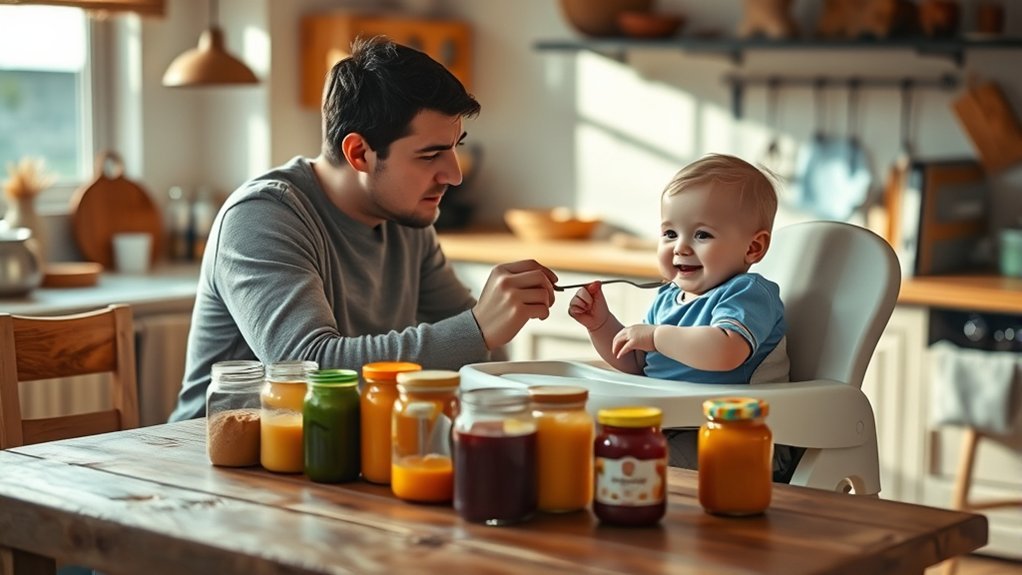
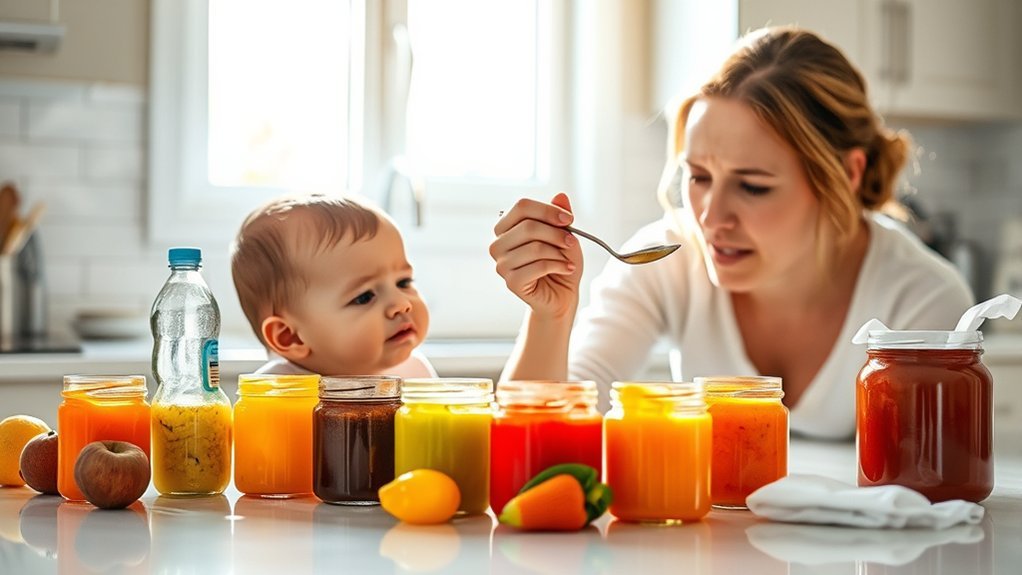
Diarrhea in babies can stem from several common causes, and recognizing them is essential for parents.
Viral infections, like rotavirus, are often the primary culprits behind acute diarrhea in infants. Bacterial infections from contaminated food or water, such as Salmonella or Shigella, can also lead to digestive upset.
Additionally, common allergens like cow’s milk or soy can trigger diarrhea, resulting in loose, slimy stools. If your baby has recently been on antibiotics, remember that these can disrupt healthy gut bacteria, causing mild diarrhea as a side effect.
Finally, sudden dietary changes, like introducing new solid foods or shifting from breast milk to formula, can temporarily upset your baby’s digestive system.
Understanding these factors helps you navigate your baby’s health better.
Safe Strategies for Introducing New Baby Foods
When introducing new baby foods, it’s important to take a cautious approach to guarantee your little one’s digestive system adjusts smoothly.
Start with single-ingredient pureed foods, waiting 3 to 5 days before adding another. This helps monitor for any allergic reactions or digestive issues.
Begin with iron-fortified cereals mixed with breast milk or formula to make sure your baby gets enough iron after 6 months.
Be mindful of allergy awareness when introducing potential allergens like peanuts or dairy—wait until other foods are well-tolerated.
Avoid foods with added sugars or salt, as these can disrupt digestion and lead to diarrhea.
Finally, confirm all homemade baby foods are free from harmful ingredients, like honey for infants under 12 months.
How to Monitor Your Baby’s Reactions to New Foods

As you introduce new foods to your baby, keeping a close eye on their reactions is essential to guaranteeing a smooth shift. Start with one food at a time and wait 3 to 5 days before adding another. This helps you monitor any adverse reactions, like diarrhea or rashes.
Maintain a detailed reaction log to track your baby’s food intake and stool patterns.
- Watch for signs of allergic reactions: vomiting, diarrhea, rashes, or swelling.
- Delay introducing high-allergen foods like peanuts or eggs until your baby has adjusted to simpler foods.
- Consult your pediatrician if you notice persistent diarrhea or concerning symptoms after a food introduction.
Being proactive can help you guarantee your baby’s well-being during this exciting shift!
Tips for Preventing Diarrhea When Starting Solids
Introducing solid foods to your baby can be exciting, but it’s important to take steps to prevent potential digestive issues like diarrhea.
Start with single-ingredient purees to help identify any baby food allergies and monitor for reactions. Wait 3 to 5 days before introducing new foods, observing any changes in stool consistency.
Avoid adding sugar or salt, as these can irritate your baby’s digestive health. Confirm foods are well-cooked and pureed to a smooth texture, minimizing the risk of digestive discomfort.
Keep track of your baby’s stool patterns and be alert for signs of dehydration, like decreased urine output. Your proactive approach will support your baby’s healthy shift to solids while reducing the risk of diarrhea.
When to Seek Medical Attention for Your Baby’s Diarrhea?
If your baby shows signs of dehydration, like a dry mouth or fewer wet diapers, it’s essential to seek medical attention right away.
Additionally, if you notice blood in your baby’s stool, don’t hesitate to contact your pediatrician, as this could indicate a serious issue.
Early intervention can make a significant difference in your baby’s health and comfort.
Signs of Dehydration
Recognizing the signs of dehydration in your baby is vital, especially during episodes of diarrhea.
Being aware of dehydration symptoms helps you act quickly to guarantee your baby’s well-being. Here are key signs to watch for:
- Decreased urine output, like no urine for over 8 hours
- A dry tongue and mouth, along with fussiness or lethargy
- A depressed or sunken soft spot on their head
If you notice any of these indicators, it’s important to seek medical attention immediately.
Hydration’s importance can’t be overstated—timely intervention can prevent serious complications.
Always trust your instincts; if your baby’s diarrhea persists or worsens, don’t hesitate to reach out to a healthcare professional. Your baby’s health is paramount.
Blood in Stool
Noticing blood in your baby’s stool can be alarming, but it’s essential to stay calm and act swiftly. Blood causes may indicate severe infections or intestinal issues that need immediate medical attention. If you see bright red blood or dark, tarry stools, contact a healthcare provider right away.
| Symptoms | Action Needed |
|---|---|
| Bright red blood in stool | Contact a doctor immediately |
| Diarrhea lasting over 2 days | Urgent pediatric consultation |
| Signs of dehydration | Seek emergency care immediately |
Always err on the side of caution with stool concerns. If you’re uncertain about the cause, it’s better to consult a doctor. Your baby’s health is your priority.
How to Handle Mild Diarrhea at Home
When your baby experiences mild diarrhea, it’s essential to stay calm and focus on maintaining their hydration and nutrition. Here are some effective home remedies and hydration strategies you can use:
- Continue breastfeeding or formula feeding to keep their nutritional needs met.
- Offer Oral Rehydration Solutions (ORS) after each large watery stool, but don’t rely on ORS alone for more than six hours.
- Monitor their stools; if you notice six or more watery stools in a day, consult your doctor.
Keep an eye out for signs of dehydration, like decreased urine output or dry mouth.
Avoid introducing new foods during this time, and reconsider any recent dietary changes that might’ve triggered the diarrhea.
Your attentiveness can help your baby recover swiftly.
Foods and Drinks to Avoid for Babies
As your baby explores new tastes and textures, it’s important to be mindful of certain foods and drinks that can pose risks to their health.
Following nutritional guidelines, avoid giving honey to infants under 12 months due to the risk of botulism.
Steer clear of foods with added sugars like flavored yogurts and muffins to prevent unhealthy eating habits.
Limit high-sodium foods such as processed meats, which can harm developing kidneys.
Fish high in mercury, including swordfish, should never be offered, as they can affect neurodevelopment.
Unpasteurized foods and drinks, like certain juices, can harbor harmful bacteria, leading to serious infections.
Always prioritize allergy concerns and consult your pediatrician when introducing new foods.
Frequently Asked Questions
Can Certain Baby Food Brands Cause More Digestive Issues Than Others?
Yes, certain baby food brands can cause more digestive issues due to ingredient sensitivity. Brand comparison reveals that some formulations contain allergens or additives, which might not suit your baby’s digestive system, leading to discomfort.
How Long Does Baby Food-Related Diarrhea Typically Last?
Baby food-related diarrhea usually lasts one to three days, depending on various duration factors. You can manage symptoms with hydration and gentle foods, so don’t panic; your little one’s tummy will bounce back soon!
Are There Specific Ingredients That Commonly Trigger Diarrhea in Babies?
Certain common allergens like dairy and wheat, along with high fiber content in fruits and vegetables, can trigger diarrhea in babies. It’s important to introduce new foods gradually and monitor for any adverse reactions.
Can Teething Contribute to Diarrhea in Addition to Baby Food?
Yes, teething symptoms can cause digestive disruption in babies. While it’s not the primary cause, discomfort may lead to changes in their eating habits, potentially resulting in diarrhea alongside the introduction of new baby food.
Is There a Link Between Baby Food Storage and Diarrhea?
Improper storage practices can lead to food contamination, with up to 48% of baby food samples showing harmful bacteria. To protect your baby, always refrigerate opened jars and follow expiration dates diligently.
Conclusion
In summary, understanding your baby’s reactions to new foods is essential. By introducing one food at a time, monitoring for signs of discomfort, and avoiding potential irritants, you can help reduce the risk of diarrhea. Remember, it’s important to trust your instincts; if something feels off, don’t hesitate to seek medical advice. With patience and careful observation, you can navigate the journey of introducing solids while keeping your little one happy and healthy.