

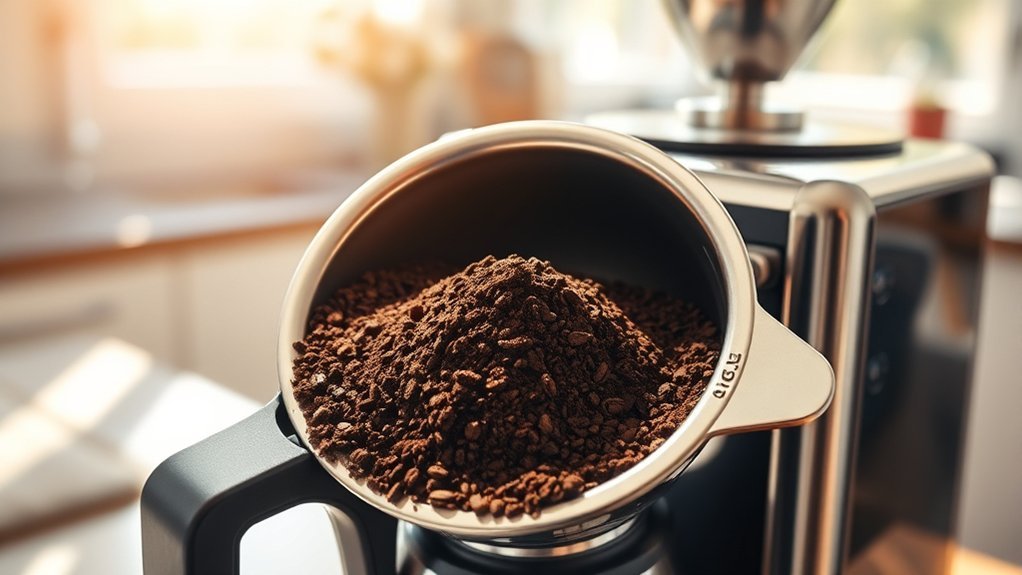
Yes, you can put coffee grounds directly in the basket without a filter, which can enhance the flavor of your brew. Brewing this way preserves the natural oils and results in a bolder taste, though it may introduce some grit. Using coarsely ground coffee helps minimize sediment. Additionally, this method reduces paper waste, making it more environmentally friendly. If you want tips on brewing methods and how to clean up afterward, you’ll find useful insights ahead.
Key Takeaways
- Yes, you can put coffee grounds directly in the basket without a filter for brewing convenience.
- Using coarsely ground coffee reduces grit and sediment in your final brew.
- Pouring water slowly allows the grounds to settle, resulting in a cleaner cup.
- Brewing without a filter enhances flavor richness and preserves natural oils.
- Regular cleaning of the basket is essential to prevent oil buildup and maintain performance.
Why Brewing Without a Filter Might Be Beneficial
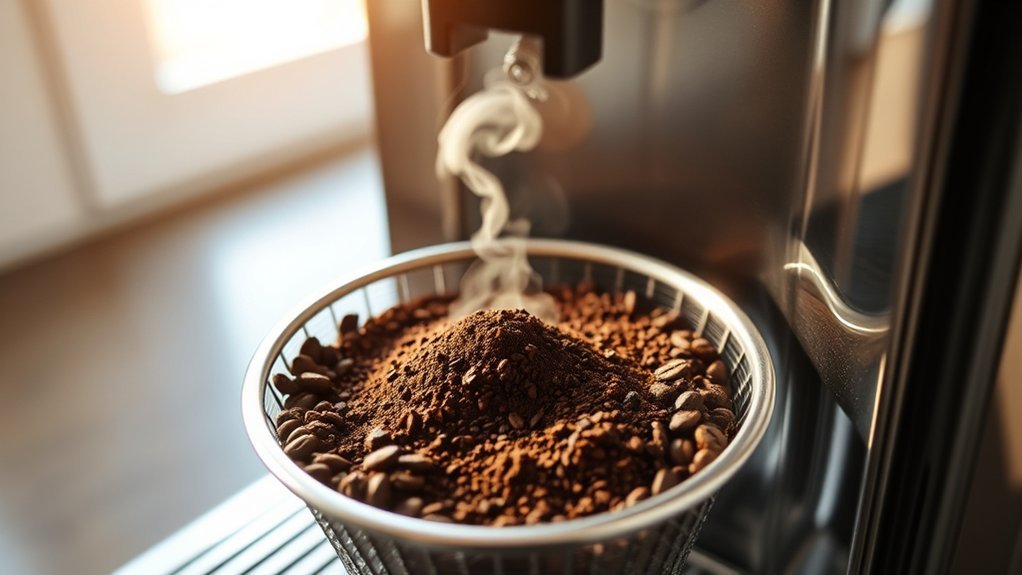
While many coffee enthusiasts rely on paper filters for brewing, you might find that brewing without a filter offers distinct advantages.
One significant benefit is the sustainability aspect; by eliminating disposable paper filters, you reduce waste and align with environmentally friendly practices.
Eliminating disposable paper filters not only reduces waste but also supports environmentally friendly practices.
Additionally, brewing without a filter preserves the natural oils and flavors in your coffee, leading to enhanced flavor richness. This method results in a fuller body and mouthfeel, providing a more robust taste experience compared to filtered coffee.
Using alternative brewing techniques, like a French press or cowboy coffee, can introduce unique flavor profiles that you may not achieve with traditional filtering.
Ultimately, you enjoy convenience and a richer cup when you skip the filter.
How to Brew Coffee Without a Filter: Methods Explained
Brewing coffee without a filter opens up a variety of methods that enhance your coffee experience. Techniques like the French press and cowboy coffee allow you to steep coffee grounds directly in water, promoting ideal flavor extraction.
You can control brew strength by adjusting the steeping time. For a quick alternative, try using a clean cloth napkin to hold the grounds while pouring hot water over them. This mimics a pour-over setup, delivering a rich flavor profile.
Simmering finely ground coffee in Turkish or Vietnamese styles also yields a robust taste, with sediment settling naturally. Cold brew is another excellent option, steeping coarse grounds in cold water for smooth coffee that requires minimal filtering.
Using Coffee Grounds in the Basket: A Practical Guide
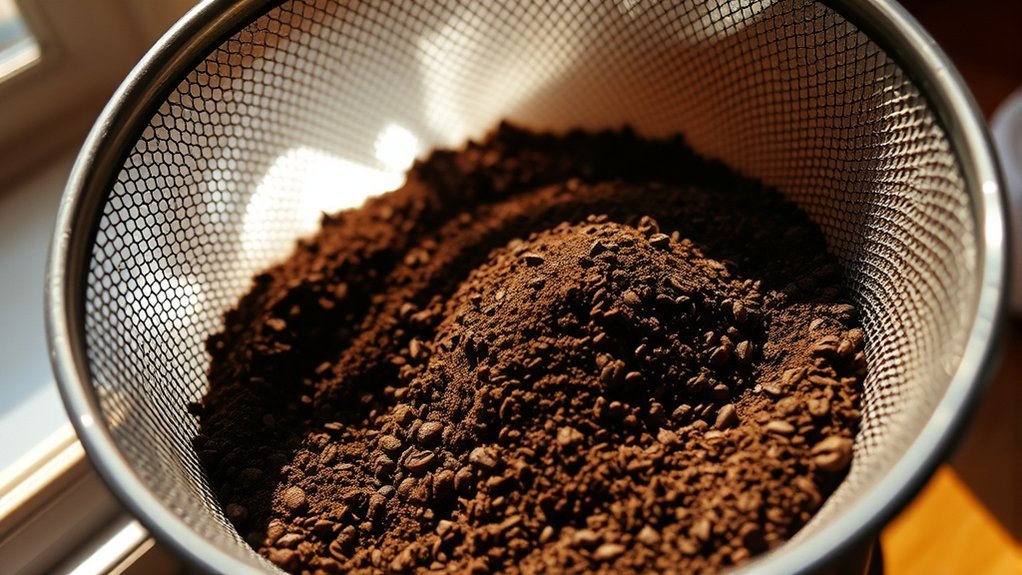
Using coffee grounds directly in the basket can be a convenient alternative when you’re short on filters, but it comes with some trade-offs.
You’ll want to explore improvised filter techniques and consider coarsely ground coffee to reduce grit.
Additionally, applying specific tips can help you achieve a cleaner cup while still enjoying the rich flavors of your brew.
Alternative Brewing Methods
If you’re looking to explore alternative brewing methods, putting coffee grounds directly in the basket can be a practical choice, though it comes with challenges. This method may yield a gritty cup due to fine grounds escaping into the brew. To enhance your coffee health, consider using coarser grounds to minimize sediment. Pour slowly and let the grounds settle for the best results.
| Technique | Impact on Taste |
|---|---|
| Coarse grind | Reduces sediment |
| Slow pouring | Enhances flavor clarity |
| Fine mesh sieve | Strains out fine grinds |
| Clean equipment | Prevents off-flavors |
Experimenting with these techniques can lead to a more enjoyable and satisfying coffee experience.
Improvised Filter Techniques
Exploring improvised filter techniques can greatly enhance your coffee experience when opting to brew with coffee grounds directly in the basket.
Using improvised materials like a fine mesh sieve or cheesecloth after brewing can effectively strain out grounds, minimizing grit in your cup.
Alternatively, you can use a paper towel or cloth as a makeshift filter, which helps contain the coffee grounds while allowing the brew to extract flavors.
Adjusting your grind size to coarser can also reduce sediment.
Additionally, pour slowly and let the grounds settle at the bottom before serving; these filtration alternatives can lead to a clearer, more enjoyable cup.
Embracing these techniques can transform your brewing experience.
Tips for Grit-Free Coffee
Brewing coffee directly with grounds in the basket can often result in a gritty cup, but there are effective strategies to achieve a cleaner brew.
Start by adjusting your grind size to a coarser texture; this minimizes fine particles that can escape during coffee extraction.
After brewing, let the coffee sit for a few minutes to allow the grounds to settle at the bottom, aiding in sediment reduction.
When pouring, do it slowly and steadily to keep the grounds from mixing into your cup.
For an alternative method, consider using a French press, which delivers rich flavor while effectively reducing grit.
Common Filterless Coffee Brewing Methods
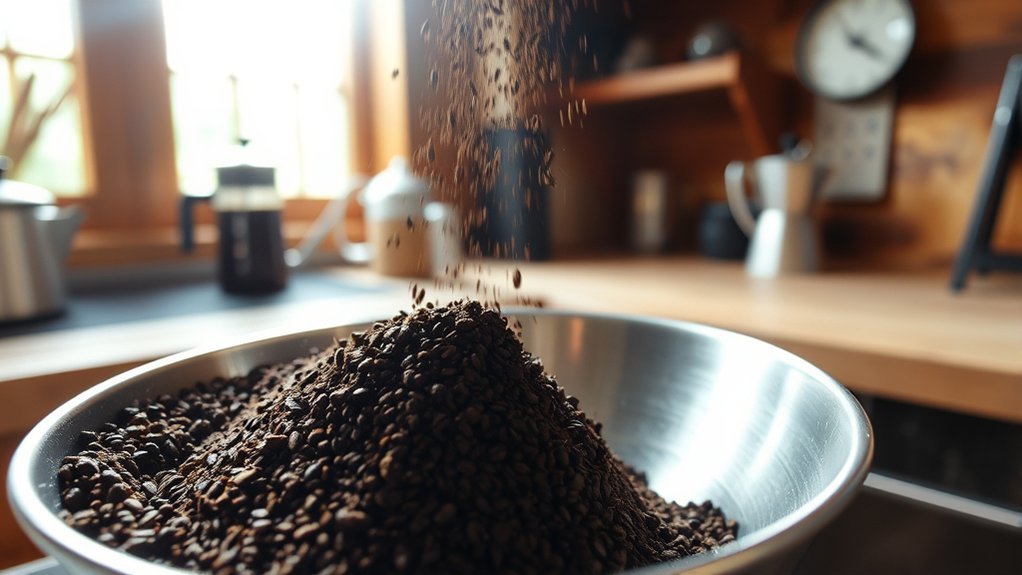
When you explore common filterless coffee brewing methods, you’ll encounter techniques like the French press and Turkish coffee that highlight the richness of flavor without the need for traditional filters.
Each method brings its unique characteristics, whether it’s the robust body of cowboy coffee or the smoothness of cold brew.
Understanding these approaches can enhance your brewing experience and appreciation for coffee’s diverse profiles.
Popular Coffee Brewing Methods
How can you enjoy a rich cup of coffee without the hassle of filters? Several popular filterless brewing methods cater to various brewing preferences and deliver distinct flavor profiles.
| Method | Description | Flavor Profile |
|---|---|---|
| French Press | Steeps grounds in hot water for a robust taste. | Rich, full-bodied |
| Turkish Coffee | Simmered finely ground coffee in a cezve. | Thick, aromatic |
| Cowboy Coffee | Boils grounds in water, then settles before pouring. | Rustic, bold |
| Vietnamese Coffee | Drips through a phin filter, capturing sediment. | Sweet, strong |
| Cold Brew | Coarse grounds steeped in cold water for hours. | Smooth, less acidic |
Experimenting with these methods can enhance your coffee experience, providing unique flavors without filters.
Unique Techniques Without Filters
Exploring filterless coffee brewing methods opens up a world of unique techniques that enhance the coffee experience.
If you prefer a more rustic approach, consider the French press or Turkish coffee, where grounds steep in hot water and are separated by plunging or pouring.
Cowboy coffee is another technique, involving boiling grounds directly in water and allowing them to settle.
The Moka pot efficiently brews coffee using pressure to separate grounds, while cold brew requires steeping coarsely ground coffee overnight in cold water, then straining through a fine mesh sieve.
Each of these brew techniques caters to different coffee preferences, allowing you to experiment and discover what resonates with your taste buds, all without needing a filter.
How to Minimize Grit in Your Brew
Ever wondered why your coffee sometimes ends up gritty? To minimize grit, focus on grind consistency. Using a coarser grind allows for better filtration, reducing fine particles that slip through.
When brewing, pour your coffee slowly, giving the grounds time to settle; this way, heavier particles sink to the bottom, preventing grit in your cup. Additionally, consider straining your brewed coffee through a fine mesh sieve or cheesecloth to catch most grounds.
Adding a layer of larger coffee grounds on top of finer ones can also serve as a natural barrier. Finally, experiment with steeping time and water temperature; optimizing these brewing techniques can enhance extraction while minimizing bitterness and sediment in your brew.
How Grind Size Affects Coffee Flavor
Your choice of grind size directly impacts the extraction rate and overall flavor profile of your coffee.
Coarse grinds slow down extraction, yielding a smoother taste, while finer grinds extract quickly, often resulting in bitterness if over-brewed.
Understanding these variations helps you optimize your brewing method for the best flavor experience.
Impact of Grind Size
Although many factors contribute to the flavor of coffee, grind size plays an essential role in determining how effectively flavors, oils, and caffeine are extracted during brewing.
Finer grinds allow for quicker extraction, enhancing bold flavors but risking over-extraction and bitterness. Coarser grinds, ideal for immersion methods like the French press, help maintain flavor balance, minimizing bitterness while allowing sediment to settle.
Medium grinds, commonly used in drip coffee, strike a balance between flavor extraction and flow rate, leading to a smooth cup.
Extraction Rate Variations
As you adjust the grind size of your coffee, you’ll notice a direct impact on the extraction rate, which ultimately shapes the flavor profile of your brew. Finer grinds expose more surface area, accelerating extraction and potentially leading to bitterness if over-extracted.
This grind impact is vital when selecting extraction techniques; for instance, methods like the French press or cowboy coffee benefit from a medium to coarse grind to allow for a smoother, balanced extraction. These coarser grinds reduce sediment and prevent over-extraction.
Conversely, using a fine grind in inappropriate brewing methods can result in a gritty texture and unpleasant taste. A balanced 1:15 coffee-to-water ratio often serves as a guideline for ideal extraction, ensuring you achieve the desired flavor nuances.
Flavor Profile Differences
When considering how grind size influences the flavor profile of coffee, it’s essential to recognize that finer grinds can rapidly extract flavors, leading to a more intense and potentially bitter brew if not monitored closely.
The grind size directly impacts flavor extraction, which can result in distinct taste experiences:
- Finer grinds enhance concentration and richness in methods like espresso but risk over-extraction.
- Coarse grinds, suitable for French press, provide a smoother, fuller body with reduced bitterness.
- Medium grinds strike a balance for drip coffee, optimizing flavor extraction without sacrificing brew time.
Understanding these nuances allows you to tailor your grind size for your preferred coffee experience, ensuring you enjoy the flavors your beans have to offer.
How to Clean Your Coffee Maker After Brewing Without a Filter
Cleaning your coffee maker after brewing without a filter is essential for maintaining its performance and ensuring great-tasting coffee. Start by turning off the machine and letting it cool to avoid burns. Remove the brew basket, dispose of the coffee grounds, and rinse both the brew basket and carafe with warm water. This prevents oil buildup that could affect flavor. Use a vinegar-water mixture (1:1 ratio) to run a cleaning cycle, eliminating lingering residue. Regular deep cleaning every few weeks, especially when brewing without filters, is vital.
| Cleaning Techniques | Maintenance Tips |
|---|---|
| Rinse immediately | Deep clean regularly |
| Vinegar cycle | Monitor for buildup |
| Dispose of grounds well | Use warm water |
Is Filterless Coffee Better for the Environment?
Is brewing coffee without filters truly a more sustainable choice? By choosing filterless methods, you can greatly reduce your environmental impact.
Here are some sustainability practices to evaluate:
- Reduced Paper Waste: Millions of paper filters end up in landfills each year. Opting for filterless brewing decreases this waste.
- Eco-Friendly Alternatives: Methods like French press or cowboy coffee eliminate disposable materials, promoting renewable resources.
- Natural Oils Retention: Filterless brewing preserves coffee’s natural oils, enhancing flavor while avoiding waste linked to traditional filters.
Taste Comparison: Filtered vs. Filterless Brewing
Although both filtered and filterless brewing methods have their merits, the taste profiles they produce can differ markedly, impacting your coffee experience.
Filterless brewing methods, like the French press, allow natural oils and flavors to remain in your cup, resulting in bold flavors and a richer, more robust taste. In contrast, filtered coffee offers a cleaner, smoother profile, often stripping away some of the oils that contribute to a gritty texture.
Studies show that filterless methods can elevate compounds like cafestol and kahweol, enhancing flavor and potential health benefits. While filtered coffee may have less sediment, filterless brewing provides a fuller mouthfeel and a more aromatic experience, appealing to those who crave stronger, more intense coffee flavors.
Can You Put Coffee Grounds in the Basket Without a Filter?
Have you ever wondered if you can brew coffee without a filter? Yes, you can put coffee grounds directly in the basket, but this method might compromise coffee quality by producing gritty coffee.
If you choose this brewing technique, consider the following:
- Use a coarser grind to minimize sediment in your cup.
- Allow the coffee to brew, then let the grounds settle before pouring to reduce grit.
- Regularly clean your coffee maker to prevent buildup of oils and residues.
Brewing without a filter can enhance flavor by preserving natural oils typically absorbed by paper filters.
However, it’s essential to balance these benefits against the risk of sediment affecting your drinking experience.
Frequently Asked Questions
Can Using Coffee Grounds Without a Filter Damage My Coffee Maker?
Using coffee grounds without a filter can cause clogs, impacting your coffee maker maintenance. It may also affect brewing techniques, leading to uneven extraction and potential damage. Always use a filter for ideal performance and longevity.
What Grind Size Is Best for Brewing Without a Filter?
Picture ocean waves crashing gently on the shore; that’s how a coarse grind interacts with water. For brewing methods without a filter, coarse grind allows ideal extraction, balancing flavor and strength without clogging your coffee maker.
How Does Filterless Coffee Impact Caffeine Content?
Filterless coffee can enhance caffeine absorption due to increased brewing efficiency. Without a filter, more oils and compounds remain in the brew, potentially boosting caffeine levels, leading to a stronger and more potent coffee experience.
Can I Reuse Coffee Grounds Brewed Without a Filter?
You can reuse coffee grounds brewed without a filter, but the flavor and caffeine content diminish considerably. Experimenting with various brewing techniques may yield interesting results, but expect a weaker cup with each subsequent brew.
Are There Health Risks Associated With Drinking Sediment in Coffee?
Drinking coffee with sediment can pose health risks, but it also offers health benefits. The sediment effects might include increased cholesterol levels and digestive issues, so be cautious about how much you’re consuming daily.
Conclusion
In summary, brewing coffee without a filter can reveal a world of bold flavors and unique aromas that might just elevate your morning ritual to celestial heights. While you can certainly put coffee grounds directly in the basket, it’s important to be mindful of the potential grit and cleanup involved. By exploring filterless methods and understanding their environmental impact, you can enjoy a rich, unfiltered cup while making informed choices about your brewing practices.


