
You shouldn’t put milk in a coffee maker because it can ruin your coffee’s flavor and compromise safety. Milky residue can clog the machine, lead to bacterial growth, and create burnt flavors. Plus, using milk interferes with proper extraction, making your coffee taste bland. Cleaning up is also a hassle, with stubborn buildup to tackle. Instead, consider some alternative methods for frothing milk that keep your coffee experience delicious and safe. There’s more to explore about brewing effectively!
Key Takeaways
- Using milk in a coffee maker can compromise flavor extraction and lead to burnt milk, ruining the coffee’s taste.
- Milk promotes bacterial growth, increasing the risk of foodborne illnesses and digestive issues.
- Residual milk can clog coffee maker lines, potentially causing permanent damage and complicating cleaning routines.
- Heating milk separately maintains the integrity of the brewing process and prevents rancid flavors in future brews.
- Regular cleaning of the coffee maker becomes challenging with milk, as stubborn residue can harbor harmful bacteria.
The Negative Impact of Milk on Coffee Flavor
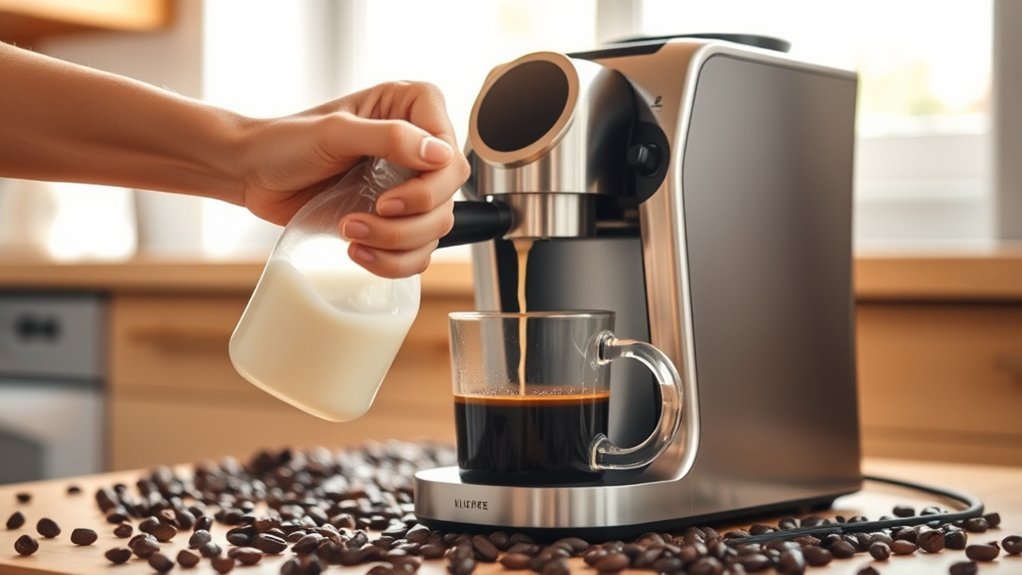
When you consider brewing your coffee with milk instead of water, think twice about the potential downsides. The thicker milk consistency interferes with flavor extraction, leading to a cup that’s less flavorful than you’d expect.
Coffee makers are engineered for water; substituting milk compromises the extraction process, resulting in disappointing brews. Additionally, burnt milk can ruin the taste of your coffee, creating an unpleasant flavor profile that lingers in subsequent pots.
Residual milk may even go rancid, tainting future brews with off-flavors. While different types of milk can add unique textures and tastes, brewing them improperly can overshadow these nuances, ultimately delivering an unappealing cup of coffee.
The Health Risks of Using Milk in Coffee Makers
Although brewing coffee with milk might seem like a convenient option, it poses significant health risks that shouldn’t be overlooked. Using milk in your coffee maker creates a breeding ground for bacterial growth, leading to serious digestive issues, vomiting, and diarrhea if ingested. Residual milk spoils quickly, producing unpleasant odors that taint future brews.
| Health Risks | Effects | Prevention |
|---|---|---|
| Bacterial Growth | Foodborne illnesses | Avoid milk in makers |
| Digestive Issues | Nausea, cramps, diarrhea | Clean thoroughly |
| Spoilage | Bad taste, rancid smell | Use milk separately |
| Clogging | Equipment damage | Regular maintenance |
To guarantee safety, avoid adding milk directly to coffee makers and opt for alternative methods.
How Milk Can Damage Your Coffee Maker
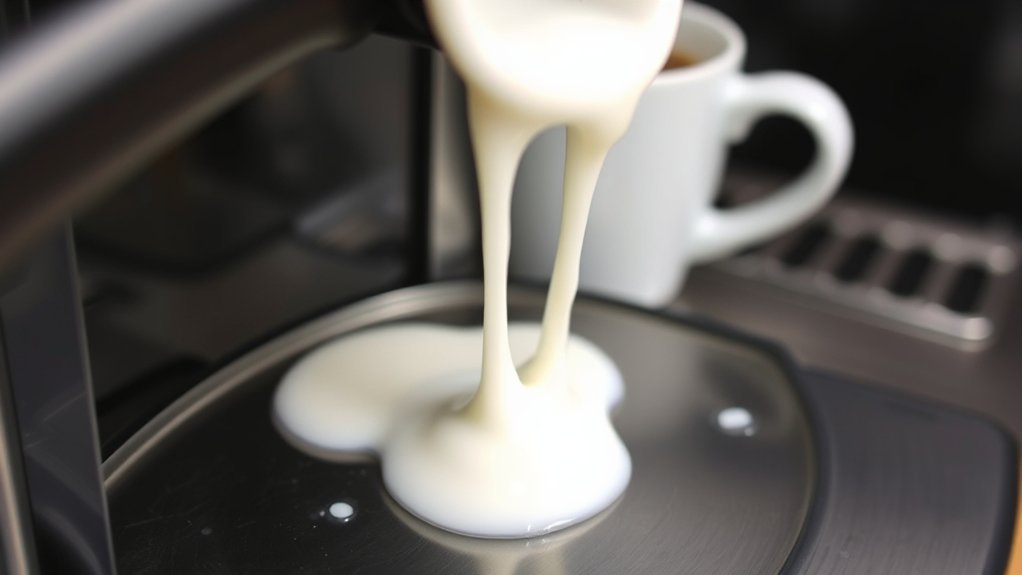
Using milk in your coffee maker can lead to a host of problems that may compromise both the machine’s functionality and your coffee’s flavor.
Here’s how milk can cause coffee maker damage:
- Clogging: Milk’s thickness can lead to milk clogging in the lines, risking permanent damage.
- Burnt Buildup: The slower movement of milk can create burnt residue, harming the appliance over time.
- Bacteria Growth: Residual milk can harbor bacteria, posing health risks if you consume the coffee.
- Flavor Degradation: Continuous use of milk can severely degrade the taste of your coffee, making each brew less enjoyable.
The Hassle of Cleaning a Coffee Maker With Milk
Cleaning a coffee maker after using milk is no simple task.
You’ll face the challenge of stubborn residue buildup that often requires disassembling parts of the machine, making it a time-consuming process.
Plus, if you don’t clean it thoroughly, unpleasant odors can linger, ruining the taste of your next brew.
Residue Buildup Challenges
When you opt to use milk in your coffee maker, you’re setting yourself up for a significant cleaning challenge. The residue buildup from milk can create a thick layer of proteins and fats that complicates your cleaning routine. This residue traps bacteria, making hygiene a serious concern.
Here are a few cleaning techniques to ponder:
- Use hot, soapy water to soak removable parts immediately after use.
- Regularly run a vinegar solution through the machine to help break down buildup.
- Disassemble components as needed for thorough cleaning.
- Avoid using milk frequently to minimize residue issues.
Neglecting this cleaning can lead to unpleasant odors and even damage, so it’s best to think twice before pouring milk into your coffee maker.
Time-Consuming Disassembly Process
Although it might seem convenient to brew coffee with milk directly in your coffee maker, the time-consuming disassembly process that follows can be a real hassle.
Residual milk often gets trapped in intricate mechanisms, making thorough cleaning essential. You’ll need to employ specific disassembly techniques to access every component, which can be tedious.
The thick residue left by milk not only complicates the cleaning but also necessitates multiple cycles to remove burnt buildup. Without proper maintenance tips, like immediate cleaning after use, you risk creating a breeding ground for bacteria.
Ultimately, the effort required to clean your coffee maker after using milk far outweighs the convenience of brewing with it in the first place.
Unpleasant Odor Issues
Using milk in your coffee maker might seem like a shortcut to a creamy brew, but it can lead to unpleasant odors that ruin your coffee experience.
The residual milk can quickly spoil, causing rancid smells that taint future cups. Additionally, it creates a breeding ground for bacteria growth and mold.
Here’s what you might face:
- Stubborn residue from milk’s thick proteins and fats
- Time-consuming disassembly for effective cleaning
- Persistent sour odors even after cleaning
- A less enjoyable coffee experience overall
Cleaning up after using milk is a hassle, and the lingering smells can make your coffee maker feel more like a burden than a joy.
It’s best to keep the milk out and maintain a fresh brew.
Tips for Frothing Milk Without a Coffee Maker
If you want to froth milk without a coffee maker, you’ve got some great options at your fingertips.
The microwave method, French press technique, and even the jar shaking method can all deliver that creamy texture you crave.
Let’s break down these simple yet effective ways to elevate your coffee experience.
Microwave Method Explained
Frothing milk in the microwave is a simple and effective way to elevate your coffee experience without needing specialized equipment. Here’s how to do it:
- Fill a microwave-safe mug with cold milk, leaving space for expansion.
- Heat the milk for about 35 seconds, ensuring it doesn’t boil.
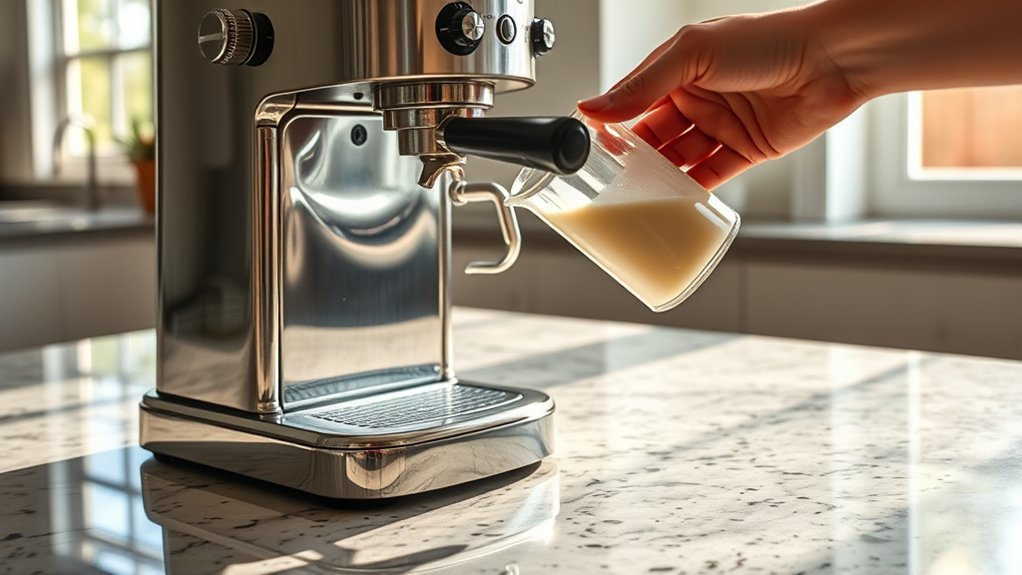
- Pour the heated milk into a French press and pump the plunger up and down for about 30 seconds to create froth.
- Alternatively, shake the milk in a glass jar after heating for a foamy texture.
These microwave frothing techniques allow you to enjoy frothed milk in your coffee easily and hygienically, avoiding the complications of using a coffee maker.
Enjoy your rich, creamy coffee!
French Press Technique
While many coffee enthusiasts rely on espresso machines for frothed milk, the French press offers a surprisingly effective alternative that’s both simple and accessible.
To start milk frothing, heat your cold milk in the microwave or on the stove until it’s warm—just don’t let it boil.
Pour the warm milk into the French press, place the lid on, and pump the plunger up and down for about 30 seconds. This technique incorporates air, doubling the volume and creating a velvety texture.
Not only is this method efficient with minimal cleanup, but it also allows you to experiment with different types of milk, like almond or oat, for unique flavors and textures in your coffee.
Jar Shaking Method
One of the simplest ways to froth milk at home is by using the jar shaking method. This technique is quick, requires minimal cleanup, and doesn’t need specialized equipment.
Here’s how to do it effectively:
- Fill a clean, empty glass jar with cold milk, leaving space for expansion.
- Secure the lid tightly and shake vigorously for 30-60 seconds, until the milk doubles in volume and becomes frothy.
- Remove the lid and microwave the jar (without the lid) for about 30 seconds to heat the frothed milk, being careful not to boil it.
- For the best results, use whole milk or a higher fat milk alternative for creamier foam.
Enjoy your deliciously frothed milk with ease!
Healthier Ways to Enjoy Milk in Coffee
Enjoying milk in your coffee can be a delightful experience, but there are healthier methods to incorporate it without compromising flavor or nutrition. Instead of adding milk directly to your coffee maker, heat it in the microwave or on the stove. Consider using a French press to froth or steam milk, enhancing your coffee’s texture. Explore plant-based options like almond or oat milk; they’re lower in calories and allergens compared to whole milk. You can also elevate your coffee with spices like cinnamon for added flavor without the milk.
| Method | Benefits |
|---|---|
| Heating Milk Separately | Prevents bacterial growth |
| Using Plant-Based Options | Fewer calories and allergens |
| Frothing at Home | Adds creamy texture easily |
Final Thoughts on Brewing Coffee Safely and Deliciously
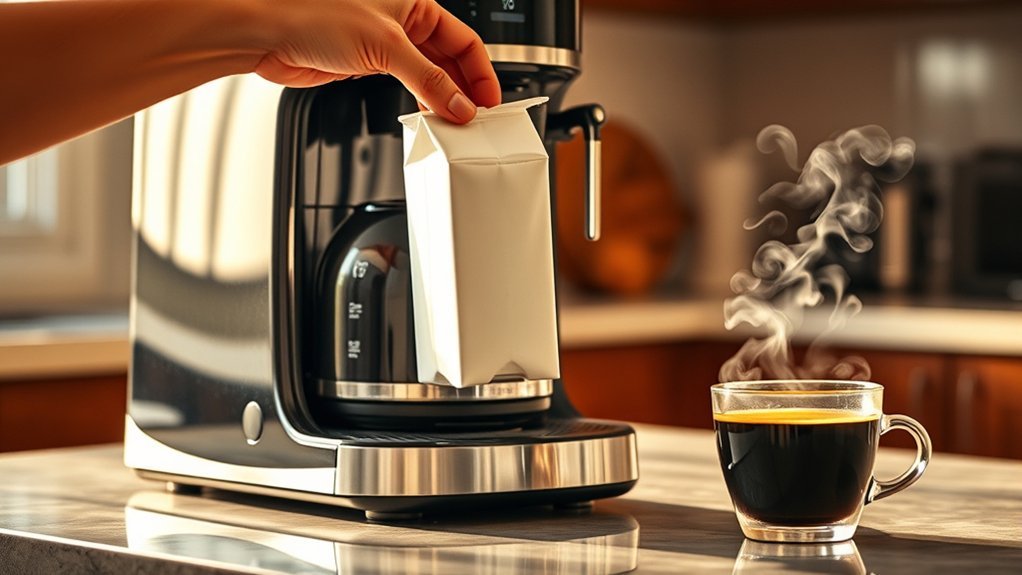
Brewing coffee safely and deliciously hinges on understanding the best practices for incorporating milk. Instead of using milk directly in your coffee maker, consider these tips for a superior coffee brewing experience:
- Brew your coffee first with water to guarantee proper extraction.
- Use frothed or heated milk alternatives after brewing, like almond or oat milk, for added flavor without the risks.
- Clean your coffee maker thoroughly and regularly to avoid bacteria and residue buildup.
- Experiment with methods such as a French press or microwave for heating milk to enhance taste.
Frequently Asked Questions
Can I Use Almond Milk in My Coffee Maker?
You can use almond milk in your coffee maker, but it can clog the machine. Almond milk offers benefits like lower calories and added nutrients, enhancing your coffee flavor while keeping it lighter and healthier.
How Long Can I Leave Milk in the Coffee Maker?
Leaving milk in a coffee maker for more than two hours invites spoilage, turning your brew into a science experiment gone wrong. Always clean immediately to prevent curdling and bacteria growth, ensuring your coffee stays delightful.
What Happens if I Accidentally Brew With Milk?
If you accidentally brew with milk, you’ll face milk residue buildup, making cleaning difficult. The residue clogs components and can lead to unpleasant odors or even mold, so it’s essential to clean thoroughly afterward.
Can I Steam Milk Using a Coffee Maker?
You can’t steam milk directly using a coffee machine, but you can froth it with a steam wand if your coffee maker has one. Just make sure to use fresh, cold milk for the best results.
Is There a Coffee Maker Designed for Milk Use?
Think of a milk frother as a skilled artist, transforming plain coffee into creamy masterpieces. While traditional coffee brewers focus on coffee extraction, dedicated machines designed for milk use elevate your beverage game beautifully.
Conclusion
To sum up, while it might be tempting to add milk directly to your coffee maker, it’s best to steer clear. As the saying goes, “a stitch in time saves nine,” and avoiding milk can save you from flavor loss, health risks, and the headache of cleaning. Instead, consider frothing milk separately or exploring healthier alternatives to enjoy that creamy texture. By brewing safely and deliciously, you can elevate your coffee experience without the hassle.