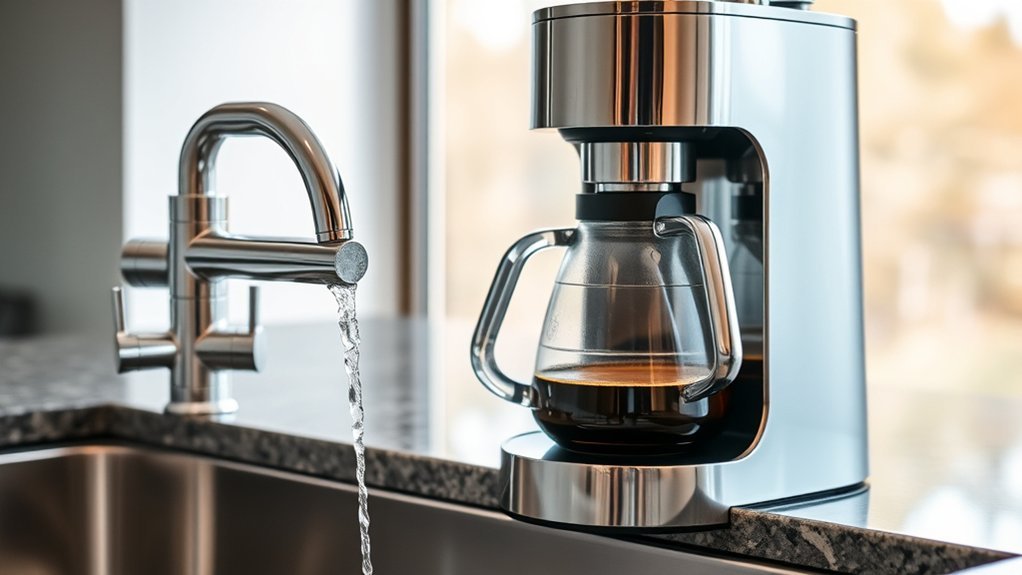
Yes, you can use tap water in your coffee maker, but it might not give you the best flavor. Tap water can contain chlorine and high mineral levels that affect your brew and leave a bitter taste. To guarantee a great cup, test your water’s TDS level and consider filtering it to improve taste and quality. Curious about how to enhance your tap water or what alternatives exist for brewing? There’s more to explore!
Key Takeaways
- Tap water can be used in a coffee maker, but its quality significantly affects flavor extraction and overall coffee experience.
- Ideal TDS levels for brewing coffee with tap water should be between 150-250 ppm to avoid under or over-extraction.
- Unpleasant odors or high mineral content in tap water can lead to bitter flavors and limescale buildup in coffee machines.
- Filtering tap water improves taste by removing chlorine and impurities, enhancing flavor extraction during brewing.
- Regular maintenance and testing of water hardness and TDS levels ensure optimal coffee brewing quality with tap water.
Is My Tap Water Good Enough for Brewing Coffee?
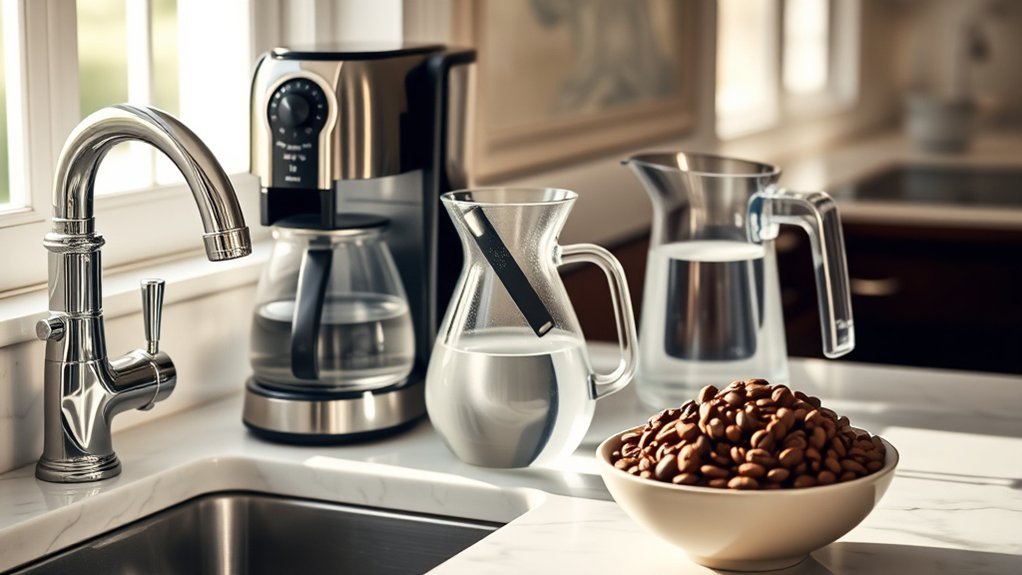
When it comes to brewing the perfect cup of coffee, you might wonder if your tap water is up to the task. The suitability of your tap water largely hinges on local water sources and its overall quality.
Ideal coffee brewing water should have a mineral balance with a total dissolved solids (TDS) level around 150 ppm. If it falls below 75 ppm, you risk under-extraction, while levels above 250 ppm can lead to muddled flavors.
Additionally, pay attention to any odors, like chlorine or sulfur, which can spoil your brew. Testing for water hardness is also essential; if your water produces foam with dish soap, it’s likely soft enough for your coffee.
Regular descaling will keep your coffee machine in top shape!
What Key Drawbacks Are There to Using Tap Water for Brewing Coffee?
Although using tap water for brewing coffee might seem convenient, it comes with several key drawbacks that can affect your cup’s quality.
Here are three issues to take into account:
- Chlorine and Odors: Tap water often contains chlorine, which can impart bitter flavors and negatively impact the creamy layer of espresso.
- Mineral Content: High mineral levels in tap water can lead to limescale buildup in your coffee maker, requiring more frequent descaling and affecting water temperature during brewing.
- Flavor Muddling: Hard water can mute coffee flavors and cause over-extraction, making your cup less enjoyable.
How to Assess Your Tap Water for Brewing Coffee?
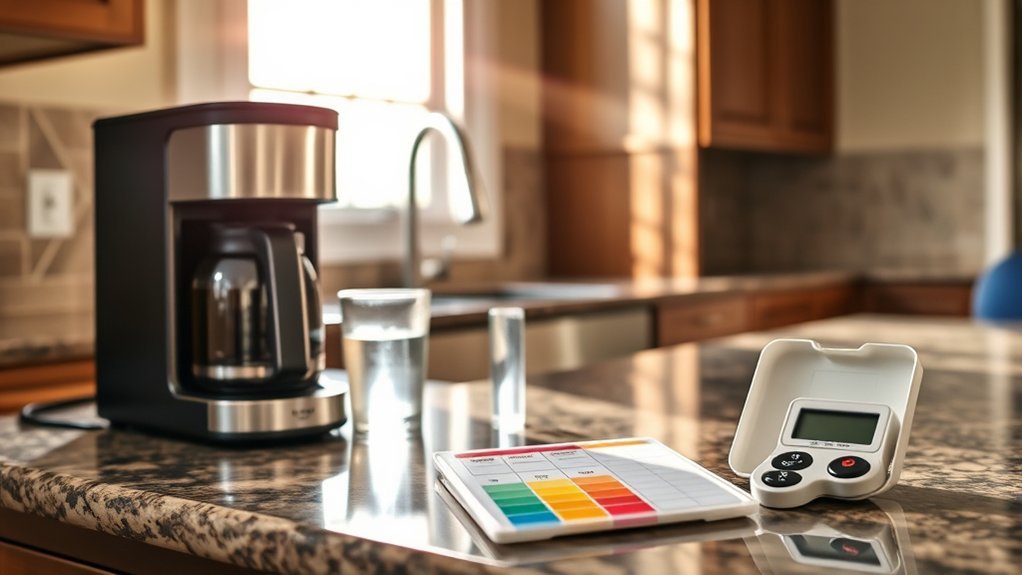
To brew the best coffee, start by evaluating your tap water’s odor and taste; any strong smells can signal unwanted flavors in your brew.
Next, test the hardness and total dissolved solids (TDS) to guarantee your water is ideal for coffee.
A quick taste test against known good sources can also help you determine if your tap water is up to par.
Assess Odor And Taste
How can you guarantee your tap water is up to par for brewing coffee? Start by evaluating both the odor and taste, as these factors greatly impact your brew’s flavor.
Here are three steps to help you evaluate your tap water:
- Smell: Pay attention to any strong odors, like chlorine or an eggy scent. These can indicate poor quality.
- Taste: Conduct a simple taste test. Compare your tap water to known good quality water, and note any off-flavors.
- Mineral Balance: If your water has high mineral content, consider filtering it to improve its quality.
Test Hardness And TDS
After evaluating the odor and taste of your tap water, it’s important to test its hardness and Total Dissolved Solids (TDS). Understanding your water chemistry helps you maintain the right mineral balance for brewing coffee. You can easily test hardness with dish soap; if you see foam, your water’s softer, while a lack of foam indicates harder water. Use inexpensive TDS test kits to verify levels are around 150 ppm for ideal brewing. Here’s a quick reference table:
| TDS Level (ppm) | Extraction Quality |
|---|---|
| Below 75 | Under-extracted |
| 50-175 | Ideal Balance |
| 150 | Ideal Brewing |
| 250+ | Over-extracted |
| Above 300 | Poor Quality |
With these tests, you can brew better coffee!
What Are the Best Practices for Brewing Coffee With Tap Water?
To brew the best coffee with tap water, start by testing your water quality to guarantee it meets ideal TDS levels.
Filtering your water can greatly enhance its taste, removing unwanted impurities like chlorine.
Don’t forget to perform regular maintenance on your coffee maker to prevent limescale buildup and keep your brews tasting fresh.
Test Your Water Quality
Is your tap water affecting the flavor of your coffee? Testing your water quality is essential to guarantee you’re brewing the best cup possible.
Here are three best practices to take into account:
- Check Total Dissolved Solids (TDS): Ideal TDS levels for coffee should be between 150 to 250 ppm. This balance enhances flavor extraction without introducing bitterness.
- Identify Smells and Odors: Regularly check for chlorine or sulfur odors, which are clear quality indicators that could ruin your brew.
- Conduct a Hardness Test: Using dish soap, assess if your water’s too hard. Foamy results indicate softer water, generally better for brewing.
Filter for Better Taste
Brewing a great cup of coffee starts with the quality of water you use, and filtering your tap water can make all the difference.
Using filtered water greatly enhances coffee flavor by removing chlorine and impurities that can create bitterness. With an ideal total dissolved solids (TDS) level of around 150 ppm for best flavor extraction, filtering helps achieve this balance.
Consider water filtration methods like activated carbon filters, such as those from PUR, to effectively eliminate undesirable tastes.
Maintaining a pH level close to neutral (around 7.0) in your brewing water is essential for preserving coffee’s natural flavors and acidity.
Embracing these filtered water benefits elevates your coffee experience and guarantees a delicious brew every time.
Regular Maintenance Required
While using tap water can be convenient for your coffee brewing, regular maintenance is key to ensuring great flavor and machine longevity.
Here are some best practices to keep in mind:
- Descale regularly: Use a 1:1 solution of water and white vinegar every few months. This descaling method helps prevent mineral buildup, especially in automatic drip machines.
- Monitor maintenance frequency: Adjust your descaling schedule based on water hardness. Softer water may require less frequent maintenance.
- Check water quality: Pay attention to any changes in taste or odor. This can signal the need for immediate maintenance or adjustments in your brewing practices.
Why Do Baristas Prefer Filtered Water for Brewing Coffee?
Have you ever wondered why baristas go to such lengths to guarantee they use filtered water for brewing coffee? It all comes down to water chemistry. Filtered water removes chlorine and impurities that can ruin the flavor and aroma of your coffee.
When you brew with high-quality water, you’re enhancing flavor extraction and achieving that rich, balanced brew you crave.
Professional baristas know that ideal brewing conditions considerably impact the taste profile of the coffee served. For instance, Starbucks employs sophisticated filtration systems to ensure their drinks are free from contaminants that compromise taste.
When you prioritize water quality, you’re not just making coffee; you’re crafting an exceptional experience, making every sip as delightful as possible.
How Can I Improve My Tap Water for Better Coffee Brews?
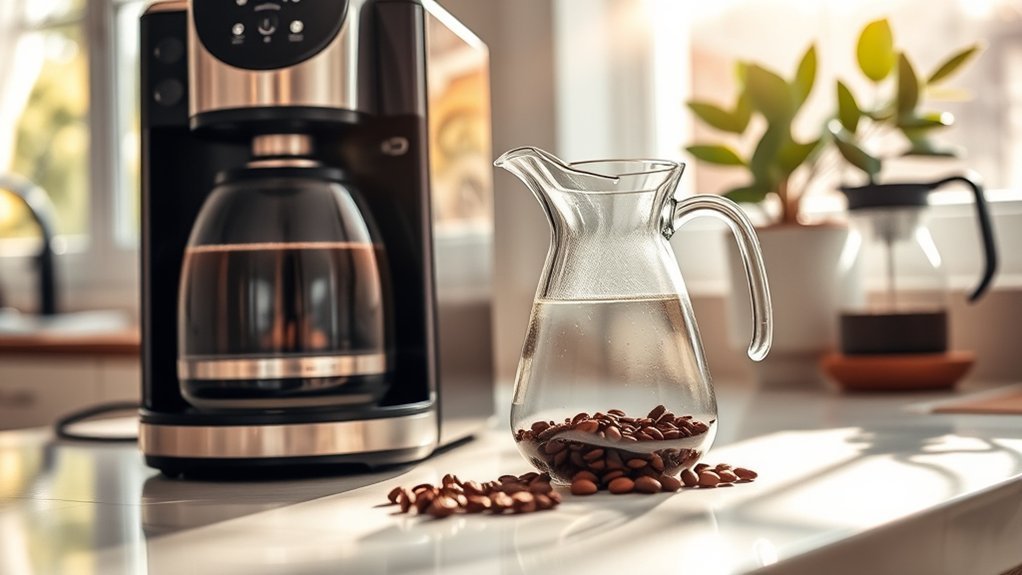
Using filtered water is just one way to elevate your coffee experience, but improving your tap water can also make a significant difference.
Here are three effective methods to enhance your tap water for better coffee brews:
- Use Activated Carbon Filters: These can remove chlorine and impurities, which greatly enhances the flavor of your coffee.
- Test Total Dissolved Solids (TDS): Aim for a TDS level of around 150 ppm. This balance helps avoid under- or over-extraction during brewing methods.
- Add Citric Acid or Lemon Juice: This can help counteract undesirable flavors from high mineral content, improving your brew’s overall taste.
What Alternatives to Tap Water Should I Consider for Brewing Coffee?
What alternatives to tap water can elevate your coffee brewing experience?
Consider using filtered water, which removes chlorine and impurities while keeping beneficial minerals intact, enhancing flavor extraction.
If you prefer something more natural, bottled spring water, like Volvic with a TDS of 130 mg/l, offers a balanced mineral content perfect for brewing.
Charcoal-filtered water is another excellent option, as it eliminates unwanted chemicals that can negatively affect taste.
You might also experiment with reverse osmosis (RO) water, but remember to re-mineralize it for ideal flavor.
Finally, mineral additives like Third Wave Water can customize your distilled or RO water, ensuring you achieve the perfect balance for your coffee.
Enjoy brewing!
Frequently Asked Questions
Can I Use Softened Water in My Coffee Maker?
Yes, you can use softened water in your coffee maker. However, it might alter the coffee flavor, making it taste different than expected. Experiment to find the best water for your perfect brew.
How Does Chlorine in Tap Water Affect Coffee Taste?
Using tap water with high chlorine levels can leave your coffee tasting off, like a bitter brew. Chlorine removal methods, such as filtering, can enhance your coffee flavor, making every sip more enjoyable.
Is Boiling Tap Water Before Brewing Beneficial?
Boiling tap water before brewing can enhance brewing efficiency by eliminating impurities and bacteria. This process also reveals the full flavors of your coffee, giving you a richer, more enjoyable cup. So, give it a try!
Can I Mix Tap Water With Bottled Water for Brewing?
You can absolutely mix tap water with bottled water for brewing! It’s a game-changer for water quality. Just adjust according to your brewing preferences, and you’ll enjoy a fantastic cup every time!
Does Water Temperature Impact Coffee Extraction From Tap Water?
Yes, water temperature greatly impacts coffee extraction efficiency. Higher temperatures can enhance flavor extraction, but poor water quality from tap sources might hinder the process. Always aim for ideal temperature and quality for the best brew.
Conclusion
In summary, while you can use tap water in your coffee maker, it’s important to take into account its quality. Did you know that nearly 80% of coffee drinkers believe water quality affects flavor? To enhance your brew, you might want to filter your tap water or use alternatives like bottled or spring water. By taking these steps, you’ll guarantee a richer, more satisfying coffee experience every time you brew. Happy brewing!