Coffee filter sizes are not universal, so the safest way to choose a filter is to match it to your exact brewer rather than relying on a number alone. Melitta-style cone filters use familiar sizes such as #1, #2, #4, and #6, while Hario V60, Kalita Wave, Chemex, AeroPress, basket-style coffee makers, and percolators use different sizing or compatibility systems. Filter shape and material can also change flow, sediment, body, and extraction.
Last updated: September 19, 2026
Quick Answer
Choose a coffee filter by your brewer model and filter-holder shape first. In Melitta’s current cone system, #1 fits 1-cup electric cone coffeemakers, #2 fits 2–6 cup electric and compatible 1-cup non-electric cone brewers, #4 fits 8–12 cup cone coffeemakers, and #6 fits 10-cup non-electric cone coffeemakers. Hario, Kalita, Chemex, AeroPress, basket brewers, and percolators use their own filter systems, so similar numbers do not guarantee compatibility.
Key Takeaways
- Coffee-filter size numbers are manufacturer-specific rather than a single universal standard.
- Melitta #1, #2, #4, and #6 filters fit different cone brewers; #6 is intended for compatible 10-cup non-electric cone brewers, not simply “commercial” machines.
- Basket filters are usually matched by brewer capacity and physical fit, while Hario, Kalita, Chemex, AeroPress, and percolator systems use their own filters.
- Cone and flat-bottom geometry can affect extraction and flavor, but neither shape automatically produces a richer or milder cup.
- Paper generally traps more oils and fine particles than reusable metal mesh, although exact filtration depends on the specific filter and brewer.
- Do not trim, heavily fold, or force a mismatched filter unless the brewer or filter manufacturer specifically approves that use.
Understanding Coffee Filter Sizes
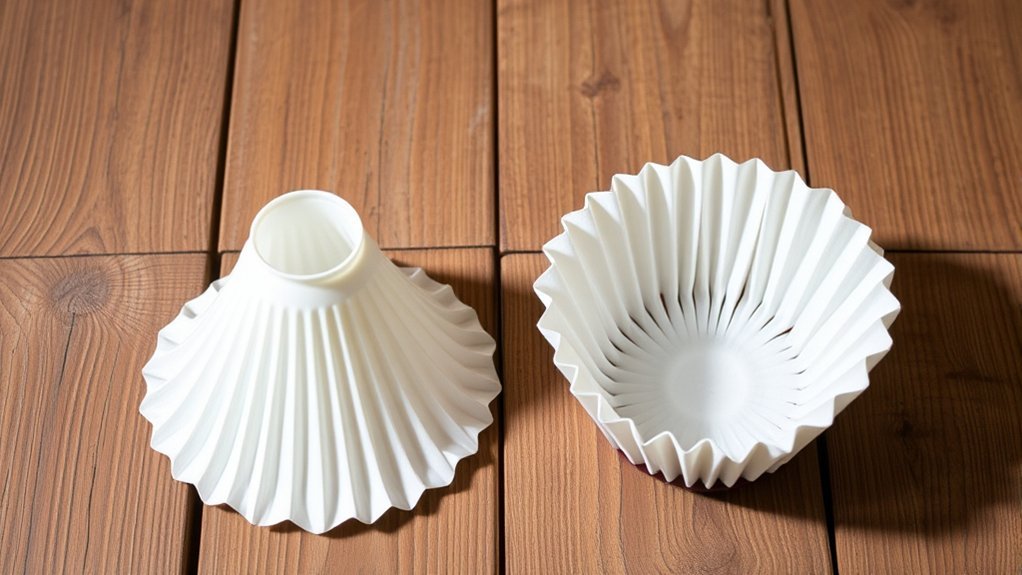
The most important rule is simple: match the filter to the brewer, not just to a number printed on the package. Coffee-filter naming differs among brands and brewing systems.
For example, Melitta uses #1, #2, #4, and #6 for several of its cone filters. Hario’s V60 system uses 01, 02, and 03. Kalita Wave uses 155 and 185. Chemex uses its own bonded-filter shapes and product codes, while AeroPress uses Standard and XL filter families.
Note: A Melitta “#2,” a Hario V60 “02,” and a Kalita “155” or “185” belong to different sizing systems. Similar numbers or brew capacities do not make filters interchangeable. Always check the brewer’s stated compatibility.
Brewer capacity can also be confusing because a manufacturer’s “cup” is not necessarily an 8-fluid-ounce household measuring cup. For example, Chemex sells its 3-cup Classic as a 15-ounce brewer, and Chemex states that its cup measurements use 5-ounce increments. When replacing filters, the brewer model is therefore more useful than translating the capacity label into household mugs.
Why Coffee Maker Cup Counts Can Be Misleading
Labels such as 4-cup, 8-cup, 10-cup, and 12-cup are useful only within the brewer manufacturer’s own system. They do not create universal filter dimensions. Two machines marketed with the same cup capacity can use different basket shapes, cone angles, filter heights, or proprietary holders.
Use cup capacity as a clue after you identify the brewer style. For example, Melitta separately sells #4 cone filters for 8–12 cup cone coffeemakers and 8–12 cup basket filters for basket-style electric coffeemakers. The capacity range may look similar, but the filters are different shapes.
Types of Coffee Filters: Cone vs. Basket
Cone and basket filters differ mainly in geometry. Cone-style holders narrow toward the bottom, while basket or flat-bottom holders support a wider coffee bed. Both can make excellent coffee when the filter, grind, dose, and brewer are properly matched.
Filter Shapes Explained
Cone filters include Melitta-style wedge cones and true conical filters such as those used in the Hario V60. Even filters that look broadly similar may have different angles, seams, paper permeability, or outlet designs, so they should not automatically be treated as interchangeable.
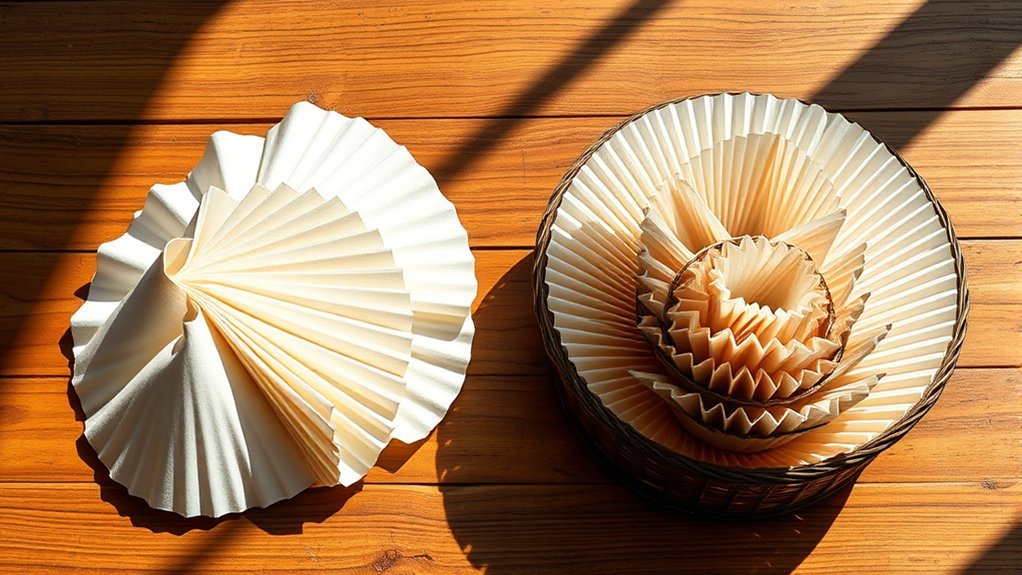
Basket filters are usually flat-bottomed with fluted or pleated walls. Melitta, for example, currently sells separate basket filters for 4–6 cup basket-style electric brewers and 8–12 cup basket-style electric brewers.
Other flat-bottom systems can be proprietary. Kalita Wave filters, for example, use a distinct waved-paper design matched to Wave drippers rather than a generic household basket filter.
Disc filters are another category. They lie flat in a percolator or other compatible filter basket instead of forming a cone or pleated basket. Melitta currently sells a 3.5-inch disc filter designed to lie flat in a percolator basket.
Physical fit matters. A filter that is too small may lose support or fold inward as water and grounds add weight. A filter that is too large may bunch against the holder, interfere with drainage, or make it harder to keep the coffee bed evenly contained.
Brewing Method Compatibility
Cone filters are common in manual pour-over devices and cone-basket automatic drip machines. Basket filters are common in traditional automatic drip brewers, although flat-bottom manual brewers also exist.
The brewer manufacturer should have the final say. Hario specifically designs its V60 paper filters around matching V60 dripper sizes. Kalita sells separate Wave 155 and Wave 185 filters for its matched flat-bottom drippers. Chemex likewise specifies dedicated bonded filters for its brewers rather than generic cone papers.
Flavor Impact Differences
Filter geometry can change the depth and shape of the coffee bed, how water moves through it, and the resulting extraction. However, there is no dependable rule that a cone always makes “stronger” or more complex coffee while a basket always makes a mild cup.
A 2019 peer-reviewed study on drip-brew basket geometry found significant differences in sensory characteristics and dissolved solids between semi-conical and flat-bottom baskets. Roast level and grind also influenced the results.
- A cone and flat-bottom brewer can taste different even when other variables are similar.
- Grind size, dose, paper permeability, water distribution, and brew time still matter.
- Choose a shape for brewer compatibility first, then adjust the recipe to taste.
Filter shape matters, but it works together with grind, roast, dose, water flow, paper characteristics, and brewer design rather than determining flavor by itself.
Coffee Filter Size Chart: #1, #2, #4, #6 & More
There is no single worldwide coffee-filter sizing standard. The coffee filter size chart below shows common current systems and what their manufacturers specify.
| Filter System | Size | Manufacturer Compatibility |
|---|---|---|
| Melitta cone | #1 | 1-cup electric cone coffeemakers |
| Melitta cone | #2 | 2–6 cup electric and compatible 1-cup non-electric/manual cone brewers |
| Melitta cone | #4 | 8–12 cup cone coffeemakers |
| Melitta cone | #6 | 10-cup non-electric cone coffeemakers |
| Melitta basket | 4–6 cup / 8–12 cup | Match the stated basket-style electric brewer capacity and physical fit |
| Hario V60 | 01 / 02 / 03 | 01: 1–2 cups; 02: 1–4 cups; 03: 1–6 cups, using the matching V60 dripper size |
| Kalita Wave | 155 / 185 | 155: matching Wave 155 dripper, 1–2 cups; 185: matching Wave 185 dripper, 2–4 cups |
| Chemex | Proprietary filter codes | FP-2/FP-2N half-moon filters for 3-cup/Funnex; a separate bonded-filter family for larger Chemex coffeemakers |
| AeroPress | Standard / XL | Standard fits standard-size AeroPress models; XL filters are for AeroPress XL-size models |
| Melitta percolator disc | 3.5-inch disc | Designed to lie flat in a percolator basket; follow the percolator and filter manufacturer’s compatibility guidance |
This table is a compatibility guide, not permission to substitute one brand’s similarly numbered filter for another. Designs can differ even when capacity labels look alike.
Can You Fold or Trim a Coffee Filter to Make It Fit?
A small seam fold that a manufacturer specifically recommends is different from modifying the overall size or shape of a filter. In general, do not cut, heavily fold, crush, or force an oversized filter just to make it fit another brewer.
Changing the filter shape can reduce wall height, create gaps, block an outlet, disturb drainage, or leave part of the coffee bed unsupported. If the paper needs major modification to sit in the holder, treat that as a sign that you probably have the wrong filter.
Note: Follow any folding instructions supplied for a filter that is intentionally designed to be folded. Chemex half-moon filters, for example, have their own manufacturer-specified folding method. That does not mean an unrelated cone or basket filter should be reshaped to fit.
The Impact of Filter Size on Brewing Quality
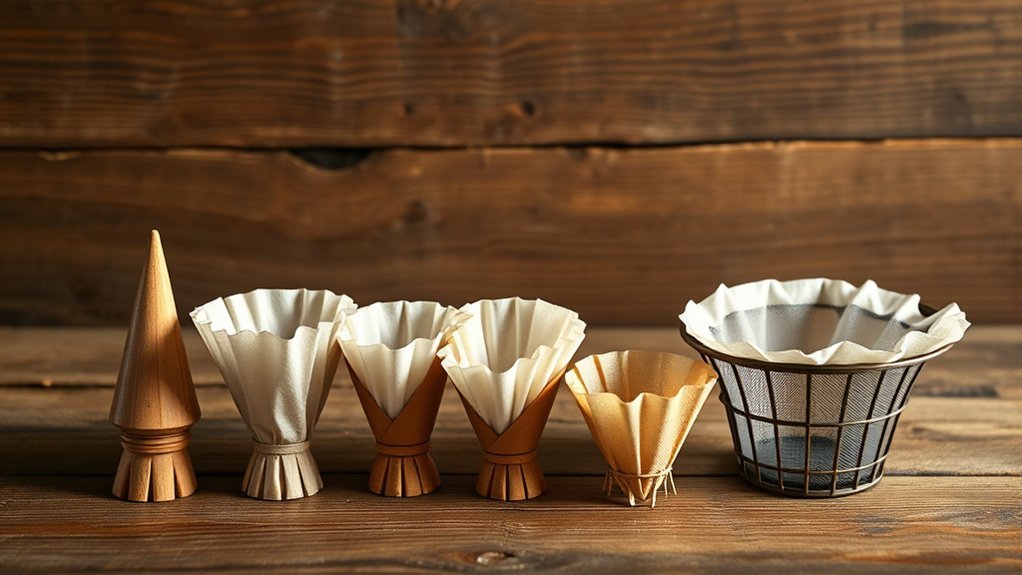
The correct filter needs enough room for the dry coffee, the swollen coffee bed, and incoming water while remaining supported by the filter holder. Poor fit can contribute to overflow, bypass, filter collapse, or unusually slow drainage.
Proper Size Ensures Extraction
A well-fitted filter stays seated against the brewer as water moves through the coffee. This helps keep grounds where the brewer was designed to hold them and reduces unintended routes around the coffee bed.
An undersized paper may sit too low or lack enough wall height for the intended dose. An oversized paper can wrinkle or bunch. Either problem can make brewing less consistent.
- Match the brewer’s specified filter size whenever possible.
- Keep the paper fully inside the filter holder rather than folded over an outlet or valve.
- Do not assume a larger filter is automatically safer for a large batch.
- Do not assume a permanent metal or cloth filter is compatible simply because it can be placed inside the holder.
Overflow Prevention Techniques
If the brew basket is overflowing, first confirm that the filter is the correct size and is sitting flat in the holder. Then check the coffee dose, grind, and drainage. For a broader diagnosis, see coffee maker grounds basket overflow causes and fixes.
A very fine grind can slow water through a paper filter, while excessive coffee can leave too little headroom for water. Fine particles can also migrate into the filter pores and slow drawdown.
Warning: Stop the brewer if hot water is rising to the top of the filter or spilling from the basket. Allow the machine and grounds to cool before repositioning the filter or cleaning a blocked basket.
Coffee Filter Troubleshooting
| Problem | Possible Cause | What to Try |
|---|---|---|
| Filter folds or collapses | Wrong size, poor seating, or weak support | Use the specified filter and seat it fully against the holder |
| Water rises too high | Too much coffee, grind too fine, clogged filter, or restricted outlet | Check dose and filter fit; use a slightly coarser grind if appropriate |
| Brew drains unusually fast | Coarse grind, high-flow paper, low dose, or poor contact | Confirm the filter type and adjust grind or recipe rather than changing to a random paper size |
| Grounds in the cup | Torn paper, filter shifted, or reusable mesh too coarse | Replace damaged paper or check the reusable filter’s fit and mesh |
| Paper bunches against the holder | Filter is too large or wrong shape | Use the specified size instead of trimming or heavily folding the paper |
How to Pick the Right Coffee Filter
At a Glance
| Time Required | About 2–5 minutes |
| Difficulty | Easy |
| Tools Needed | Coffee maker model or manual; ruler only if model information is unavailable |
| Cost | No special tools required; filter prices vary by brand and material |
Use this order when choosing a replacement filter:
- Identify the coffee maker or dripper. Find the model number on the brewer, manual, manufacturer’s site, or existing filter packaging.
- Check the required shape. Determine whether it uses a wedge cone, true cone, flat-bottom basket, waved flat-bottom filter, proprietary folded paper, disc, or another system.
- Match the exact size system. A #2, 02, 155, 185, Standard, XL, or FP-2 label only makes sense within its own manufacturer’s system.
- Choose the material. Paper usually favors clarity and low sediment; metal can allow more oils and fine material through; cloth performance varies with its weave and construction and requires regular care.
- Confirm the fit before brewing a full batch. The filter should sit naturally in the holder without being forced, crushed against an outlet, or sitting so low that the intended dose approaches the rim.
If You Don’t Know Your Coffee Maker Model
If the model number and manual are unavailable, use physical measurements as a fallback rather than guessing from cup capacity alone.
- Clean and dry the filter holder. Remove old grounds and make sure you can see its full shape.
- Identify the geometry. Note whether the holder is wedge-shaped, pointed-conical, round flat-bottom, rectangular basket, waved, or designed for a disc.
- Measure the holder. For a cone, note the top opening, bottom shape, and usable wall height. For a basket, measure the opening and base. For a disc holder, measure the flat filter area.
- Compare those measurements with a known filter or manufacturer listing. An old filter package, a correctly fitting unused filter, or the brewer maker’s parts page is more reliable than a generic online dimension chart.
- Test the dry fit. The paper should sit inside the holder with proper support and without heavy bunching, large gaps, or interference with the outlet.
Note: Measurements are a fallback, not a universal conversion chart. Two filters with similar dimensions can still have different angles, seams, pleats, paper flow rates, or brewer-specific designs.
Pro Tip: Save a photo of your filter package or brewer model on your phone. It is more reliable than trying to remember whether your machine uses “#2,” “02,” “155,” or another similarly named size.
The Role of Filter Material in Flavor
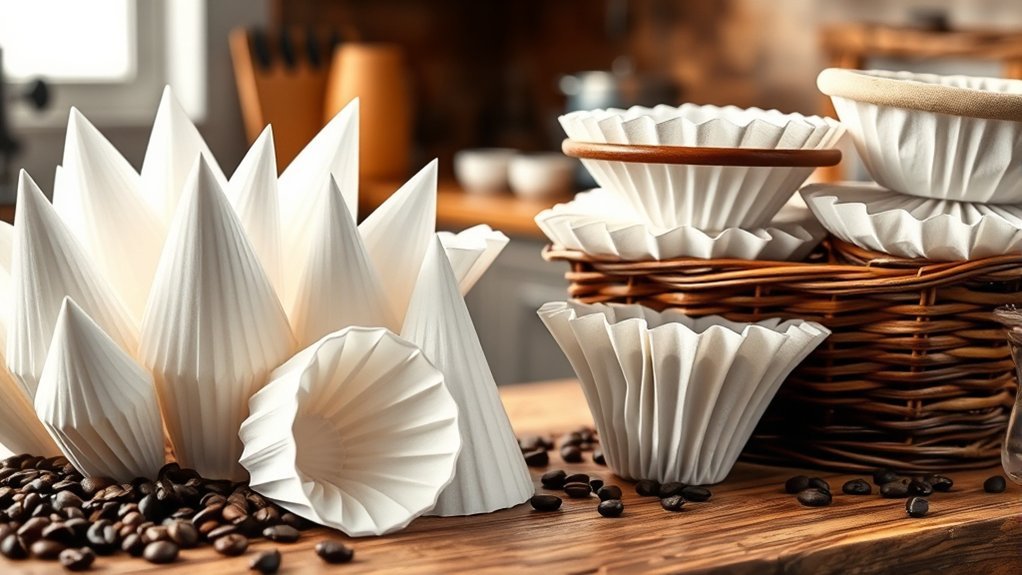
Filter material affects how much sediment and oil reaches the cup, but the result also depends on the filter’s thickness, permeability, construction, age, cleanliness, and brewing method.
Paper Filters
Paper filters generally trap fine particles and a substantial amount of coffee oil, which tends to produce a cleaner-looking cup with less sediment than many reusable metal-mesh filters. Research also shows that the physical characteristics of paper matter. A 2018 study of paper coffee filters found that paper porosity and the particle size of ground coffee were important factors affecting cafestol levels in filtered coffee.
White vs. Brown Coffee Filters
Do not assume that a brown filter automatically produces a richer or oilier coffee than a white filter. Color alone does not tell you the filter’s thickness, porosity, flow rate, or exact compatibility.
Processing differs by manufacturer. Chemex, for example, states that its matching white and brown filter papers function the same way; its white paper receives an oxygen-cleansing process while its brown paper retains its natural wood color.
When choosing between white and natural-brown versions of the same manufacturer’s filter, first confirm that both versions are listed for your exact brewer. After that, color is mainly a product preference rather than a substitute for choosing the correct size and construction.
Metal Filters
Reusable metal mesh can allow more coffee oils and fine material to pass than paper designed for the same brewer. AeroPress describes the difference similarly: its stainless-steel filter allows oils through for a fuller-bodied cup, while its paper micro-filters keep out more oils and fine grit for a smoother profile.
Cloth Filters
Cloth filters are reusable, but there is no single flavor profile that applies to every cloth filter. Weave density, fabric thickness, brewer design, age, and cleaning all influence how much sediment and oil passes into the cup.
Cloth also requires more care than disposable paper because coffee oils and moisture remain in the fabric after brewing. Prompt rinsing and thorough drying help prevent stale flavors and buildup.
Best Practices for Maintaining and Reusing Filters
Maintenance depends on whether the filter was designed to be disposable or reusable.
- Metal filters: Empty the grounds and rinse promptly. Follow the manufacturer’s deep-cleaning instructions when oils or fines build up. AeroPress states that its reusable stainless-steel filter can also be cleaned on the top rack of a dishwasher.
- Cloth filters: Rinse thoroughly after brewing and let the filter dry completely. CoffeeSock’s current care instructions, for example, recommend thorough rinsing, hanging the filter to dry, and boiling its cotton filters in fresh water for 10 minutes about every 6–8 weeks to remove accumulated coffee oils.
- Disposable paper filters: Treat them as single-brew filters unless their manufacturer specifically says they are reusable. Reusing wet paper can change flow, strength, cleanliness, and structural integrity.
Reusable filters last longer and perform more consistently when coffee grounds and oils are removed promptly and the filter is cleaned according to its manufacturer’s instructions.
Always verify that a reusable filter was designed for the specific brewer. A metal or cloth filter that merely fits inside the opening is not necessarily compatible with the brewer’s flow path, filter cap, outlet, or sealing system.
How to Use Your Coffee Filter Effectively
Once you have the correct filter, a few simple habits can improve consistency:
- Seat the filter correctly. Place it fully inside the holder with no paper blocking the brewer’s outlet or valve.
- Pre-wet when appropriate. Rinsing a paper filter is common in manual pour-over brewing because it can seat the paper, warm the brewer, and reduce noticeable paper flavor. Follow the brewer’s instructions rather than treating pre-wetting as mandatory for every machine.
- Match grind to the brewer and filter. Do not rely on one universal “medium” setting. A high-flow V60 paper, thick Chemex paper, automatic drip basket, and metal filter can require different grind adjustments.
- Use a measured coffee-to-water ratio. Start with the brewer manufacturer’s recipe when one is available, then adjust for taste. Hario, for example, publishes a 1:16 starting recipe for its Alpha V60-01 dripper, using 12.5 grams of coffee for 200 grams of water.
- Watch the first few brews with a new filter. If drawdown becomes dramatically slower or faster, confirm compatibility and then adjust the grind or recipe rather than assuming a random different filter size is the solution.
For manual brewing, pre-wetting can also warm the dripper and serving vessel. Discard that rinse water before adding coffee unless your specific recipe says otherwise. Chemex, for example, describes pre-wetting as optional rather than mandatory.
Frequently Asked Questions
Can I use cone filters in basket coffee makers?
Usually not. A cone filter and a flat-bottom basket are designed to sit differently in the filter holder. Folding a cone into a basket can create wrinkles, unsupported areas, bypass, or restricted drainage. Use the filter shape and size specified for the brewer.
Do different brands of coffee filters vary in size?
Yes. Even filters with similar names can differ in height, angle, seam, pleat design, paper thickness, and permeability. Proprietary systems such as Hario V60, Kalita Wave, Chemex, and AeroPress should be matched to their stated brewer compatibility.
How do I store unused coffee filters?
Keep unused paper filters clean, dry, and protected from kitchen odors, splashes, grease, and moisture. Store them in their original package or a clean covered container near the brewer.
Are paper coffee filters biodegradable or compostable?
Many current products are, but the claim is product-specific. Melitta identifies its current cone filters as commercially compostable, while Chemex and AeroPress describe their current paper filters as compostable. Local composting rules and available facilities differ, so check the package and your local program before disposal.
Can I reuse coffee filters?
Reuse filters that were designed for reuse, such as compatible metal or cloth filters. Disposable paper filters are best treated as single-use unless the manufacturer specifically states otherwise.
Are #2 and #4 coffee filters interchangeable?
Not in a brewer designed for one specific size. Within Melitta’s cone system, #2 filters are intended for smaller compatible brewers, while #4 filters are larger and intended for compatible 8–12 cup cone coffeemakers. Do not force or heavily fold a #4 into a brewer specified for #2 just because both are cone-shaped.
Is a Hario V60 02 filter the same as a Melitta #2 filter?
No. Hario 02 is a proprietary V60 filter size designed for the matching 02 dripper, while Melitta #2 belongs to a different cone-filter system. Similar numbers do not indicate identical dimensions or compatibility.
What size filter does a 12-cup coffee maker use?
It depends on the brewer’s filter holder. A compatible 8–12 cup Melitta-style cone brewer commonly uses a #4 filter, while an 8–12 cup basket-style brewer uses the appropriate basket filter. Do not choose solely from the “12-cup” label; check whether the machine has a cone or flat-bottom basket.
What filter does a 4–6 cup coffee maker use?
Check the brewer shape and model rather than using capacity alone. Melitta #2 cone filters are specified for compatible 2–6 cup electric cone coffeemakers, while Melitta separately sells a 4–6 cup basket filter for basket-style electric coffeemakers. Other brands may use different systems.
What if I do not know what filter size my coffee maker uses?
Look for a model number on the brewer first. If that is unavailable, identify the holder’s shape and measure its opening, base, and usable depth. Compare those measurements with a correctly fitting old filter or a manufacturer listing. Do not rely on cup capacity or a generic dimension chart alone.
Do white and brown coffee filters use different sizes?
Not necessarily. Manufacturers often sell white and natural-brown versions in the same filter size. Color describes paper processing rather than a universal size difference, so confirm the size and brewer compatibility printed by the manufacturer.
Do paper coffee filters need to be rinsed before brewing?
Not always. Pre-wetting is common in pour-over brewing because it can seat the paper, warm the brewer, and reduce noticeable paper flavor. Some manufacturers treat it as optional, so follow the instructions for your brewer instead of assuming every automatic coffee maker requires a rinse.
Can I trim or fold an oversized coffee filter?
Avoid major trimming or folding unless the manufacturer specifically instructs you to fold that filter design. Altering an oversized filter can reduce wall height, create gaps, bunch the paper, or interfere with drainage. A filter that needs major modification is usually the wrong size or shape.
Conclusion
The right coffee filter is the one designed for your brewer. Melitta #1, #2, #4, and #6 sizes are useful within that cone-filter system, but they should not be treated as universal standards. Hario V60, Kalita Wave, Chemex, AeroPress, basket brewers, and percolators use their own compatibility rules. Once the fit is correct, you can choose paper, metal, or cloth based on the clarity, body, convenience, and maintenance you prefer.
When in doubt, check the coffee maker’s model or manual before buying filters. If that information is unavailable, identify and measure the filter holder and compare it with a manufacturer listing or a known correctly fitting filter. Avoid forcing, trimming, or heavily folding a mismatched filter. Those simple checks prevent many problems with collapsing paper, overflow, poor drainage, and incompatible replacement filters.
Sources
- Melitta USA — Coffee Filters — current cone, basket, and disc filter systems and compatibility.
- Hario USA — Filters — V60 01, 02, and 03 filter compatibility.
- Chemex — Getting Started — brewer capacities, filter families, paper types, and compatibility.
- AeroPress — FAQ — current Standard/XL sizing, compatible models, cleaning, and paper-versus-metal characteristics.
- Kalita USA — Filters — Wave 155 and Wave 185 filter compatibility.
- Frost, Ristenpart & Guinard, Journal of Food Science (2019) and Rendón, Scholz & Bragagnolo, Food Research International (2018) — research on brew-basket geometry, sensory quality, paper characteristics, and diterpene filtration.