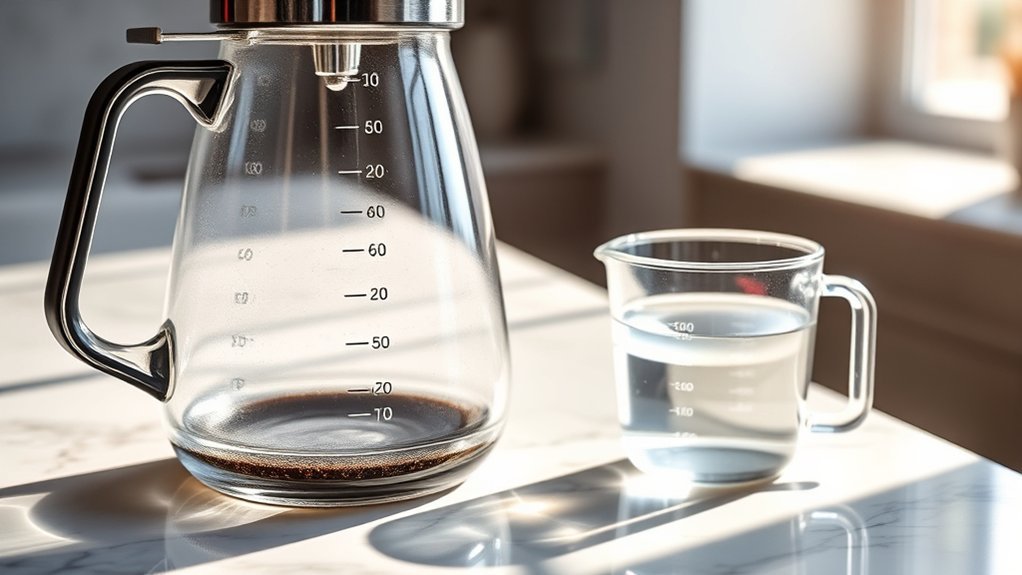
Coffee maker carafe markings can be confusing because the word “cup” does not always mean an 8-fluid-ounce U.S. measuring cup. Many drip coffee makers use a smaller brewer cup of about 5 fluid ounces, but the exact amount depends on the manufacturer and model. Check the manual or product specifications before converting the numbered markings into ounces.
Quick Answer
Many coffee makers count one carafe “cup” as approximately 5 fluid ounces. On those machines, a 12-cup carafe has a nominal capacity of about 60 fluid ounces, equal to 7.5 standard 8-ounce measuring cups. However, some brewers use different cup sizes, so verify the manual or product page for your model.
Key Takeaways
- A U.S. measuring cup contains 8 fluid ounces, but many coffee makers define one brewer cup as approximately 5 fluid ounces.
- A 12-cup carafe holds about 60 fluid ounces only when the machine uses a 5-ounce brewer cup.
- The amount of coffee collected in the carafe is usually lower than the water added because the grounds, filter, and brewer retain some liquid.
- For a consistent starting recipe, use approximately 55 grams of coffee per liter of water, or about a 1:18 coffee-to-water ratio by weight.
- Check the manual, manufacturer’s product page, or ounce markings instead of assuming every carafe uses the same cup definition.
At a Glance
| Time Required | About 2–5 minutes |
| Difficulty | Easy |
| Tools Needed | Coffee maker manual, clear liquid measuring cup, and optional digital gram scale |
| Cost | No cost with measuring tools you already own; a scale is optional |
Understanding Coffee Maker Carafe Sizes
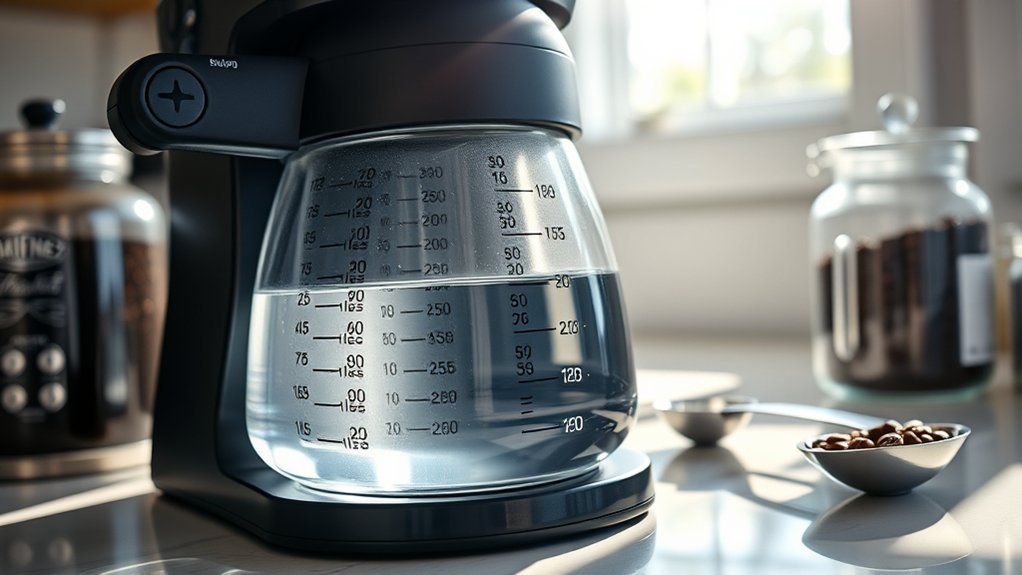
Coffee maker capacities commonly range from small 4- or 5-cup machines to larger 12- or 14-cup models. The number describes the manufacturer’s brewer cups, not necessarily the number of 8-ounce mugs you can fill.
For example, Mr. Coffee lists one current 12-cup model as holding 60 fluid ounces and defines each cup as approximately 5 fluid ounces. Cuisinart also defines a cup as approximately 5 ounces for one of its 12-cup machines, while noting that the figure can vary with brewing technique.
That does not mean every brewer uses the same measurement. Some carafes use 4-, 5-, or 6-ounce increments, and some show both ounces and cup numbers. Your model’s manual and maximum-fill marking take priority over any general conversion chart.
On a machine that defines one brewer cup as 5 fluid ounces, the calculation is simple: 12 cups × 5 fluid ounces = 60 fluid ounces.
Carafe material does not change the numbered capacity, but it affects how the coffee is held after brewing. A glass carafe lets you see the level and normally sits on a warming plate. A stainless-steel thermal carafe limits visibility but retains heat without continuous warming. Ceramic carafes are less common in automatic drip machines and are usually chosen for appearance and heat retention.
Power your essentials anywhere with a 999Wh pure sine wave power station delivering up to 1000W continuous with 2000W surge. It supports fast charging via USB-C PD 60W and USB-A QC 18W, plus simultaneous output for multiple devices through AC, USB, wireless, and car/DC ports. Recharge using AC, car, or solar with a built-in MPPT controller and dual cooling fans, while the upgraded battery management system protects against surges, short circuits, and overheating.

Explicit Brewing Indicator: On/off indicator light keeps you aware of your coffee maker's status
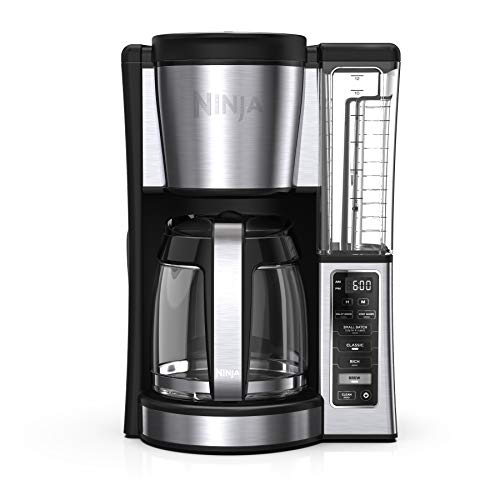
2 BREW STYLES: Classic or Rich, each brew is flavorful and never bitter with custom brew strengths.
Coffee Maker Cups vs. 8-Ounce Measuring Cups
A U.S. customary measuring cup contains 8 fluid ounces, or about 236.6 milliliters, according to the USDA volume conversion table. That unit is useful for recipes, but it is not the definition used by every coffee maker.
Why the Two Cup Definitions Differ
The smaller brewer cup is a product-capacity convention. It roughly represents a modest serving of brewed coffee and allows a manufacturer to describe the number of smaller servings a machine can prepare. An everyday mug may hold 10, 12, 16, or more fluid ounces, so the word “cup” alone does not tell you how many mugs a carafe will fill.
Note: Fluid ounces measure liquid volume. Weight ounces measure mass. When discussing water or carafe capacity, use “fluid ounces.” When weighing coffee beans or grounds, use grams or weight ounces.
Useful Coffee Cup Conversions
| Measurement | Fluid Ounces | Approximate Milliliters |
|---|---|---|
| 1 U.S. measuring cup | 8 fl oz | 237 mL |
| Common 5-ounce brewer cup | 5 fl oz | 148 mL |
| 12-ounce mug | 12 fl oz | 355 mL |
| 16-ounce travel mug | 16 fl oz | 473 mL |
Why Accurate Measurements Matter
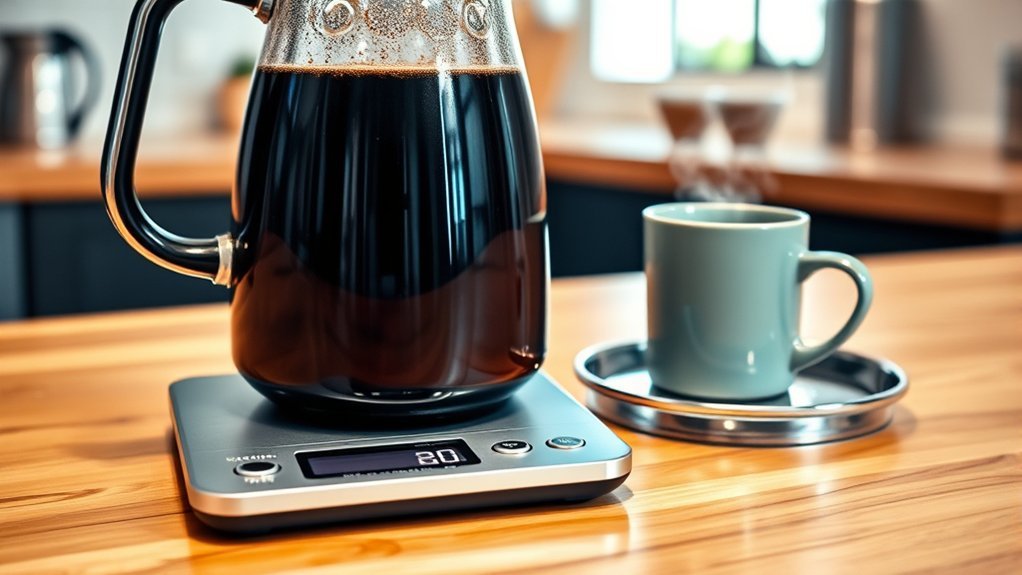
The amount of water and ground coffee determines beverage strength and affects extraction. If you treat each carafe marking as 8 ounces when the machine intends 5 ounces, you may add far too much coffee or miscalculate how many mugs the batch will provide.
A practical baseline is approximately 55 grams of coffee per liter of water. The Specialty Coffee Association’s Golden Cup reference expresses this as 8.25 grams of coffee for 150 milliliters of water, which is about a 1:18.2 coffee-to-water ratio by weight.
This is a starting point, not a rule that overrides your taste or the brewer’s instructions. Use slightly more coffee for a stronger drink or slightly less for a milder drink. Keep the water level constant while making small dose changes so you can identify what improved the result.
Pro Tip: Once you find a ratio you enjoy, record the water level, coffee weight, grind setting, and filter type. Repeating those four details is more reliable than trying to recreate the batch with an unmeasured scoop.
Converting Carafe Markings to Fluid Ounces
Use this formula after confirming how many fluid ounces your machine assigns to one brewer cup:
Number on the carafe × fluid ounces per brewer cup = nominal water capacity
The following table applies only to machines that use a 5-fluid-ounce brewer cup.
| Carafe Marking | Nominal Fluid Ounces | Equivalent 8-Ounce Cups | Approximate 12-Ounce Mugs |
|---|---|---|---|
| 4 cups | 20 fl oz | 2.5 cups | 1.7 mugs |
| 5 cups | 25 fl oz | 3.1 cups | 2.1 mugs |
| 8 cups | 40 fl oz | 5 cups | 3.3 mugs |
| 10 cups | 50 fl oz | 6.25 cups | 4.2 mugs |
| 12 cups | 60 fl oz | 7.5 cups | 5 mugs |
| 14 cups | 70 fl oz | 8.75 cups | 5.8 mugs |
These figures describe the water capacity before brewing. Do not expect to collect every listed ounce as finished coffee. The grounds and filter retain water, and a small amount may remain inside the brewer or leave as steam.
How to Measure a Coffee Carafe Accurately
1. Check the Manual or Product Page
Look for wording such as “one cup equals approximately 5 fluid ounces,” “60-fluid-ounce capacity,” or “1.8-liter carafe.” Use the model number printed on the coffee maker rather than relying on a general manual for the brand.
2. Verify the Markings With Water
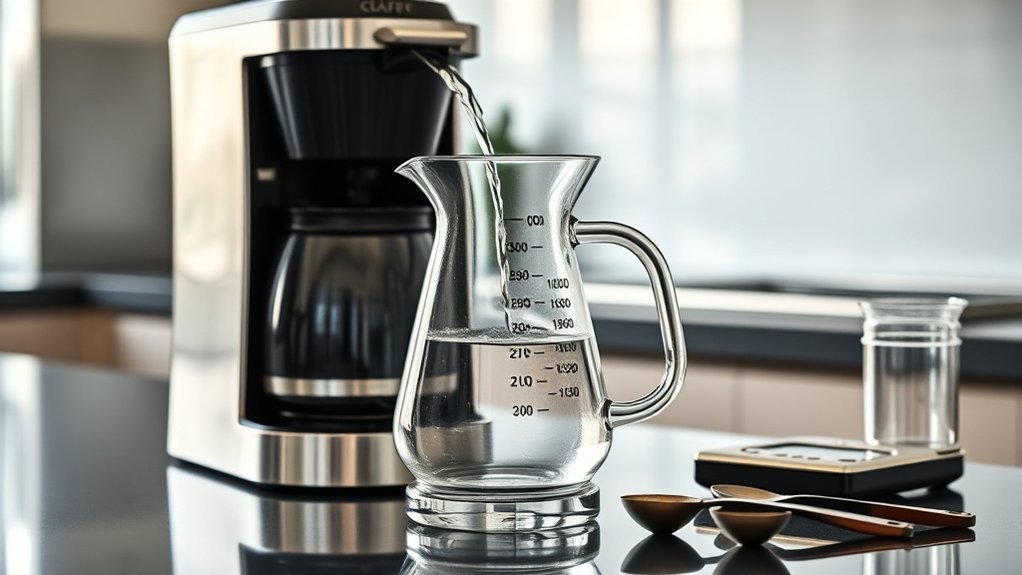
Place a clear liquid measuring cup on a level counter. Fill the carafe to a numbered line, then pour that water into the measuring cup. Read the bottom of the liquid curve at eye level. These steps follow the measurement practices described in NIST’s kitchen measurement guidance.
You can also place the empty carafe on a scale, press tare, and add water to the selected line. For ordinary kitchen calculations, the water’s weight in grams is approximately equal to its volume in milliliters.
3. Record the Result
Divide the measured fluid ounces by the carafe number. For example, if water filled to the “8” line measures 40 fluid ounces, each brewer cup equals 5 fluid ounces. Write that figure in the manual or save it with your preferred coffee recipe.
Warning: Never fill the reservoir above its maximum line. Excess water or too many grounds can cause the brew basket to overflow, releasing hot water and coffee onto the counter.
Common Coffee Measurement Misconceptions
- “A coffee maker cup is always 8 ounces.” An 8-fluid-ounce cup is a U.S. measuring unit, but many brewers use a smaller manufacturer-defined cup.
- “A 12-cup carafe produces twelve large mugs.” A 60-ounce batch fills five 12-ounce mugs before accounting for water retained during brewing.
- “The carafe markings are wrong.” The markings may be correct for the manufacturer’s brewer-cup definition even though they differ from an 8-ounce measuring cup.
- “One scoop works for every machine.” Scoops differ in size, and coffee density changes with roast and grind.
- “The water added must equal the coffee collected.” Grounds, filters, and the brewer retain some water, so finished yield is normally lower.
How Much Coffee to Use for Each Carafe Size
The following chart uses approximately 55 grams of coffee per liter of water. It applies to carafes based on 5-fluid-ounce brewer cups and rounds each dose to a practical whole gram.
| Carafe Size | Water | Starting Coffee Dose |
|---|---|---|
| 4 brewer cups | 20 fl oz / 591 mL | 33 g |
| 5 brewer cups | 25 fl oz / 739 mL | 41 g |
| 8 brewer cups | 40 fl oz / 1.18 L | 65 g |
| 10 brewer cups | 50 fl oz / 1.48 L | 81 g |
| 12 brewer cups | 60 fl oz / 1.77 L | 98 g |
| 14 brewer cups | 70 fl oz / 2.07 L | 114 g |
For stronger coffee, increase the dose by about 5% at a time. For milder coffee, reduce it by about 5%. Adjusting in small steps is more predictable than making a large change or altering several variables at once.
A 1:18 ratio means approximately 1 gram of coffee for every 18 grams of water. A 1:16 ratio uses more coffee and produces a stronger beverage when the other brewing variables remain similar.
If you do not own a scale, tablespoons can provide a rough starting point, but they are less consistent. Use level tablespoons, follow the scoop instructions supplied with the brewer, and adjust after tasting. Do not assume every included scoop holds one standard tablespoon.
Troubleshooting Coffee Measurement Issues
| Problem | Likely Cause | What to Do |
|---|---|---|
| Coffee tastes weak | Too little coffee, an incorrect cup conversion, or a grind that drains too quickly | Confirm the water volume, then increase the coffee dose by about 5%. |
| Coffee tastes too strong | Too much coffee for the measured water | Reduce the dose by about 5% while keeping the water level unchanged. |
| Coffee tastes bitter or dry | Grounds may be too fine, the brew may drain too slowly, or coffee may remain on a warming plate too long | Use a slightly coarser grind and serve the coffee sooner. |
| Brew basket overflows | Too many grounds, an overly fine grind, doubled filters, a blocked outlet, or excessive water | Unplug the machine, let it cool, clean the basket, use one correct filter, and stay below the maximum fill line. |
| Finished yield seems low | Normal water retention or buildup inside the brewer | Compare the water added with the beverage collected. Clean or descale the machine according to its manual if the difference grows. |
| Replacement carafe does not fit | Matching the advertised cup count but not the brewer model | Match the exact model number, lid design, height, base diameter, and pause-and-serve mechanism. |
Coffee Measurement Reference
| Measurement | Reliable Starting Point |
|---|---|
| U.S. measuring cup | 8 fluid ounces |
| Common brewer cup | Approximately 5 fluid ounces; verify the model |
| 12-cup nominal capacity | 60 fluid ounces when one brewer cup equals 5 fluid ounces |
| Coffee-to-water baseline | Approximately 55 grams per liter, or about 1:18 |
| Preferred measuring method | Coffee and water measured by weight |
| Finished beverage yield | Lower than the water added by an amount that varies with the brewer and dose |
Frequently Asked Questions
What is the standard size of a coffee maker carafe?
There is no single universal carafe size. Common household models are advertised as 4, 5, 8, 10, 12, or 14 cups. Many manufacturers use approximately 5 fluid ounces per brewer cup, but some models use a different definition.
How many ounces are in a 12-cup coffee carafe?
A 12-cup carafe has a nominal 60-fluid-ounce capacity when the manufacturer defines one brewer cup as 5 fluid ounces. Check the manual because the definition can differ by model.
Can I use a kitchen scale for measuring coffee?
Yes. A gram scale is one of the easiest ways to repeat a successful recipe. Weigh the ground coffee, then weigh or measure the water. Start near 55 grams of coffee per liter of water and adjust gradually.
Why is there less coffee in the carafe than the water I added?
Coffee grounds and the filter retain water, and a small amount may remain in the brewer or escape as steam. The difference varies with the dose, grind, filter, and machine, so a fixed finished-yield figure does not apply to every brewer.
How do I clean my coffee maker carafe?
Let the carafe cool, then wash it with warm water, mild dish soap, and a non-abrasive sponge or bottle brush. Follow the manufacturer’s instructions before placing it in a dishwasher. Avoid sudden temperature changes that could crack a glass carafe.
Do different coffee types require different measurements?
The same weight ratio is a useful starting point, but roast level, bean density, grind, and personal taste can change the preferred dose. Measure by weight and adjust the coffee amount in small steps rather than relying on a fixed number of scoops.
What are the common carafe materials and their benefits?
Glass carafes make the coffee level easy to see and are commonly paired with warming plates. Stainless-steel thermal carafes retain heat without continuous warming and are more resistant to breakage. Ceramic offers good heat retention and appearance but is less common in automatic drip machines.
Sources
- Mr. Coffee 12-Cup Programmable Coffee Maker specifications — supports the approximately 5-fluid-ounce brewer cup and 60-fluid-ounce capacity example.
- Cuisinart Personal Brew 12-Cup Coffee Maker specifications — confirms that one manufacturer’s cup is approximately 5 ounces and may vary by brewing technique.
- Specialty Coffee Association Golden Cup ratio reference — supports the 8.25-gram-per-150-milliliter brewing baseline.
- NIST Metric Kitchen measurement guidance — supports weighing ingredients and reading liquid measurements on a level surface at eye level.
- USDA metric equivalents by volume — supports the conversion of one U.S. cup to 8 fluid ounces or 236.59 milliliters.
Conclusion
A coffee maker’s numbered cups are serving marks, not guaranteed 8-ounce measurements. Many 12-cup machines use a 5-fluid-ounce brewer cup and therefore hold about 60 fluid ounces, but your model’s manual or product specifications provide the final answer. Confirm the capacity once, measure coffee by weight when possible, and adjust one variable at a time for a repeatable brew.