
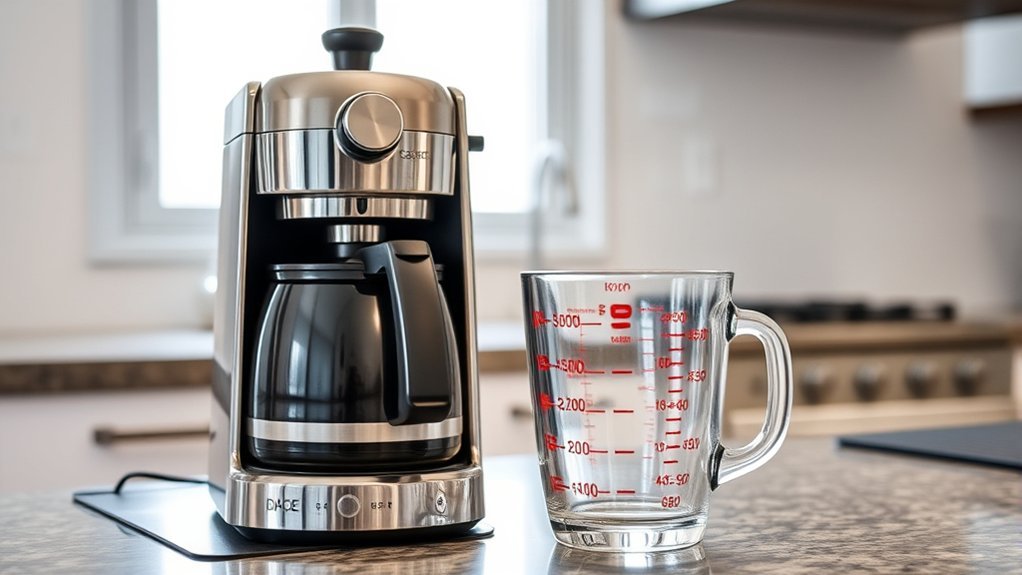
Coffee maker cups typically measure 4 to 6 ounces, differing from the standard 8-ounce measuring cup. This can lead to confusion, especially since a 12-cup coffee maker’s reservoir holds 60 ounces but usually brews about 50 ounces due to ground absorption. For consistent results, it’s essential to measure both coffee and water accurately, following recommended ratios. Understanding these differences can enhance your brewing experience, and there’s more to uncover about optimizing your coffee preparation.
Key Takeaways
- A coffee maker “cup” is typically defined as 5 ounces, while a standard measuring cup is 8 ounces.
- Some coffee makers define a cup as low as 4 ounces, which can cause confusion in brewing yields.
- A 12-cup coffee maker usually has a 60-ounce reservoir but brews around 50 ounces due to coffee ground absorption.
- The recommended coffee-to-water ratio is 1:18, making accurate measurements crucial for achieving desired flavor strength.
- Misunderstanding these differences can lead to inconsistent brewing results, emphasizing the importance of clarity in measurements.
How Coffee Maker Cups Differ From Standard Measurements
When it comes to brewing coffee, understanding the difference between coffee maker cups and standard measurements is essential.
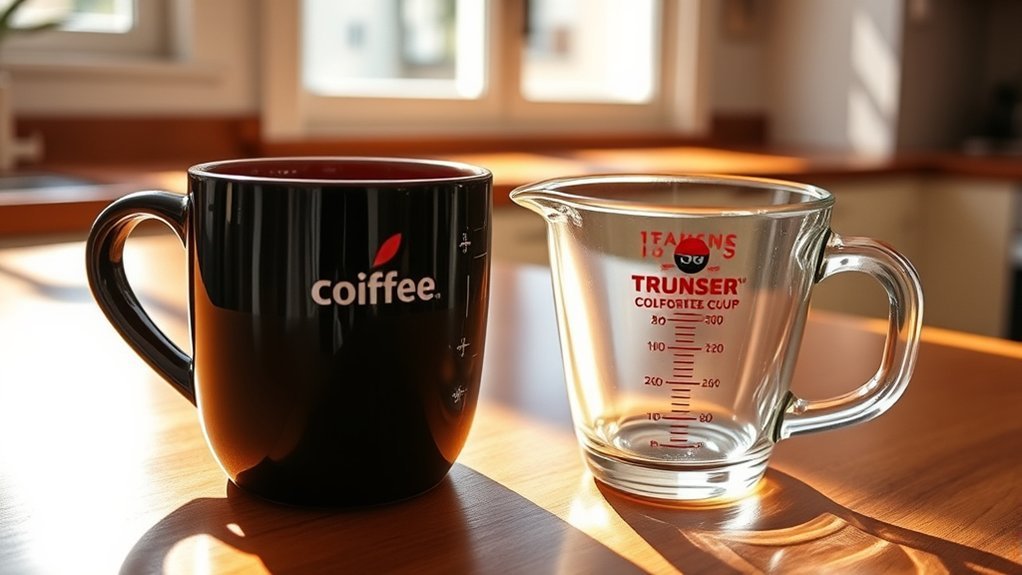
In the coffee industry, a “cup” usually refers to 5 ounces, while a standard measuring cup is 8 ounces. This discrepancy can lead to confusion, especially when you’re trying to follow brewing instructions or compare different coffee makers.
Some manufacturers even define a cup as low as 4 ounces, which can impact measurement accuracy. For example, a 12-cup coffee maker has a 60-ounce reservoir but typically yields only about 50 ounces of brewed coffee due to absorption by the coffee grounds.
Some coffee makers define a cup as just 4 ounces, affecting the brewed yield significantly.
Knowing these differences is key to achieving the perfect strength and flavor in your coffee brewing.
Understanding the Variability in Coffee Maker Cup Definitions
Although you might assume that a “cup” in coffee brewing holds a standard volume, the reality is much more complex.
The term can mean anything from 2 to 6 ounces, with 5 ounces often cited by coffee makers, while cooking uses 8 ounces as the norm. This variability can lead to significant coffee cup confusion, especially when you think a 12-cup coffee maker brews a consistent amount.
In truth, it might only yield about 50 ounces of coffee. Many consumers overlook these discrepancies, impacting their assumptions about brewing capacity clarity and serving sizes.
To achieve your ideal coffee strength and volume, it’s vital to understand these differences and measure accordingly.
What You Need to Know About Standard Coffee Cup Sizes

Understanding the varying definitions of a coffee cup sets the stage for grasping standard coffee cup sizes. In the U.S., a standard coffee cup is often considered to be 6 fluid ounces, which contrasts with the traditional 8 fluid ounces used in cooking.
This discrepancy can lead to confusion, especially when using coffee makers that define a “cup” as anywhere between 4 to 6 fluid ounces. As a result, a 12-cup coffee maker might only yield about 50 ounces instead of the expected 72 ounces.
Coffee cup history shows that cultural preferences further influence these sizes, with some regions favoring larger servings. To brew accurately, always check the definitions provided by your coffee maker and adjust your coffee grounds accordingly.
How to Measure Coffee and Water Ratios
When it comes to brewing coffee, understanding standard measurements is essential for achieving the perfect cup.
You’ll want to follow the recommended coffee-to-water ratios for ideal flavor, and don’t hesitate to adjust the coffee quantity to suit your taste.
Let’s break down the essentials to help you brew your best coffee yet.
Standard Coffee Measurements Explained
To brew the perfect cup of coffee, getting the measurements right is essential. A standard coffee maker defines a “cup” as 5 ounces, which differs from the 8 ounces typically used in cooking.
For ideal flavor, aim for a coffee-to-water ratio of 1:18, meaning for every 1 gram of coffee, use 18 grams (or milliliters) of water. If you’re using a 12-cup coffee maker, about 4 ounces of ground coffee is required for the 60 fluid ounces of water.
When brewing for larger groups, remember that one gallon translates to about 25 five-ounce cups. Adjusting coffee grounds by 10-15% can tweak strength, allowing for measurement accuracy and a personalized coffee brewing experience.
Coffee-to-Water Ratio Guide
Getting the coffee-to-water ratio right is essential for brewing a delicious cup of coffee. The Specialty Coffee Association recommends a ratio of 1:18, meaning for every 1 gram of coffee, you should use 18 grams of water.
For a typical 12-cup coffee maker with a 60 oz reservoir, roughly 4 oz of coffee grounds will yield ideal results. You can tweak this by adjusting the amount of coffee by 10-15% to suit your taste preferences.
To guarantee consistency in your brewing techniques, always measure coffee by weight rather than volume. Using a digital scale to measure both coffee and water won’t only enhance accuracy but also account for water quality effects, ensuring a flavorful cup every time.
Adjusting Brew Strength Tips
Adjusting the brew strength of your coffee can transform your morning ritual into a delightful experience.
For a standard flavor balance, aim for 1 gram of coffee to every 18 grams (or milliliters) of water. When using a 12-cup coffee maker, you’ll want about 4 ounces (113 grams) of coffee for 60 fluid ounces of water.
If you crave a bolder cup, increase your coffee by 10-15%. Conversely, reducing the coffee will yield a milder taste.
Don’t forget that grind size plays a crucial role; finer grinds extract flavors quicker for a stronger brew, while coarser grinds result in a lighter cup.
Using a digital scale guarantees consistent measurements, enhancing your flavor balance every time.
Tips for Consistent Brewing: Accurate Coffee Measurements
To brew consistently great coffee, standardizing your measurements is key.
Using a digital scale helps you accurately weigh coffee and water, leading to more reliable results.
Don’t forget to adjust your coffee-to-water ratio based on your personal taste for the perfect cup every time.
Standardize Coffee Measurements
Understanding coffee measurements is essential for brewing the perfect cup. The difference between a coffee maker cup (5 ounces) and a standard measuring cup (8 ounces) can lead to confusion.
To achieve consistent brew strength and measurement precision, follow these tips:
- Familiarize yourself with your coffee maker’s cup definition, as it may vary.
- Use 2 tablespoons of coffee grounds for every 6 ounces of water.
- Adjust your coffee-to-water ratio based on personal taste preferences.
- Consider the 1:18 coffee-to-water ratio for accurate brewing.
- If possible, invest in a digital scale for weight measurements.
Use Digital Scales
Here’s a quick reference for your brewing:
| Coffee Amount | Water Amount | Ratio |
|---|---|---|
| 10 grams | 180 grams | 1:18 |
| 20 grams | 360 grams | 1:18 |
| 30 grams | 540 grams | 1:18 |
| 40 grams | 720 grams | 1:18 |
| 50 grams | 900 grams | 1:18 |
Embrace digital brewing for a reliable cup every time!
Adjust for Personal Taste
While brewing coffee, adjusting for personal taste can make all the difference in achieving that perfect cup. Understanding your brewing preferences helps create delicious flavor profiles.
Here are some tips to guarantee you get it just right:
- Use your coffee maker’s markings to measure water accurately (5-6 ounces per cup).
- For every 6 fluid ounces of water, start with 2 tablespoons of coffee grounds, adjusting based on strength preference.
- Stick to a coffee-to-water ratio of 1:18 for consistent flavor.
- If you like a stronger brew, increase coffee grounds by 10-15% while keeping water the same.
- Keep a ratio chart or brew recipe handy to enhance predictability in your coffee preparation.
Experiment, and enjoy your perfect brew!
Decoding Coffee Maker Capacity Claims
When shopping for a coffee maker, you might find the term “cup” misleading, as manufacturers often define it differently than you expect. Many brands label a “cup” as just 5 ounces, while a standard measuring cup is 8 ounces. Some, like Bunn and Mr. Coffee, define a cup as low as 4.2 ounces.
This discrepancy leads to significant consumer confusion about coffee maker specifications and actual capacity. For instance, a 12-cup coffee maker may hold 60 ounces, but you’ll likely brew about 50 ounces, factoring in absorption by coffee grounds.
Understanding these differences is essential, especially when brewing larger quantities, like a gallon, which equates to roughly 25 five-ounce cups. Always measure carefully to avoid surprises.
Frequently Asked Questions
Can I Use a Standard Measuring Cup for Coffee Makers?
Yes, you can use a standard measuring cup for coffee makers, but make certain it’s accurate. Maintaining measuring accuracy helps you achieve the right brewing ratios, resulting in a consistent and enjoyable coffee experience every time.
What Happens if I Mismeasure My Coffee?
If you mismeasure your coffee, you’ll likely end up with an unbalanced brew. Incorrect brewing ratios can lead to weak or overly strong coffee, affecting your enjoyment. Stick to precise measurements for ideal flavor every time.
Are All Coffee Makers the Same Size?
No, all coffee makers aren’t the same size. They vary considerably in coffee maker sizes and brewing capacity, catering to different needs. You’ll want to choose one that fits your daily coffee requirements best.
How Can I Adjust Recipes for Different Coffee Maker Sizes?
When brewing your favorite coffee, don’t let size hold you back! Adjust your recipes by calculating brewing ratios based on your coffee maker’s cup sizes, ensuring each cup remains rich and satisfying, no matter the machine.
Do Different Brewing Methods Affect Cup Measurements?
Yes, different brewing techniques can affect measurement accuracy. Each method extracts flavors differently, sometimes requiring adjustments in coffee and water ratios. Understanding these nuances helps you achieve the best results from your chosen brewing style.
Conclusion
In the world of coffee, understanding the differences between coffee maker cups and standard measurements is like opening a treasure chest of flavor. By grasping the nuances of cup sizes and ratios, you’ll brew the perfect cup every time. Remember, precision is key, so don’t let those tiny discrepancies ruin your coffee experience. With these tips, you’ll be sipping on liquid gold that awakens your senses and fuels your day—one glorious cup at a time!