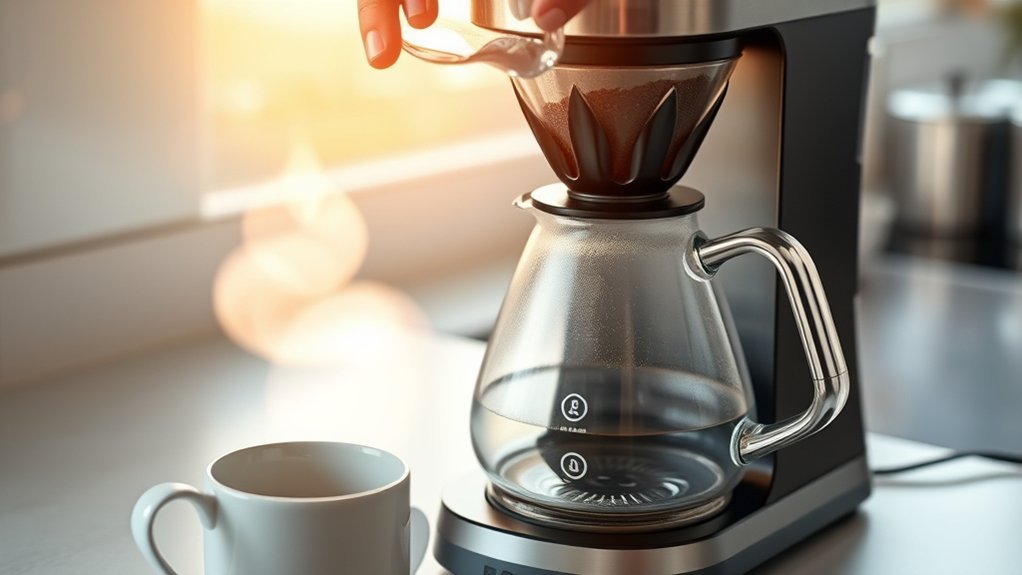
If your drip coffee tastes stronger than you enjoy, the easiest fix is usually to change the amount of coffee you use or dilute the finished brew with hot water. Grind size and brew time also affect flavor, but they are better used to correct extraction problems than simply to make coffee weaker.
Quick Answer
To make weaker coffee in a drip coffee maker, use a lighter brew ratio of 1:18 to 1:20 by weight (about 1 level tablespoon of ground coffee per 6-ounce cup of water). Keep a medium grind, use paper filters, and let the machine run its full cycle. If it is still too strong, dilute the finished brew with hot water.
Key Takeaways
- Use less coffee for the same amount of water. A 1:18 to 1:20 weight ratio (or 1 level tablespoon per 6 oz cup) is the ideal starting point for a mild cup.
- Keep a medium grind setting so the water drains at the correct speed without causing bitter over-extraction or sour under-extraction.
- Switching from a metal mesh filter to a paper filter removes coffee oils and micro-fines, instantly creating a lighter body.
- If your brewed coffee is balanced but too intense, dilute it with 10% to 20% hot water instead of interrupting the brewer mid-cycle.
- Decaffeinated beans reduce caffeine intake, but they do not automatically reduce the concentration or taste intensity of your cup.
At a Glance
| Time Required | About 5–10 minutes, depending on machine brew capacity |
| Difficulty | Easy |
| Tools Needed | Automatic drip coffee maker, paper filter, medium-ground coffee, water, and a kitchen scale or measuring spoon |
| Cost | No additional cost (uses less coffee per batch) |
How to Make Weaker Coffee in a Drip Coffee Maker
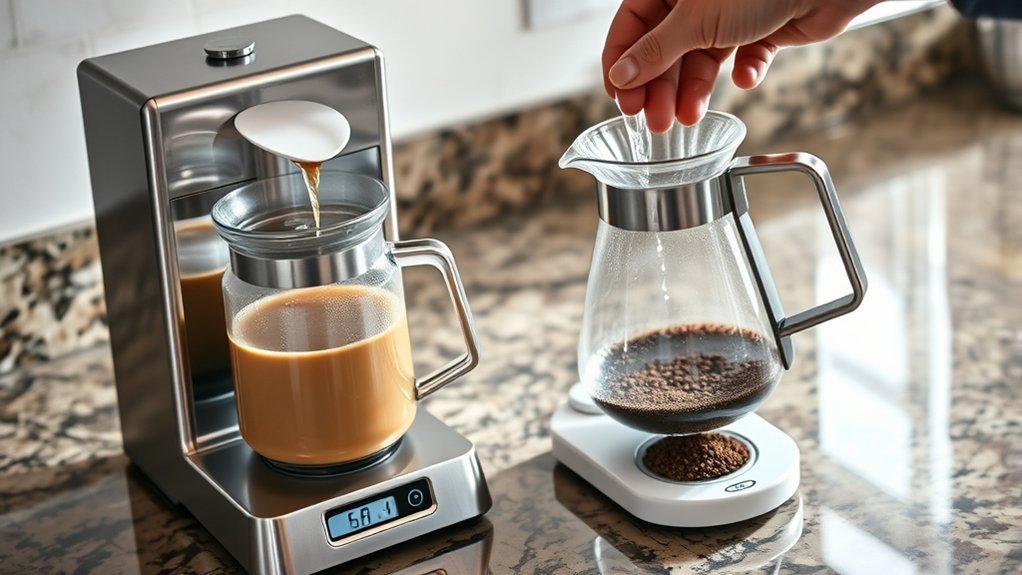
The most reliable way to brew weaker drip coffee is to reduce the amount of ground coffee relative to your water volume. While a digital kitchen scale gives the most consistent results, simple volumetric measuring spoons can also produce a lighter, milder cup when adjusted properly.
- Start with a medium grind. The National Coffee Association’s drip-coffee guidance recommends medium grounds as the standard baseline for automatic drip brewers to ensure proper water contact time.
- Use paper filters if possible. Paper filters trap coffee oils and sediment that can make coffee feel heavier and taste more intense.
- Measure your water. Fill your brewer’s reservoir with cold, filtered water up to your desired cup markings. (Note: standard coffee maker “cups” are typically 5 to 6 fluid ounces, not 8 ounces).
- Use a lighter coffee-to-water ratio.
- By weight: Use a 1:18 to 1:20 ratio (e.g., 25 grams of ground coffee for 500 grams of water).
- By volume: Use approximately 1 level tablespoon of medium-ground coffee per 6-ounce cup marking on your carafe (compared to the standard 2 tablespoons for regular strength).
- Run the complete brew cycle. Allow the machine to run from start to finish without pausing or pulling the carafe early.
- Taste and adjust. If the cup has a clean flavor profile but remains slightly too bold, add a splash of hot water directly to your mug.
Pro Tip: Adjust one variable at a time. Always start by dialing back your coffee dose. Leave your grinder at a medium setting until you are sure whether the coffee needs less dissolved strength or a correction for bitterness or sourness.
If your machine includes a brew strength button (often labeled “Mild,” “Regular,” or “Bold”), select “Mild” or “Regular.” On most drip machines, a “Bold” setting slows down the water flow to increase extraction, which makes the resulting coffee taste stronger and heavier.
Power your essentials anywhere with a 999Wh pure sine wave power station delivering up to 1000W continuous with 2000W surge. It supports fast charging via USB-C PD 60W and USB-A QC 18W, plus simultaneous output for multiple devices through AC, USB, wireless, and car/DC ports. Recharge using AC, car, or solar with a built-in MPPT controller and dual cooling fans, while the upgraded battery management system protects against surges, short circuits, and overheating.
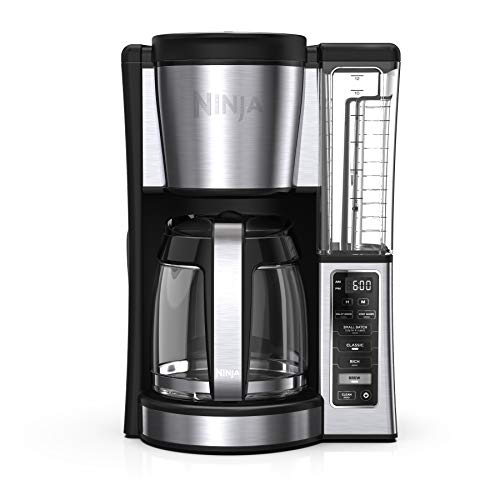
2 BREW STYLES: Classic or Rich, each brew is flavorful and never bitter with custom brew strengths.

SEMI-TRANSPARENT WATER RESERVOIR holds up to 5 cups of water capacity with a level indicator to always ensure you have enough water ready for brewing.
What Makes Coffee Weak or Strong?
To fix strong coffee without making it taste bad, it helps to distinguish between three coffee terms that are frequently confused: strength, extraction, and caffeine content.
Strength refers to the concentration of dissolved coffee solids in the finished cup, scientifically known as Total Dissolved Solids (TDS). A cup with low TDS tastes light and tea-like, while high TDS tastes dense, heavy, and intense. The Specialty Coffee Association outlines how brew strength, extraction yield, and brewing ratio interact on the Coffee Brewing Control Chart.
Extraction refers to the percentage of soluble flavors pulled from the grounds into the water. Proper extraction yields sweetness, balance, and aroma. Under-extraction results in sour, salty, or grassy flavors, while over-extraction causes astringent, harsh bitterness.
Caffeine is a chemical compound extracted rapidly during the earliest part of brewing. A weakly brewed cup of a dark roast coffee can actually have comparable caffeine to a rich light roast depending on the bean type and total dose used.
Note: If you are trying to cut back on caffeine rather than reduce flavor boldness, switch to decaffeinated beans or drink a smaller portion. Reducing the ground coffee dose in your brewer will lower total caffeine, but it is not an exact method for caffeine management.
Coffee-to-Water Ratio: The Primary Strength Dial
The coffee-to-water ratio is the single most effective control for beverage strength. The classic specialty coffee baseline is roughly 1:15 to 1:16.7 (about 60 grams of coffee per liter of water), which produces a rich, traditional cup.
For a noticeably lighter and milder brew, shift your recipe to 1:18 (approx. 55 g/L) or 1:20 (50 g/L). This ensures that every drop of brewed coffee contains fewer dissolved solids, giving you a weaker beverage without compromising the clean extraction of pleasant flavors.
A weaker cup requires a lower concentration of dissolved coffee solids. Adjusting your coffee-to-water ratio is the cleanest way to lower strength without introducing sour or bitter off-flavors.
Grind Size: Why It Controls Extraction, Not Strength
Grind size controls how fast water flows through the brew basket and how easily flavor compounds dissolve. For automatic drip machines, a consistent medium grind (resembling rough sea salt or kosher salt) is ideal.
If you grind excessively coarse in an attempt to make coffee weaker, the water will pass through the basket too quickly without extracting natural sugars. This results in coffee that is weak, sour, hollow, and unpleasantly sharp rather than smooth and mild.
Brew Time and Automatic Drip Cycles
Contact time determines how long hot water sits with the grounds. The NCA states that typical drip brewers are engineered for roughly 5 minutes of total water contact.
Do not attempt to make weaker coffee by yanking the carafe away or turning the machine off halfway through the cycle. The first half of a drip cycle extracts most of the sour organic acids, while sweetness and balance dissolve in the latter half. Interrupting the brew leaves you with a sour, unbalanced concentrate.
Coffee-to-Water Ratio Chart for Lighter Drip Brews
The table below provides practical starting measurements for brewing lighter coffee, whether you measure ingredients with a digital gram scale or kitchen measuring spoons.
| Coffee (Grams) | Approx. Tablespoons | Water Volume | Weight Ratio | Strength Profile |
|---|---|---|---|---|
| 30 g | ~6 tbsp | 480 ml (16 oz) | 1:16 | Standard regular strength |
| 26 g | ~5 tbsp | 480 ml (16 oz) | 1:18 | Mild, smooth, lighter body |
| 24 g | ~4.5 tbsp | 480 ml (16 oz) | 1:20 | Noticeably weak and delicate |
| 20 g | ~3.5 tbsp | 480 ml (16 oz) | 1:24 | Very thin; prone to tasting watery |
The Specialty Coffee Association’s brew ratio documentation standardizes brewing formulas by weight because volume scoops can vary significantly depending on bean roast density, moisture level, and grind fineness.
Choose the Right Grind Size and Filter Type
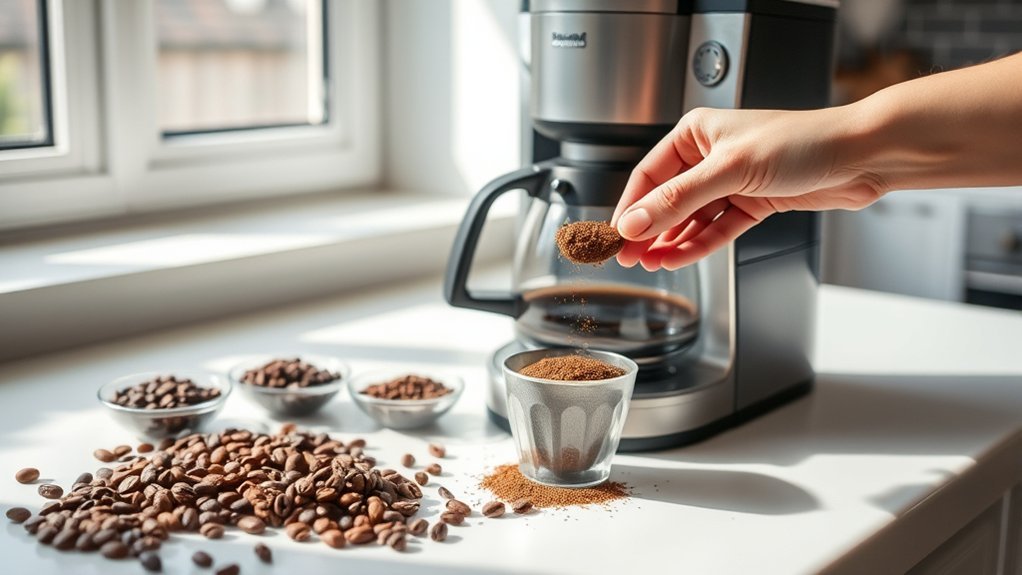
Grind size and filter choice work together to shape the clarity, perceived heaviness, and flavor balance of drip coffee.
Adjust Grind Size Appropriately
Keep your grinder near a medium setting. Only make small, incremental adjustments if you detect extraction flaws in your lighter brew:
- Go slightly coarser: If your coffee tastes both strong and dry, bitter, or astringent, a slightly coarser grind will slow down extraction and soften harsh notes.
- Go slightly finer: If your lighter brew tastes thin, sharply sour, or resembles grassy water, the water is flowing through too fast. Moving slightly finer restores sweetness and balance.
Paper Filters vs. Metal Mesh Filters
The type of filter in your brew basket has a major impact on how strong coffee feels on your palate:
- Paper Filters (Recommended for weaker coffee): High-density paper traps coffee oils (cafestol and kahweol) and microscopic bean particulates. This yields a crisp, clear cup with a lighter mouthfeel.
- Permanent Metal/Mesh Filters: Reusable gold-tone or stainless steel mesh filters allow natural oils and sediment to pass through into the pot. This creates a dense, heavy body that makes coffee taste stronger and heavier than it actually is.
Explore How Brew Time Affects Coffee Strength
Because automatic drip brewers use a fixed pump and heating element, you cannot adjust contact time directly without changing grind size or batch volume.
If you want a smaller batch of weak coffee, brew at least 3 to 4 “cups” (marked on the carafe) rather than attempting a single 1-cup dose in a wide flat-bottom basket. Very shallow beds of coffee cause water to channel around the grounds, resulting in an uneven, weak, and sour cup.
Use Filtered Water for a Cleaner Taste
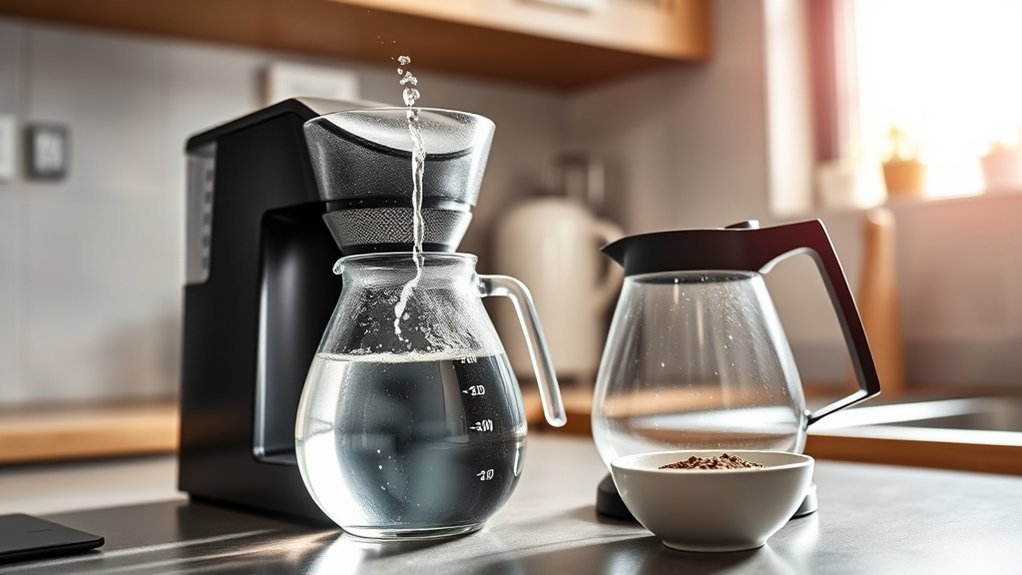
Brewed coffee is roughly 98.5% water. Unfiltered municipal water high in chlorine or heavy minerals can create a muddy, bitter taste that makes coffee seem unpleasantly harsh.
The National Coffee Association advises using clean, cold, filtered water while avoiding completely distilled or softened water, which lacks the mineral balance needed to extract pleasant aromatic compounds properly. While filtered water optimizes flavor clarity, it does not lower brew strength on its own.
How to Dilute Brewed Coffee Effectively (The Bypass Method)
If your drip coffee maker brews a rich, balanced cup that is simply too intense for your taste, post-brew dilution (bypass brewing) is the safest and most reliable technique. Dilution lowers TDS concentration after brewing is complete without risking the sourness of under-extraction.
Single-Cup Dilution
- Pour your regular mug of brewed drip coffee.
- Add approximately 10% hot water (about 1 to 1.5 tablespoons per 8-ounce cup).
- Stir, taste, and add further hot water in small increments until the beverage intensity matches your preference.
Whole-Carafe Bypass Dilution
If brewing for multiple people who prefer lighter coffee, brew a standard balanced pot using your machine’s optimal recipe (such as 1:16), then add 4 to 8 ounces of hot water directly to the carafe after brewing finishes. This reduces overall strength without flooding the brew basket.
Pro Tip: An Americano uses espresso diluted with hot water for this exact reason. Adding clean hot water to a well-extracted drip brew preserves sweet, aromatic flavors while eliminating overwhelming heaviness.
Experiment With Coffee Beans for a Milder Taste Profile
The origin, roast degree, and processing of your coffee beans influence perceived bitterness and heaviness, although they do not dictate numeric beverage concentration.
| Bean Choice | Flavor Characteristics | Does It Make Coffee Weaker? |
|---|---|---|
| Light Roast | High acidity, floral/fruity notes, less roasty bitterness | No; changes flavor character rather than strength |
| Medium Roast | Balanced body, caramel sweetness, mild acidity | No; standard baseline for smooth cups |
| Dark Roast | Heavy body, smoky, bold, bitter chocolate notes | No; perceives as stronger due to roast compounds |
| Decaffeinated Beans | Similar flavor to regular coffee; 97%+ caffeine removed | No; reduces caffeine, not brew concentration |
Cleaning Your Coffee Maker for Optimal Performance
Accumulated mineral scale inside your machine’s boiler and stale coffee oils coating the brew basket can make even lightly brewed coffee taste bitter, pungent, and harsh.
- Wash the brew basket and glass carafe with warm, soapy water after every brew to remove rancid oils.
- Descale your coffee maker every 1 to 3 months using a manufacturer-approved descaling solution or diluted white vinegar (if permitted by the user manual).
- Wipe the showerhead nozzle regularly to ensure even water distribution across the coffee bed.
The SCA Coffee Brewer Standards emphasize that consistent water temperature and clean brew paths are required to prevent bitter off-tastes.
Warning: Always ensure your coffee maker is unplugged and completely cooled before descaling or cleaning internal heating surfaces. Never submerge the electrical base of the coffee maker in water.
Troubleshooting Weak or Strong Drip Coffee
| Flavor Problem | Probable Cause | Corrective Action |
|---|---|---|
| Too strong, but pleasant | Beverage concentration (TDS) is higher than preferred | Shift ratio to 1:18–1:20 or dilute mug with hot water |
| Weak and sharply sour | Under-extraction (grind too coarse or water passed too fast) | Move grinder slightly finer; do not stop machine early |
| Strong, bitter, and dry | Over-extraction plus high concentration | Reduce ground dose and adjust grinder slightly coarser |
| Weak, flat, and watery | Dose was reduced too severely or grounds channeled | Increase dose slightly to 1:18 ratio and level the coffee bed |
| Bitter and muddy body | Using metal mesh filter or old coffee oil buildup | Switch to paper filters and thoroughly wash carafe/basket |
Frequently Asked Questions
Can I Use Decaf Coffee for a Weaker Brew?
Use decaf when your goal is less caffeine rather than milder flavor. Decaffeinated coffee brews at the same concentration and strength as regular coffee. According to the U.S. Food and Drug Administration (FDA), decaf still contains small amounts of caffeine, typically 2 to 15 milligrams per 8-ounce cup.
How Does Water Temperature Affect Coffee Strength?
Water temperature controls extraction efficiency. Most automatic drip brewers maintain standard brewing water between 195°F and 205°F. Do not try to weaken coffee by tampering with the water heating element, as cool water causes sour under-extraction. Adjust the coffee dose or dilute with hot water instead.
Is It Possible to Reuse Coffee Grounds for Weaker Coffee?
No. Running water through spent grounds pulls out bitter, astringent woody compounds because all desirable sugars and flavor oils were extracted during the first cycle. Always use fresh grounds in a lighter ratio (1:18 to 1:20) or dilute a fresh brew.
What Types of Coffee Beans Are Best for Mild Flavors?
Light to medium roasts from Central or South America (such as Colombian or Costa Rican washed coffees) offer smooth, clean, and mildly sweet flavor profiles without heavy roasty bitterness. However, the brew ratio remains the direct control for physical strength.
Can Milk or Cream Dilute Coffee Strength After Brewing?
Yes. Adding dairy or plant-based milk adds water and fats that dilute dissolved coffee concentration and bind with polyphenols to mute bitterness. However, milk does not reduce the total milligrams of caffeine already present in the mug.
Can I Make Coffee Weaker Without Changing the Grind?
Yes. In fact, keeping a medium grind and simply reducing your coffee dose (or adding hot water after brewing) is much more reliable than altering the grind, which risks creating sour or astringent off-flavors.
Should I Stop the Coffee Maker Early to Make Weaker Coffee?
No. Stopping an automatic brewer early traps the sweet, balancing compounds in the basket and leaves you with an acidic, sour concentrate. Always let the full cycle finish, then adjust your recipe or dilute with hot water.
Conclusion
To make drip coffee weaker without ruining its flavor, change the coffee-to-water ratio first. Moving to a 1:18 or 1:20 ratio (around 1 level tablespoon per 6-ounce cup) lowers beverage strength cleanly. Keep a medium grind, use paper filters to remove heavy sediment, and let your automatic brewer run its full cycle. If your finished cup still tastes too intense, adding a splash of hot water will give you complete control over flavor strength with zero bitterness.
Sources
- National Coffee Association — Drip Coffee Guide — drip grind guidelines, standard brew cycle contact times, and machine care.
- Specialty Coffee Association — Towards a New Brewing Chart — brew strength definitions, Total Dissolved Solids (TDS), and extraction yield standards.
- Specialty Coffee Association — Water and Coffee Acidity — brewing ratios and water quality standards for extraction.
- U.S. Food and Drug Administration — Spilling the Beans: How Much Caffeine Is Too Much? — caffeine consumption and decaffeinated coffee metrics.
- Specialty Coffee Association — Coffee Standards — certified home coffee brewer standards and temperature benchmarks.