To prevent coffee maker fire hazards, unplug it when not in use and keep flammable items at least three feet away. Regularly inspect the power cord for fraying and watch for signs of overheating, like discoloration or unusual smells. Clean your coffee maker frequently to avoid grease buildup, and always monitor it while it’s brewing, especially if it lacks an automatic shutoff feature. Stick around to discover more essential tips for keeping your kitchen safe.
Key Takeaways
- Unplug the coffee maker when not in use to prevent overheating and electrical malfunctions.
- Keep flammable items at least three feet away from the coffee maker to reduce fire risks.
- Regularly inspect cords for fraying or damage to avoid short circuits and ignition hazards.
- Clean the coffee maker frequently to prevent grease and grounds buildup, which can pose fire risks.
- Monitor the coffee maker while operating, especially if it lacks an automatic shutoff feature.
Top Safety Tips for Using Your Coffee Maker
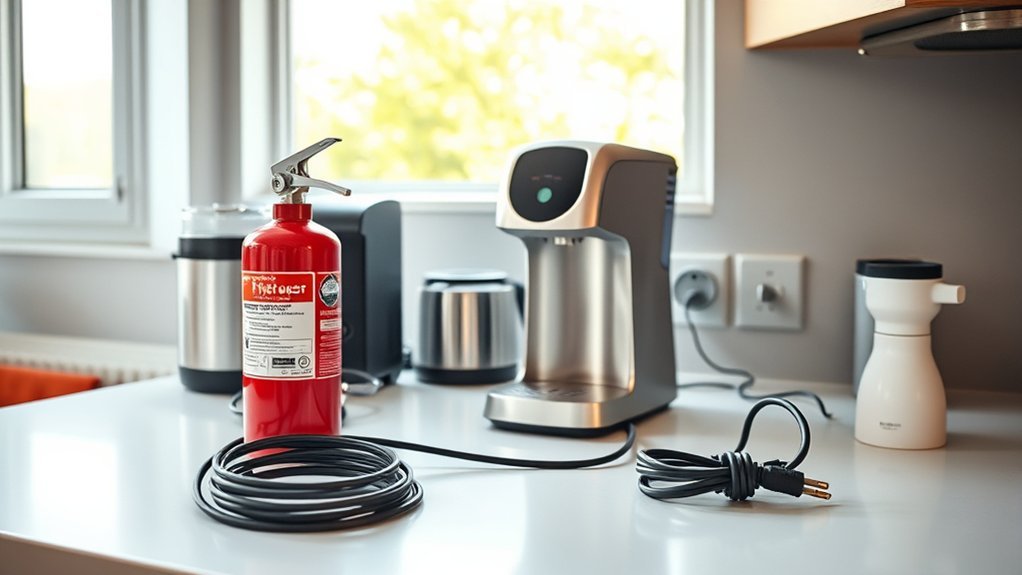
Using your coffee maker safely is crucial to preventing accidents in the kitchen. To guarantee fire safety awareness, unplug your coffee maker when it’s not in use. This simple step helps prevent electrical malfunctions and overheating.
Regularly inspect the cord for fraying or damage, replacing any worn cords immediately to avoid short-circuiting hazards. Keep flammable items like paper towels and dishcloths at least three feet away from your coffee maker to minimize ignition risks.
Additionally, practice good coffee maker maintenance by cleaning it frequently to prevent the buildup of flammable coffee grounds and oils. Always monitor your coffee maker while it’s operating, as unattended appliances greatly increase fire risks in your kitchen.
Stay safe and enjoy your coffee!
Understanding the Risks of Coffee Maker Fires
Understanding the risks of coffee maker fires is essential for your safety.
Common causes include electrical malfunctions, overheating, and improper placement near flammable materials.
Common Causes Identified
While enjoying your morning brew, it’s essential to recognize that coffee makers can pose serious fire hazards if not properly monitored.
One common cause is a coffee maker malfunction due to electrical issues, such as overheating from a failing heating element or damaged wiring. Regular inspections can help catch these problems early.
Prolonged operation without automatic shutoff features also increases the risk of overheating, so keep an eye on your machine. Worn or frayed cords can short-circuit or ignite, making it crucial to check appliance cords regularly.
Additionally, placing your coffee maker near flammable materials, like paper towels, and leaving it unattended during operation heightens the fire risk.
Prioritizing electrical safety is essential to prevent these dangers.
Preventive Measures Emphasized
To prevent coffee maker fires, it’s crucial to adopt specific safety measures that address the risks involved.
Here are four key preventive measures you should follow:
- Regular Inspections: Conduct routine coffee maker maintenance by checking for overheating elements and damaged wiring.
- Monitor Brewing Times: Always supervise your coffee maker, especially if it lacks an automatic shutoff feature, to prevent overheating.
- Inspect Cords: Regularly examine the appliance’s cord for frays or damage, as these can lead to short circuits or fires.
- Safe Placement: Keep your coffee maker away from flammable materials like paper towels or dishcloths to reduce fire risks.
Easy Ways to Keep Your Coffee Maker in Top Shape

Keeping your coffee maker in top shape is essential not just for great-tasting coffee but also for safety.
Start with regular coffee maker maintenance; check the power cord for fraying or damage. A worn cord can lead to a fire risk, so replace it right away.
Regularly inspect your coffee maker’s power cord for any fraying or damage to prevent potential fire hazards.
Clean your coffee maker frequently to avoid grease and coffee residue buildup, which can ignite. Always unplug the machine when not in use, especially if it lacks an automatic shutoff feature.
Position your coffee maker on a stable, heat-resistant surface, away from flammable materials.
Finally, follow the manufacturer’s instructions for maintenance and cleaning to guarantee safe brewing and keep your appliance functioning properly, minimizing potential fire hazards.
Spotting Electrical Issues in Your Appliances
How can you guarantee your appliances, including your coffee maker, are safe from electrical issues? Regular appliance maintenance is essential for ensuring electrical safety.
Here are some key checks to perform:
- Inspect cords for fraying or exposed wires; damaged cords can cause short-circuiting.
- Look for signs of overheating, like discoloration or a burning smell, which indicate malfunctions.
- If your coffee maker frequently trips circuit breakers or makes outlets warm, seek professional evaluation immediately.
- Plug your coffee maker directly into an outlet, avoiding overloaded power strips to reduce overheating risks.
Why Do Regular Cleaning and Inspections Matter?

Regular cleaning and inspections are essential for keeping your coffee maker safe and functional.
By preventing the accumulation of grease and detecting electrical issues early, you reduce the risk of fire hazards and guarantee your appliance lasts longer.
Staying on top of these tasks not only enhances performance but also promotes a safer kitchen environment.
Prevent Accumulation of Grease
Often overlooked, the importance of cleaning your coffee maker can’t be overstated.
Regular maintenance helps prevent grease buildup, a common fire hazard in kitchens. To keep your coffee maker safe and efficient, follow this cleaning schedule:
- Monthly Deep Clean: Disassemble your coffee maker and wash all components with warm soapy water.
- Inspect Cords and Heating Elements: Check for any signs of wear or damage that could lead to electrical issues.
- Unplug When Not in Use: This minimizes the risk of overheating and electrical malfunctions.
- Monitor for Off-Flavors: Regular cleaning guarantees better-tasting coffee by eliminating old grease and residue.
Detect Electrical Issues Early
While you might think your coffee maker is functioning just fine, neglecting routine cleaning and inspections can lead to serious electrical issues.
Regular cleaning helps remove coffee grounds and oils that can cause overheating, while electrical inspections allow you to check the wiring integrity of cords and connections.
Look for fraying or signs of damage, as these can lead to short-circuits—common causes of electrical fires in coffee makers.
Make certain your appliance is on a stable, heat-resistant surface, away from flammable materials to minimize fire risks.
Ensure Appliance Longevity
To guarantee your coffee maker serves you well for years to come, committing to routine cleaning and inspections is essential.
Regular coffee maker maintenance not only enhances safety but also provides significant longevity benefits. Here are four key practices to follow:
- Clean Regularly: Remove coffee oils and residues to prevent flammability.
- Inspect Cords: Check for fraying or damage to avoid electrical hazards.
- Descale and Clean: Routine checks help prevent overheating and malfunctions.
- Maintain Clutter-Free Zones: Keep your coffee maker away from flammable materials to minimize fire risks.
Best Practices for Using Electrical Appliances Safely
Using electrical appliances safely is vital for preventing accidents and reducing fire hazards in your home.
Always unplug your coffee maker when it’s not in use to minimize the risk of electrical malfunctions or overheating. Regularly check the cord for any fraying or damage; worn cords can lead to short-circuits or fires.
Place your coffee maker on a stable, heat-resistant surface, away from flammable materials like paper towels. Frequent cleaning of your coffee maker is important, as coffee oils can ignite if the machine overheats.
Finally, always adhere to the manufacturer’s instructions for appliance maintenance, as improper handling can greatly increase the risk of accidents and fires.
Prioritize electrical safety for a secure kitchen environment.
Creating a Coffee Maker Fire Safety Plan for Your Home
Creating a fire safety plan for your coffee maker is a proactive step in ensuring your home remains secure. Here are four essential tips to enhance your fire safety awareness through effective coffee maker maintenance:
Creating a fire safety plan for your coffee maker is crucial for maintaining a secure home.
- Inspect the cord regularly for fraying or damage to prevent short-circuits.
- Unplug the coffee maker when not in use, especially if it lacks an automatic shutoff feature.
- Keep it away from flammable materials like paper towels or dishcloths to avoid accidental ignition.
- Clean the coffee maker frequently to reduce grease buildup that could ignite during operation.
When to Seek Professional Help for Electrical Safety?
How can you tell when it’s time to call in a professional for electrical safety? If you notice outlets that feel hot to the touch or smell like burning, seek help immediately.
Frequent circuit breaker trips while using appliances, like your coffee maker, signal an underlying issue that needs expert attention. Additionally, if your home has an outdated electrical system, it may not safely support modern appliances, making an electrical inspection crucial.
After renovations or when adding new appliances, a wiring assessment by a licensed electrician guarantees everything’s up to code. Professional inspections not only identify hidden fire risks but also provide essential recommendations to enhance your home’s electrical safety.
Don’t take chances—get it checked!
Frequently Asked Questions
Can I Use My Coffee Maker Outdoors Safely?
You can use your coffee maker outdoors, but make certain it’s on a stable, dry surface away from flammable materials. Follow coffee maker tips, and prioritize outdoor safety to prevent accidents and make sure a pleasant brewing experience.
What Should I Do if My Coffee Maker Overheats?
If your coffee maker’s steaming like a volcano, unplug it immediately. Look for overheating signs like smoke or unusual smells. Implement safety measures by letting it cool down and checking for damage before using it again.
Are There Specific Coffee Maker Models Known for Fire Risks?
Yes, some specific models, particularly older or cheaper ones, can have fire risks due to faulty wiring or overheating. It’s essential to research and read reviews before purchasing to guarantee safety and reliability.
How Often Should I Replace My Coffee Maker?
You should replace your coffee maker every 5 to 10 years, depending on its lifespan. Look for replacement signs like inconsistent brewing, strange smells, or excessive noise to guarantee safe and efficient operation.
Is It Safe to Use Extension Cords With Coffee Makers?
It’s not safe to use extension cords with coffee makers. They can’t handle the power requirements specified in manufacturer guidelines, risking overheating and fire. Always plug your coffee maker directly into a wall outlet for ideal extension cord safety.
Conclusion
In the grand symphony of your morning routine, your coffee maker should play a harmonious role, not a dangerous solo. By following these safety tips and maintaining your appliance, you can guarantee a safe brewing experience. Just like a well-tuned instrument, regular inspections and cleaning keep your coffee maker performing at its best. So, take charge and create a fire safety plan to enjoy your daily cup without worry. Remember, safety first for a perfect brew!